
 0
0
 0
0
By Christophe Uwizeyimana
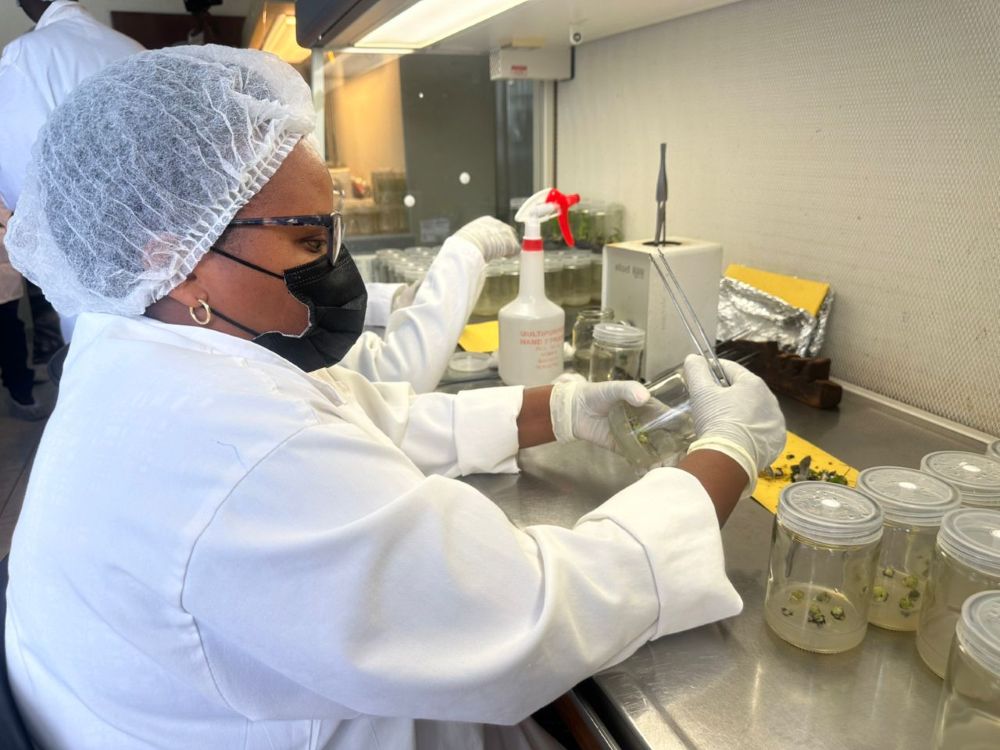
As climate change intensifies and crop diseases continue to threaten agricultural productivity across Africa, Rwanda is turning to science in search of lasting solutions. Through biotechnology, the country is developing improved seed varieties designed to withstand drought, resist devastating diseases, reduce reliance on pesticides, and increase food production. Scientists believe these innovations could play a critical role in strengthening Rwanda’s food security and helping farmers adapt to an increasingly unpredictable climate.
Yet despite these advances, many farmers remain uncertain about what biotechnology actually is and how improved seeds are developed. Some have lost confidence after experiencing poor harvests caused by diseased or low-quality planting materials, leaving many to question whether new seed technologies can truly deliver on their promise.
These issues formed the center of discussion during the June 29, 2026 edition of Biravugwa, a program aired on Isango Star TV, where journalists Gutermann and Assiati Mukobwajana hosted an in-depth conversation with Dr. Athanase Nduwumuremyi, Coordinator of the Roots and Tubers Program and Senior Scientist at the Rwanda Agriculture and Animal Resources Development Board (RAB), who also serves as Chairperson of the Open Forum on Agricultural Biotechnology (OFAB) Rwanda Chapter, and Pacifique Nshimiyimana, Country Coordinator of Alliance for Science Rwanda.
The discussion came at a time when many farmers, particularly potato and pineapple growers in Rwanda’s Northern Province, continue to report declining yields because of diseases affecting planting materials and the increasing impact of climate change.
Opening the discussion, journalist Gutermann asked Dr. Athanase how improved seeds reach farmers and who is responsible for developing them.
Dr. Athanase explained that the process begins with scientific research at RAB.
“Every improved seed distributed to farmers starts with research at RAB. Scientists develop and evaluate the varieties before supplying foundation seed to certified seed multipliers, who then produce enough quality seed for distribution to farmers. This system exists for all priority crops selected by the Government of Rwanda.”
He explained that different crops face different challenges during seed multiplication. Crops such as sweet potatoes, for example, can easily accumulate diseases if planting materials are not properly managed, making quality control essential throughout the production chain.
Dr. Athanase noted that Rwanda has made significant progress in becoming self-sufficient in seed production.
“Today, we are proud that Rwanda no longer depends heavily on imported seed for many important crops. Most of the improved seed used by our farmers is now produced within the country.”
As climate change continues to reshape agricultural conditions, Rwanda has also begun developing improved crop varieties specifically designed to withstand environmental stress.
Assiati Mukobwajana then asked one of the questions many farmers often raise:
“When experts talk about climate-resilient seeds, what exactly does that mean?”
Dr. Athanase responded by explaining that climate change has fundamentally altered farming conditions across Rwanda.
“Climate change has had major consequences for agriculture. Temperatures have increased, rainfall has become less predictable, and diseases that never existed in Rwanda before are now affecting our crops. Sometimes farmers receive too little rain, while at other times rainfall is excessive. Climate-resilient crops are designed to survive these conditions by tolerating drought, resisting emerging diseases, and maintaining productivity even under environmental stress.”
He stressed that developing climate-resilient agriculture is no longer optional but essential for Rwanda’s future food security.
Wanting to understand how these improved varieties are developed, Gutermann followed with another question:
“How do scientists actually create these improved seeds?”
Dr. Athanase explained that scientists continue to use conventional plant breeding but increasingly complement it with biotechnology.
“We use every available scientific method. Conventional breeding involves crossing plants with desirable characteristics, but this process can take between twenty and thirty years before a new variety is ready. Biotechnology enables us to understand precisely why a plant becomes susceptible to disease and allows us to improve that trait much faster. Once we identify the responsible gene, biotechnology can silence or modify it, reducing the development time to approximately five years.”
According to him, biotechnology does not replace traditional breeding but significantly accelerates scientific progress.
One of Rwanda’s most important success stories has involved cassava, a staple food for millions of people.
Dr. Athanase explained that after scientists successfully controlled Cassava Mosaic Disease around 2009, another devastating viral disease Cassava Brown Streak Disease, emerged, threatening national production.
“Using biotechnology, we have now developed six improved cassava varieties that resist these viral diseases. The research has been completed, and we are now working with certified seed multipliers so farmers can access these improved varieties.”
He added that researchers have achieved similar progress with other crops.
“Potato farmers spend substantial amounts of money purchasing fungicides to control late blight. Through biotechnology, we have developed two potato varieties that resist this disease naturally, even under heavy rainfall. We are also testing maize resistant to Fall Armyworm and continuing research on bananas and several other strategic crops.”
The discussion then shifted to the broader meaning of biotechnology.
Turning to Pacifique Nshimiyimana, Assiati Mukobwajana asked:
“Many people hear the word biotechnology but do not understand what it actually means. What is agricultural biotechnology?”
Pacifique explained that biotechnology is simply the application of biological science to strengthen living organisms against threats such as diseases and pests.
“Agricultural biotechnology uses biological knowledge to strengthen the natural defense systems of crops. It allows scientists to improve a plant’s ability to resist diseases, pests and environmental stress while maintaining its nutritional quality.”
Using bananas as an example, he described how biotechnology helps protect crops from destructive diseases.
“Bananas are affected by diseases such as Fusarium Wilt and Banana Xanthomonas Wilt. Scientists have identified how these pathogens infect the plant and have developed methods that block those infection pathways, allowing the banana to defend itself.”
He also cited Rwanda’s potato research.
“The Victoria potato variety is popular among farmers but vulnerable to disease. Scientists identified naturally resistant genes from indigenous potato varieties such as Nyirakarayi and incorporated those resistance traits into Victoria, making it much stronger against disease.”
Pacifique emphasized that biotechnology is not about creating artificial food but about using science to strengthen agriculture.
“The objective is to help farmers harvest more while spending less on pesticides and protecting the environment. A farmer who wants to improve productivity today must understand modern agricultural technologies because science is becoming one of the most important tools for ensuring food security.”
Returning to the issue of public confidence, Gutermann asked Dr. Athanase whether these improved seeds are safe for farmers and consumers.
Dr. Athanase acknowledged that misinformation often creates unnecessary fear.
“Farmers need accurate scientific information. Every improved seed undergoes rigorous scientific evaluation and approval before it reaches farmers. These are safe, high-quality seeds that meet national regulatory standards.”
He believes biotechnology could also improve public health by reducing farmers’ dependence on agricultural chemicals.
“Many pesticides used today are expensive and, when misused, may pose risks to both farmers and consumers. If crops naturally resist diseases, farmers spray fewer chemicals, reducing production costs while also lowering environmental and health risks.”
Discussing the future of improved cassava, Dr. Athanase explained that research has already been completed.
“Our work on six improved cassava varieties has been finalized. The next stage is to train certified seed multipliers, provide them with foundation seed, and enable them to produce enough planting material for farmers across the country.”
Experts argue that such innovations are increasingly important as Africa seeks to feed a rapidly growing population.
According to the Food and Agriculture Organization (FAO), improved seed varieties can increase crop yields by 20 to 50 percent, depending on crop type and management practices. The organization also estimates that up to 40 percent of global crop production is lost annually to pests and diseases, highlighting the importance of developing resistant varieties. Meanwhile, the African Development Bank warns that climate change could significantly reduce agricultural productivity across Africa unless farmers adopt climate-resilient technologies.
These figures are particularly relevant for Rwanda, where agriculture contributes roughly one-quarter of the country’s Gross Domestic Product and provides employment for more than 60 percent of the population. Increasing productivity while reducing production costs remains essential for improving rural incomes and achieving national food security.
Throughout the discussion, both experts agreed that scientific innovation alone will not transform agriculture. Farmers must also receive accurate information that enables them to make informed decisions.
Pacifique believes public awareness will determine whether biotechnology reaches its full potential.
“Technology alone cannot transform agriculture. Farmers must understand why these improved seeds are being developed, how they work, and the benefits they offer. Once they have that knowledge, they will be better equipped to make choices that improve their livelihoods.”
As Rwanda continues implementing its agricultural transformation agenda under Vision 2050, biotechnology is emerging as one of the country’s most promising tools for addressing the growing challenges of climate change, crop diseases, and food insecurity.
The message from scientists is clear: biotechnology is not replacing traditional farming—it is strengthening it. By combining decades of agricultural research with modern science, Rwanda is laying the foundation for a more resilient agricultural sector capable of producing healthier crops, reducing production costs, protecting the environment, and ensuring food security for future generations.
Whether these scientific breakthroughs ultimately transform agriculture will depend not only on continued research but also on farmers’ access to quality certified seeds, effective extension services, and public trust in the science behind them. If these elements come together, the tiny seed being improved in today’s laboratory could become one of Rwanda’s most powerful tools in securing tomorrow’s harvest.

Photo: From left to right: Dr. Athanase Nduwumuremyi, Senior Scientist at the RAB and Chairperson of the OFAB Rwanda Chapter, and Pacifique Nshimiyimana, Country Coordinator of Alliance for Science Rwanda, during a panel discussion with journalists Gutermann and Assiati Mukobwajana of Biravugwa on Isango Star TV. (https://www.youtube.com/live/G3MWllQx5Bo)
Other Related Stories you may also read:1. https://theforefrontmagazine.com/musanze-rab-harvests-high-yield-living-modified-potatoes-giving-new-hope-to-rwandan-farmers/


