
 0
0
 0
0
By Annonciata Byukusenge
Bugingo, 18, lost the use of both legs after a prolonged hospital stay, which forced him to drop out of secondary school. When he finally returned home to the Rusenge sector in the Nyaruguru district, he says he felt there was nothing left to hope for.
For years, Daniel Bugingo could not walk to school. Now, he farms for a living and helps put food on his family’s table. This is Bugingo’s testimony shared with Dufatanye members and partners at the Exhibition in Kigali on 19 June 2026.
“I tried going back to school, but it was impossible. The journey alone took four hours each way. I eventually left in my fifth year. I had given up on any kind of future.”

His life began to change when he was selected to be a beneficiary of Dufatanye Organization, a Rwandan non-governmental body that has been operating in the southern districts of Nyaruguru, Nyanza, and Nyamagabe since its formal registration as an organization in 2015, though its roots date back to 2003.
The Dufatanye Organization trained Bugingo in vegetable and seed farming, then provided him with seedlings and a small garden plot. He now grows enough food to feed his family and sells surplus produce at the local market. He is also back in school, completing a technical and vocational education program.
“Because formal school had become out of reach, I thought I would never have a chance to study again. Dufatanye helped me return. I am finishing my vocational training now, and it gives me confidence that a decent life is possible.”

A leaking roof, then a new home
Odette Mukarugambwa tells a different story of hardship, one measured in sleepless, rain-soaked nights.
The roofing sheets were old and had holes, and when it rained, they would get wet. At night, they would wake up and make beds to make sure they were covered from the rain.

“There is no way to explain what it feels like to be rained on inside your own house unless it has happened to you. The sun would come right through those gaps, too. Imagine waking up during the night and making beds to make sure they were covered from the rain. Unfortunately, my neighbors know that I am in the room with my kids.”
Dufatanye built her a new home. She says the worry is gone.

In addition to agriculture and livestock farming, Dufatanye beneficiaries were trained in making handicrafts, weaving small and big baskets, and, in particular, making pads that are given to women and girls free of charge to help them during menstruation. These pads are made from the banana tree.

A widening reach
Madam Carine Akure, a Programme Manager at Dufatanye Organization, says the organization’s model goes beyond handing out assistance. It works with beneficiaries in what it calls “Villages of Hope,” supporting them across farming, livestock, education, sanitation, and access to clean water.

“We do not just reach these communities; we build a durable, systematic way of working with them. Akure said.
In his remarks at the Grow Together Networking Showcase, a celebration of partnership, innovation, and community transformation, Karema Godfrey, CEO of Dufatanye Organization, said that they celebrate not only these achievements but also the partnerships that have made them possible.
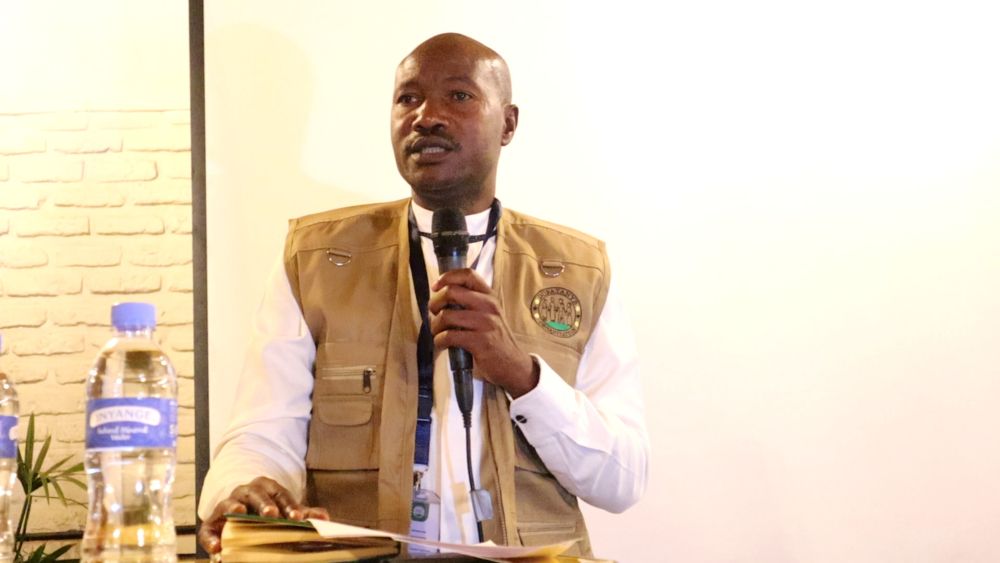
“We sincerely thank the Government of Rwanda for creating a supportive and enabling environment that allows organizations like ours to serve communities effectively. We are equally grateful to our donors, partners, volunteers, staff, and participants for their unwavering commitment. We truly appreciate each one of you, and your contribution to this journey is deeply appreciated.”
Valens Mugiraneza, Investment and Partnership Specialist, who represented the Ministry of Agriculture and Animal Resources (MINAGRI) at the Dufatanye Exhibition, says that MINAGRI stands ready to support farmers.
“The Ministry of Agriculture assures you of its continued partnership and support. We are pleased to see you taking steps towards food security, expanding the market, and moving from vulnerable to becoming a partner in helping others. Be good ambassadors and help others change their behavior to help them escape poverty.”

To date, Dufatanye says it has helped 51,677 households climb out of the lowest poverty bracket and has built 36 homes for the most vulnerable. Around 1,078 families have received livestock.
What the organization says it is most proud of, however, is that many of those it helped are now helping others.
“The people we supported who have left the category of the extremely poor are now contributing to lifting those around them,” Akure said.
Dufatanye says it plans to expand its work nationwide within five years and is developing a dedicated training center to serve its growing base of beneficiaries.


Dufatanye Organization at the Open Day in the Nyaruguru district and the exhibition in Kigali.


