
 1
1
 0
0
By Emmanuel Mutangana
The 19th Rwanda Agricultural Show has become more than a place for farmers to display agricultural products. It provides opportunities to learn new farming techniques, discover value-addition technologies, connect with buyers, and expand business networks, which could increase their incomes long after the exhibition ends.
Running from July 22 to 31, 2026, at Mulindi Show Ground in Kigali under the theme “Accelerating Agri-Food Systems Transformation through Innovation and Strategic Partnerships,” the annual exhibition has brought together more than 600 exhibitors from across Rwanda’s agriculture and livestock sectors.
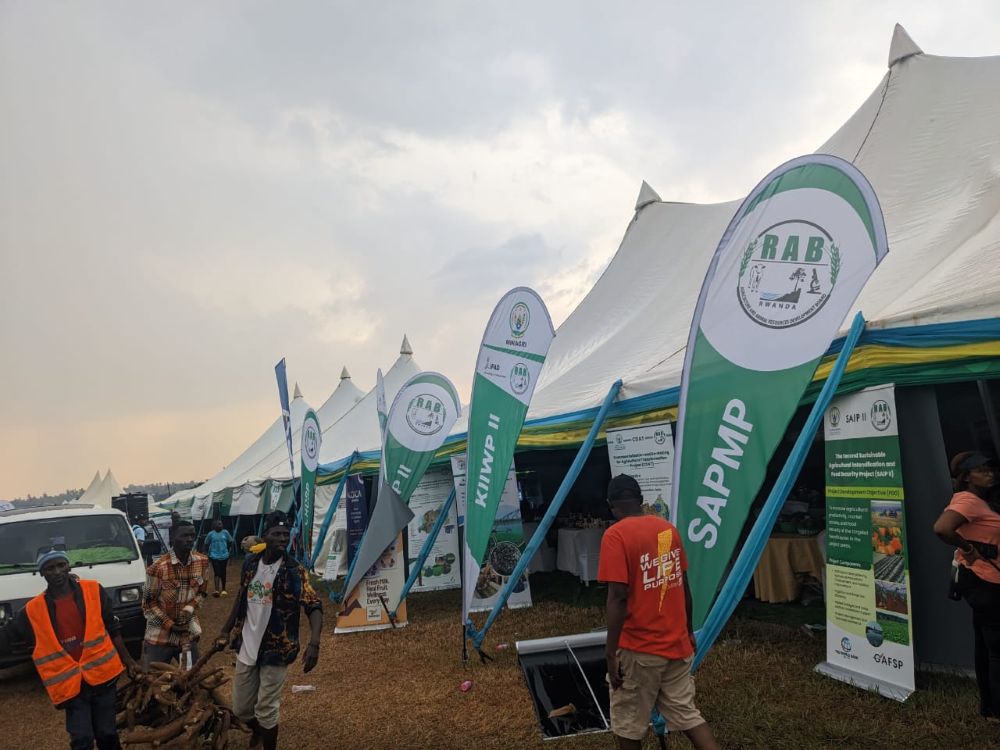
Among them are farmers supported by the Sustainable Agricultural Intensification and Food Security Project (SAIP) and the Commercialization and De-Risking for Agricultural Transformation (CDAT) Project, implemented by the Rwanda Agriculture and Animal Resources Development Board (RAB) through its Single Project Implementation Unit (SPIU), with support from the World Bank and other development partners.
For these farmers, the exhibition is proving valuable not only for showcasing their products but also for exchanging ideas, identifying new markets, and learning from fellow exhibitors.
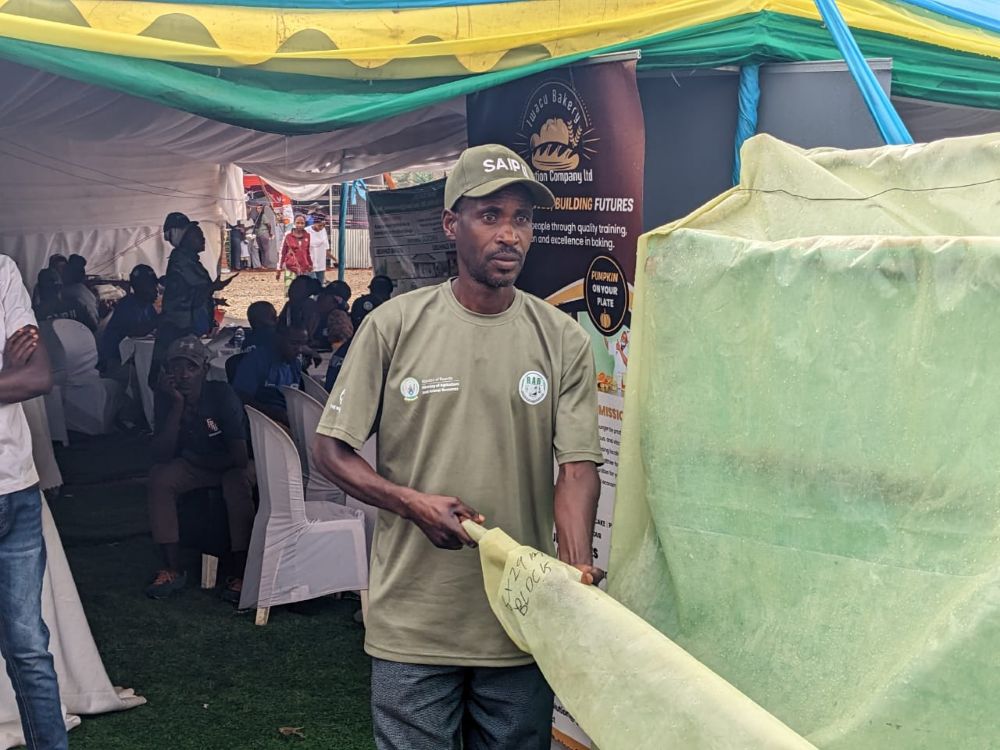
Frederick Ibyikora, a member of the 3,500-member KOABIMURU Cooperative in Rubengera Sector, Karongi District, said the exhibition exposed him to new ways of adding value to agricultural products that he had never considered before.
“Our cooperative came here to showcase vegetables grown in greenhouses, particularly cucumbers and bell peppers,” he said.
While his cooperative had already benefited from SAIP through a greenhouse support scheme in which farmers contributed 10 percent of the investment while the project financed the remaining 90 percent, Ibyikora said the agricultural show offered a different kind of benefit.
“We have discovered technologies and practices from farmers across the country that we didn’t know before,” he said.
One of the biggest lessons, he noted, was learning that bell peppers can be processed into powder, opening up new marketing possibilities beyond selling them fresh.
“We also learned that pumpkins can be processed into bread and doughnuts. These are innovations we had never seen before.”
At the same time, visitors to the cooperative’s stand were equally interested in learning about greenhouse farming.
“Many farmers came to ask how greenhouse farming works because they saw the results we are achieving,” he said.
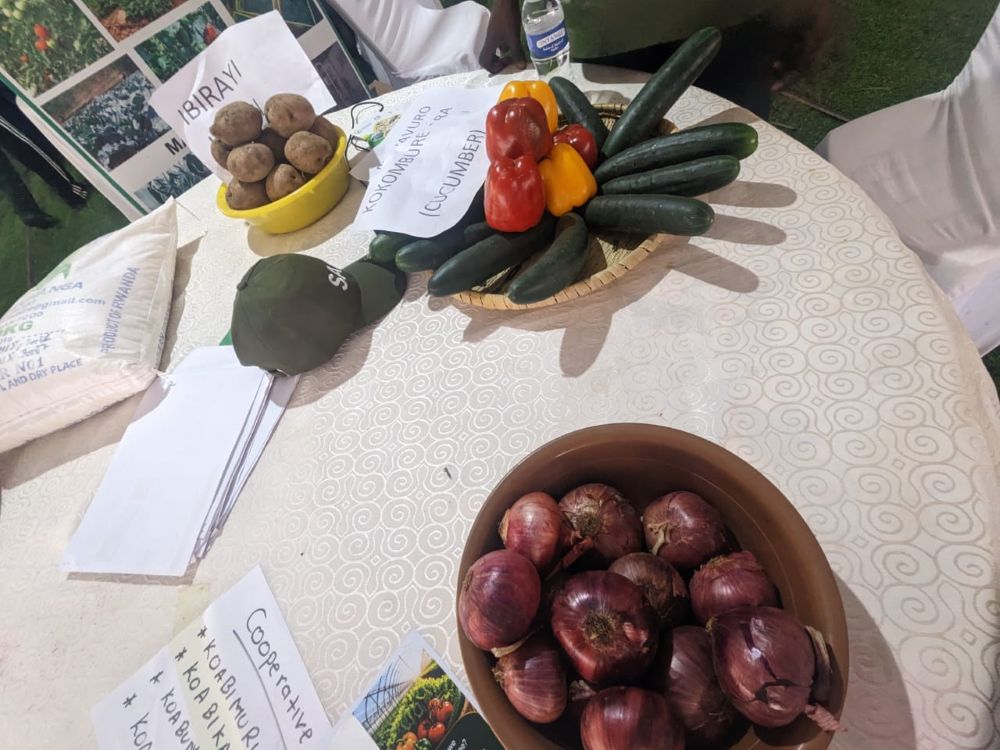
According to Ibyikora, greenhouse cultivation enables farmers to harvest significantly more produce from smaller plots of land.
“For example, I can harvest about 2.5 tons of cucumbers from just 2.5 ares in a single season. That income cannot be compared to cultivating much larger open fields with lower productivity.”
For others, the exhibition has translated directly into increased sales.
Yukunda Uzamukunda, President of IABM Cooperative, which operates in the Nyamabuye, Cyeza, and Muhanga sectors of Muhanga District, said participating through the CDAT Project has significantly boosted the cooperative’s visibility.
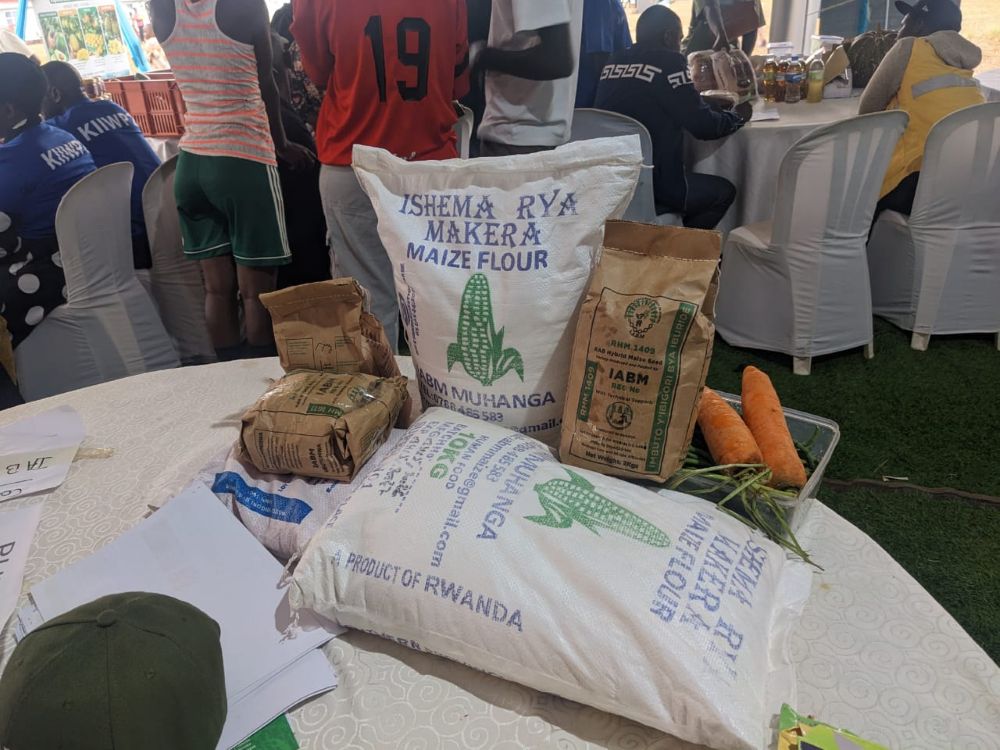
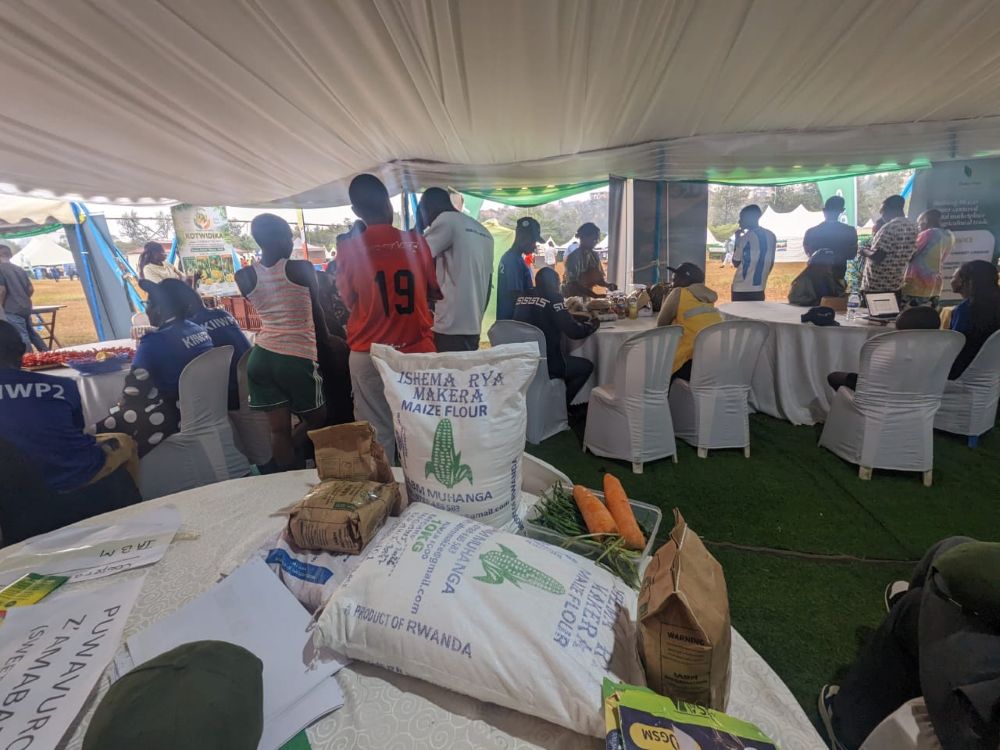
The cooperative is exhibiting its maize flour brand, Ishema Rya Makera, hybrid maize seeds, and various horticultural products, including carrots, beetroot, eggplants, and green beans.
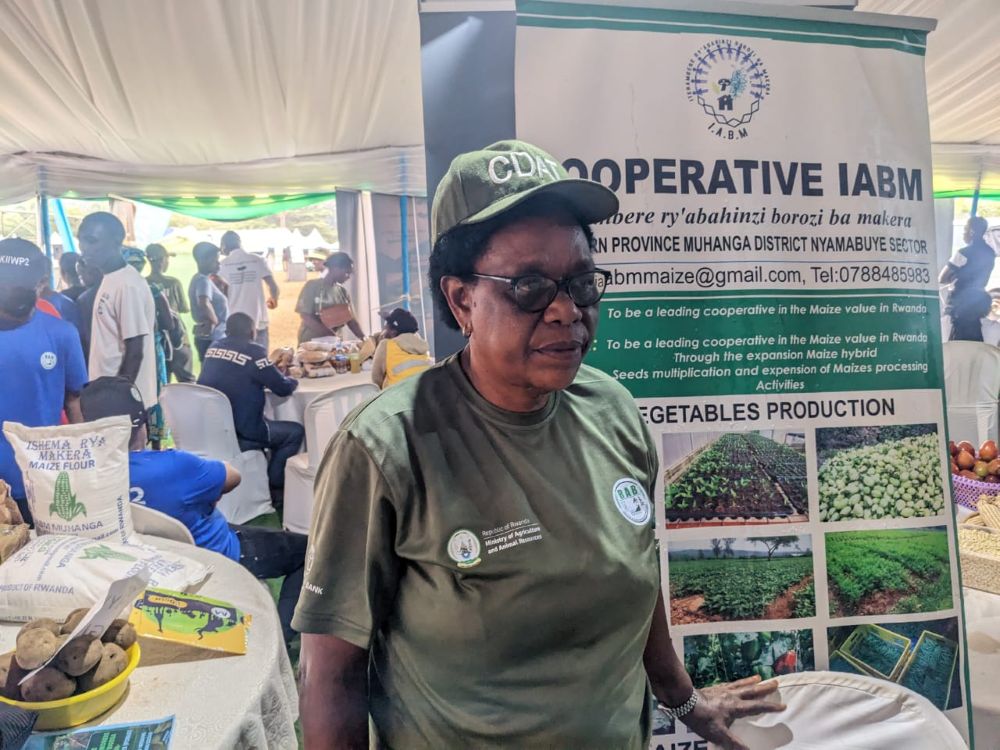
“I came with 15 sacks of maize flour, and only two remain. I expect those to be sold before the exhibition ends,” he said.
He added that many visitors collected the cooperative’s contact information after expressing interest in purchasing hybrid maize seeds ahead of the upcoming September planting season.
“The exhibition has helped people know who we are. We are confident many of those contacts will become customers.”
Among the products attracting particular attention were the cooperative’s premium green beans, which are also exported.
Uzamukunda attributed improvements in crop quality to training received through CDAT, especially on compost production, irrigation, and sustainable farming practices.
“Before CDAT, we didn’t know proper crop management, irrigation, or compost preparation. We received practical training and participated in study tours where we learned modern farming techniques that we later adopted.”
The project also trained members to recycle crop residues into organic compost instead of burning or discarding them.
“Previously, we considered those residues useless. Now we turn them into organic fertilizer.”
The results, she said, have been significant.
“Our maize yields increased from about 40 kilograms per are to nearly 70 kilograms per are after adopting these practices.”
For Frodouard Rurakabije, representing the 684-member KOABIKARU Cooperative in Rutsiro District, the exhibition has become an important place for networking and knowledge exchange.
The cooperative, which grows potatoes, beans, and wheat, is exhibiting its produce through the SAIP Project.
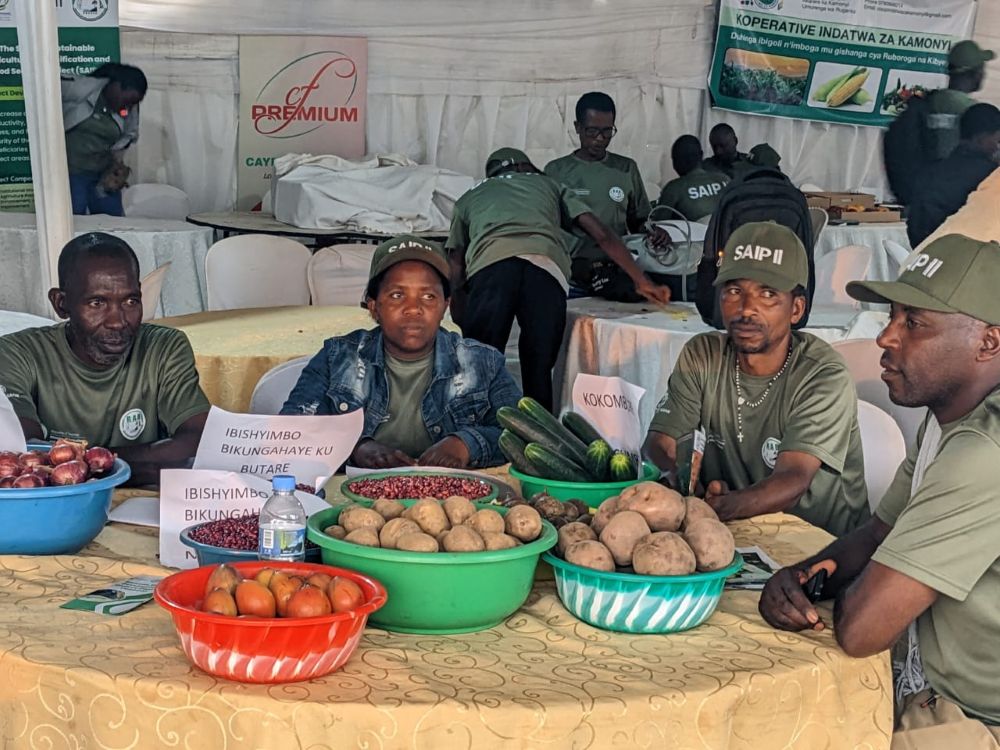
“We have met buyers interested in our products, which gives us confidence that we will find reliable markets,” he said.
Beyond market opportunities, Rurakabije said interactions with fellow exhibitors introduced him to additional farming innovations.
“One innovation that impressed me was liquid organic fertilizer made from natural plant materials. After discussing it with other farmers and seeing the results they have achieved, I believe it can further improve our productivity.”
He added that exchanging contacts with farmers, traders, and wholesalers will help the cooperative continue accessing markets and technical knowledge even after the exhibition concludes.
“The exhibition helps us build relationships that will continue beyond this event. We learn from others, and they also learn from us.”
Like many exhibitors, Rurakabije credits SAIP with strengthening the cooperative’s farming practices through training on compost production, post-harvest handling, crop management, and the use of improved seed varieties.
Officially opening the 19th Rwanda Agricultural Show on July 23, Minister of Agriculture and Animal Resources Dr. Telesphore Ndabamenye emphasized that agriculture remains a pillar of Rwanda’s economy, contributing about 20 percent of the country’s Gross Domestic Product and supporting nearly 70 percent of processing industries.
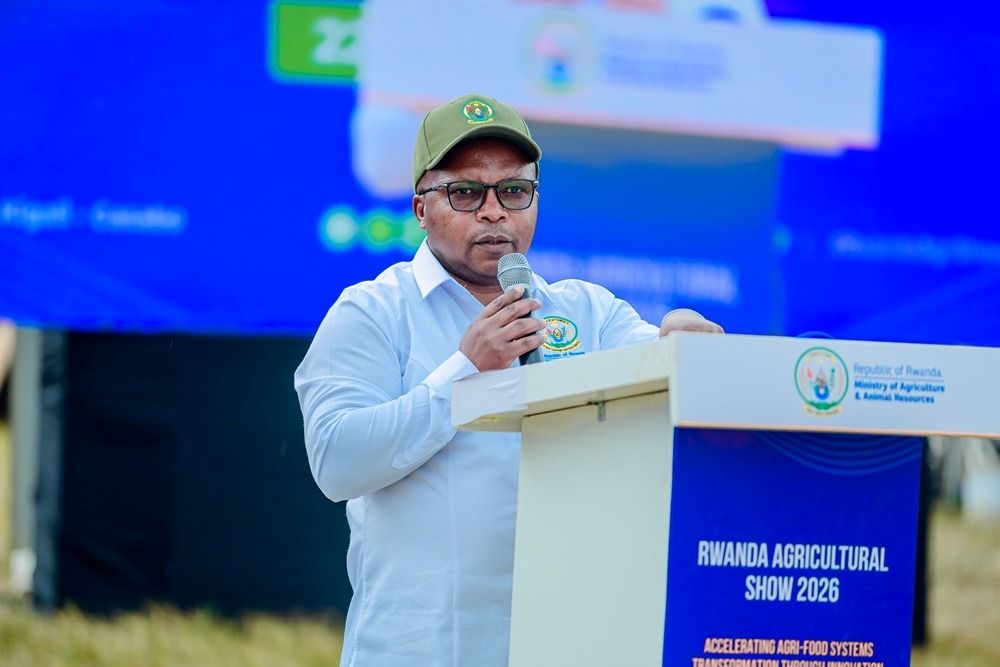
Under the Second National Strategy for Transformation (NST2), Rwanda aims to increase production of priority crops by 50 percent while maintaining annual agricultural growth above six percent.
Addressing challenges such as climate change and rising agricultural input costs, the minister said the government has increased fertilizer subsidies, expanded access to affordable agricultural financing, and introduced concessional loans that cut agricultural lending rates to half of prevailing commercial bank rates.
He said more than RWF 55 billion in agricultural financing has been approved over the past three years, with over RWF 30.9 billion already disbursed through 31 participating financial institutions.
Minister Ndabamenye encouraged farmers to apply the knowledge and technologies showcased during the exhibition to improve productivity in the upcoming 2027A planting season.
Organized annually by the Ministry of Agriculture and Animal Resources (MINAGRI), the Rwanda Agricultural Show has served since 2003 as a platform for farmers, researchers, agribusinesses, investors and policymakers to exchange technologies, knowledge and investment opportunities while advancing the modernization of Rwanda’s agri-food systems.


