 0
 0
By Emmanuel Mutangana –
Farmers in Rulindo District are sharing experiences of how improved farming practices, cooperative support, and access to markets have helped them expand production, increase earnings, and invest in their families, as they encourage others to treat agriculture as a business.
For Emerita Uwimana, a member of Dukundumurimo Cooperative, operating in the Muyanza irrigation scheme in Butare Cell, Buyoga Sector, the change began when she moved from farming mainly to feed her family to growing crops with the intention of earning an income.
Uwimana, a mother of three, said she initially grew green beans on 16 ares of land, investing Rwf180,000 and earning Rwf1.85 million, according to her account. She later began growing chili peppers, investing Rwf120,000 on half a hectare and earning Rwf1.2 million.

As her farming business grew, she expanded her cultivated area and diversified her crops according to market demand.
“I now cultivate five hectares. Depending on the market, I may grow chili peppers on three hectares and green beans on the remaining two,” she said.
Uwimana attributed her progress partly to support from the Second Sustainable Agricultural Intensification and Food Security Project (SAIP II), which helped farmers improve their practices and recognise the commercial opportunities in agriculture.
She said her earnings had enabled her to support her children’s education, acquire livestock, purchase two motorcycles, and build three commercial properties, in addition to the house in which she lives. She also owns a greenhouse.
Uwimana estimates that her assets are now worth about Rwf65 million, saying she had previously owned assets worth less than Rwf500,000.
“Farming is a serious business because it has helped me achieve many things,” she said, urging fellow farmers to approach agriculture professionally and with confidence.
Learning better farming practices
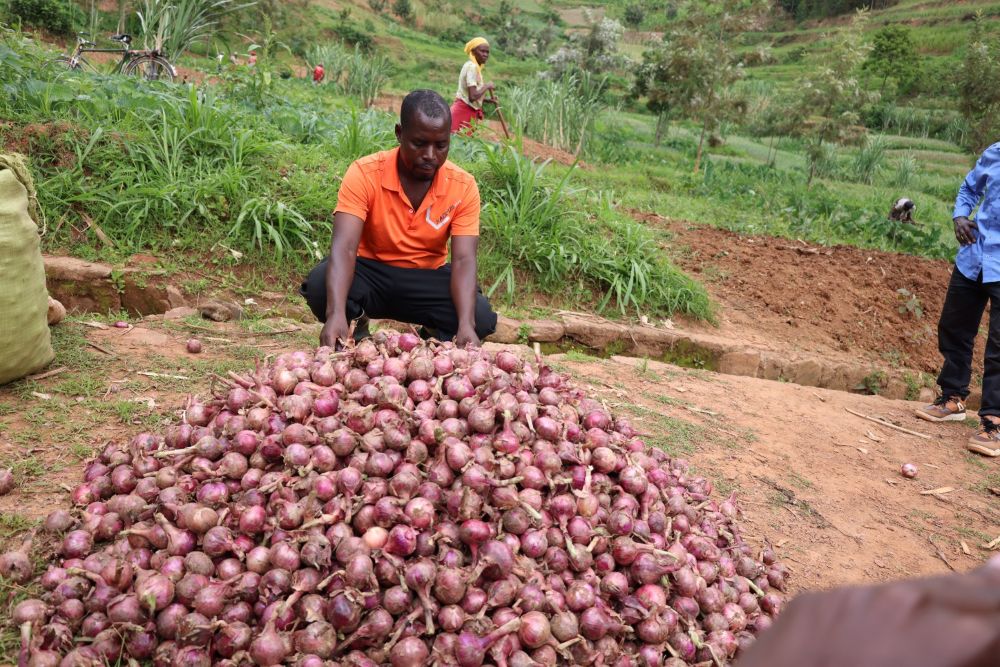
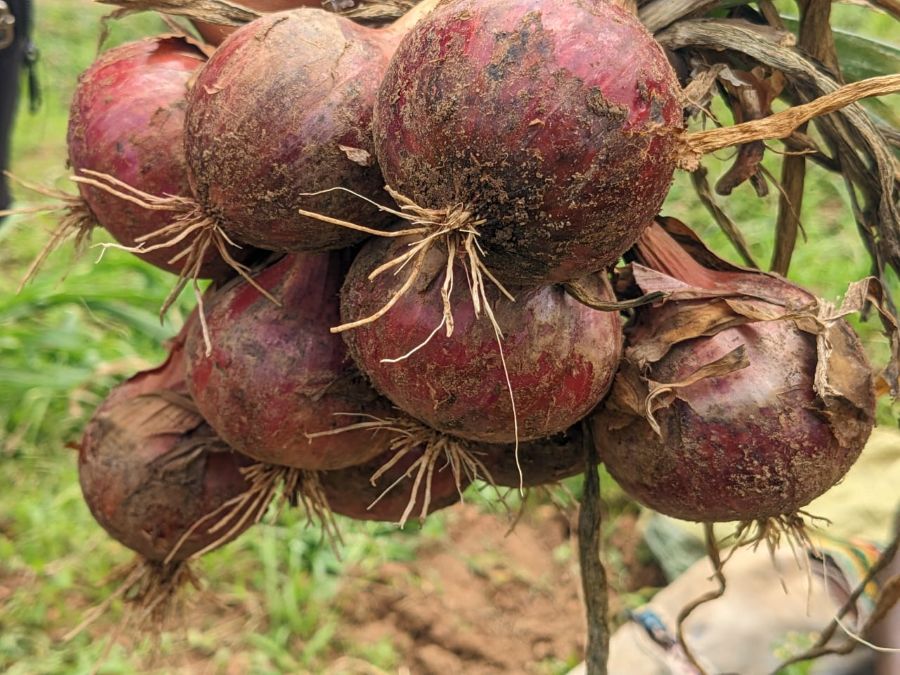
Jean Damascene Ngendahimana, another member of Dukundumurimo Cooperative, said he started growing onions in 2020 on just 10 ares of land before gradually expanding to one hectare.
He grows onions during the dry season, when he says there is less rain to damage the crop.
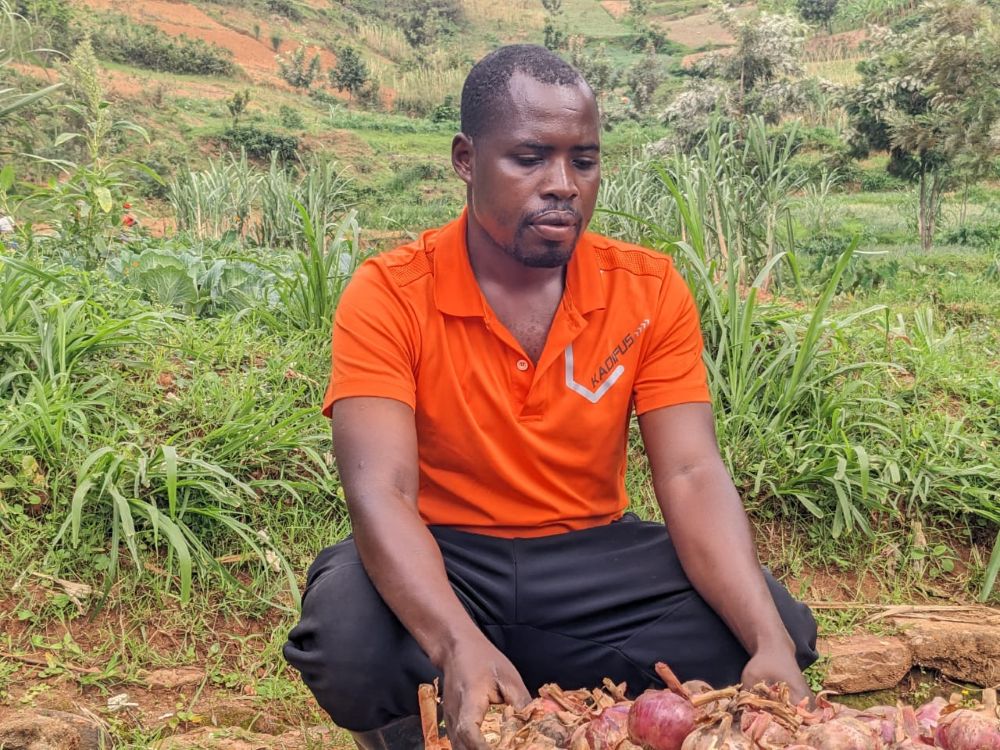
“Onion farming is profitable because the crop takes only three to four months to mature,” Ngendahimana said, encouraging other farmers to consider the crop as a source of income.
He said he invests about Rwf2 million per hectare and estimates returns of between Rwf5 million and Rwf6 million. He also reported harvesting approximately 17 tonnes per hectare and said the cooperative pays farmers RWF500 per kilogram.
Ngendahimana attributed his progress to changes in farming methods, including more organised cultivation, the use of selected seeds supplied through the cooperative, and training provided under SAIP II.
The project established demonstration farms and organised study visits that allowed farmers to learn from others with more experience.
He said the income from farming had enabled him to move out of rented accommodation, build his own house, and acquire additional land. He estimates that his assets are now worth about RWF20 million.
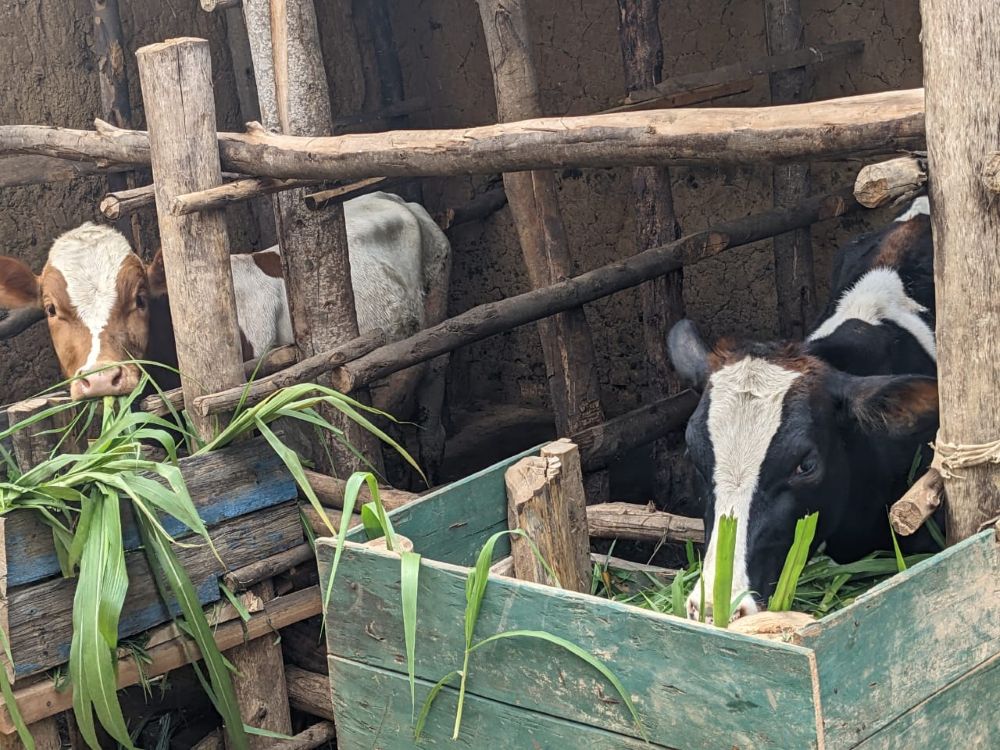
His experience reflects a wider message emerging from the farmer knowledge-sharing sessions in Rulindo: improving agricultural production requires not only access to land and water but also practical skills, planning and an understanding of the market.
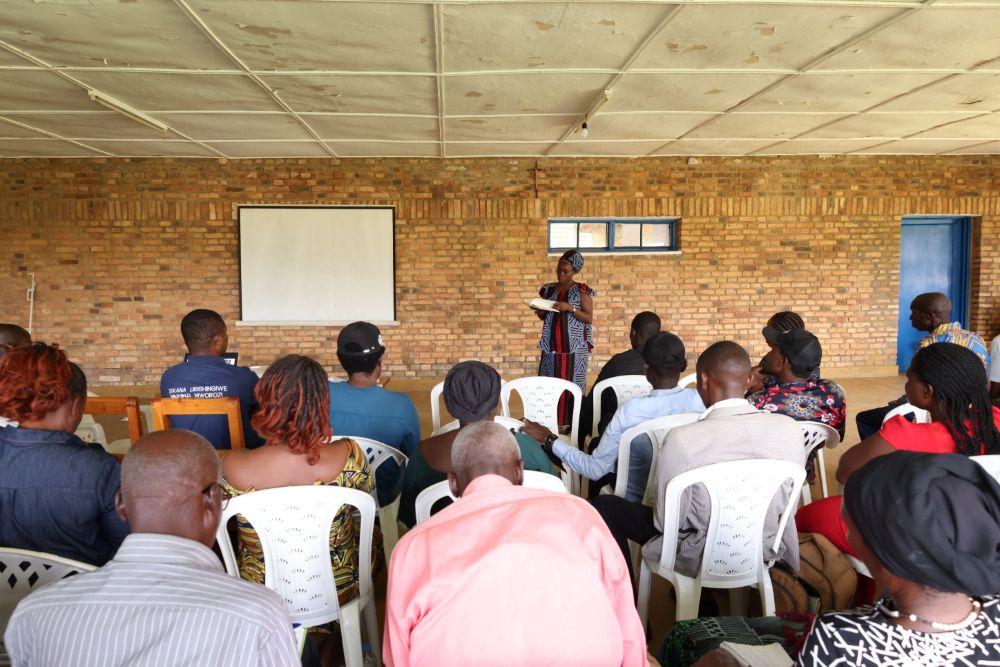
The sessions, held on October 27, brought together farmers and cooperatives supported by SAIP II to exchange experiences, learn from successful producers and discuss ways to address challenges affecting production and market access.
The initiative was organised by the Rwanda Agriculture and Animal Resources Development Board (RAB) through its Single Project Implementation Unit.
More produce, growing-market opportunities
For farmers to benefit from increased production, however, they also need reliable markets.
Vedaste Nisabwe, a produce buyer from Kamonyi District who has purchased onions from Dukundumurimo Cooperative for three years, said the quantity available from the cooperative had increased significantly.
“When we started buying from them, the available production was about 10 tonnes, but now it can reach 100 tonnes,” he said.
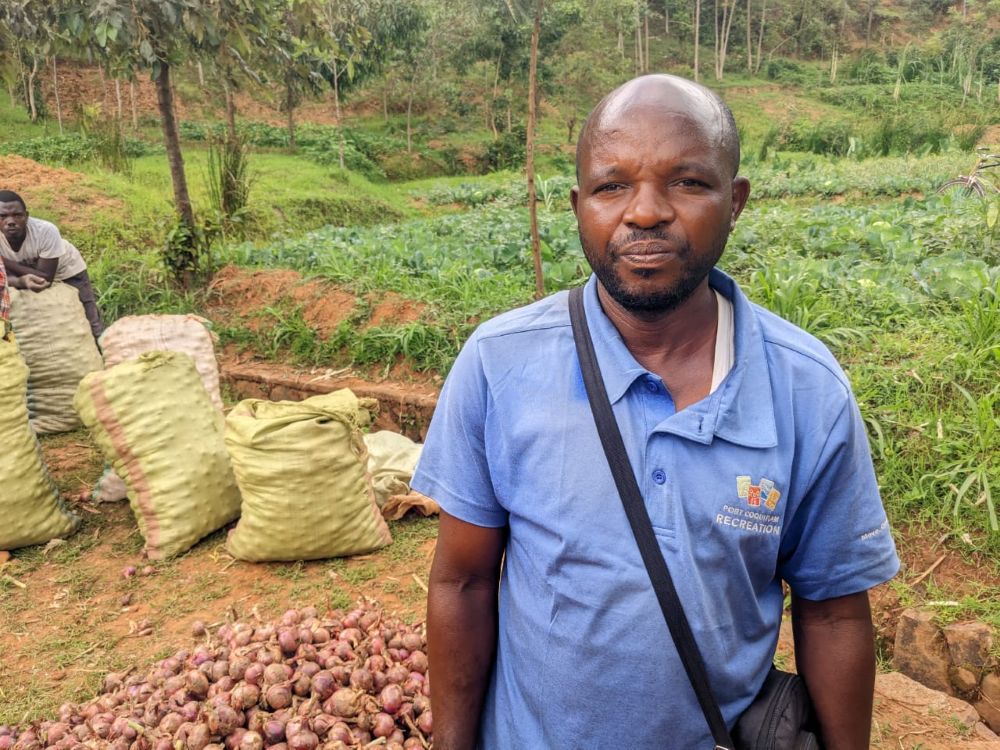
Nisabwe attributed the cooperative’s growing output partly to the use of selected seeds, which he said produced good-quality onions that were less prone to damage.
He added that the onions compete in the market with produce imported from Tanzania, making quality and availability important factors in attracting buyers.
The buyer’s account highlights the importance of connecting farmers with markets as they expand production, enabling cooperatives to supply larger quantities and strengthening the commercial prospects of their members.
Cooperatives identify areas for improvement.
The knowledge-sharing sessions also gave cooperatives an opportunity to learn from one another and identify changes that could improve their own performance.
Viateur Bagwaneza, president of Kora Ukire Muyanza Cooperative, said the cooperative has 1,827 members cultivating 293 hectares across the Buyoga, Burega, and Jabana sectors.

The cooperative focuses on vegetables, fruits, and flowers, including crops intended for export markets.
Bagwaneza said discussions with other farmers helped him identify opportunities to improve yields, particularly through better farming techniques and more effective use of organic manure.
He said the cooperative planned to strengthen poultry farming to improve the supply of manure and support its efforts to increase production per hectare.
For Domitilla Mukandori, a member of Dukundumurimo Cooperative, the session offered lessons on improving greenhouse production.
She belongs to a group of nine women that received support from SAIP II to establish a greenhouse for growing peppers and tomatoes.
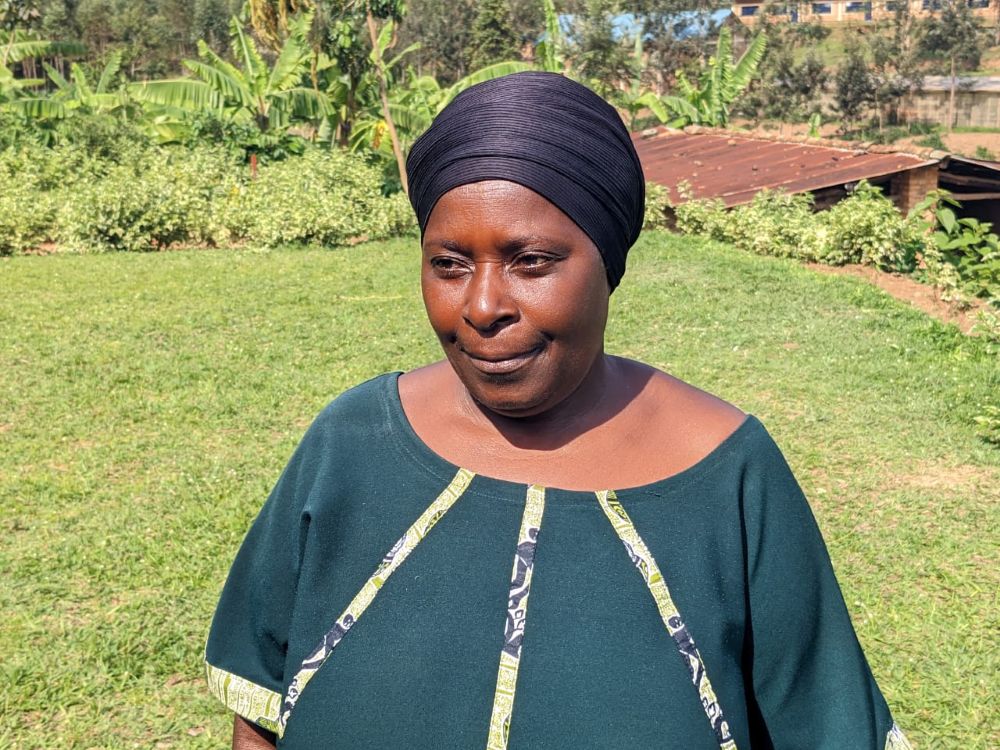
Mukandori said she had learned from other farmers about practices that could help increase yields and hoped to explore additional support to expand the group’s greenhouse farming activities.
The exchanges reflect the project’s emphasis on farmers learning directly from one another, particularly by identifying practical approaches that can be adapted to their own farms.
The initiative is intended to help cooperatives strengthen their production and market performance while building the capacity to continue their activities beyond the period of project support.
SAIP II’s support in Rulindo
SAIP II began activities in December 2018, focusing on productive use of land developed under the earlier Land Husbandry, Water Harvesting, and Hillside Irrigation project in the Muyanza area.
According to the project’s activities in Rulindo, it works with six cooperatives: Dukundumurimo, Kora Ukire, Kimuyanza, Kotemuru, Mugref, and Caprocyu. Its beneficiaries also include farmer groups, small and medium-sized enterprises, and the Twuhire Muyanza water users’ organisation.

The project promotes maize, beans, potatoes, vegetables, and fruits, alongside support for irrigation, greenhouse farming, mechanisation, post-harvest handling, and value addition.
The Muyanza irrigation scheme covers 2,550 hectares, with 655 hectares currently irrigated. The area designated for irrigation is 1,100 hectares, while the reservoir has a storage capacity of 2.3 million cubic meters of water.
The figures show that potato production rose from 12 tonnes per hectare in the 2024A season to 16 tonnes in the 2026A and 2026B seasons. Maize yields increased from 3.1 to 3.4 tonnes per hectare over the same period, while bean yields rose from 2.7 to three tonnes per hectare.
Theoneste Rugerinyange, Rulindo District’s vice mayor in charge of economic development, said SAIP II had contributed to improvements in farmers’ production and livelihoods, while training had helped change their attitudes towards farming.
He added that the district expected the benefits of the irrigation scheme to continue beyond the project’s support period.
Rugerinyange said that cooperation between farmers and local institutions would be important to maintaining the infrastructure and making effective use of the scheme.