 0
0
 0
0
By Annonciata Byukusenge
Developing nations must urgently convert their climate blueprints into investment-ready projects to unlock hundreds of billions of dollars in stalled funding, officials warned at a global summit, as the gap between environmental planning and hard cash widens.
Speaking at the 11th Global National Adaptation Plan (NAP) Expo in Kigali, policymakers and United Nations officials stated that international efforts must rapidly shift toward funding large-scale infrastructure rather than isolated pilot projects.
The stakes are rising for climate-vulnerable countries. According to the UN’s 2025 Adaptation Gap Report, developing nations will require between $310 billion and $365 billion annually by 2035 to withstand worsening extreme weather. Current international public finance falls short of that target by more than twelvefold.
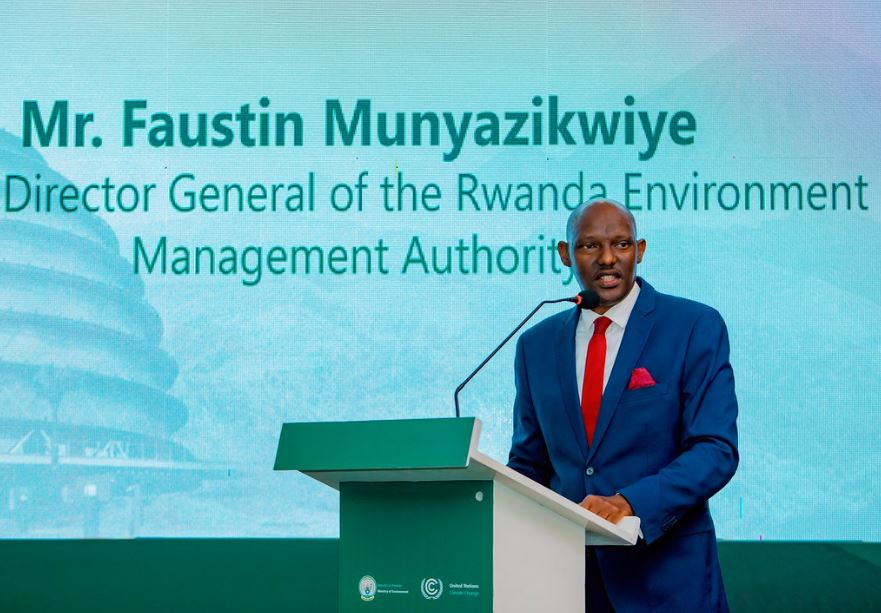
“Without means of implementation, the NAP and other good strategies will just be strategic documents,” said Faustin Munyazikwiye, Deputy Director General of the Rwanda Environment Management Authority (REMA), during the opening ceremony. “Without financing, adaptation strategies risk remaining theoretical.”
The shift to bankable climate deals
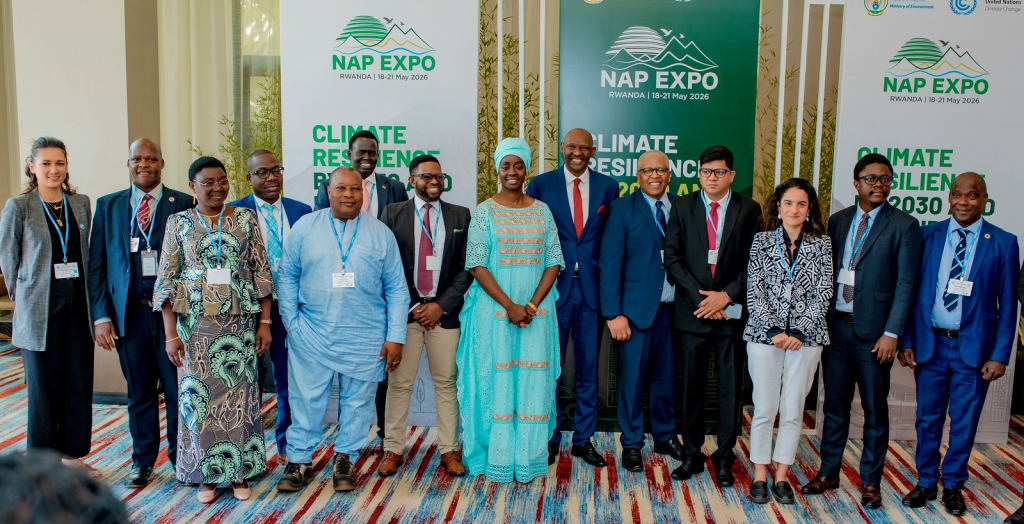
The four-day conference, which concluded on May 21, brought together delegates from more than 60 countries, alongside institutional investors and development banks. A primary focus of the summit was “matchmaking” sessions designed to pair government adaptation strategies with private and public capital.
For decades, global climate diplomacy has focused heavily on the formulation of NAPs, comprehensive frameworks designed by governments to identify ecological vulnerabilities and institutional risks.
However, UN officials note that the “center of gravity” in climate finance has permanently shifted toward bankable execution.
The Planning Era: Identifying regional risks, building local institutions, and drafting vulnerability frameworks.
The Implementation Era: Securing technology transfers, establishing multi-million-dollar investment portfolios, and proving measurable resilience outcomes.
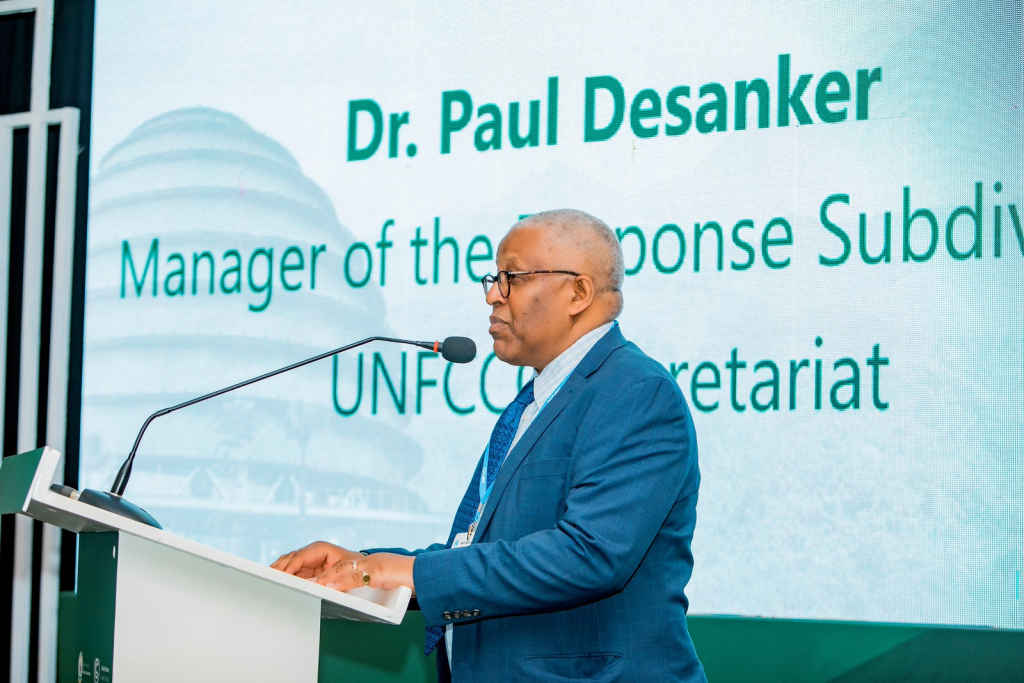
“The question is no longer only how do we prepare a good plan. The question is now how do we implement that plan at scale with finance, technology, capacity, and measurable results,” said Dr. Paul Desanker, representing the United Nations Framework Convention on Climate Change (UNFCCC) Secretariat.
Dr. Fatmata Lovetta Sesay, the UNDP Resident Representative to Rwanda, watched these climate impacts transition from future predictions into a relentless daily reality for ordinary citizens.
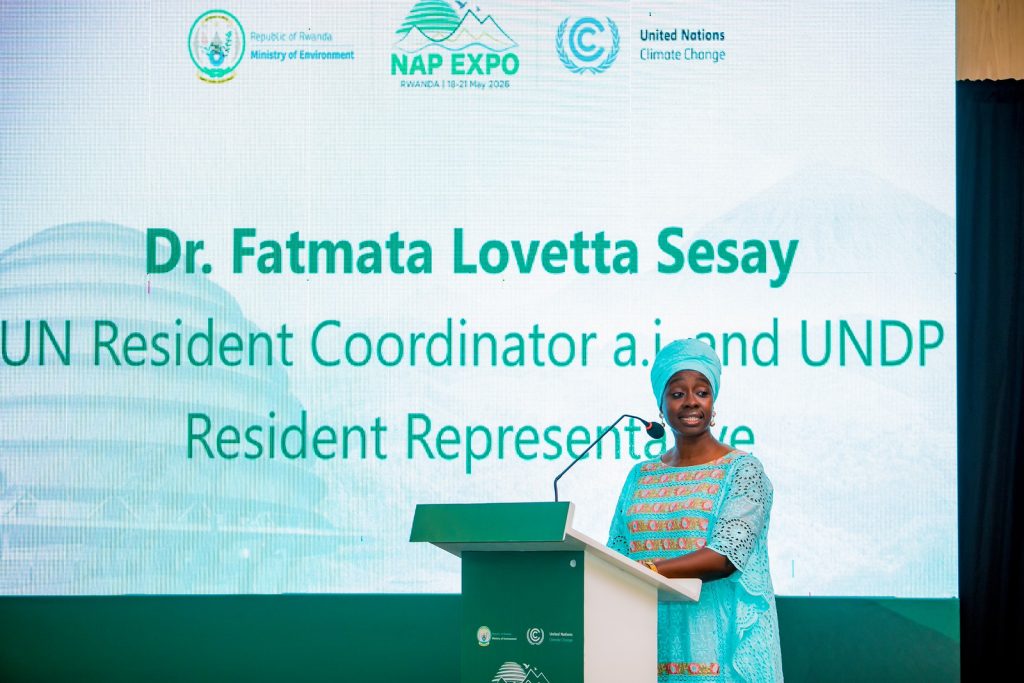
“This is a vital and timely conversation because the effect of climate change becomes more evident throughout the world, and as this continues to be almost our day-to-day life, the need to efficiently identify, access, and mobilize finance remains ever more critical,” Sesay said.
From swamps to safe havens
Rwanda is trying to show the world what happens when money actually reaches the ground. Under its Vision 2050 plan, the government is treating climate adaptation not as an eco-luxury but as basic urban survival.
The capital city of Kigali has become a living laboratory. Instead of letting urban wetlands degrade into flood hazards, the city is actively converting hundreds of hectares of marshland into green infrastructure designed to absorb heavy rains and protect surrounding neighborhoods.
Rwanda’s Living Templates
The Kigali Wetlands Project (491 Hectares), engineering degraded city wetlands to act as natural sponges against urban flooding.
Nyandungu Eco-Tourism Park (120 Hectares), a restored wetland that has brought back native biodiversity while generating local eco-tourism jobs.
Shifting the center of gravity
For years, UN conferences focused on teaching vulnerable nations how to measure their risks and write reports. But delegates in Kigali agreed that the era of chronicling disaster must end.
“The center of gravity is shifting,” said Dr. Paul Desanker of the United Nations Framework Convention on Climate Change (UNFCCC) Secretariat.
For Mokoena France, Chair of the Least Developed Countries Expert Group (LEG), the Kigali summit was less about diplomatic niceties and more about survival. His coalition represents the world’s most vulnerable populations, people who did the least to cause global warming but are paying the highest price to endure it.
As the four-day expo wrapped up, the success of the event was being measured not by the resolutions signed, but by the handshakes between government ministers and institutional investors in the hallways. For the families living on the hillsides of Kigali, those handshakes are the real defense against the next storm.


