
 0
0
 0
0
By Eric Twahirwa
Across Rwanda, Uganda, and Kenya, climate change is crashing tea yields and plunging the industry’s most vulnerable workers into hunger. Because these casual laborers are paid strictly by the kilogram, climate-driven crop losses translate instantly into vanished wages, leaving them without any legal or financial safety net.
Billions for climate, but tea pickers still go hungry across the Rwanda–Uganda border
For decades, women have formed the backbone of the tea workforce in Rwanda and Uganda, harvesting one of East Africa’s most valuable export crops. But as rainfall becomes increasingly unpredictable, many say climate change is steadily taking away both their work and their dignity.
For 70-year-old Uwamahirwe Venantie, tea picking has been her only source of income since she entered the fields at 18 in 1974. Age and heavy rains leave her too weak to work, while prolonged dry spells slow tea growth, reducing the amount she can harvest. Younger women may still collect between 30 and 50 kilograms of green leaves a day, but Venantie rarely exceeds 25 kilograms.
“Whether it rains heavily or the sun is too hot, I cannot go out to pick tea. When that happens, I lose the money I would have used to buy food. There was a time when I became seriously ill and couldn’t work for a long period. Even now, the money I earn is too little to change my life,” she says.
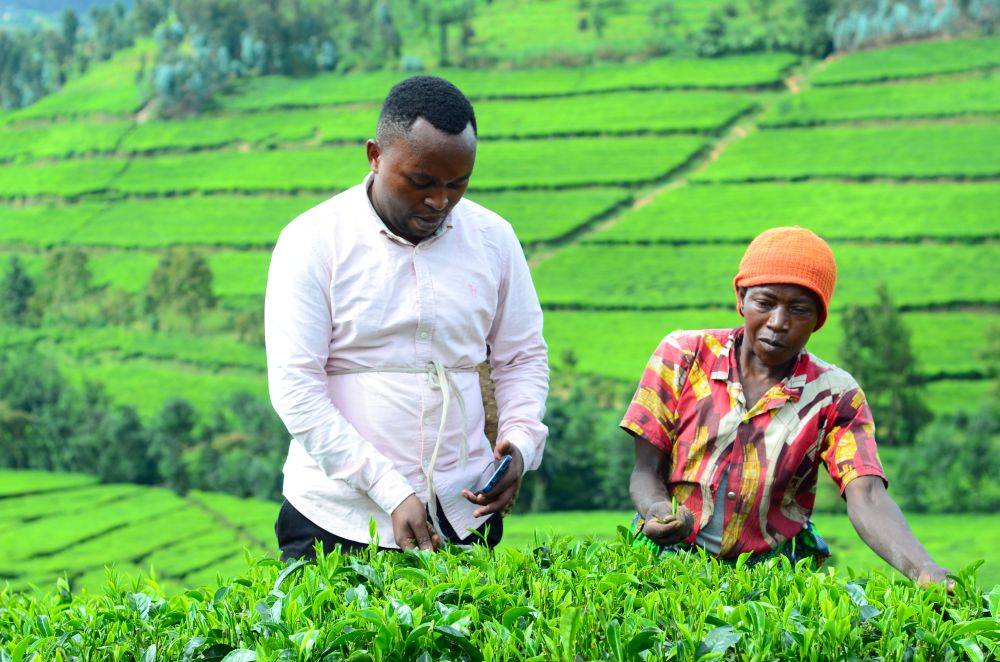
MUNEZERO is another tea picker in western Rwanda who says climate change has gradually eroded the financial security that tea harvesting once provided.
“There are days when the tea bushes produce very little because the weather has changed. When we harvest fewer kilograms, we earn less money, yet the cost of food, school fees, and other household expenses continues to rise. We depend entirely on tea picking, so whenever production falls, our families immediately feel the impact,” she says.
The experiences of these women reveal a common reality shared across the Rwanda–Uganda border. Although tea remains one of the region’s most important cash crops, climate change is steadily reducing the incomes of the workers who depend on it most.
Tea depends on stable rainfall and moderate temperatures. Across the highlands of western Rwanda and southwestern Uganda, those conditions are becoming increasingly unreliable. Workers say prolonged droughts are increasingly followed by intense rainfall, disrupting tea growth and reducing the amount of green leaf available for harvest.
Across the border in Uganda’s Kisoro District, Ukwishatse describes an almost identical struggle. “When the climate changes, you can go from harvesting 35 kilograms to only five or ten kilograms in a day. That means earning only a small amount of money, which cannot even buy a child’s notebook or enough food. Whenever climate-related problems reduce tea production, life simply comes to a standstill,” she says.
Tea pickers are paid according to the quantity of green leaves they harvest. In Rwanda, workers typically receive between RWF 70 and RWF 110 per kilogram, while tea pickers interviewed in Kisoro District earn between UGX 170 and UGX 200 per kilogram. Across the 15 tea collection centers visited during this investigation, payments ranged from approximately US$0.03 to US$0.06 per kilogram, leaving workers extremely vulnerable whenever production falls.
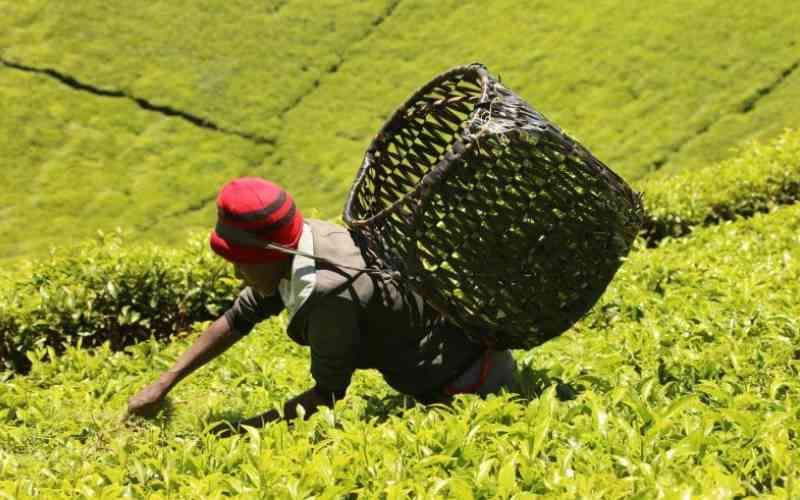
Unlike salaried employees, tea pickers have no guaranteed income when climate shocks reduce harvests.
Tea cooperatives acknowledge that low wages have become increasingly difficult for workers as climate change affects production.
Mr. Nshimiyimana Thacien, president of KOTEP Pfunda Cooperative, which represents tea farmers in Rwanda’s Rubavu, Nyabihu, and Rutsiro districts, says cooperatives try to supplement workers’ earnings whenever possible.
“The official payment to tea pickers is determined by NAEB. We try to add some money because if workers do not come, we lose harvests. But we have appealed for the official rates to be increased because workers’ living conditions are becoming increasingly difficult.”
Yet cooperative leaders admit they have limited financial capacity to cushion workers against climate shocks.
The struggles of tea workers stand in sharp contrast to the scale of climate finance commitments made by both governments.
Uganda’s National Climate Finance Strategy estimates the country will require US$28.1 billion between 2022 and 2030 to implement its climate commitments. Of this, US$17.7 billion is earmarked for adaptation, with agriculture identified as one of the country’s highest priority sectors. The government expects 85 percent of this financing to come from international sources.
Rwanda’s Climate and Nature Finance Strategy estimates the country requires US$11 billion to implement its climate commitments by 2030. The strategy also estimates that agriculture alone will require US$6.5 billion in investment through 2050, with approximately US$5.6 billion expected from private investors.
Both strategies prioritize climate-smart agriculture, irrigation, improved water management, agricultural insurance, and private investment as key adaptation measures. Yet tea workers interviewed in both countries say they continue to absorb the financial costs of climate change largely on their own.
Neither Rwanda’s nor Uganda’s climate finance strategies specifically allocate funding to tea pickers or tea farmer cooperatives. Instead, investments are expected to strengthen agriculture through broader programs such as climate-smart farming, resilient irrigation systems, sustainable land management, and blended finance mechanisms. The gap between national commitments and the daily experiences of workers raises important questions about whether climate finance is reaching the people most vulnerable to increasingly erratic weather.
Seth Kwizera, Executive Director of the Economic Policy Research Network (ESPRN), says climate risks must be integrated into long-term economic planning.
“Climate change and conflicts continue to threaten national development. If Rwanda is to achieve Vision 2050 and the National Strategy for Transformation, there must be alternatives and contingency measures whenever these shocks occur. These are some of the issues researchers are currently examining.”
Government agencies say efforts are underway to identify solutions.
Alex Nkurunziza, an official at Rwanda’s National Agricultural Export Development Board (NAEB), says the institution is conducting a study with the Monitoring and Analyzing Food and Agricultural Policies (MAFAP) program to identify reforms that could strengthen the tea sector.
“We are assessing the current challenges facing the tea sector and collecting ideas that will help improve tea production, trade, and processing. The findings will guide future interventions.”
Kenya: Tea pickers are absorbing climate losses before markets notice
At dawn, John, 60, and his wife Rose, 57, walk a short dirt track to their patch of farmland on a precipitously steep hillside in Kenya’s central highlands.
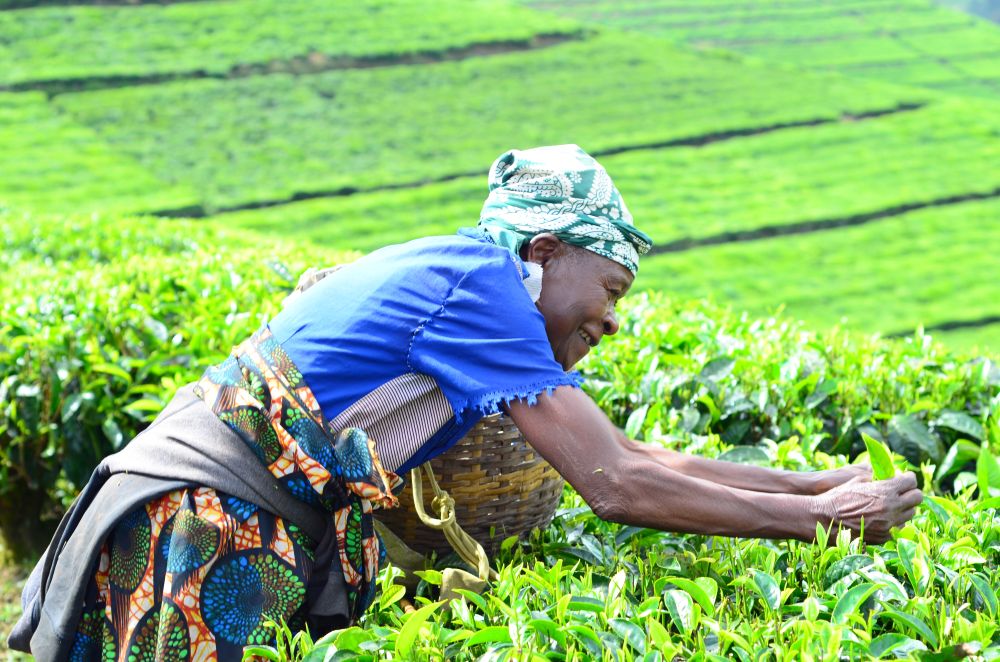
They spend the day picking two leaves and a bud from their tea bushes, filling baskets on their backs, then emptying them into a sack to be sold. Repeat until sundown.
They have done this for nearly three decades. But the arithmetic of survival is getting harder.
Last year, the couple earned Sh 135,000 from tea production, plus another Sh 130,000 from honey and avocados. That is about half of Kenya’s average salary. Spread across 12 family members, including five children and seven grandchildren, it works out to around Sh 35 per person per day.
“We can afford enough food, but at times we have had to take out loans to pay for education,” Rose told The Standard. “Three years ago, we had to sell our cow, which meant we could not consume milk and also reduced our income even further.”
John and Rose are not anomalies. They are the face of a quiet crisis unfolding across Kenya’s tea-growing highlands, one where climate change is already being paid for, in full, by the people who pick the leaves. And the global tea market has not yet noticed.
Kenya is the world’s largest exporter of black tea. The sector supports over one million livelihoods directly, with women making up more than 60 percent of the workforce.
Tea production is concentrated west of the Rift Valley, in Kericho, Bomet, Kisii, and Nandi counties, with significant smallholder production in central regions like Murang’a, Nyeri, and Meru.
The Tea Board of Kenya’s performance report shows production in February 2026 dropped by 16.27 percent compared to February 2025 from 44.61 million kilogrammes to 37.35 million kilogrammes.
The report attributes this to “hot and dry weather conditions experienced throughout the country.”
The decline hit smallholder farmers hardest. The smallholder sub-sector under the Kenya Tea Development Agency (KTDA), which has wide coverage east of the Rift, recorded a production decline of 22.08 percent. Estates recorded an 11.23 percent decline.
However, the official data does not capture the fact that tea pickers are not salaried employees. Most are paid per kilogram plucked. When yields drop, daily wages drop by the same proportion instantly, automatically, and without any negotiation or safety net.
Investigations reveal that tea pickers are losing between Sh 650 and 1,000 a day in wages, an estimated 20 to 30 percent cut in income. For a picker working 20 days a month, that translates to Sh 13,000 – 21,000 in lost monthly earnings.
Meanwhile, tea export prices have remained steady. Data from the Mombasa Tea Auction shows that the average price in November 2025 rose slightly to about Sh295 per kilo, a 1.5 percent increase compared to the same period the previous year.
The global tea market has not adjusted. The loss never appears on corporate ledgers. It appears as empty plates, unpaid school fees, and land sales in Kericho’s households.
When you ask any tea farmer about the weather, you will hear the same story.
Benard Koske, 70, a tea farmer from Kericho, said, “Climate change poses a real threat to us. We cannot predict seasons anymore; temperatures are rising, and rainfall is more erratic, more often accompanied by unusual hailstones and longer droughts, which was not the case in the past.
“If this continues, then it will make growing tea much harder and life for us extremely difficult.”
The data backs him up. The IGAD Climate Prediction & Applications Centre’s weekly forecast for May 2026 confirms the pattern: exceptional rainfall is expected over western Kenya but also less-than-usual rainfall over other parts. This volatility, not just drought or flood alone, is the new reality.
The Kenya Meteorological Department warned farmers in early April 2026 that the long rains would be “significantly suppressed” during the first half of the month, only improving toward the end. Farmers who planted too early risked losing their crops entirely.
“Farmers should align planting with the improving rains, weed crops, ensure good drainage in wetter areas, and practice water conservation in drier regions,” Kenya Met advised.
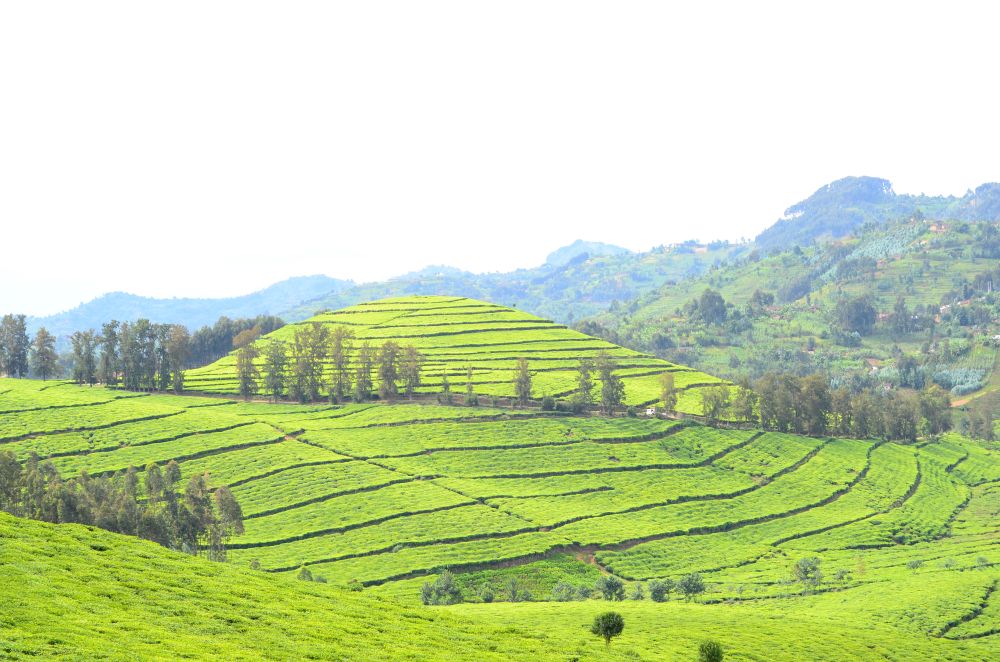
For tea farmers, whose bushes are perennial, “aligning planting” is not an option. They can only watch and absorb.
Across the Gatanguru Tea Factory, an 8,000-member farmer cooperative in Murang’a County, extreme weather caused production to fall from 24 million tonnes of tea in 2023/24 to 17 million tonnes in 2024/25, according to factory manager Nancy Githaiga.
“This climate problem is really major for us. I believe that if things continue the way they are, the very existence of tea farming in this area will be threatened,” Githaiga said.
Tea pickers and smallholder farmers are absorbing climate losses in ways that do not appear in any official statistic.
When John and Rose sold their cow three years ago, it was a distress sale, a productive asset converted to cash for survival.
“We can afford enough food,” Rose said carefully. The qualification “enough” speaks volumes.
For families living on Sh 35 per person per day, “enough” means the minimum caloric intake to keep picking. It does not mean nutritious food. It does not mean three meals a day.
The cold, wet conditions that come with erratic rainfall are taking a physical toll on aging pickers. John and Rose both suffer from joint pain and respiratory problems. “We can take medicine for the joint pains, which helps the pain to subside for a time, but it then comes back,” Rose said.
Experts are raising questions over why Kenyan tea production is declining, and pickers are earning less, yet global tea prices have not seen a sharp increase.
Climate change is disrupting tea harvests in Kenya through erratic rainfall, prolonged dry spells, and rising temperatures.
But global tea prices are shaped by many other forces beyond weather shocks in East Africa, including fuel and shipping costs, currency fluctuations, stock levels, and demand from major buyers such as the UK, Pakistan, and Egypt.
Buyers also source tea from countries like India, China, and Sri Lanka, helping cushion the global market from supply shocks in Kenya.
At the same time, high unemployment in rural Kenya means there is still a steady supply of labor willing to work despite falling earnings.
This has reduced pressure on tea estates and factories to increase wages, even as climate impacts continue to squeeze production and household incomes. Experts warn the real crisis may emerge when pickers can no longer absorb the losses.
They observe that casual laborers begin to stop showing up when effective wages fall below survival levels, and some factories are already reporting labor shortages linked to this pressure.
Antony Kariuki, Agroforestry and Watershed Specialist, warns that when tea-farming households struggle to afford basic food like maize and beans, it signals a deeper breakdown in the system sustaining one of Kenya’s key export crops.
“Once these warning signs intensify, global tea prices are expected to adjust, but by then the cost will already have been absorbed by the pickers themselves,” Kariuki said.
Koskei said, “Farmers like us are bearing the brunt of this crisis, but we aren’t the ones who have caused it. We, small-scale farmers, cannot fix this problem ourselves.”
Climate change is expected to reduce optimal growing conditions for tea in Kenya by 26 percent by 2050. Areas with only average conditions will see production fall by 39 percent.
The Christian Aid report that contained these projections was released in 2021. Five years later, the crisis is no longer a projection; it is a daily reality.
According to the report, the global tea trade has a structural feature: climate risk is automatically transferred to workers through piece-rate wages. No contract negotiation. No risk-sharing mechanism. No insurance. Just lower daily pay when the rains do not come, come too hard, or come at the wrong time.
As John contemplates the future, his biggest hope is for his children to leave tea farming entirely. “I would just love it if my children could do something different,” he said. “Farming is just so difficult. There is so much struggle.”
This article is supported by the Fojo Media Institute.


