 0
0
 0
0
By Annonciata Byukusenge
Residents in several parts of Huye District say climate change has hit them hard, drying up their water sources so badly that clean water no longer reaches the taps. As a result, many have gone back to fetching untreated water from a nearby swamp, something they thought they’d left behind for good.
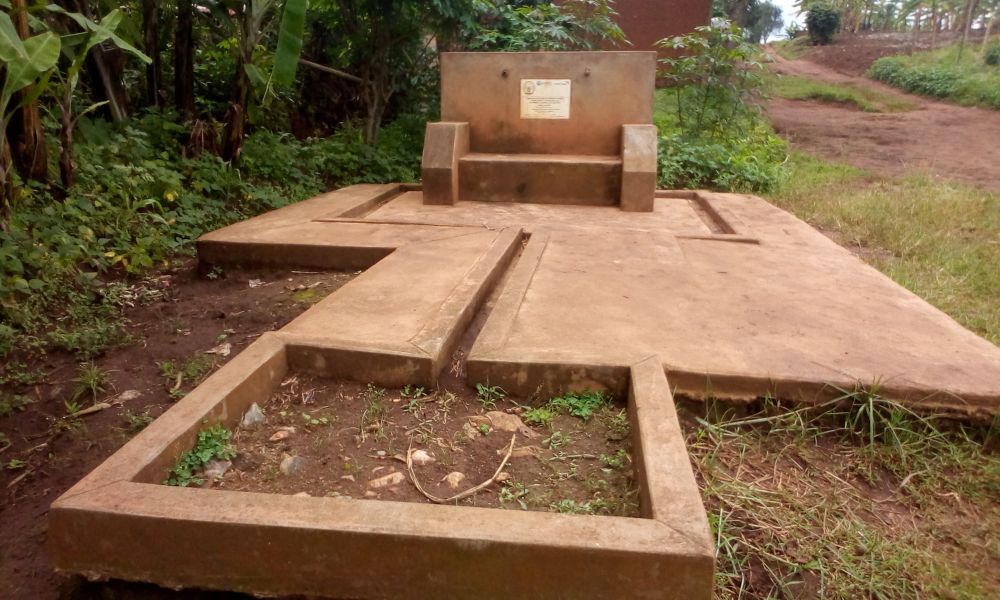
Forefront Magazine spoke with residents of Agasharu Village, Kabuga Cell, in Mbazi Sector. They explained that their tap has stopped working altogether, forcing them back to the same swamp they used to rely on years ago, before clean water finally reached their community.
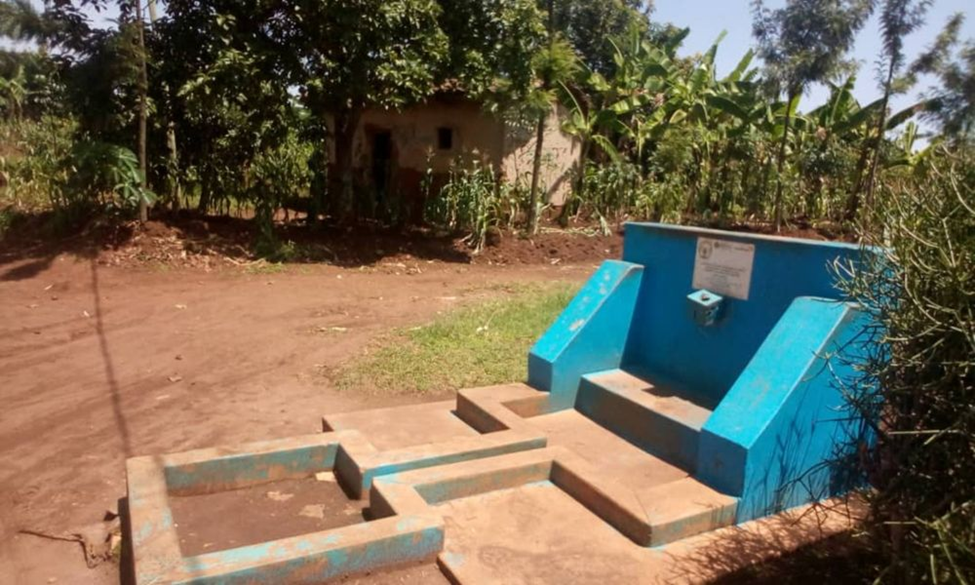
Jane Uwimana, one of the residents who used to fetch water from the now-dry tap. “WASAC gave us this water in support of the World Vision. We had it for a while, then it stopped coming for good. We tried talking to local leaders, but nothing really changed. The water only comes two or three times a week now, and even then, it only runs for about two hours.”
She added that before the tap was installed, they used to collect water from a swamp called Nyirampana, and that’s exactly where they’re back to fetching from now, despite how happy they’d been when clean water first arrived.
“We were overjoyed when they fetched clean water closer to us. We felt like we’d finally be spared the trips to the health center that came from drinking dirty water and that our health would improve. But that’s not how things turned out; we’re back to fetching from Nyirampana. And it’s far. It takes about an hour to get there, mostly because you’re climbing uphill the whole way.”
Kamana, a 55-year-old man from the area, said the broken tap has hit vulnerable people the hardest, since not everyone has the strength to make the long climb down and back up the hill to fetch water.
“My daughter-in-law is pregnant right now, and there’s no way she can manage that walk to the swamp. Even if she leaves at dawn, carrying a jerrycan of water back up that hill is no small task. And it’s not just pregnant women; there are elderly women too weak to make the trip. Because of this, people end up walking about 40 minutes to fetch water from another village instead, though even that’s only really an option for those who live closer to it. For people who live far from that other tap too, getting there is just as hard.”
Is the water shortage in the Mbazi Sector linked to climate change?
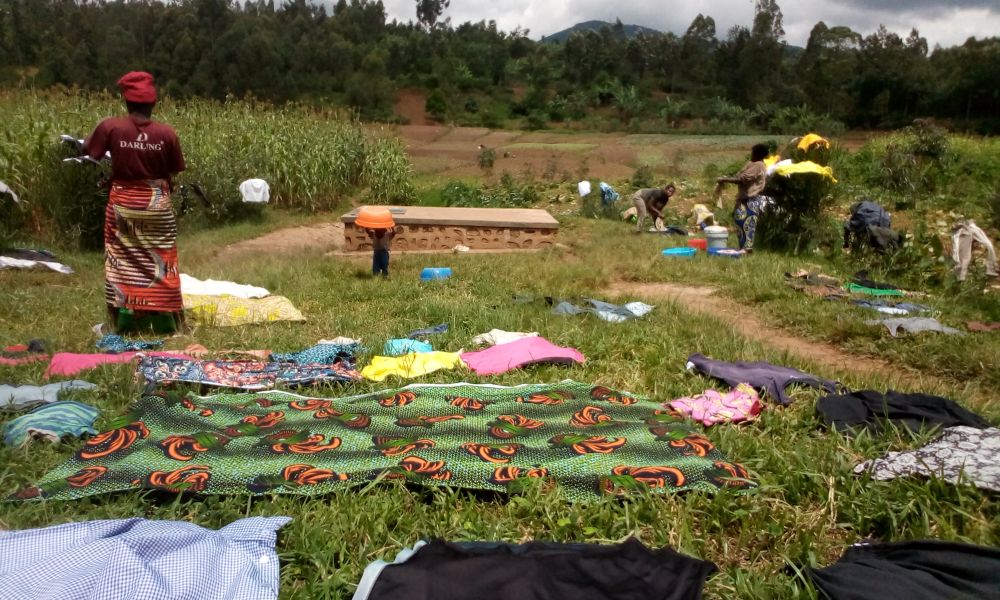
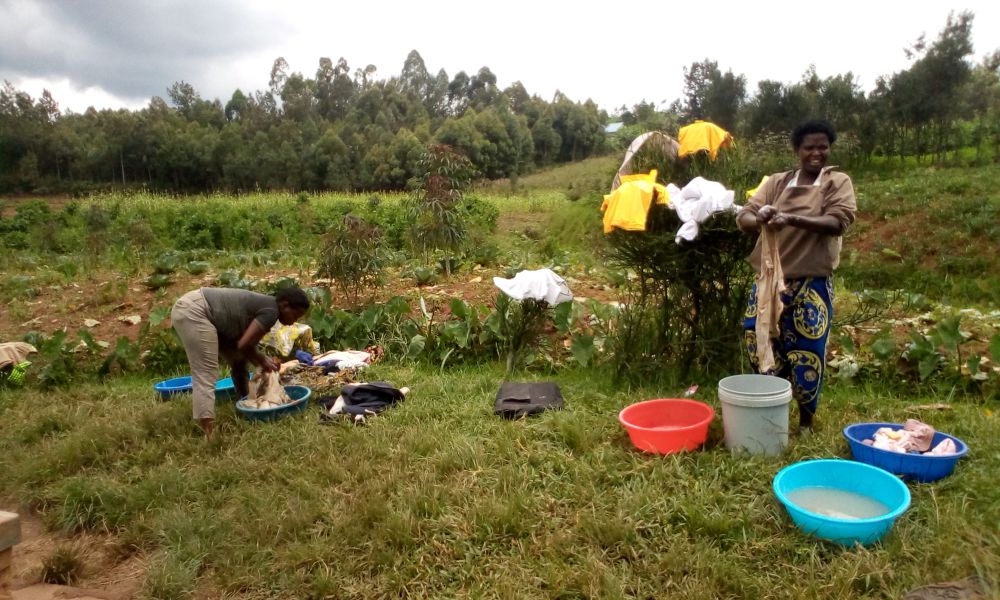
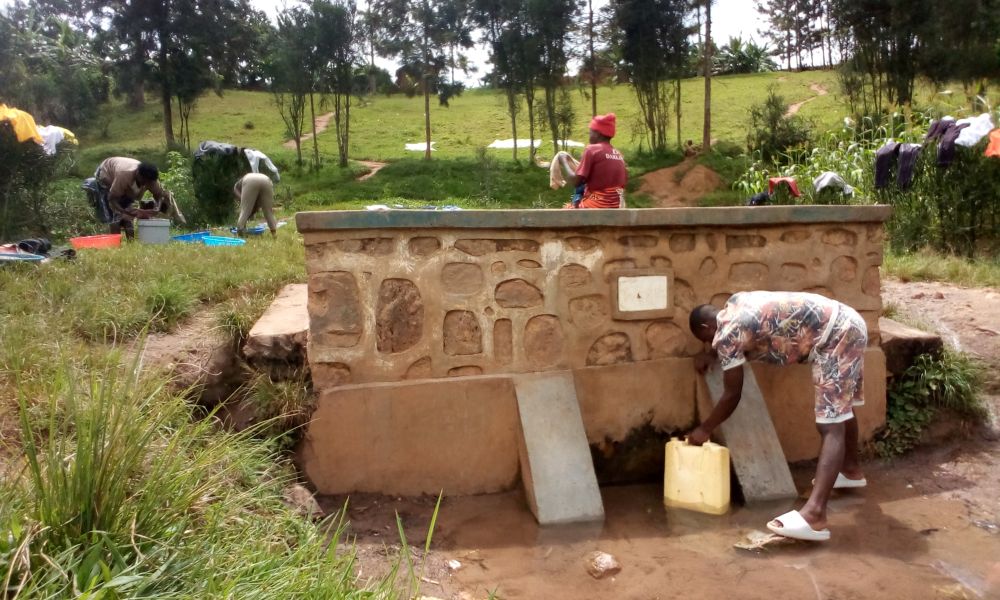
Even if we go back to the Nyirampana swamp, there is no space to help us wash our clothes. To ensure hygiene and sanitation, we go to the Rugango swamp because it has a natural water source and a tap repaired by the district.
Kanakuze begins her day before sunrise at 5:30 am, walking to a neighbor’s village swamp to collect enough water to last the day.
“I collect water early in the morning for sanitation at home. But if I need water to wash clothes and to clean household items, I have to go to the source, where I get enough water.”
She stands at the swamp’s water source, washing clothes, mostly those of her children, by hand. A mother of three, she speaks openly about the impact of climate change on their daily life.
“I come all the way here to wash clothes because we simply don’t have water near our home. It’s a long walk, but this is my only choice. There’s nowhere else I can go.”
Her story is far from remote. Across Huye, women and vulnerable residents are navigating a water infrastructure that exists on paper but breaks down in practice, a gap that national surveys now confirm is widening.
In Ndobogo Village, Kabuga Cell, Emmanuel Ndagijimana manages a village tap that has become symbolic of the problem. After the Easter holiday, he said the water dropped three times, and it was beaten within two hours each time.
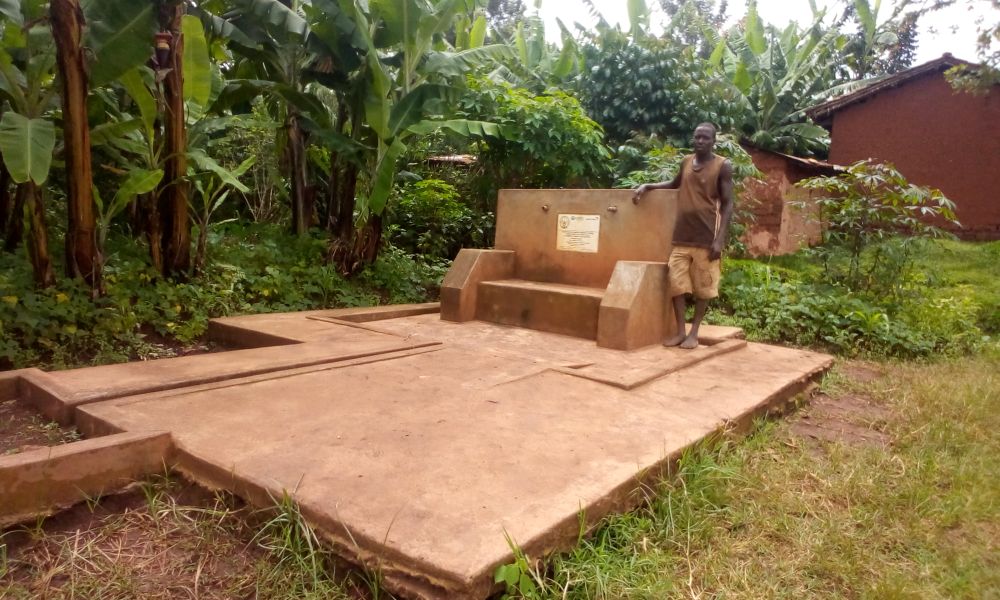
“When the tap doesn’t have water, people go back to the swamp. A jerrycan costs 200 francs there, and if you don’t have the money and you’re not strong enough to carry it yourself, you go to bed without eating supper.”
He added that they are facing the impact of climate change.
Climate change contributes to the water shortage in our village. “The dry season started at the end of May; normally, it starts in the middle of June or at the end. If there is aid from the government, it can help us to cope with these impacts.”
Huye District Mayor Sebutege Ange explained that as the population grows, water consumption rises with it, stretching the existing supply thinner across more people. He added that an unusually intense dry season has made things worse, cutting into the water supply at its source.
“When there’s an extended dry spell, water levels drop at the springs, which shrinks the overall supply,” he said. “We’re currently running a water-rationing program because climate change is the main driver behind the drop in water levels at our springs. We’re asking residents to follow the rationing schedule.”
He also pointed out that Huye’s urban area is growing fast, with more people moving in, while the water supply itself hasn’t grown to match.
“As the population grows, the water supply doesn’t grow along with it,” he said. “Because of climate change, water levels at the springs fall during the dry season, but the number of people needing that water stays the same or keeps rising. That said, there is a broader project underway to expand the water supply across the district, because as the population grows, the amount of water available has to grow with it.”
The bigger picture
Rwanda’s 7th Household Living Conditions Survey found that satisfaction with access to clean drinking water has dropped in both urban and rural areas, from 53% to 40% in cities, and from 53% to 48% in rural areas.
Under its second National Strategy for Transformation (NST2, 2024–2029), Rwanda aims to reach 100% of the population with clean water, up from the 90% coverage recorded by the end of 2024. The ultimate goal is for every household to have clean water within easy reach, including extending water access to one million new homes.