 0
0
 0
0
By Christophe Uwizeyimana
The Green Amayaga Project, carried out by the Rwanda Environment Management Authority (REMA) in partnership with local authorities and other partners, has significantly transformed the lives of communities and schools across the Southern Province. Covering all districts of the Amayaga region including Kamonyi, Ruhango, Gisagara, Kamonyi, and Nyanza, the project was designed to restore degraded landscapes, conserve biodiversity, strengthen climate resilience, and improve livelihoods.
Among its many interventions, one of the most notable achievements has been the provision of clean cooking gas (LPG) to schools, improving student nutrition, enhancing kitchen hygiene, and reducing pressure on local forests. At the community level, over 3,100 households have received improved stoves to promote sustainable energy use and reduce reliance on firewood.
Clean Cooking Gas: A Game-Changer for Schools
Through the Green Amayaga Project, 20 schools across the Amayaga region have received LPG, to transform school kitchens and improve their operations.
The Priest, Nyabenda Venuste, Head of EAV Mayaga School in Nyanza District, explains: “In a term, we used to order 700 steres of firewood, costing between 8.5 and 9 million Rwf. Now, with gas, our firewood consumption has dropped to about 200 steres per term, reducing costs to around 4.5 million Rwf.”
Jean Claude Munyaneza, Head Teacher at ES Ruhango, adds: “Since Green Amayaga provided us with gas, our firewood consumption has dropped drastically from 300–350 steres per term to about 100. This has saved us between 500,000 and 700,000 Rwf per term and eliminated the need to request firewood support.”
The transition to gas has also improved hygiene and working conditions in school kitchens. Munyaneza emphases: “The gas kitchen is always clean, unlike the smoky firewood kitchen. Heat control ensures food is cooked properly, and kitchen staff no longer inhale smoke, improving their health and comfort.”
One of the Cookers, Jean Baptist Shumbusho emphasizes the practical benefits:
“Meals are prepared faster, and students no longer wait for late meals due to wet firewood.”
Sister Marie Jose Uwamariya, bursar at Sainte Bernadette Save in Gisagara District, highlights both environmental and economic benefits: “Gas has reduced firewood consumption by 40%, keeping kitchens clean and students fed on time.”
Remy Songa, Green Amayaga Project Manager, says: “The introduction of LPG addressed the firewood shortage and also helps protect planted trees. By reducing the demand for wood, we allow young trees to grow, which improves air quality and reduces harmful emissions.”
From Desertification to a Flourishing Environment
While clean cooking gas has transformed school kitchens, the Green Amayaga Project has also addressed the wider environmental challenges in the Amayaga region. For years, drought, deforestation, and soil erosion left the area on the brink of desertification. Rivers would overflow, washing away fertile soil and leaving farmers unable to sustain crops.
Kayitesi Alice, Governor of Southern Province, emphasizes the broader impact:
“The Southern Province has many large schools that previously relied heavily on firewood. With LPG provided by the Green Amayaga Project, schools can reduce firewood use, protect forests, and maintain cleaner, healthier kitchens. This initiative benefits both the environment and the school economy, especially for boarding schools with over 1,500 students.”
Before LPG was introduced, schools in the Amayaga region spent over 100 million Rwf per term to collect firewood. With gas, costs have been significantly reduced. The pilot project provided 20 full kits of Giant LPG gas, totaling 323,920,000 Rwf, or approximately 16,196,000 Rwf per kit. Future initiatives will build on this pilot.
A Model for Climate Resilience and Sustainable Development
By combining clean cooking gas for schools, improved stoves for communities, forest restoration, climate-smart agriculture, and community-based ecosystem management, the Green Amayaga Project has created a greener, healthier, and more resilient Amayaga region. The project, which cost 1.36 billion Rwandan francs , is scheduled to run through 2025, with plans to scale up beyond 2030, ensuring continued environmental protection and sustainable development for local communities.

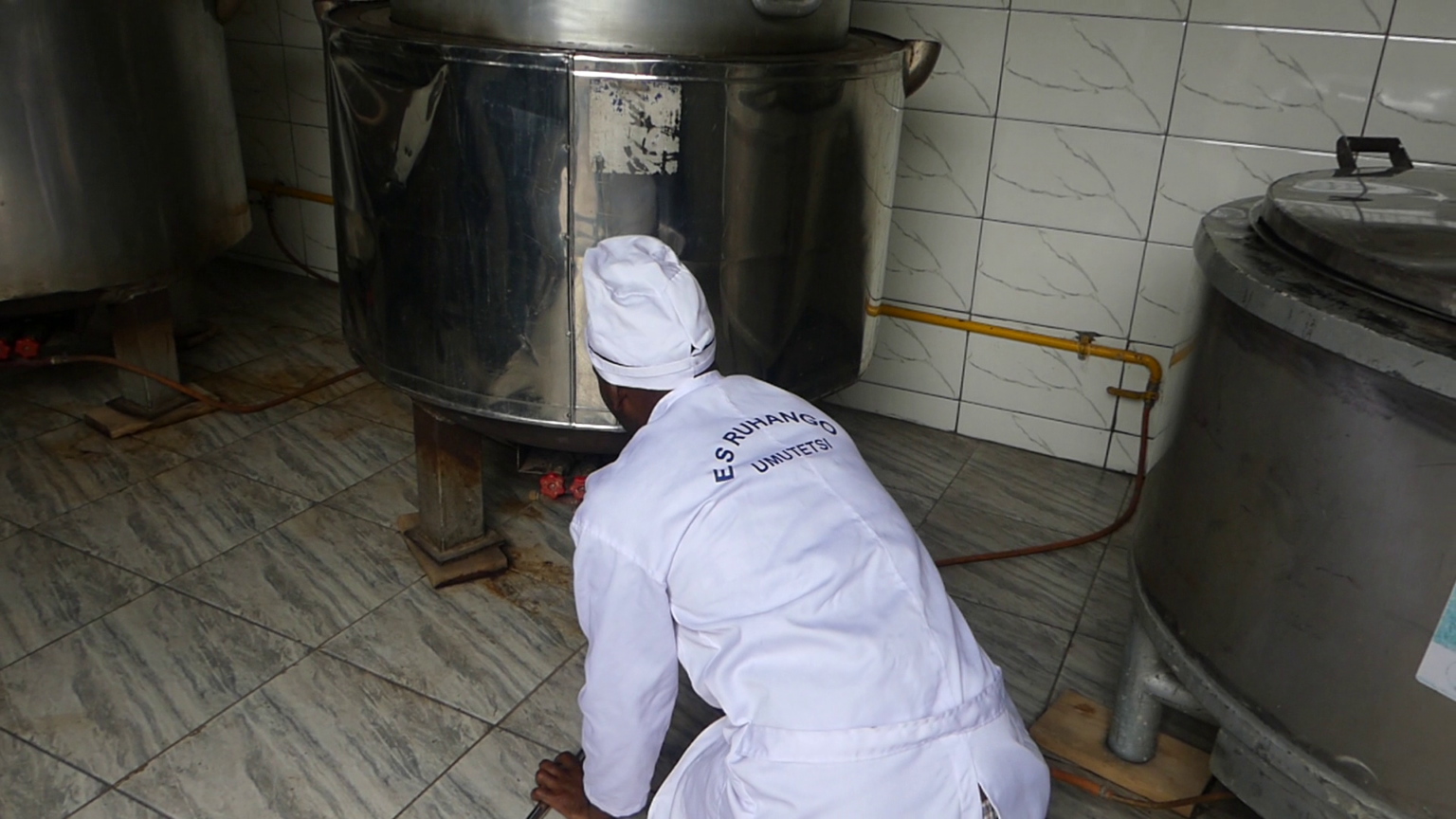
Photo: LPG gas from the Green Amayaga Project has reduced firewood use, improved kitchen hygiene, ensured timely meals, and protected local forests in Southern Province schools.

Photo: Remy Songa, Green Amayaga Project Manager, highlights how LPG gas reduces firewood use, protects young trees, and improves air quality in Southern Province schools.

Photo:Kayitesi Alice, Governor of Southern Province, highlights how LPG gas from the Green Amayaga Project helps schools reduce firewood use, protect forests, and maintain cleaner, healthier kitchens.

Photo:Apart from LPG gas in schools, the Green Amayaga Project was set to provide over 60,000 improved cookstoves across all districts it covers, helping communities cook efficiently and reduce firewood use.


