 0
 0
By Annonciata Byukusenge
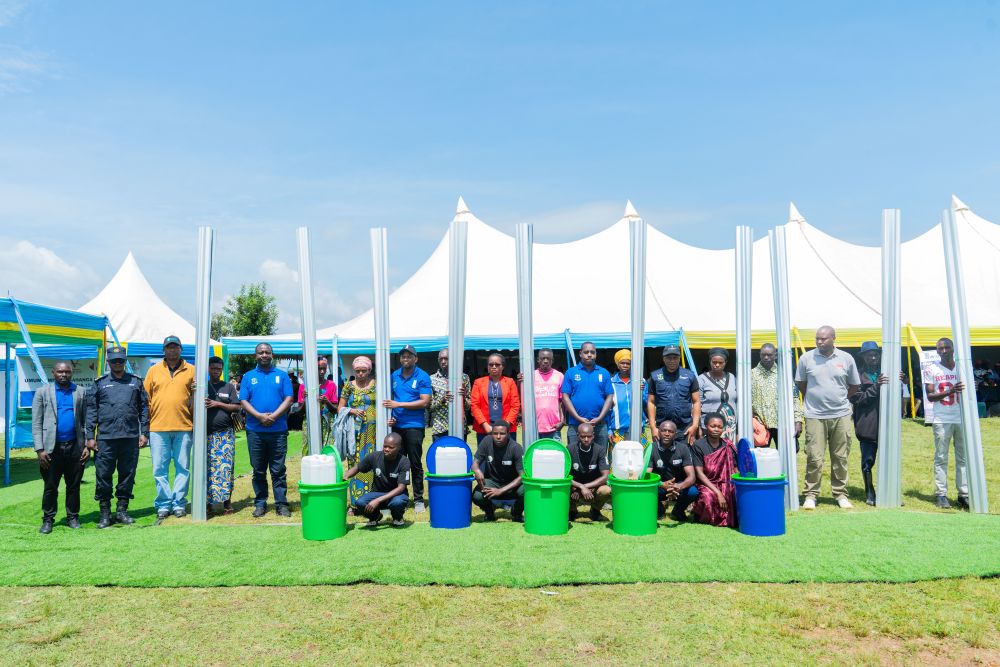
Rwanda’s Nyamagabe District handed over 1,000 newly built toilets to low-income households on Saturday, as the district hosted the national celebration of World Toilet Day 2026.
The world celebrates the day on Nov. 19 each year. In Rwanda, it was preceded by a hygiene and sanitation campaign that began on Nov. 19 and ended with Saturday’s event.
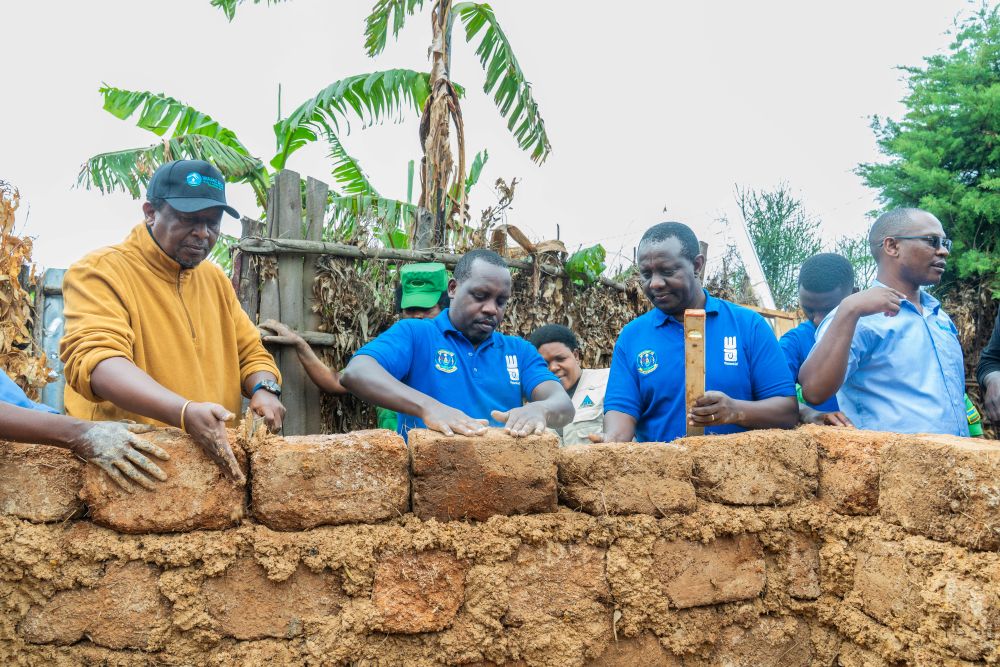
Before the ceremony, residents took part in community work activities, known as Umuganda, to build toilets for households that had none.
Chantal Mukamana, who lives in Cyanika Sector and was among the beneficiaries, said her old toilet had no roof, so people using it got soaked whenever it rained.
“Now we can use it without worrying about the rain.”
She added that she had put off building a proper toilet because she believed she could not afford one. After attending training on hygiene and sanitation, she realized she had not had enough information about why a proper toilet matters.
“I found that building a proper toilet doesn’t take great means, because once you have dug the pit and put up the structure, the authorities help you get iron sheets for the roof,” she said. “Attitude is the real problem. I didn’t have a habit of caring for a toilet.”
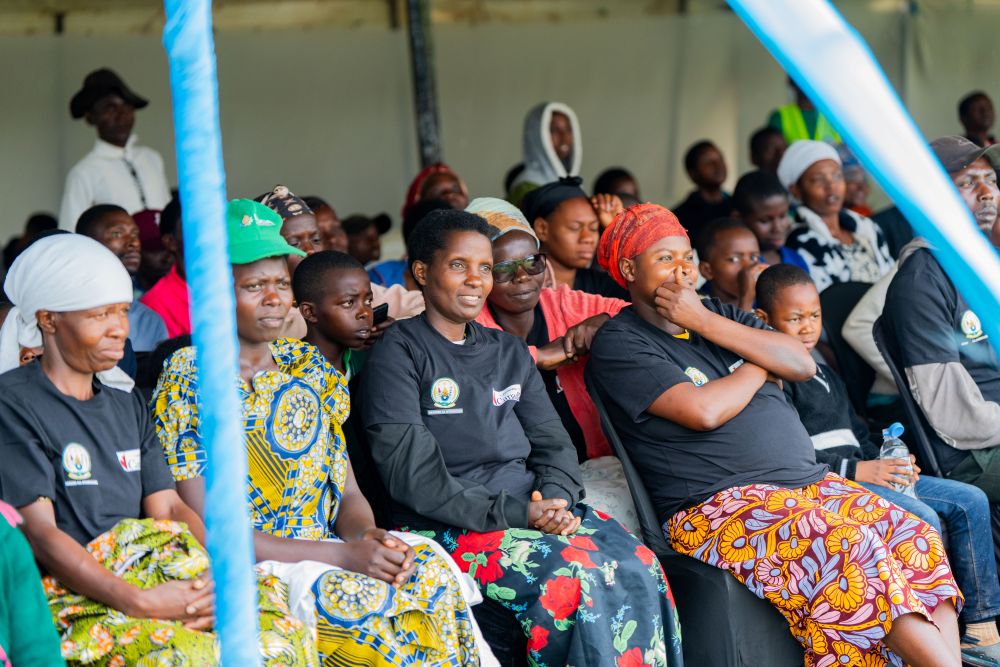
Dr. Jean Marie Vianney Kagimbangabo, director general of Kigeme Hospital, who represented the Ministry of Health at the ceremony, said illnesses linked to poor hygiene had been widespread in the district over the past 10 months.
“Our figures show that 50,000 people in Nyamagabe sought treatment over the last 10 months for intestinal diseases, worms, and diarrhea, all of which are caused by poor hygiene.”
He also warned of epilepsy caused by the pork tapeworm, which people can contract by eating pork from infected pigs.
“Some people eat pork without first checking by a veterinarian whether the pig carries the tapeworm, and they become infected and then pass it on to others,” he said.
Kagimbangabo urged residents to keep their homes and surroundings clean and to keep pigs penned rather than letting them roam, since free-ranging animals pick up the parasite.
Auxille Ngabo of Rwanda Water Aid, which helped the district build the toilets, said everyone deserves a decent toilet.
“If you have a proper toilet, you stay away from disease, especially those caused by dirt. You must change your mindset if we are to reach the development we want and protect the water sources we draw from, because when they are contaminated, the diseases come back.”
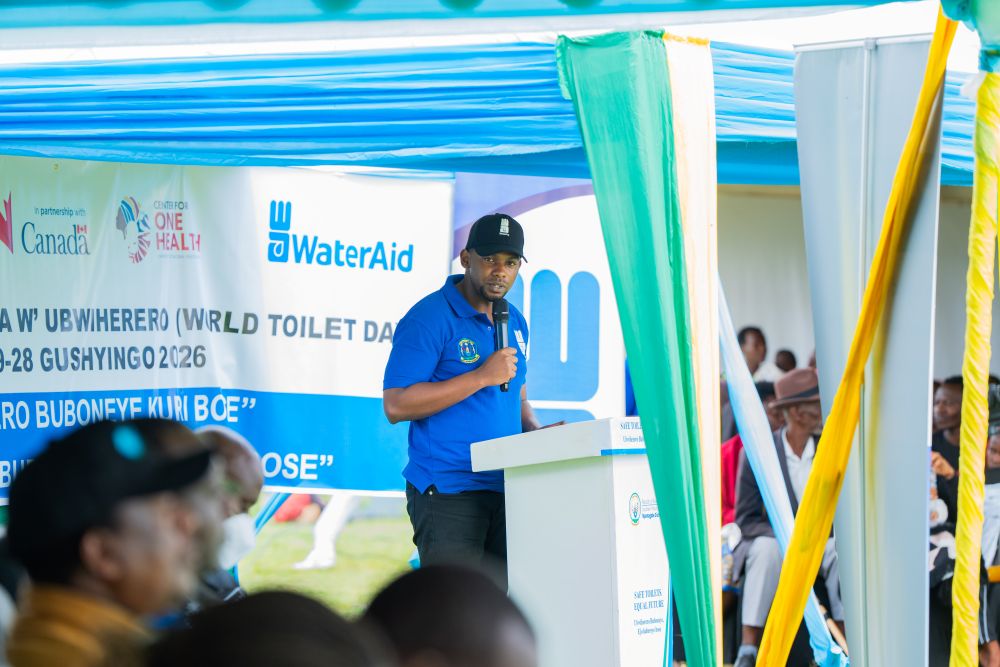
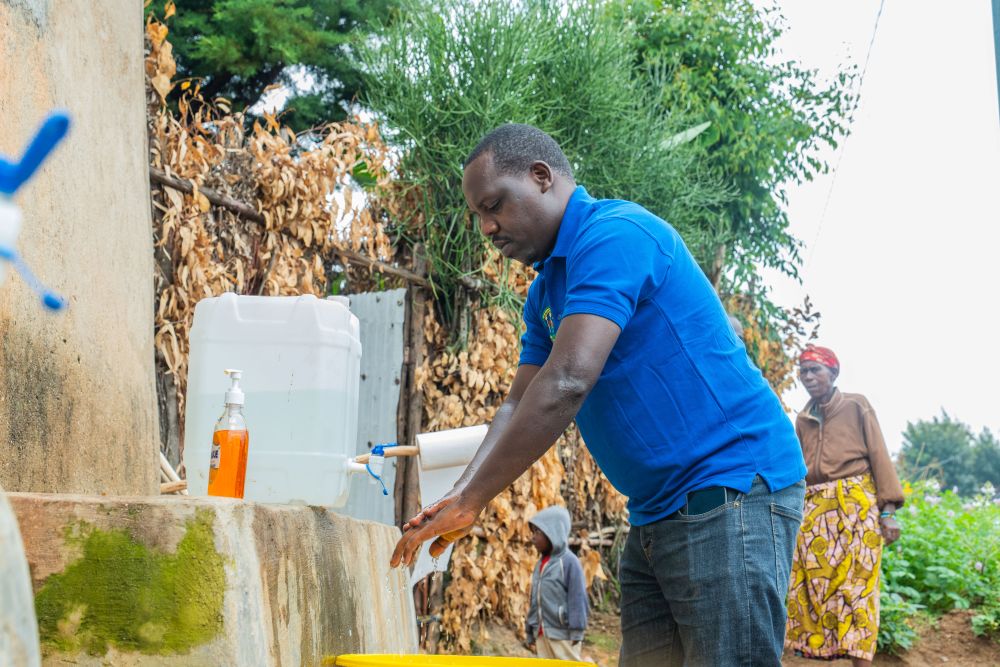
He added that a good toilet should have clean water and soap nearby so users can wash their hands properly.
Rwanda Water Aid built toilets for 1,000 households, including 386 in Cyanika Sector, where another 170 households received iron sheets to roof their toilets.
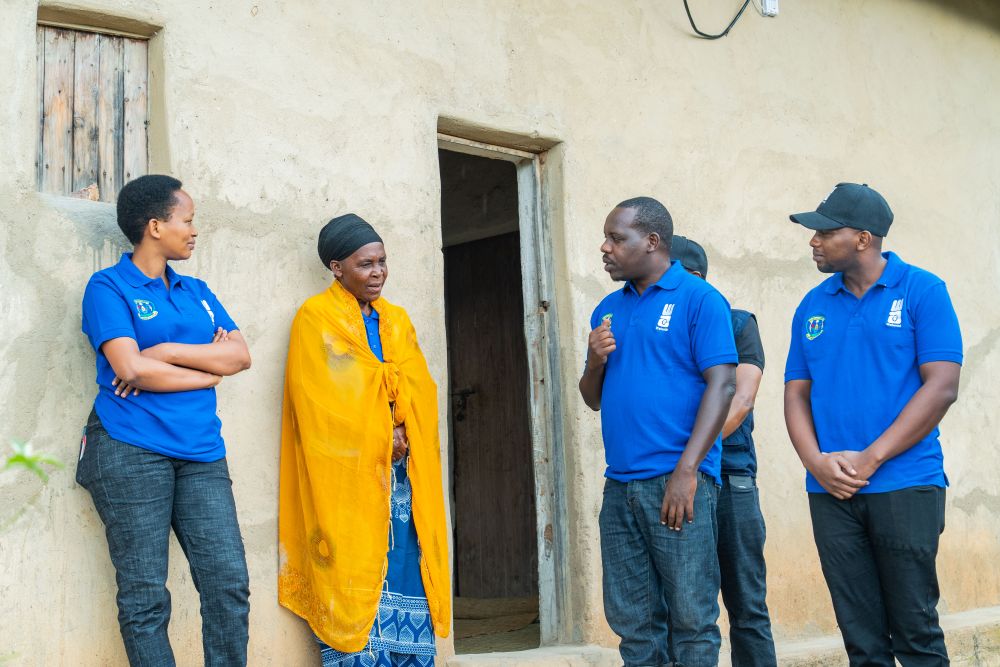
“It’s not just about having a toilet. Look after it, and make cleanliness a part of who we are every day.”
Zakayo Ntirenganya, another beneficiary, said he had been too embarrassed to let visitors see his old toilet.
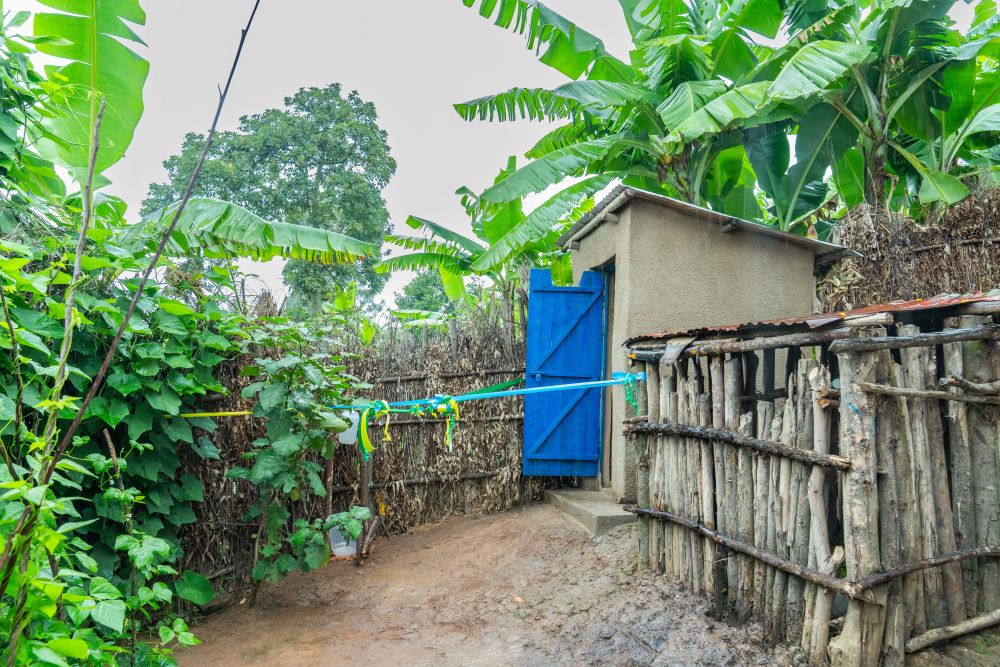
“Nobody who visited us was ever shown the toilet, because only my family knew how to use it. Now, if a traveler asks to use the toilet, I can show them without any shame.”
Thaddée Habimana, mayor of Nyamagabe district, participated in the ceremony on what he said was his first official visit to the district in that role. He thanked the partners supporting local development.
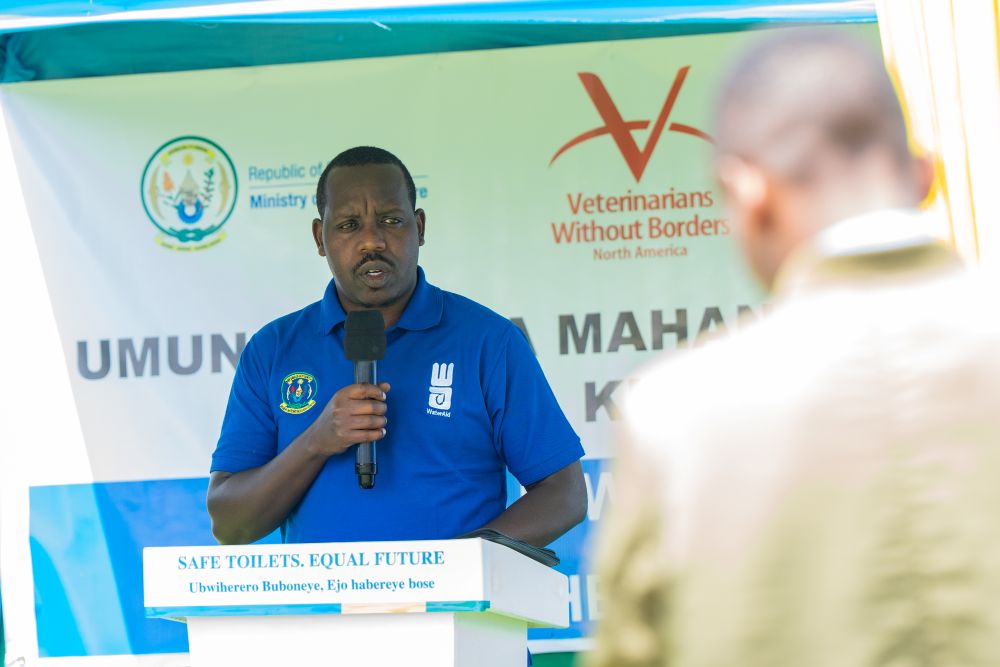
“8.8% of the district’s residents had toilets that did not meet standards, while about 1% practiced open defecation. Between 2023 and 2026, 2,100 toilets have been built and about 3000 repaired.”
Much work remains, and the district will continue promoting hygiene and extending clean water supplies, especially to communities near Nyungwe Forest.
Speakers, including an official from the Ministry of Infrastructure, thanked WaterAid and Water for People for supporting hygiene and sanitation in Nyamagabe.
Beneficiaries were urged to maintain their toilets. Men and boys were reminded that hygiene is not only a concern for women and girls, since everyone needs a toilet.
Cyanika Sector, the host of this year’s event, has three health posts and one health center.
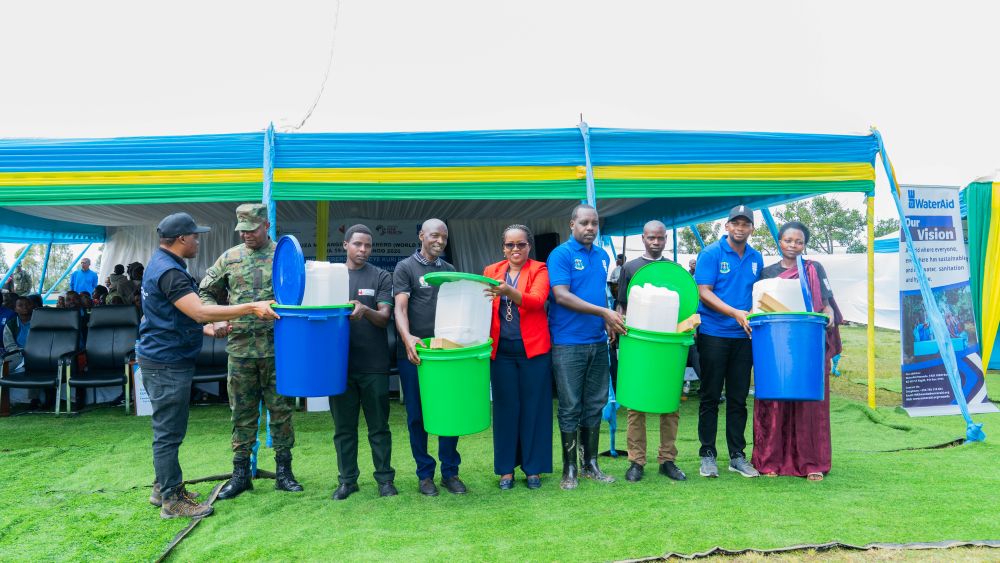
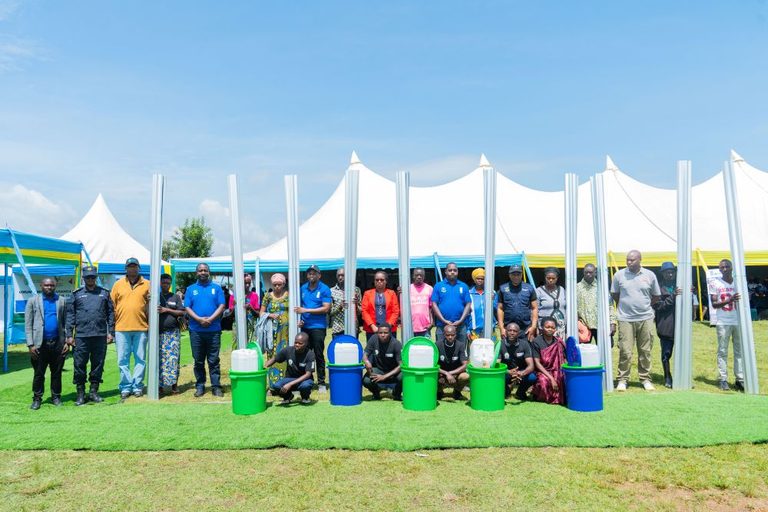
The ceremony also honored top-performing hygiene and sanitation clubs, including the Nyamirama club. Each member received soap, a basin, and a 60-liter water container with a tap. Also, 170 roofing sheets were given to households that are building toilets that meet standards.