
 0
 0
By Christophe Uwizeyimana
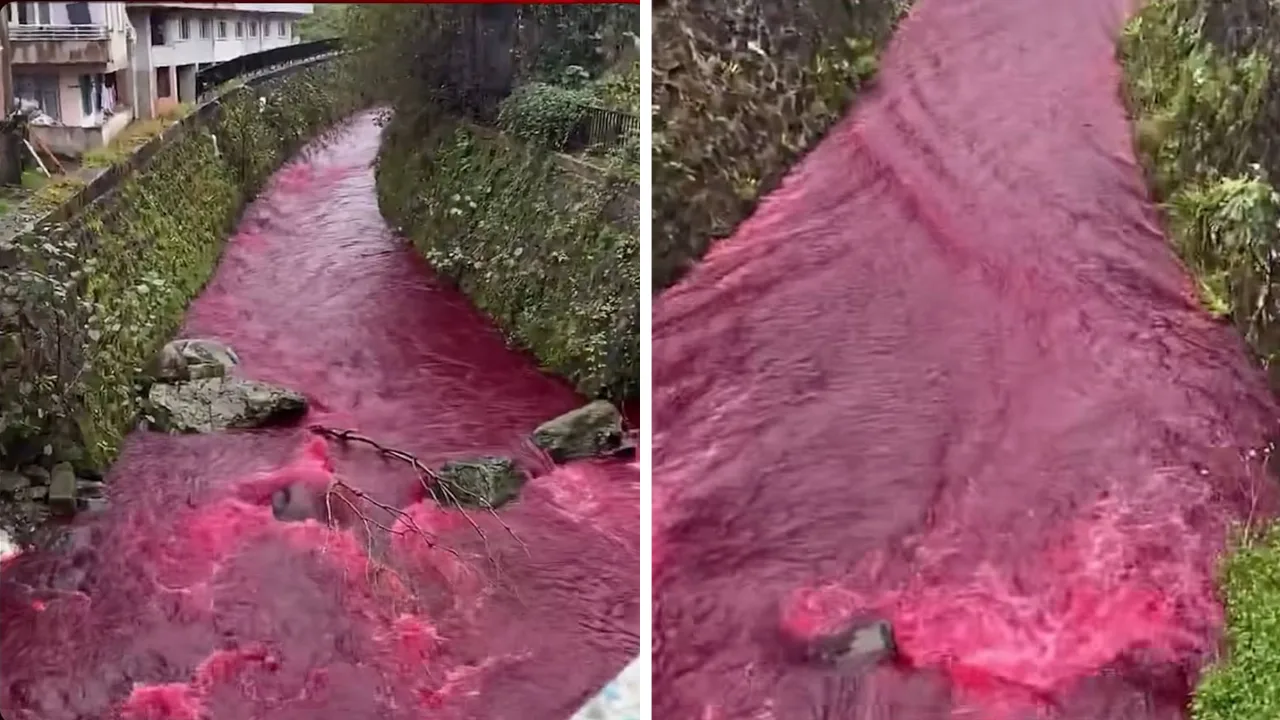
Rize, Türkiye – The Değirmendere Stream, which flows through the city center of Rize province in northeastern Türkiye before emptying into the Black Sea, turned bright red on November 21, prompting an environmental investigation and administrative action against a facility suspected of discharging wastewater into the waterway. Link:https://x.com/ChristopheUwiz/status/2124794623612846549?a=bMBuNgl2hwLAvBs6N-A&s=20
The unusual discoloration attracted the attention of local residents, who recorded the incident and alerted authorities after noticing the sudden change in the stream’s appearance.
Following reports of suspected environmental pollution, inspection teams from Rize Municipality and the Provincial Directorate of Environment, Urbanization and Climate Change were dispatched to investigate.
According to the Rize Governor’s Office, the inspection involved two environmental inspectors, an environmental engineer and drone-operating personnel. Using drone-assisted monitoring, the team traced an uncontrolled discharge into the stream and identified a facility responsible at approximately 4:00 p.m.
Local media reports identified the facility as a privately operated tea factory. Authorities subsequently imposed an administrative penalty under Article 20(i) of Türkiye ‘s Environmental Law No. 2872.
Water samples were also collected and sent to an authorized environmental laboratory to determine the nature and composition of the substances responsible for the pollution. The governor’s office indicated that additional administrative penalties could follow after the laboratory findings are evaluated.
Scientific explanation: How tea-processing wastewater could turn water red
The involvement of a tea-processing facility has drawn attention to the chemical compounds naturally present in tea leaves and the potential environmental effects of wastewater released during production.
Scientific research shows that black tea contains several polyphenolic compounds, including catechins, theaflavins and thearubigins. These substances develop through enzymatic oxidation during black tea manufacturing and contribute to the beverage’s characteristic reddish-brown color.
Theaflavins produce orange-red pigments, while thearubigins contribute significantly to the darker reddish-brown appearance of black tea. If wastewater containing these dissolved compounds is released into a stream without adequate treatment, it could potentially alter the water’s color.
A scientific study published in 2025 in Scientific Reports, examining the effects of tea manufacturing processes and tea varieties on infusion color, explains how oxidation transforms catechins into colored compounds that influence the appearance of black tea.
Other research published in Molecules in 2022, titled Enzymatic Oxidation of Tea Catechins and Its Mechanism, also describes the chemical transformations responsible for producing theaflavins and thearubigins during tea processing.
However, the presence of these compounds in tea does not, by itself, establish that they caused the red discoloration in Rize. Laboratory testing is necessary to confirm whether tea-derived pigments or other industrial substances were responsible.
Potential environmental consequences
Beyond changing the appearance of water, untreated tea-processing wastewater may present environmental risks because of its organic matter and other dissolved substances.
When wastewater containing substantial organic material enters a river, microorganisms begin breaking down the pollutants, a process that consumes dissolved oxygen. If oxygen levels fall significantly, fish and other aquatic organisms may experience stress or, in severe cases, die.
Environmental scientists commonly assess this type of pollution using biochemical oxygen demand (BOD) and chemical oxygen demand (COD). These measurements help determine the amount of oxygen required to break down biodegradable organic matter and the overall quantity of chemically oxidizable substances in wastewater.
The color of the water alone, however, cannot establish the level of toxicity or the extent of ecological damage. Further testing, including dissolved oxygen measurements and assessments of relevant chemical substances, would be needed to determine the actual environmental impact.
Investigation and further action
In its statement, the Rize Governor’s Office confirmed that an uncontrolled discharge had been identified and that an administrative penalty had been imposed on the responsible facility under Türkiye ‘s Environmental Law.
The collected water samples are expected to provide further information about the pollutants and help authorities determine whether additional legal measures are necessary.
For now, although the investigation has identified a facility associated with the discharge, the precise chemical composition of the substances that turned the Değirmendere Stream red, their potential toxicity and the extent of environmental damage remain unknown.
The laboratory findings will be important in establishing the cause of the unusual discoloration and determining the appropriate environmental and regulatory response.


