
 0
 0
By Annonciata Byukusenge
Energy transition must not leave energy-poor communities, women, and informal workers behind.
Shine Collab is calling for a deeper, more inclusive understanding of a just transition, one that places energy justice at its center and responds to the realities of countries and communities facing energy poverty and underdevelopment.
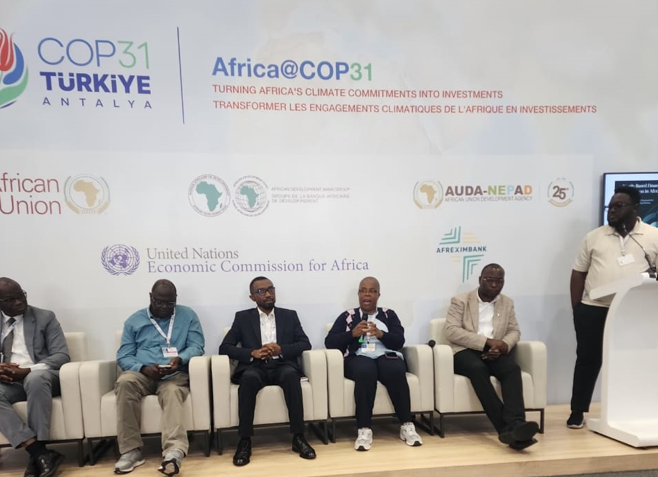
Speaking at a side event focused on 𝗙𝗶𝗻𝗮𝗻𝗰𝗶𝗻𝗴 𝗥𝗲𝘀𝗶𝗹𝗶𝗲𝗻𝗰𝗲 𝗮𝗻𝗱 𝗝𝘂𝘀𝘁 𝗧𝗿𝗮𝗻𝘀𝗶𝘁𝗶𝗼𝗻𝘀 𝗶𝗻 𝗔𝗳𝗿𝗶𝗰𝗮 by the Africa Coalition for Sustainable Energy and Access, PanAfrican Climate Justice Alliance, African Union Commission, and the UN Economic Commission for Africa, Dr. Melania Chiponda, a climate activist and executive director, Shine Collab, said for millions of people who still lack reliable access to energy, the transition cannot be treated as a process that begins before they have access to the energy they need.
“A transition that changes how energy is produced without first addressing who has access to it risks reproducing existing inequalities. Energy justice must therefore be concerned not only with the technologies and systems powering economies but also with the fair distribution of energy and the impacts of its production and delivery on communities,” she said.
According to Dr. Chiponda, the distribution of energy must not leave communities carrying the social, environmental, and economic costs of how energy is generated and supplied while the benefits flow elsewhere. A genuinely just transition must recognise access to affordable, reliable, and sustainable energy as a matter of justice, particularly for people who have historically been underserved.
She emphasised that the Just Transition debate must make visible a constituency that is too often overlooked: women, whose unpaid care work and livelihoods in the informal economy are essential to the functioning of households and communities.
She added that a transition that measures progress mainly through the creation of formal-sector jobs risks excluding women and others whose work is rooted in the care economy and informal sector. “These workers should not be treated as an afterthought or expected to fit into a narrow model of employment. Their contributions, needs, and economic realities must inform the policies, investments, and social protections that shape the transition,” she noted.
According to Dr. Melania, if these dimensions are ignored, the Just Transition could create new forms of poverty even as it seeks to address the harms associated with existing energy and development systems.
She noted that justice requires recognising different forms of work, protecting livelihoods, valuing care, and ensuring that women and informal workers have a meaningful voice in decisions that affect their lives.
The session also questioned the meaning of industrialisation and noted that it must also be clearly defined. “Without scrutiny of what is being produced, for whose benefit, where value is created, and who bears the costs, industrial development pursued in the name of a green transition could reproduce extractive and unequal patterns of development. Africa must not become a sacrificial zone for the energy and industrial ambitions of other economies,” participants noted.
Dr. Chiponda called on governments, policymakers, development partners, and other actors shaping the energy transition to place energy access, equitable distribution, care work, informal livelihoods, and community well-being at the heart of Just Transition planning.
“The transition must be judged not simply by changes in energy systems or industrial output, but by whether it improves people’s lives, reduces inequalities, and safeguards communities,” she said.


