
 0
0
 0
0
By Emmanuel Mutangana
Every morning, children from Rugarama and neighboring villages in Kansi Sector, Gisagara District, gather at an Early Childhood Development (ECD) center where they learn, play, receive care, and are introduced to nutritious foods.
For some parents, the center has become more than a place where children spend part of their day. It has also become a point where families learn how to prepare balanced meals and address malnutrition at home.
An ECD centre at the heart of nutrition efforts
The ECD center is part of nutrition interventions supported by the Second Sustainable Agricultural Intensification and Food Security Project (SAIP II), implemented by the Rwanda Agriculture and Animal Resources Development Board (RAB).
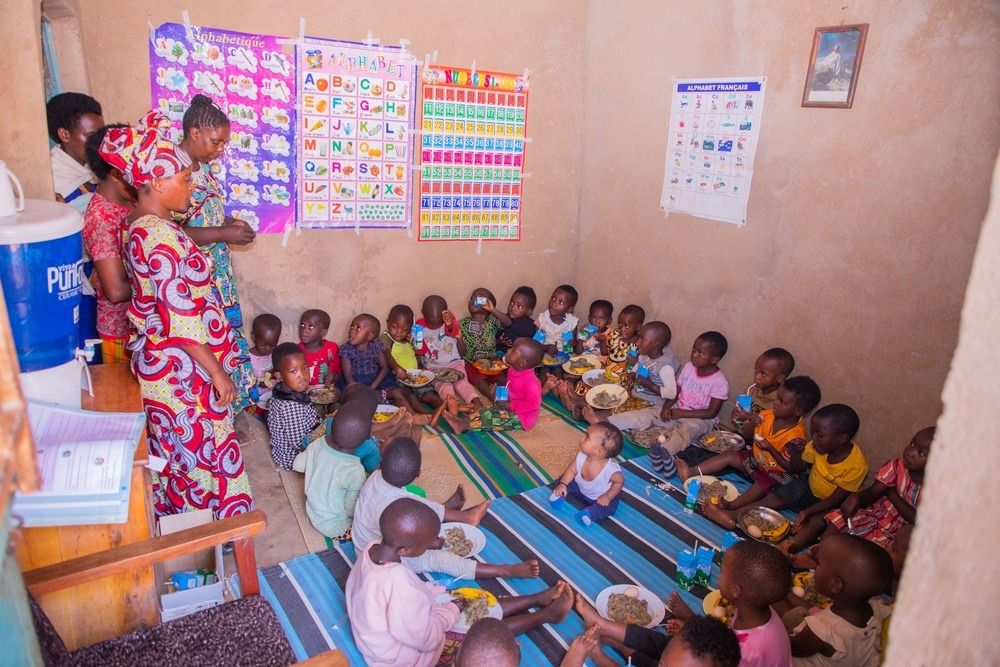
Uwimana Ikunde, who runs the ECD center in Rugarama Village, Kabuti Cell, said its activities combine early learning, hygiene education, and nutrition.
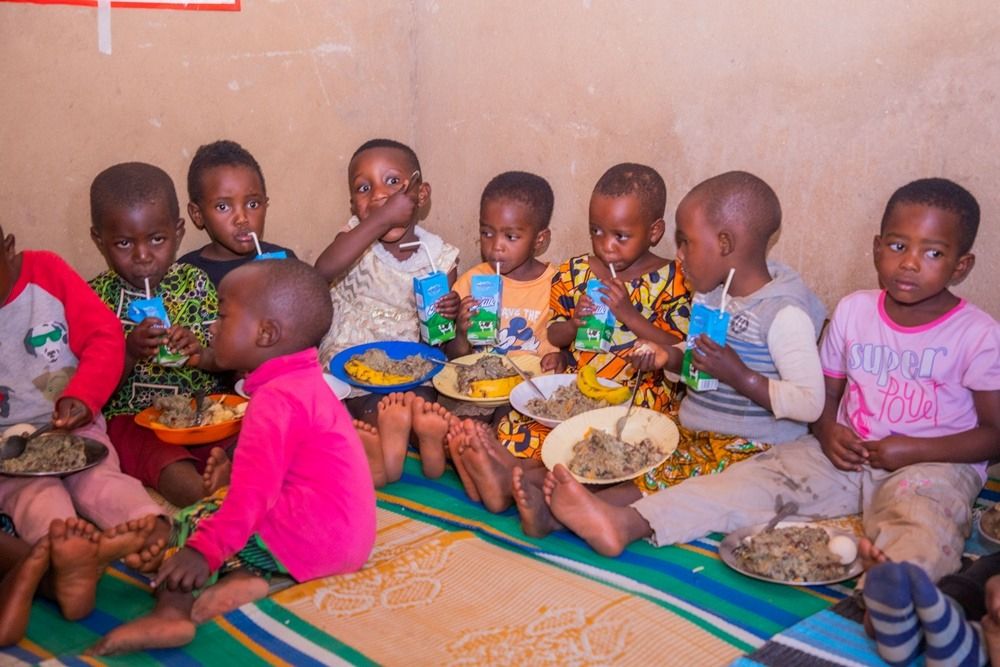
“At this ECD, we teach children and stimulate their minds. We teach them reading, counting, and hygiene. We also prepare a balanced diet for them once a month so that they can move away from malnutrition,” Ikunde said.
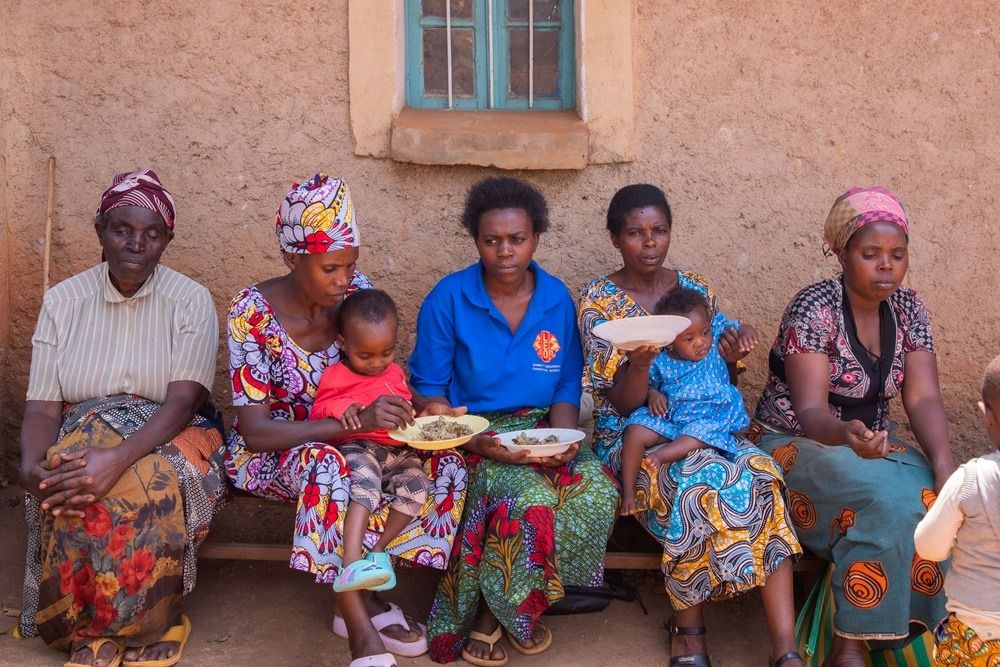
Parents contribute food items used to prepare meals at the center.
The ECD currently has 20 children, although others have already moved on to nursery school. Ikunde said four of the children had previously experienced malnutrition, but none of the children currently attending the center are experiencing malnutrition.
Children normally arrive at around 7:30 a.m. and leave at noon, although the center sometimes closes earlier when it does not have porridge flour or milk.
Ikunde said the center has also changed how parents think about childcare and nutrition.
“Before the ECD came, you would find children wandering around the village. A parent might go to cultivate and leave the child at home without anyone looking after them,” she said.
She added, “When the parent brings the child here, they no longer have that worry. The parent can go to cultivate, and when they return, they reunite with the child at home. The child continues to grow well, receives care, and does not experience malnutrition.”
She said parents have also become more willing to participate in nutrition activities.
“Parents’ understanding of preparing balanced diets has changed. Before, we had to persuade them, but after they saw the benefits, they became much more willing to participate,” Ikunde said.
Nutrition lessons reaching households
For Claudine Uwiyubashye, whose child attends the ECD center, that change in understanding has also been reflected at home.
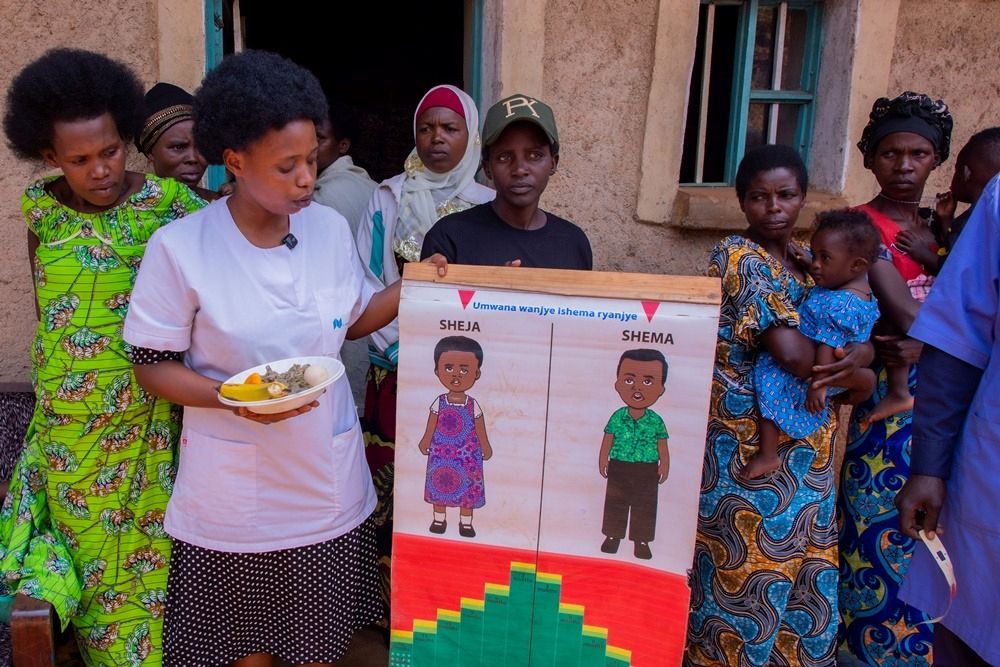
“Before, I did not know about balanced diets. SAIP II came and trained us, and we started cooking at the village kitchen. We learned what a balanced diet is. Before that, we did not know it, and we did not give it much importance; we simply prepared whatever food we had for our children,” Uwiyubashye said.
The training, she said, also taught parents that balanced meals should continue to be prepared at home rather than only during community cooking sessions.
“They taught us that we should prepare balanced diets at home, not only at the village kitchen,” she said.
At the time, Uwiyubashye had a child experiencing malnutrition.
She said the knowledge she gained changed how she prepared food for the child, while additional support from SAIP II gave the household another source of nutritious food.
“Before, I had a child who was experiencing malnutrition. But after SAIP came and I learned how to prepare a balanced diet, the child’s weight increased. Now the child is going to start nursery school in good health and has recovered from malnutrition,” she said.
The household also received three laying hens, which have since started producing eggs.
“SAIP also gave me three laying hens. They now lay eggs, so at home, an egg is now part of our meals,” Uwiyubashye said.
Nutrition lessons continue beyond the ECD
Divine Uwizera, Nutrition Officer at Kansi Health Centre, said the sector had previously recorded high levels of stunting and malnutrition.
She said SAIP II’s intervention has helped families identify locally available foods that provide the nutrients children need.
“Parents with children attending the ECD who received chickens or vegetable seeds are brought together and taught how to prepare balanced diets so that children can continue receiving a balanced diet even when they return home,” Uwizera said.
She said health workers are now observing improvements among children.
“The children are now growing well, and measurements show changes in their condition,” she said.
The approach means that nutrition education is not confined to the ECD center. Parents are encouraged to apply what they learn in their own homes, while households receiving agricultural and livestock inputs have additional resources with which to prepare nutritious meals.
SAIP II’s wider nutrition support in Gisagara
The ECD-based activities are part of a broader SAIP II nutrition intervention in Gisagara District, where the project has been supporting vulnerable households, particularly those with children under five and pregnant and lactating women.
According to Gisagara District, SAIP II has provided 10,800 laying hens to 2,700 households, with each household receiving four chickens, a poultry cage, feed, a drinker, and a feeder.
The project has also distributed 32,160 mushroom-growing tubes to 2,146 households, 4 tonnes of beans to about 600 households, 400,000 sweet potato cuttings to 600 households, and different vegetable seeds to 1,000 households.
The interventions are intended to improve access to diverse and nutritious foods while helping households develop their own sources of food.
The district says some households that received chickens have since increased their flocks and started earning income from poultry, allowing them to invest in other activities.
Jerome Rutaburingoga, Mayor of Gisagara District, said the project has also helped residents learn collectively about addressing malnutrition.
“SAIP II helped residents understand the importance of working together and learning together about addressing malnutrition,” Rutaburingoga said.
He said households that received chickens are increasingly able to expand their poultry production.
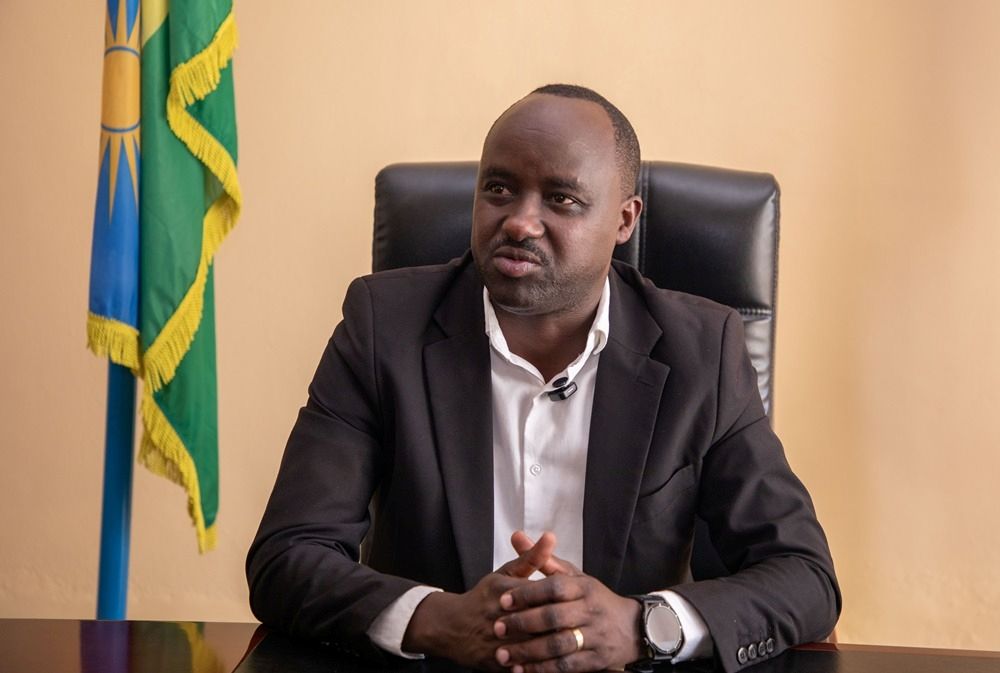
“Residents who received chickens have been able to increase their number of chickens after addressing malnutrition in their households. They are now also earning money to invest in other activities,” he said.
With SAIP II scheduled to close in December 2026, district officials are increasingly focusing on how households can sustain the gains made through the project.
Rutaburingoga said beneficiaries are being encouraged to take care of the assets and knowledge they have received.
“As a project, there will come a time when it ends, and we thank the project for being a good partner. We are now encouraging beneficiaries who received support from the project to continue taking care of what they received, especially because they have people following up with them closely,” he said.
He added that local leaders are also working to ensure that the achievements are sustained beyond the project’s implementation period.


