 0
0
 0
0
By Annonciata Byukusenge
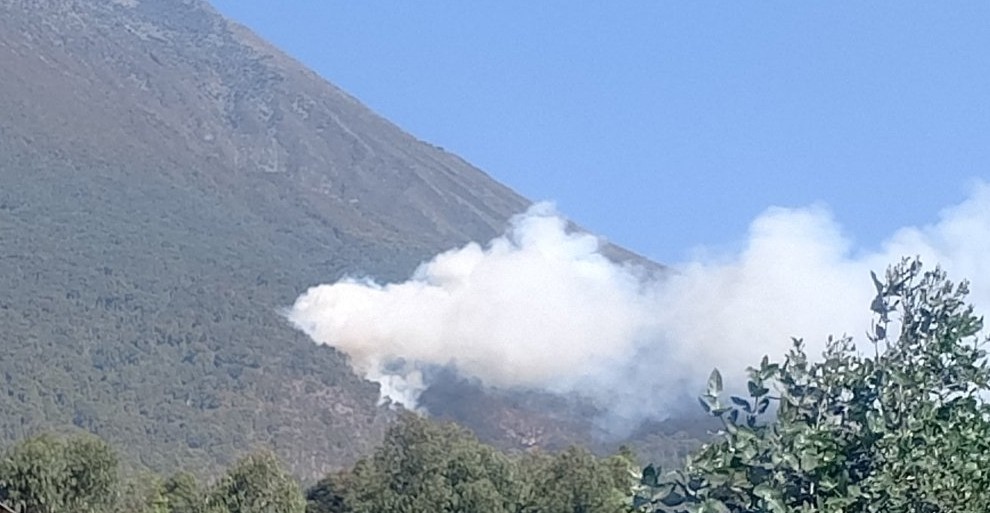
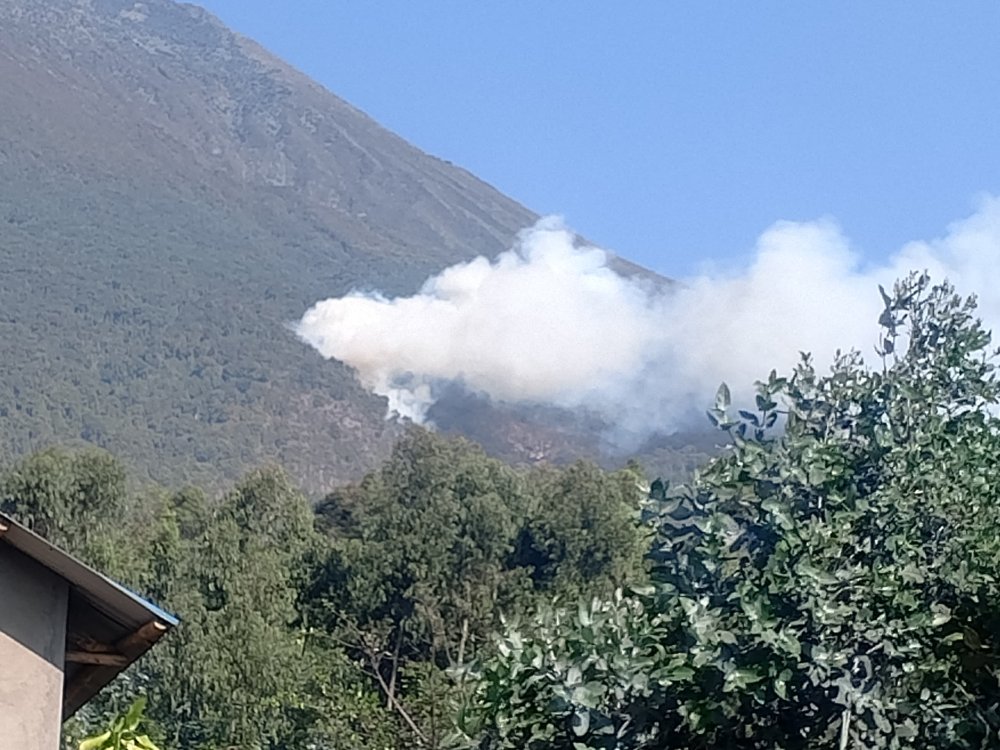
A forest fire broke out on Mount Muhabura in Burera District, Northern Province, on the morning of Friday, August 14, 2026.
A resident of Nyagahinga Cell in Cyanika Sector said the fire started partway up the mountain at around 6 a.m. and quickly spread uphill, making it difficult to reach; firefighters would need to trek a long distance on foot just to get to the flames.
“We saw the forest had already caught fire by 6 this morning. We tried to find out if anyone was fighting it, but there was no one, and it just kept burning. Right now we’re calling from inside the volcano; we’re trying to put it out ourselves.”
Residents of Nyagahinga said they weren’t too worried about their property, since their homes sit roughly two kilometers from the mountain, far enough to feel safe for now.
Northern Province Governor Maurice Mugabowagahunde said that officials from various levels of government were heading to the scene to help contain the blaze and that he was hopeful the damage would be limited.
“We’re all on the ground now, working to put it out. I’m confident this will be brought under control without too much lost.”
By around 9 a.m., residents reported that the fire had started to die down, raising hopes that it could soon be fully extinguished.
As of this writing, the full extent of the damage isn’t yet known; the fire was still burning while residents worked to contain it, and no official assessment has been done.
The cause of the fire also remains unclear. Some residents pointed to honey harvesters who occasionally enter Volcanoes National Park, noting that the practice involves lighting smoke to calm the bees and that this could be behind the outbreak. Investigators have not confirmed this.
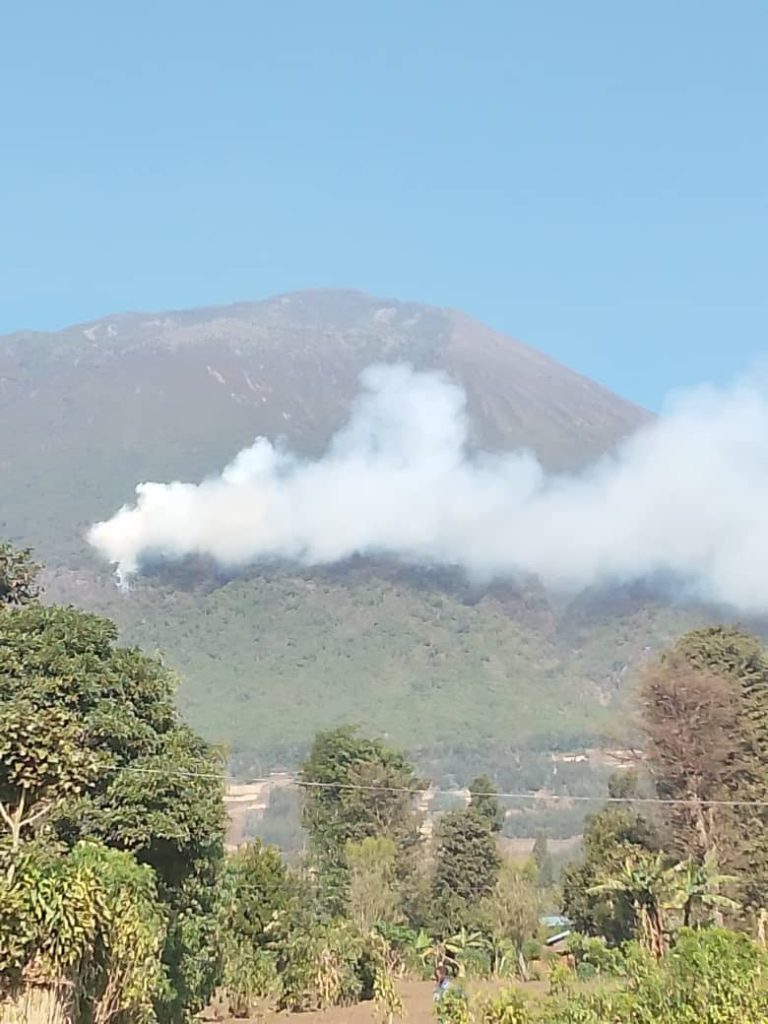
The last time fire struck Mount Muhabura was back in 2009.
Standing at 4,127 meters, Muhabura is the second-tallest of Rwanda’s five volcanoes.
During the dry season, grass in the parks’ forests, including Volcanoes National Park, where Muhabura sits, dries out and becomes highly flammable, leaving the area especially vulnerable whenever flames take hold.


