
 0
0
 0
0
By Annonciata Byukusenge
For the first time in the history of the East African Community, the region came together to mark a day dedicated entirely to the lake that gives so many millions of people their water, their food, and their way of life. The Inaugural Regional Lake Victoria Day, held on 21 May 2026, was not merely a ceremony. It was a declaration that the time for fragmented, short-term responses to the lake’s challenges was over and that a new period of coordinated, long-term partnership had started.
This ceremony, organized by the Lake Victoria Basin Commission (LVBC) and hosted by the Government of the United Republic of Tanzania, outlined together government delegations from Uganda, Kenya, Tanzania, Rwanda, and Burundi, together with development partners, financing institutions, civil society, academia, the private sector, and representatives of the communities that depend on the lake every single day.
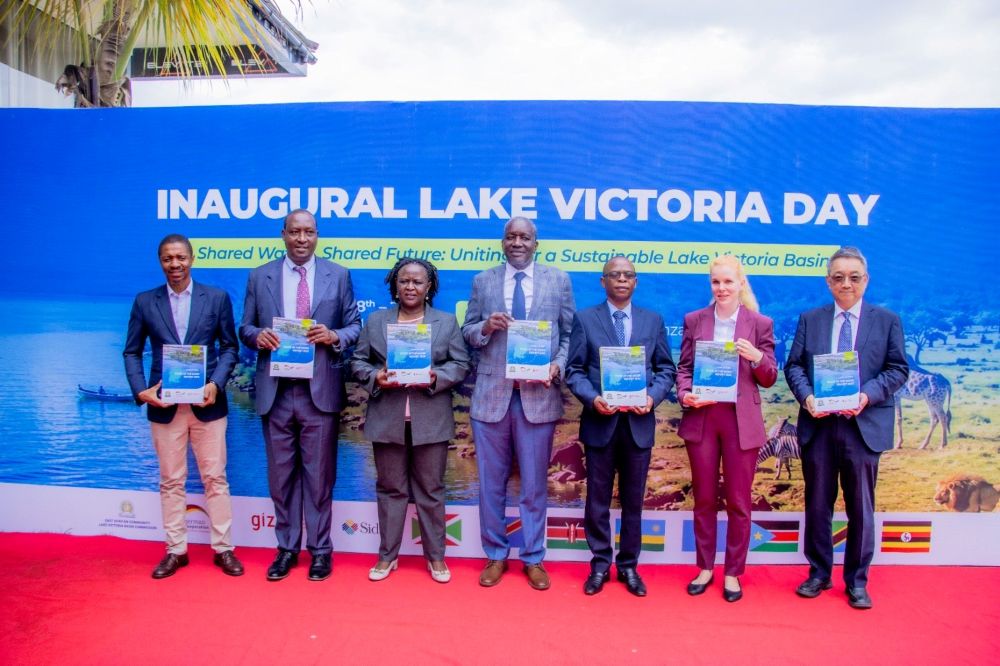
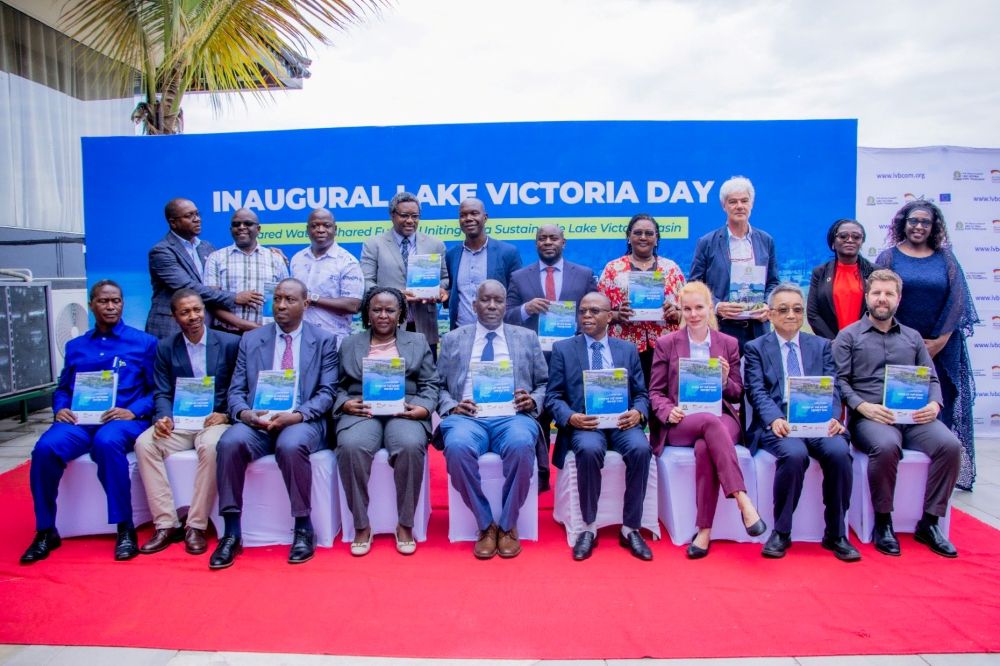
The theme of Lake Victoria Day, ‘Shared Waters, Shared Future: Uniting for a Sustainable Lake Victoria Basin,’ is therefore timely and appropriate. It reminds us that the future of this shared resource depends on coordinated action and sustained investment.
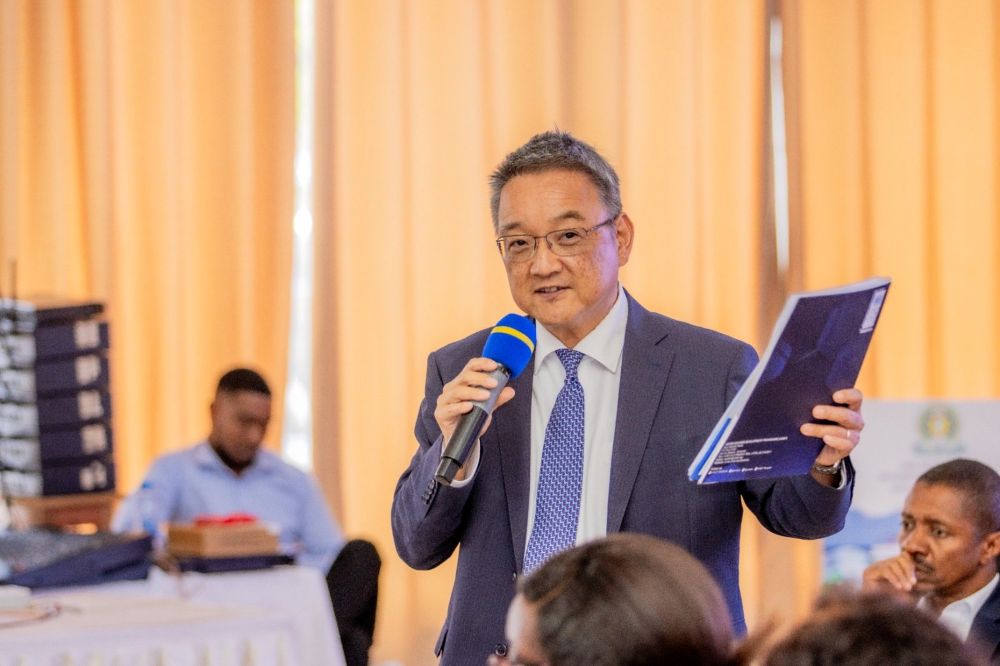
Dr. Masinde Bwire, Executive Secretary of the Lake Victoria Basin Commission. In his opening remarks, he expressed his emotions and appreciated the development partner representatives on behalf of the Lake Victoria Basin Commission.
“Allow me to place on record our deep appreciation to the development partners and cooperating institutions that have supported LVBC and partner states over the years. The World Bank, the Global Environment Facility, and Sweden/Sida supported the Lake Victoria Environmental Management Programme, which strengthened transboundary natural resources management, harmonized policies and standards, supported cleaner production, restored wetlands, promoted sustainable land management, improved sanitation facilities, and contributed to navigation safety.”
Dr. Alfred Okot Okidi, Permanent Secretary, Ministry of Water and Environment, Republic of Uganda, in his remarks, emphasized that theme and said that Lake Victoria is not only the largest freshwater lake in Africa and the principal source of the White Nile; it is also a shared regional asset that supports water supply, fisheries, transport, trade, agriculture, tourism, energy production, biodiversity, and the livelihoods of millions of East Africans.
“Lake Victoria is too important to East Africa’s future to be managed through fragmented, short-term, and underfunded interventions. It requires a coordinated, long-term, and investment-ready regional program, anchored in strong regional institutions and supported by sustained partnerships.” Said Dr. Alfred.
He added that Lake Victoria is under growing pressure from environmental degradation, rapid population growth, urbanization, climate change, and inadequate infrastructure.
Water quality deterioration remains one of the most pressing concerns. Urban centers around the lake continue to expand, yet sanitation and wastewater treatment systems have not kept pace. It is estimated that more than 70% of wastewater generated within the basin is discharged into the environment untreated or only partially treated. Plastic pollution, industrial effluents, and agricultural runoff are also contributing to eutrophication, algal blooms, and the degradation of aquatic ecosystems.
Population growth, estimated at approximately 3% annually, is increasing pressure on forests, wetlands, shorelines, and agricultural land. Deforestation, wetland degradation, sedimentation, and siltation are affecting rivers, nearshore ecosystems, navigation channels, and water abstraction points.
Climate change is compounding these vulnerabilities. In 2021, Lake Victoria reached historically high-water levels, resulting in widespread flooding that displaced thousands of people and damaged roads, ports, water supply systems, lakeshore settlements, and other critical infrastructure across Uganda, Kenya, and Tanzania.
Water safety and inland transport also remain major concerns. Lake Victoria is one of Africa’s busiest inland transport corridors, supporting fishing, passenger transport, tourism, and trade. However, thousands of people are estimated to lose their lives annually to drowning across Lake Victoria and the wider Nile systems. In this regard, the establishment of the Regional Maritime Rescue Coordination Centre is an important milestone toward improving maritime safety and emergency response.
Biodiversity loss and declining fisheries productivity also threaten livelihoods. Overfishing, pollution, habitat degradation, and invasive species such as water hyacinth continue to undermine the sustainability of fisheries resources and aquatic ecosystems.
These challenges are interconnected and transboundary. They are not simply environmental problems; they are development, investment, and regional stability issues. Addressing them requires coordinated regional responses with sustained financing and strong partnerships among governments, development partners, regional institutions, communities, and the private sector.
The Lake Victoria Basin is one of East Africa’s most strategic natural assets. The lake covers about 68,870 km², and the basin extends over nearly 194,000 km² across Burundi, Kenya, Rwanda, Tanzania, and Uganda, supporting more than 45 million people. Its waters sustain agriculture, fisheries, hydropower, transport, industry, and tourism, while its wetlands, forests, rivers, and shorelines provide water regulation, biodiversity habitat, climate buffering, and cultural identity. Because actions and inaction in one part of the basin affect the whole system, regional cooperation is not optional; it is essential.
Lake Victoria Day dialogue back to the investment.
The Lake Victoria Basin requires investment at a scale far beyond the current level of committed resources. While past and ongoing programs have provided important support, including the US$210 million Lake Victoria Environmental Management Programme II, EU and German support through KfW for the Lake Victoria Basin IWRM Programme, and about US$15.29 million recently accessed through climate finance windows, these resources remain modest compared to the multi-billion-dollar needs of the Basin.
A regional priority with global reach
Investment in Lake Victoria connects directly to the UN 2030 Sustainable Development Goals, particularly SDG 6 on clean water, SDG 13 on climate action, SDG 14 on life below water, and SDG 17 on partnerships. It advances the African Union’s Agenda 2063 vision of inclusive growth and environmental resilience and gives substance to the EAC Vision 2050. Every dollar committed to the basin, participants agreed, is ultimately an investment in water security, food security, public health, and the livelihoods of tens of millions of East Africans.
Two years of groundwork and real results
The Inaugural Lake Victoria Day did not start from zero. LVBC has spent more than two years helping Partner States build a shared governance framework, and its cumulative project portfolio now exceeds US$580 million, delivered alongside roughly fifteen cooperating partners. Policies have been harmonized. Wetlands have been restored. Sanitation infrastructure has been upgraded in key towns. The Regional Maritime Rescue Coordination Centre in Mwanza marks meaningful progress on water safety.
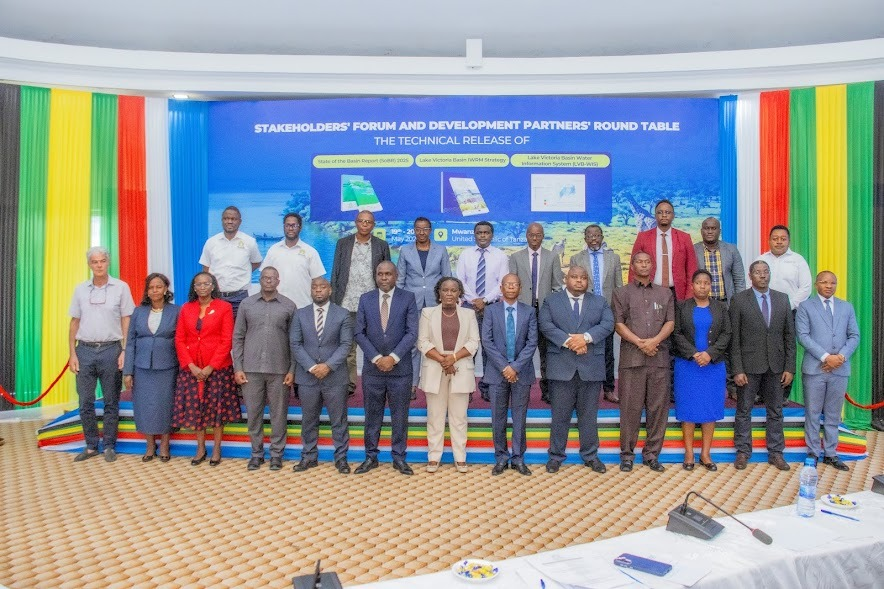
Three major regional instruments were formally launched at the event. The State of the Basin Report, prepared with German support through GIZ, delivers the most comprehensive evidence-based assessment of the basin’s environmental, social, economic, and governance conditions to date. The Lake Victoria Basin Integrated Water Resources Management Strategy, supported by Germany through BMZ and KfW together with the European Union and Partner States, charts the long-term investment blueprint. The Lake Victoria Basin Water Information System provides a shared digital platform for monitoring, data sharing, early warning, and evidence-based planning. These tools give the region a credible, unified foundation for mobilizing resources and tracking results.
A beginning is not an end.
Uganda’s Permanent Secretary, Dr. Alfred Okot Okidi, put the collective ambition simply: if the region acts together today, Lake Victoria will remain not just a shared resource but a shared catalyst for unity, resilience, and prosperity.
The next phase of cooperation must move from plans to projects, from projects to scaled impact, and from fragmented efforts to a shared regional investment compact, one that keeps fishers, farmers, traders, and families at the center.
Lake Victoria has sustained East Africa for centuries. With the right partnerships and the right investment, East Africa can now return the favor and ensure the lake sustains generations yet to come.


