
 0
 0
By Mutangana
A farmer in Kamonyi District is combining poultry and crop production to secure a reliable supply of organic manure for his fields while generating additional income from selling chickens, an experience he shared during a knowledge-sharing session organised under the Second Sustainable Agricultural Intensification and Food Security Project (SAIP II).
Innocent Nsanzimihigo, who farms in Ruboroga wetland, which connects Rugarika, Nyamiyaga and Mugina sectors, said the idea came after training through SAIP II helped him improve his crop production.
He said that before receiving the training, he harvested between 50 and 60 kilogrammes of maize per are. After learning how to prepare and use organic manure properly, his harvest increased to between 85 and 90 kilogrammes per are in the most recent season. The improvement encouraged him to consider another activity that could support his farming.
“I realised that I could not continue with crop farming alone. I needed another activity that could support agriculture, while agriculture could also support it. That is when I thought of raising chickens professionally so that I could produce enough manure for my fields,” Nsanzimihigo said.
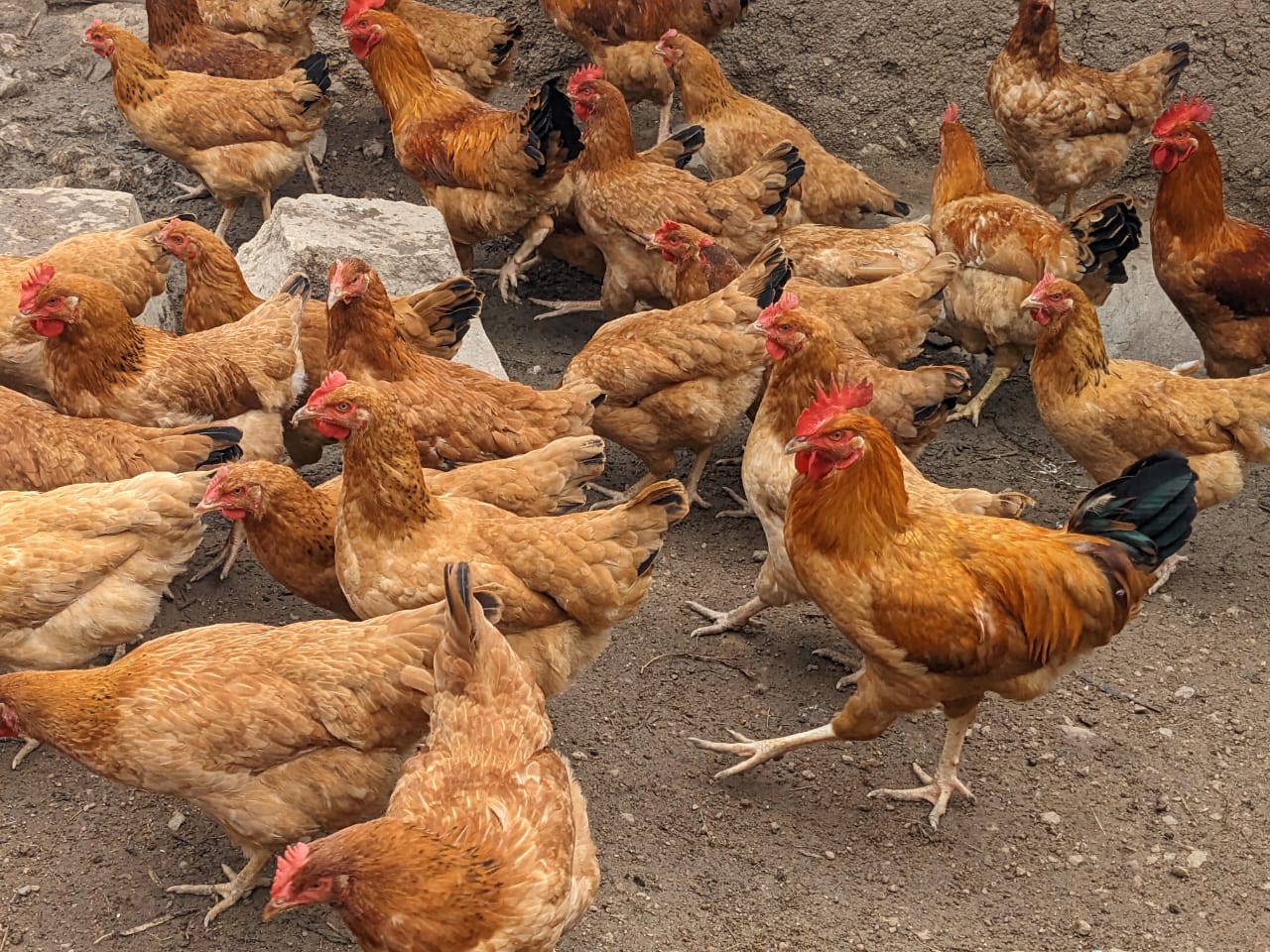
He had previously kept a few chickens, usually between five and 10, which roamed freely around the home. But he later decided to move into more organized poultry production after recognizing the value of chicken manure as a source of organic fertilizer.
He initially bought 100 chicks but, because he lacked sufficient resources to raise all of them, he sold some and remained with 50. He later brought in another 200 chicks, selling some as they grew to help finance the poultry activity and his crop production.
As his experience and resources increased, he began buying larger batches. He most recently brought in 500 chicks, sold 200 after they had grown for about a month and continued raising the rest.
He currently has 350 chickens, which he plans to keep until they begin laying eggs. This will allow him to earn income from egg production while continuing to use their manure on his fields. He also intends to keep raising and selling other batches of chickens.
Chicken manure supports crop production
Nsanzimihigo said combining poultry and crop farming had helped him reduce his dependence on manure from other livestock farmers.
Previously, he had to obtain manure from people who kept cattle and other animals. Now, his own chickens provide manure that he uses to support crop production.
He currently cultivates six blocks covering a total of 30 ares. Each block requires about 1.5 tonnes of manure, according to him.
“Combining crop farming with livestock keeping is very helpful. Before, I had to get manure from other people who kept cows and other animals. Today, my chickens provide manure for my crops and also generate money for me,” he said.
He said he had so far sold about 1,000 chickens since starting the project.
According to his account, he sold 500 chickens at Rwf3,000 each, generating Rwf1.5 million. Another 200 were sold at Rwf10,000 each, bringing in Rwf2 million, while 300 were sold at Rwf15,000 each, generating Rwf4.5 million.
The sales amounted to about Rwf8 million. He estimated that his investment in the chickens had been between Rwf5 million and Rwf6 million, although the 350 chickens he currently keeps are not included in those sales figures.
He said he hoped to expand the activity further as he continued balancing poultry production with crop farming.
Training helps farmers improve production
Other farmers also shared how agricultural training had helped them improve their production during the knowledge-sharing session.
Theodethe Umutoni, a member of KABIYAKI Cooperative, said SAIP II had provided training in soil conservation, the proper use of agricultural inputs and the production of organic manure.
She said the knowledge had helped her increase her production from 500 kilogrammes to 1.5 tones.
“The knowledge-sharing session gave us an opportunity to exchange ideas and learn from one another’s achievements. We share what we have accomplished and learn from the experiences of others. We can then take those ideas back to our cooperatives and share them with other members,” she said.
She added that the exchange helped farmers identify practices they could adopt to improve their activities.
District reports improved production and post-harvest facilities
Uzziel Niyongira, Kamonyi District’s Vice Mayor in charge of Economic Development, said SAIP II had worked with farmers in the district for about three years, supporting cooperatives through training and agricultural infrastructure.
He said the project had initially focused on training farmers in professional farming practices, which he said had contributed to increased production.
According to Niyongira, some cooperatives had reached maize yields of 9.2 tons per hectare.
He also said the project had supported the construction of maize and onion drying facilities, which he described as an important step in helping farmers improve the value of their produce and earn more income.
Niyongira urged farmers to maintain the infrastructure provided through the project and ensure that it remains functional.
He said the district would continue encouraging farmers to protect and maintain the facilities through proper management and repairs when necessary.
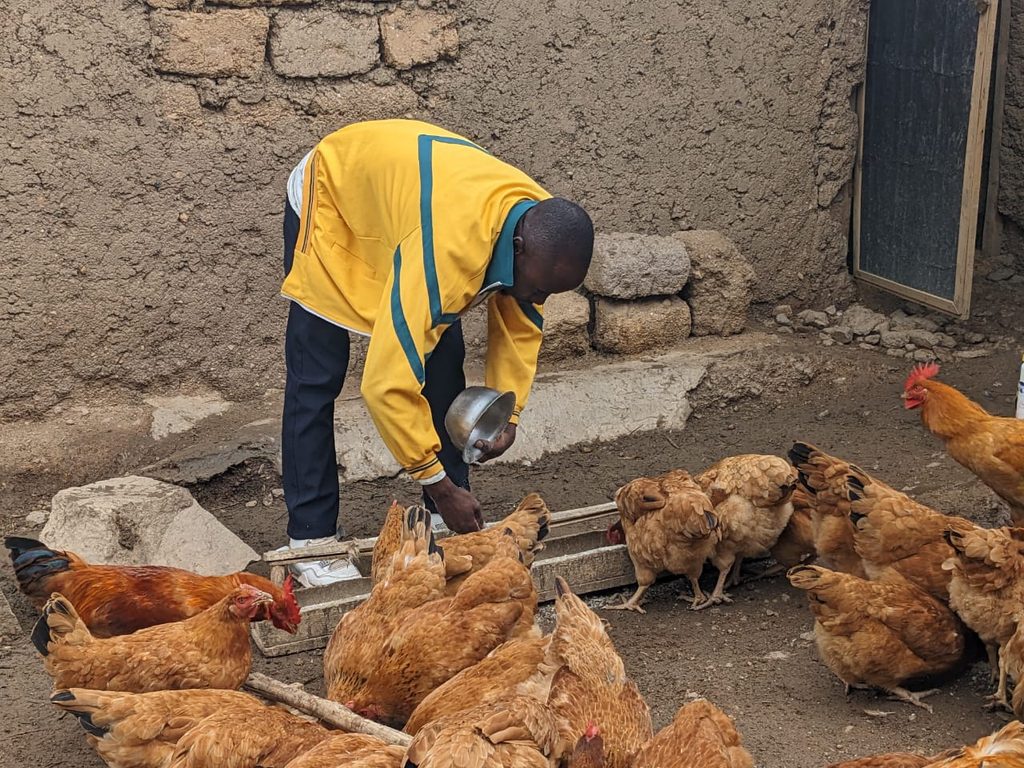
Photo:Innocent Nsanzimihigo, a farmer in Kamonyi District, who is combining poultry and crop production to improve agricultural productivity through the use of chicken manure.
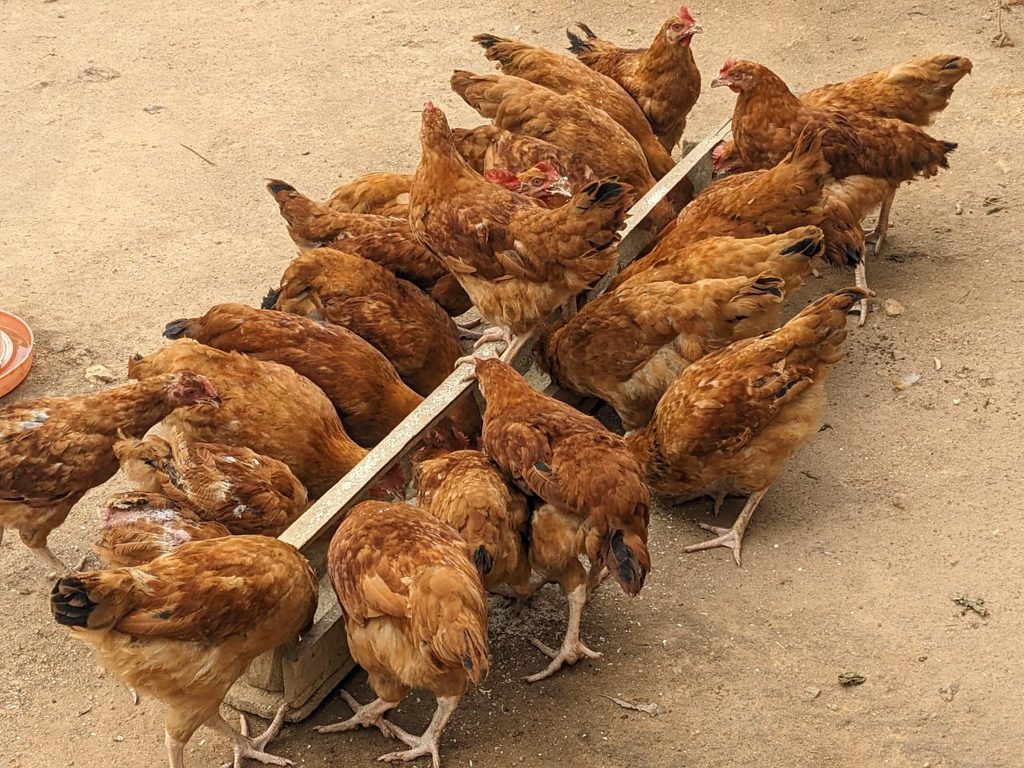
Photo:Poultry farming at Innocent Nsanzimihigo’s farm in Kamonyi District, where chicken manure is used as organic fertiliser to improve soil fertility and increase crop production.
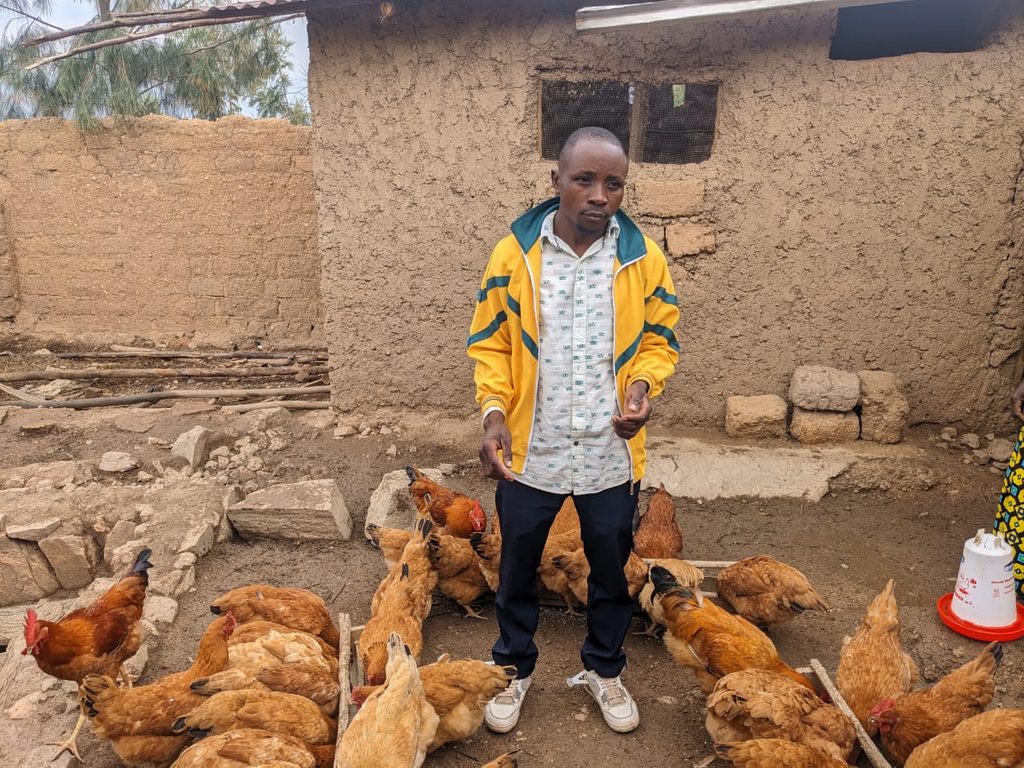

Photo:Theodethe Umutoni, a member of KABIYAKI Cooperative, who says training in sustainable farming practices and organic manure production has helped her increase crop yields.
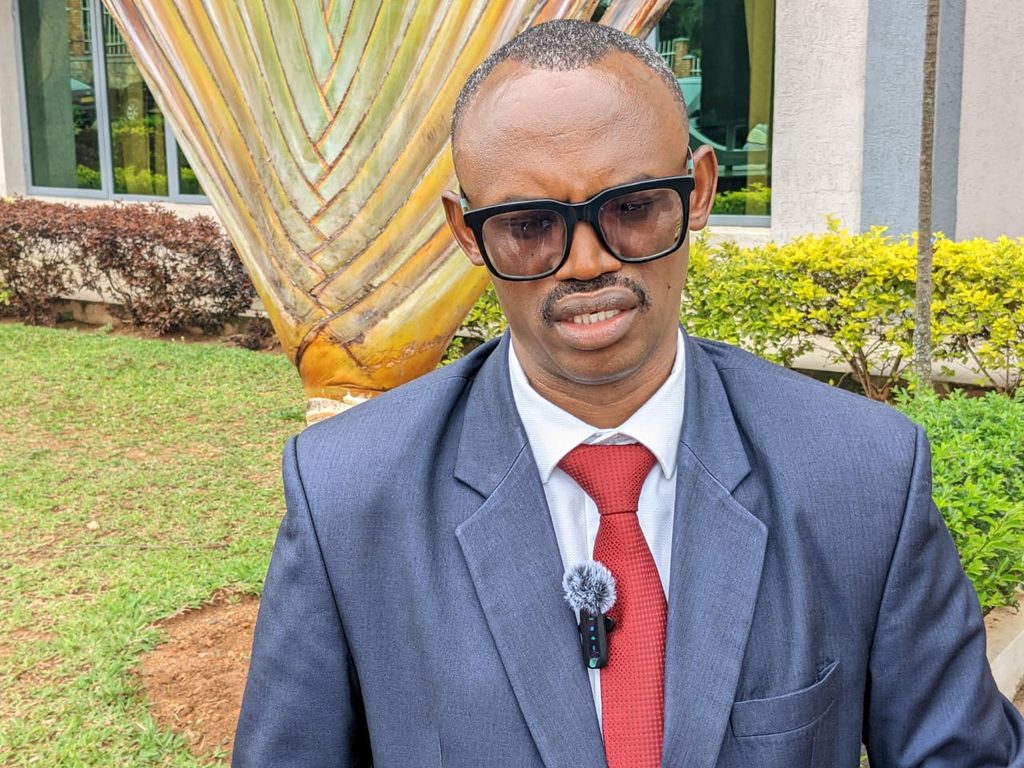
Photo:Uzziel Niyongira, Kamonyi District’s Vice Mayor in charge of Economic Development, speaking about the progress of the SAIP II project and the importance of maintaining agricultural infrastructure.
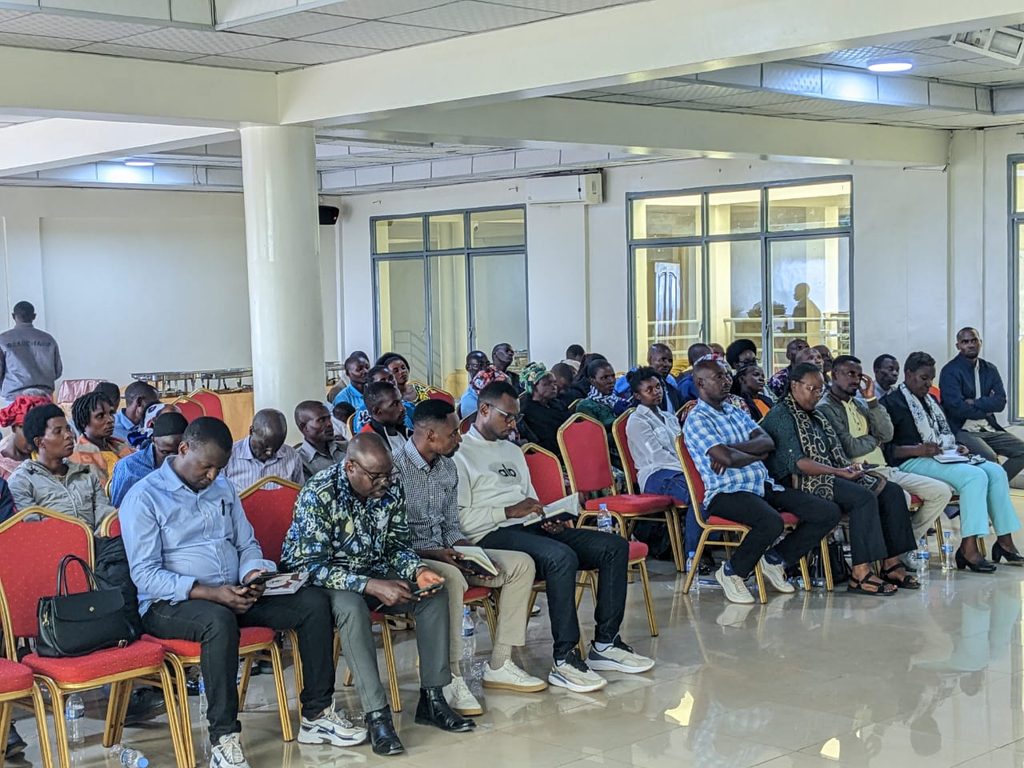
Photo:Participants attend a knowledge-sharing session on the achievements and impact of the Second Sustainable Agricultural Intensification and Food Security Project (SAIP II) in Kamonyi District.


