 0
 0
By Emmanuel Mutangana –
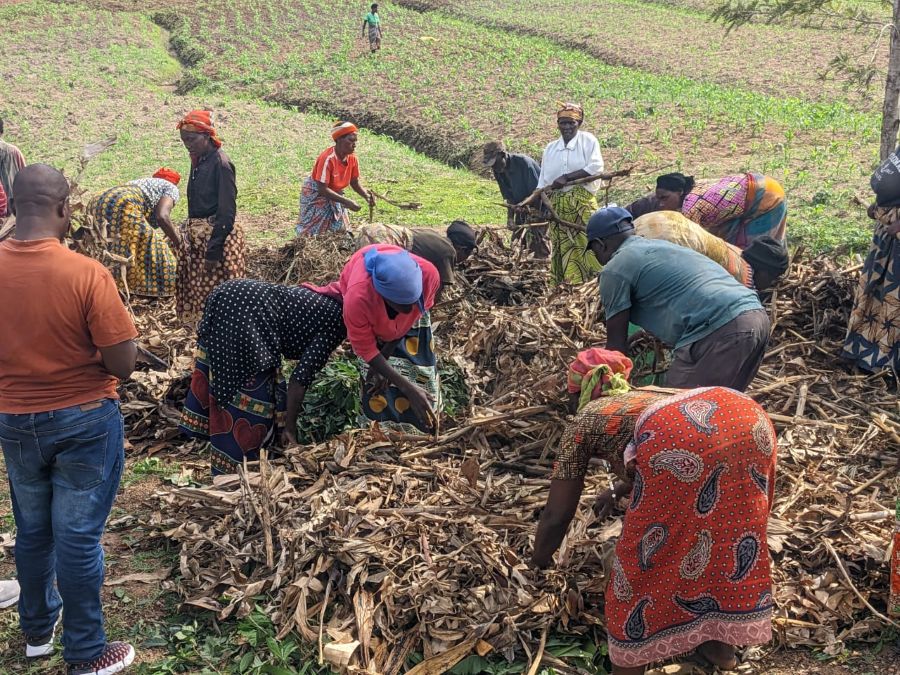
A women’s farming group in Muhanga District has increased vegetable production and expanded compost making after adopting improved agricultural practices promoted through the Second Sustainable Agricultural Intensification and Food Security Project (SAIP II), with members sharing their experience during a knowledge-sharing session.
Beatha Mukarushema, a member and secretary of Terimbere Mutegarugori Group, which operates under Tuzamurane Cyeza Cooperative, said training in compost production and modern farming practices had helped members improve how they cultivate their land and manage organic fertilizer.
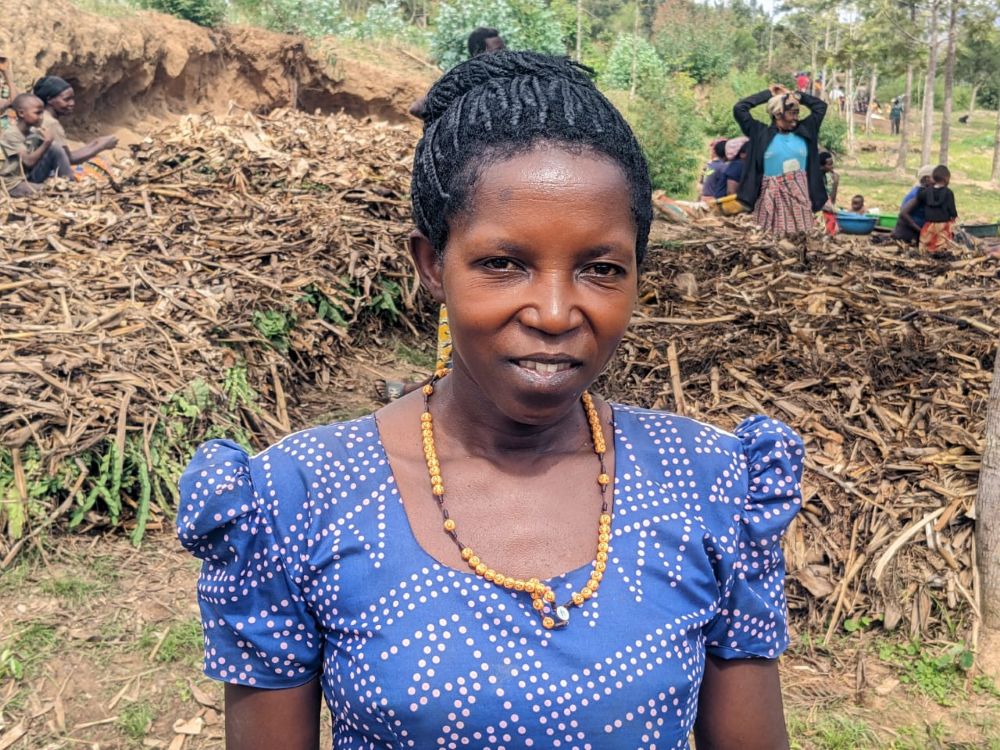
The group has 30 members. Before receiving the training, Mukarushema said members used to put fresh grass and other plant materials in animal shelters and apply the resulting manure to their crops before it had properly decomposed.
The practice sometimes damaged crops because the manure was still hot and could dry out plants, she said.
After SAIP II introduced training on compost making, members learned how to prepare organic fertilizer before applying it to their fields.
“We used to harvest little because we were practicing traditional farming. We did not know how to prepare and use compost properly. After the training, we changed our farming methods and began producing compost that we could use when needed,” Mukarushema said.
She said the changes had been accompanied by an increase in vegetable production. The group initially harvested 23 tonnes of vegetables from one hectare. Production later rose to 123 tonnes and then 140 tonnes before reaching 480 tonnes, which she said was harvested from half a hectare.
The figures reflect the production levels reported by the group at different stages of its farming activities.
The group has also increased the amount of compost it produces. Mukarushema said members initially delivered 78 tonnes of compost, but the quantity had risen to 483 tonnes within one year. They now aim to produce 1,000 tonnes.
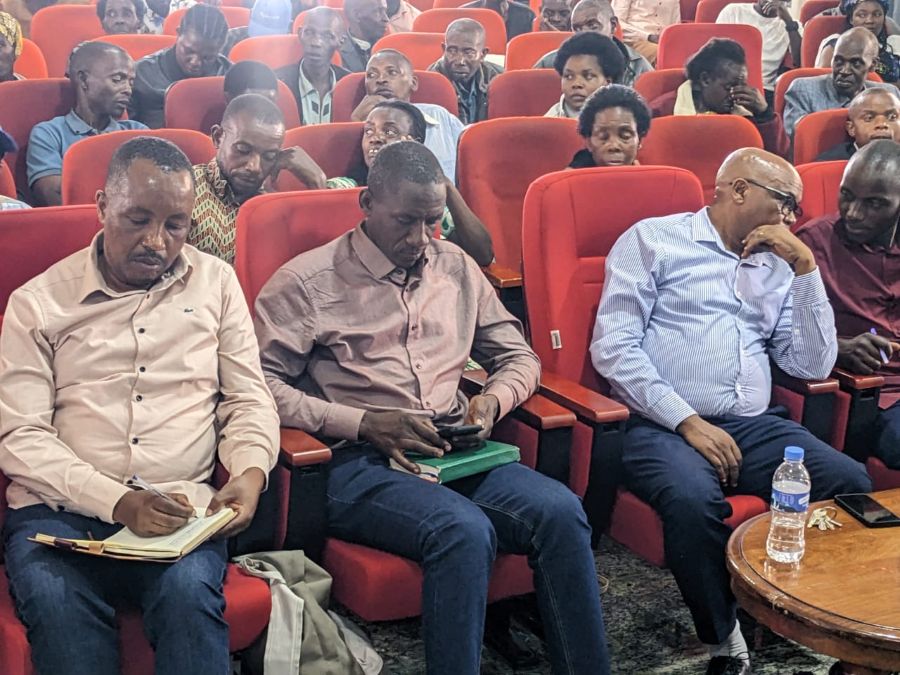
Tuzamurane Cyeza Cooperative has 36 groups, of which 13 are involved in selling compost, according to Mukarushema. She said other members were also learning from those already engaged in its production.
How the group makes its compost
Mukarushema said the training also introduced members to the use of earthworms, which they call “friends of farmers,” to help break down organic materials during compost preparation.
The process begins with laying small sticks on the ground to allow air to circulate beneath the compost. Members then add dry grass, fresh grass, animal manure, and ash, which they use as a source of minerals. They add water and cover the mixture.
The group also prepares food to attract and multiply earthworms. Mukarushema said members cook rice, sweet potatoes, Irish potatoes, and sugar, place the mixture in a jerrycan, and cover it. After four days, they collect the earthworms and their eggs and transfer them to the compost.
Within about a week, she said, the worms multiply and help break down the organic materials.
She said the method had made it easier for members to obtain organic fertilizer when they needed it, reducing the challenges they previously faced when fertilizer was unavailable.
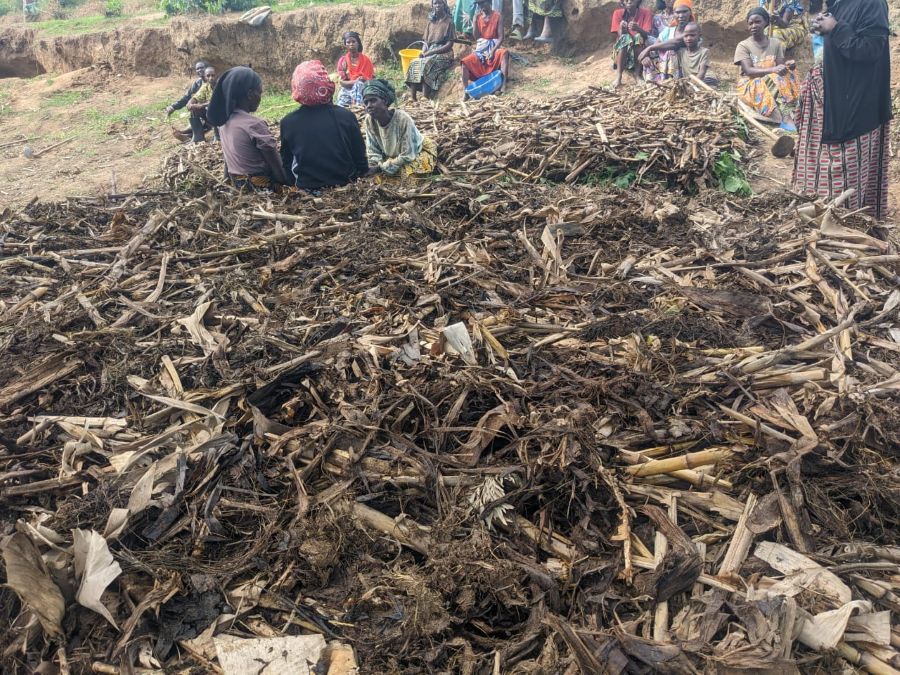
SAIP II also trained the group in modern farming, crop rotation, group management, and working with financial institutions. It provided improved hybrid seeds, including carrots, peppers, tomatoes, and onions, which members planted using the compost they had learned to prepare.
The group rotates crops, growing maize and then replacing it with vegetables, depending on the season. Mukarushema said the cooperative had recently delivered about 203 tonnes of maize.
She encouraged other farmers to adopt compost making, saying it had helped members improve access to fertilizer and avoid delays in planting caused by shortages. The knowledge-sharing session also gave the group ideas about expanding into fruit production.
“Although we were already growing maize and vegetables, we learned that we could also venture into fruit farming. We will discuss it as a group and see how we can take it forward, including possibly establishing a fruit farm,” she said.
Potato farmers seek to improve production.
The knowledge-sharing session also brought together farmers from other cooperatives, including COIABNDI Cooperative, which operates in the Rongi, Kibangu, Kiyumba, and Rugendabari sectors of Muhanga District.
Vedaste Mabano, the cooperative’s president, said its 160 members mainly grow Irish potatoes, alongside maize and beans, through crop rotation. The cooperative cultivates about 34 hectares, according to Mabano.
He said SAIP II had supported members through agricultural training and the provision of Irish potato seeds and organic fertilizer, as well as study visits to other farming cooperatives.

Mabano said potato farming offered members an opportunity to earn income, although it required substantial investment.
“On one hectare, we invest about Rwf5 million and expect to earn around Rwf15 million,” he said.
He said the session had helped him understand how other cooperatives were organising their farming activities and improving production.
After learning from a maize-growing cooperative in Cyeza, he said COIABNDI members recognised that they still had work to do to improve their performance.
“We have learned a lot from this session. We have seen how other cooperatives work, and we want to reach their level or even do better,” he said.
The district highlights investment in farming infrastructure.
Eric Bizimana, Muhanga District’s vice mayor in charge of economic development, said SAIP II had supported farmers through training, improved access to finance, increased production, and assistance in developing agricultural projects.
He said that about RWF 175 million had been invested in post-harvest infrastructure, including drying facilities and storage for Irish potatoes. Two drying facilities were nearing completion, he added.

Bizimana said training in modern farming practices and the use of agricultural inputs had contributed to improvements in potato and maize production.
He said the district would continue working with farmers to ensure that the knowledge and infrastructure provided through the project remained useful beyond its implementation period.
The district had also requested regular follow-up visits, at least every six months, to assess whether the activities supported by SAIP II were being maintained and delivering lasting benefits, he said.
For farmers in Muhanga, the knowledge-sharing session provided an opportunity to learn from other cooperatives, improve production methods, and consider new farming activities. The challenge now is to maintain those practices and build on the progress made.