 0
0
 0
0
By Emmanuel Mutangana
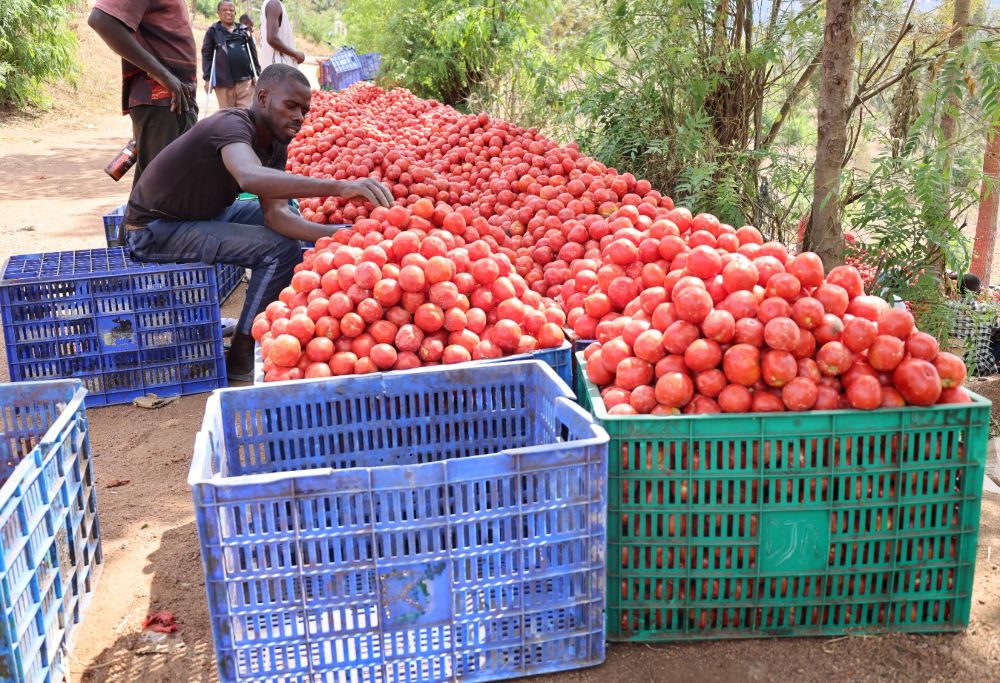
Improved tomato seeds, better farming practices, and stronger links to buyers are helping farmers in Ruhango District increase production and secure better prices for their harvests, according to members of Abiyunze Kinazi Cooperative.
The cooperative, which operates in Burimo Cell, Kinazi Sector, says tomato production has increased significantly since farmers began receiving support through the Commercialization and De-risking for Agricultural Transformation (CDAT) Project.
Abiyunze Kinazi has 610 members, including 290 men and 320 women. Its members cultivate tomatoes and rice in the Kanyegenyege marshland, which stretches across Kinazi Sector in Ruhango and Busoro Sector in Nyanza District.
The farmers rotate the two crops by season.
Boniface Bavakure, president of Abiyunze Kinazi Cooperative, said poor-quality seed, limited technical knowledge, and weak market access previously constrained tomato production.
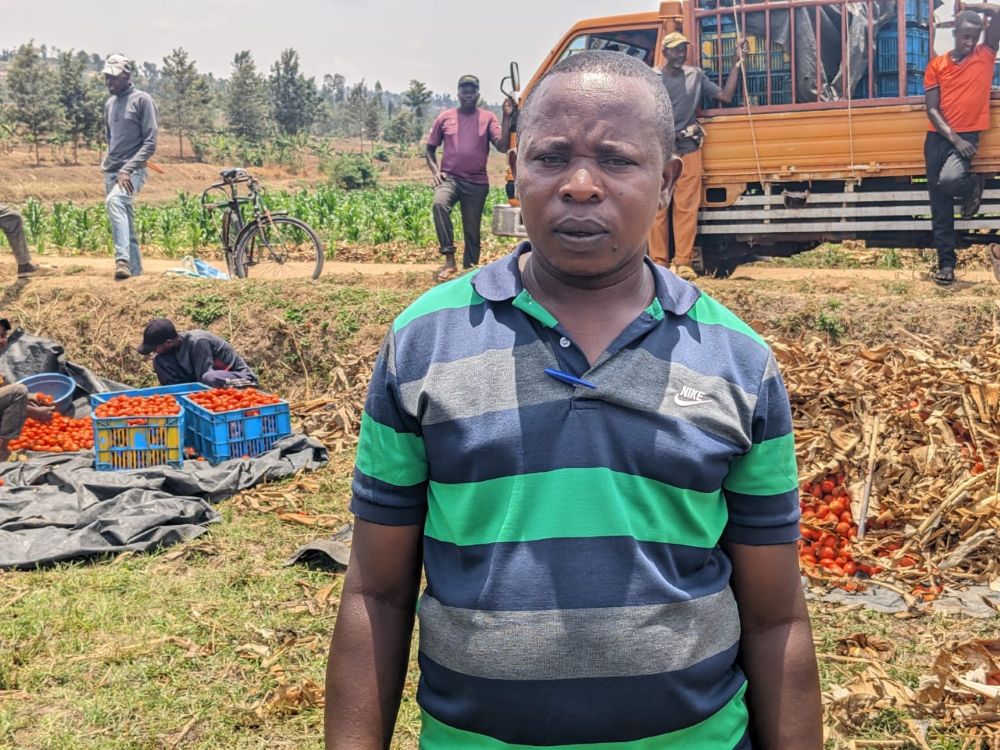
“Before we started working with CDAT, farmers were using the seed varieties they sourced themselves. On one hectare, we could harvest between seven and eight tonnes, depending on the variety,” Bavakure said.
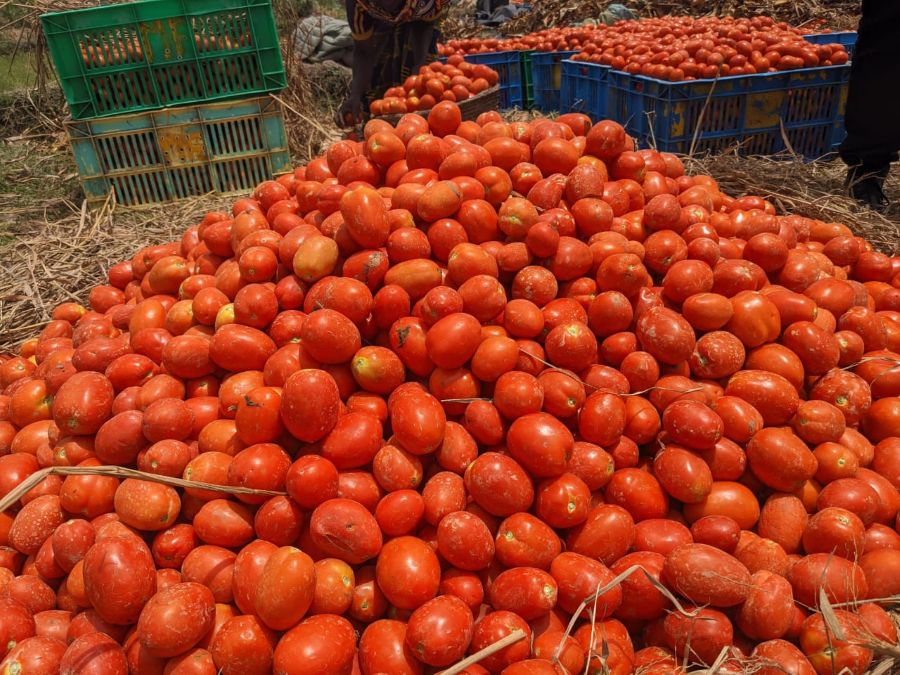
He said some of the varieties previously used by farmers were difficult to harvest and transport because the tomatoes were soft and easily damaged, making it difficult to find reliable buyers.
The situation has changed since farmers received improved seed and training on good agricultural practices.
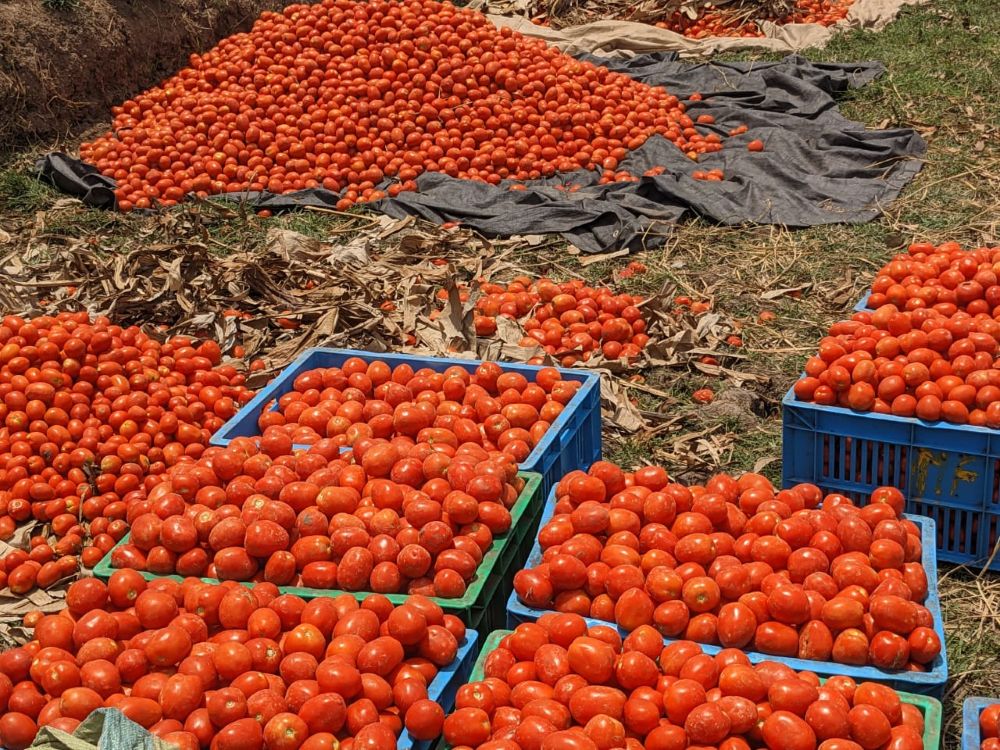
“Today, on one hectare where we have harvested about six times, we can get between 13 and 14 tonnes,” Bavakure said.
He attributed the increase to both improved seed and training that helped farmers determine the appropriate planting density, fertilizer application, timing, and correct use of crop protection products.
The harvest could increase further because the current crop had not yet completed its production cycle, he said.
Better tomatoes, stronger market
The increase in production has been accompanied by improved access to buyers.
Bavakure said farmers previously sold their tomatoes in small local markets, where a crate could sometimes fetch as little as Rwf2,000 to Rwf3,000.
With buyers linked to them through CDAT, the cooperative initially sold a crate for about Rwf12,000, while the price has since reached Rwf18,000.
He said the stronger and less fragile tomatoes are better suited to transportation, reducing losses between the farm and the market.
Antoinette Mukandayisabye, a tomato trader and member of Duharanire Kwigira Cooperative in Nyarugenge, Kigali, is among the buyers purchasing produce from Abiyunze Kinazi.
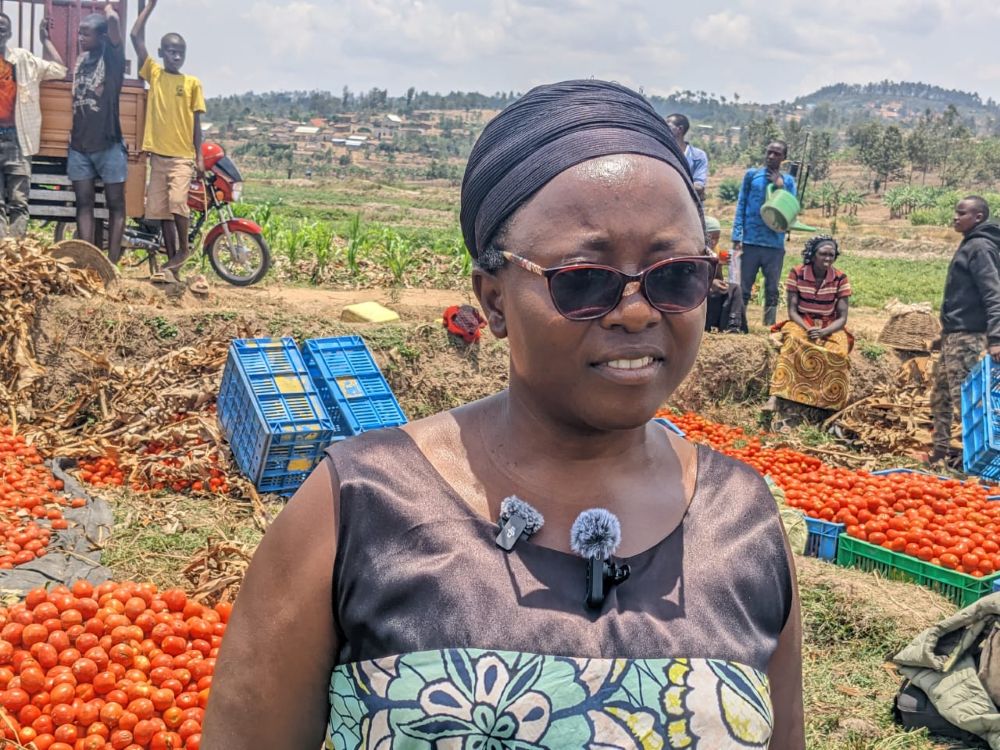
She said that the quality of tomatoes from the cooperative has improved compared with previous seasons.
“I have bought tomatoes from this cooperative this season, and I have seen a difference in the quality of the produce compared with previous years,” Mukandayisabye said.
She said the cooperative previously struggled with tomato varieties that resulted in significant losses during transportation.
“If we were transporting five tonnes, we could find that another three tonnes were left as damaged produce because the variety was not good,” she said.
Mukandayisabye said her cooperative supplies tomatoes to markets in Rwanda as well as Tanzania and Kenya, making quality and durability important considerations for buyers.
She said the improved tomatoes from Ruhango are now competitive with produce from other markets.
“Today, when we take them to the market, we can sell them at the same level as other tomatoes,” she said.
Her cooperative buys a crate from the farmers at Rwf18,000 and can sell it for between Rwf22,000 and Rwf23,000, depending on the market.
For Mukandayisabye, improved quality has also reduced the reputational risk for traders.
“As a trader, one of the benefits is that I can compete with other traders in the market without being embarrassed to say that I have good Rwandan tomatoes,” she said.
Beatrice Mukarwego, a member of Abiyunze Kinazi Cooperative, said farmers previously relied on seed they sourced individually, without adequate technical knowledge on how to maximize production.
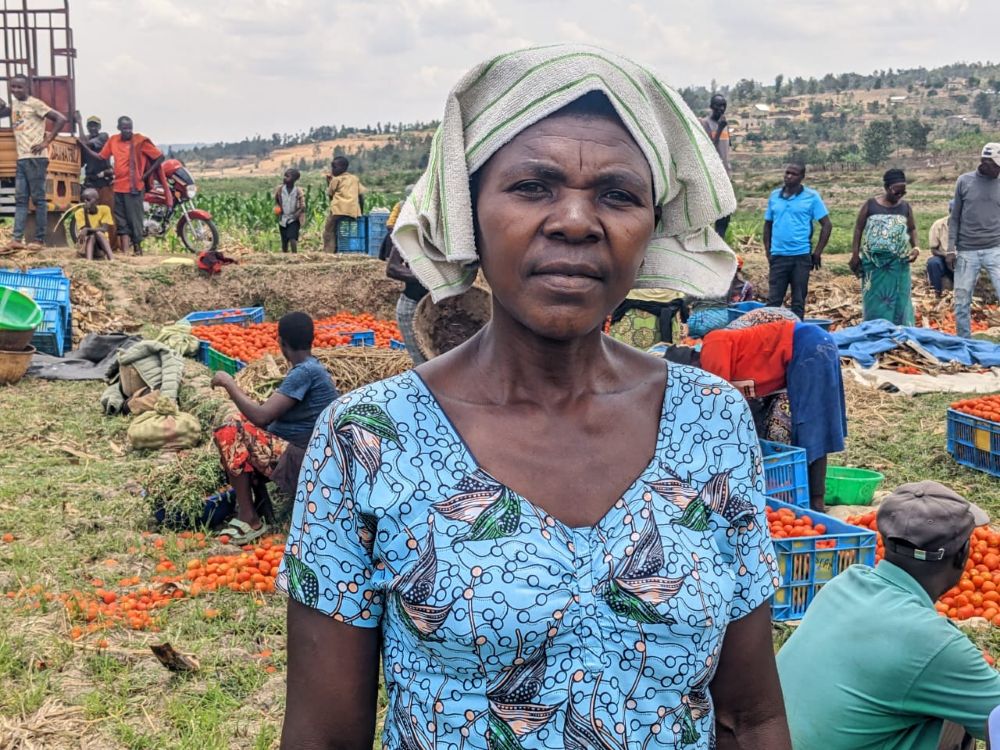
She said the earlier seed varieties produced lower yields and tomatoes that were less firm.
Mukarwego added that the improved varieties have brought better production and tangible benefits to her household.
“Farming tomatoes in this cooperative has helped me buy three goats and two pigs. This season, it has also helped me pay school fees for my child,” she said.
Wider support for horticulture
Chantal Muhoza, a horticulture specialist with RAB/SPIU under the CDAT Project, said farmers had previously faced challenges including limited access to markets, difficulties transporting produce, inadequate information about markets and agricultural inputs, and gaps in knowledge of good agronomic practices.
She said CDAT responded through farmer training, field demonstrations, study visits, cooperative organization, erosion-control measures, matching grants, and stronger market linkages.

“Post-harvest infrastructure has also been introduced to help farmers preserve produce and move it to markets,” Muhoza said.
The project also established demonstration farms within cooperatives to give farmers practical opportunities to learn improved production techniques.
According to project figures, about 4.5 tonnes of seed have been distributed, while approximately 354 hectares of demonstration farms have been established among cooperatives across 15 districts.
Horticulture productivity rising
Project figures indicate that productivity has increased for several horticultural crops since CDAT interventions began.
During Season A, chili productivity increased from 7.4 tonnes per hectare in 2023 to 8.9 tonnes per hectare in 2025, representing a 20.3 percent increase.
French bean productivity rose from eight tonnes per hectare to 10.3 tonnes per hectare over the same period, an increase of 28.8 percent.
During Season B, chili productivity increased from seven tonnes per hectare in 2023 to eight tonnes in 2025, while onion productivity rose from 13 tonnes per hectare in 2024 to 14.8 tonnes in 2025.
French bean productivity recorded a larger increase, rising from eight tonnes per hectare in 2023 to 11.8 tonnes in 2025, equivalent to a 47.5 percent increase.
During Season C, chili productivity increased from six tonnes per hectare in 2023 to 10 tonnes in 2025, a 66.7 percent increase.
The project’s support has also been linked to increased participation in export markets.
According to project figures, 4,000 tonnes and 319 kilograms of chilli produced by 10 cooperatives were exported, generating approximately Rwf2.16 billion for farmers.
Fresh bean exports reached 3,294 tonnes from 17 cooperatives and generated approximately Rwf1.62 billion for farmers.