
 0
0
 0
0
By Emmanuel Mutangana
Farmers in Gisagara District have sharply increased onion production after gaining access to improved seed varieties, agricultural training, and stronger market connections through the Commercialization and De-risking for Agricultural Transformation (CDAT) Project.
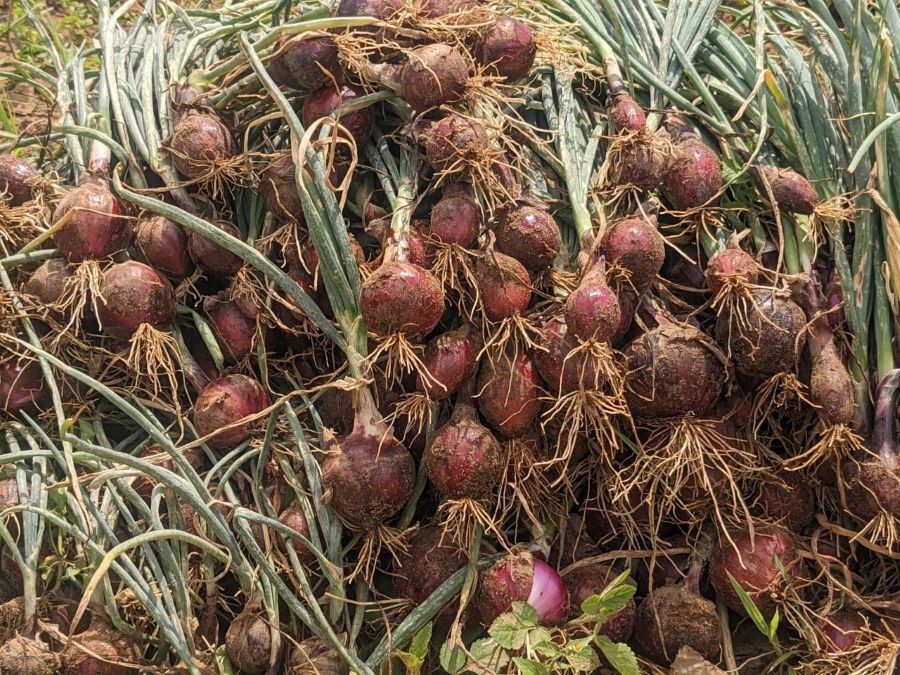
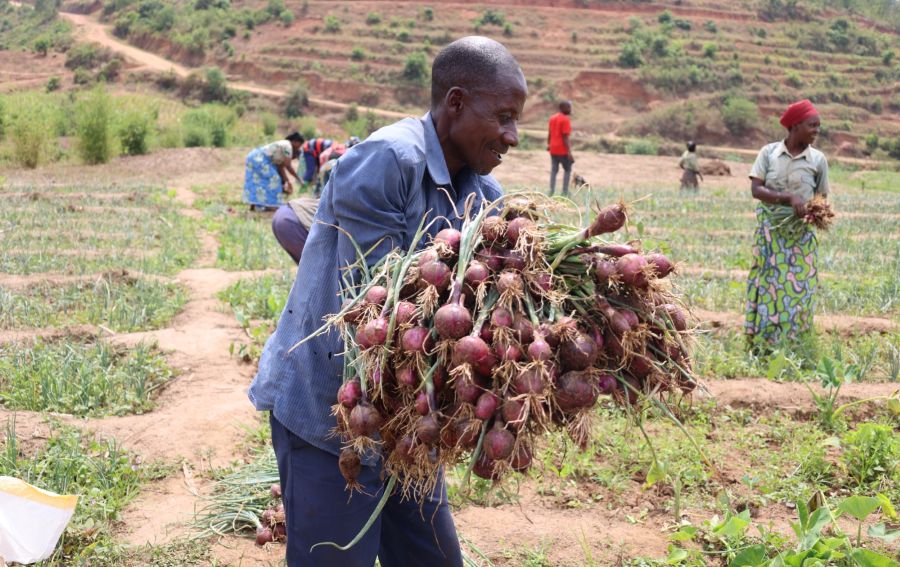
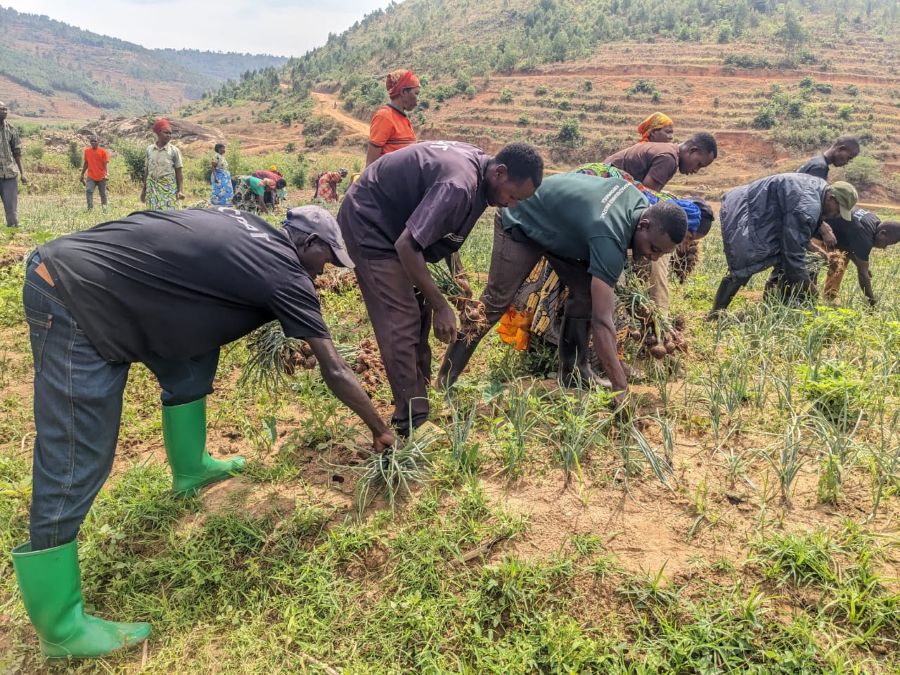
At Korwamuki Cooperative in Kigembe Sector, farmers say onion production has risen from about four tonnes in previous seasons to 18 tonnes per hectare after receiving improved seed and support to strengthen their farming practices. The onions were planted on three hectares, putting total production at about 54 tonnes.
The cooperative has 623 members and obtained legal status in 2018. Its members cultivate crops in the Nyakanyeri Scheme, where they previously struggled with flooding, limited access to quality seed, and difficulties finding reliable markets.
Xaverine Mukeshimana, president of Korwamuki Cooperative, said CDAT first helped address water-related challenges affecting the scheme before supporting farmers with other agricultural needs.
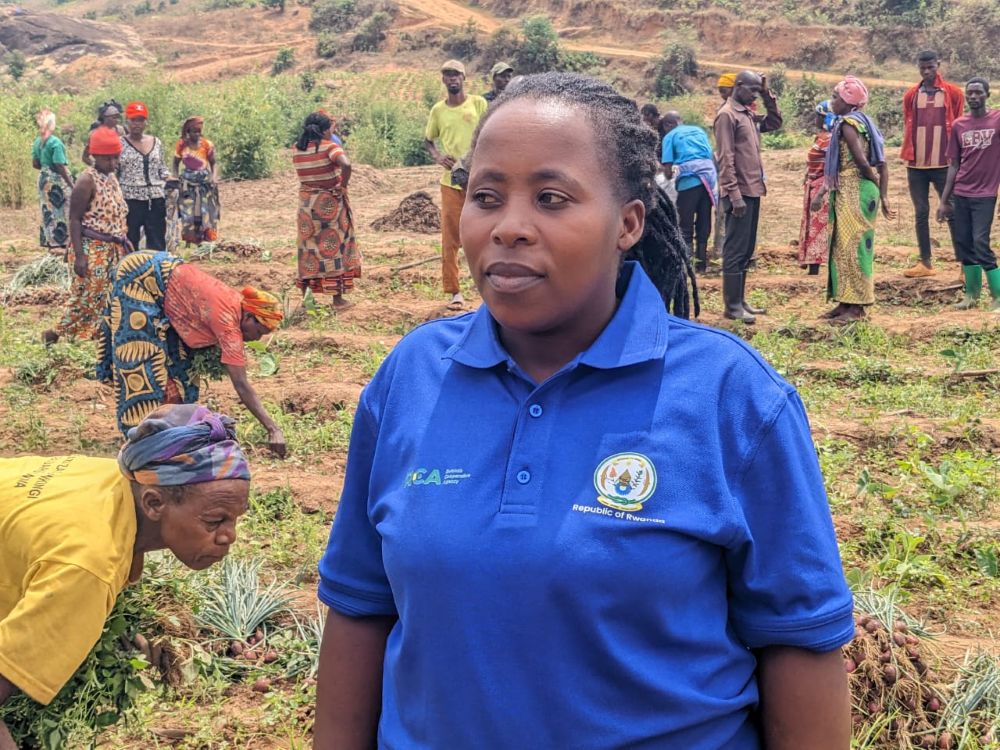
“The project first worked on the scheme, starting uphill, to control the water that used to come down and destroy our crops. We used to work and lose everything,” she said.
After the initial interventions, farmers identified access to improved and market-preferred seed as one of their major needs.
Mukeshimana said CDAT provided improved onion seed, which farmers planted on three hectares and harvested about 18 tonnes per hectare.
Before receiving the improved seed, the cooperative’s total onion harvest from the same area was usually no more than four tonnes per hectare, she said.
The increase was accompanied by improvements in crop quality.
“We not only get a larger harvest. The onions were also of good quality, especially because they came from a variety that was not commonly grown here but was very good,” Mukeshimana said.
The cooperative sold the onions at about Rwf700 per kilogram, compared with around Rwf500 previously.
Market access has also changed.
Previously, individual farmers had to search for buyers themselves, sometimes struggling to sell their produce.
Mukeshimana said CDAT’s support in connecting farmers to markets has reduced that challenge.
“We have not experienced the shortage of markets that we used to face,” she said.
For individual farmers, the change is also visible at the household level.
Emmanuel Kabuga, a member of Korwamuki Cooperative, said training and improved seed changed the way he approaches onion farming.
He planted onions on five ares and harvested 300 kilograms, compared with about 90 kilograms before he received the improved seed through CDAT.
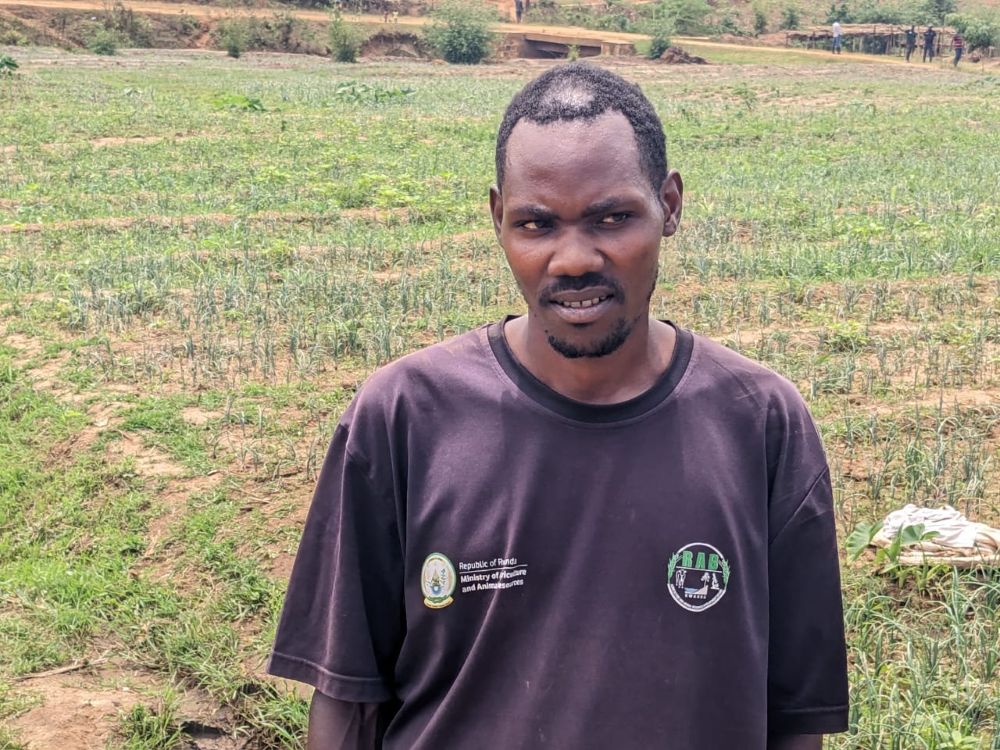
“The training improved the quality of farming here, and the project also gave us improved onion seed that matures in about two months,” Kabuga said.
The income from his harvest helped him pay school fees for his children and health insurance for his family. He also bought two goats and a pig, he said.
Choosing the right seed
Chantal Muhoza, a horticulture specialist under the CDAT Project, said improved onion varieties were introduced through demonstration farms in areas where farmers had not traditionally grown the crop.
“Onions were mainly introduced in areas where farmers were not already growing them, using demonstration farms so that farmers could see their potential and adopt the crop,” Muhoza said.
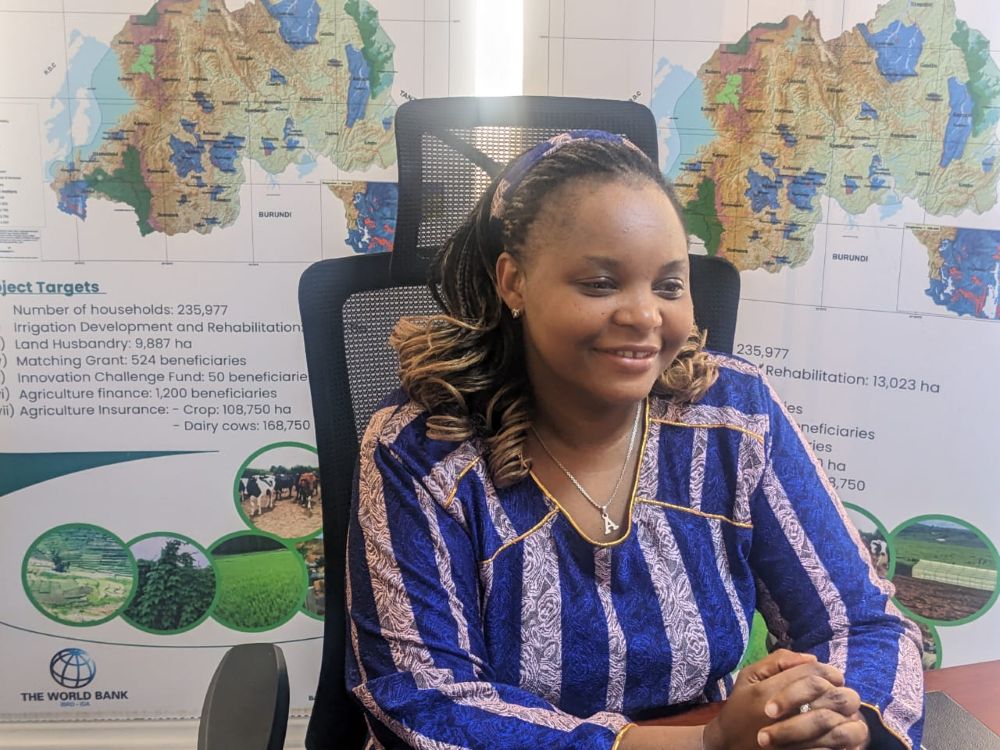
According to Muhoza, 270 kilograms of onion seed were distributed and planted across 45 hectares of demonstration farms in areas covered by CDAT.
The variety introduced at Korwamuki was Neptune, which she said is suited to warmer areas. She said the variety produces relatively large and uniform bulbs with a red colour preferred by the market. It also has better storage characteristics because the bulbs dry after harvest, reducing the risk of rotting compared with varieties that are more susceptible to post-harvest deterioration.
The demonstrations were also intended to help farmers understand the importance of selecting seed varieties according to local climatic conditions.
“Farmers need to know which varieties perform well in warm areas and which ones are suited to cooler conditions before deciding what to plant,” Muhoza said.
Project figures show that onion productivity has also increased across the CDAT-supported areas.
During Season B, average onion productivity rose from 13 tonnes per hectare in 2024 to 14.8 tonnes per hectare in 2025, representing a 13.8 percent increase.
Muhoza said the project expects productivity per hectare to continue increasing as farmers adopt improved varieties and farming practices.


