
 0
0
 0
0
By Annonciata Byukusenge
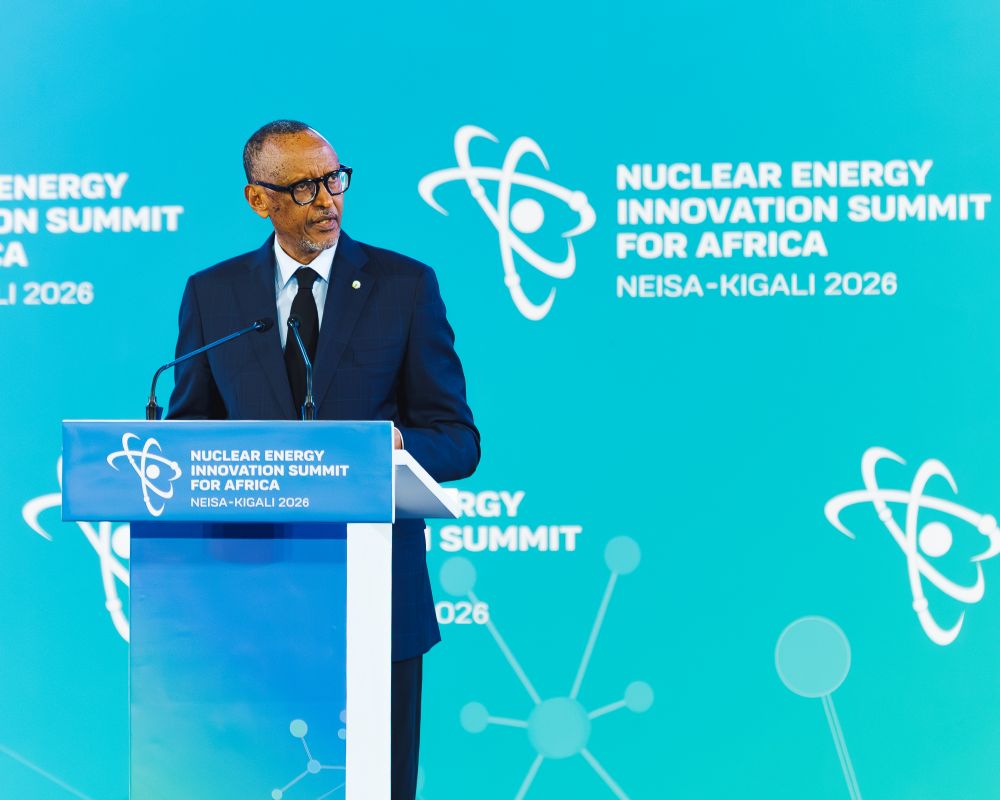
President Paul Kagame has laid out a definitive timeline for Rwanda’s ambitious atomic leap, announcing that the first critical phase of national readiness assessments is complete and the grid could see its first nuclear electrons flowing by the early 2030s.
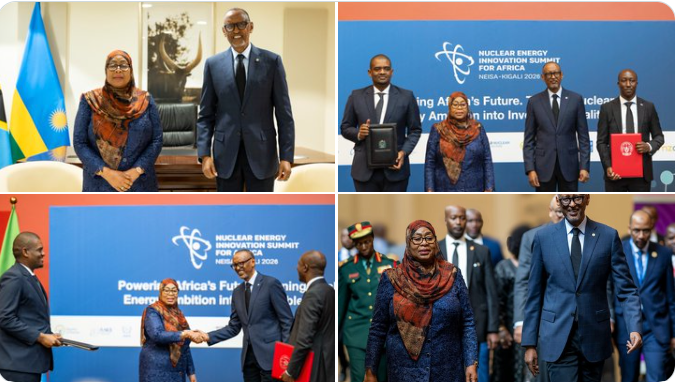
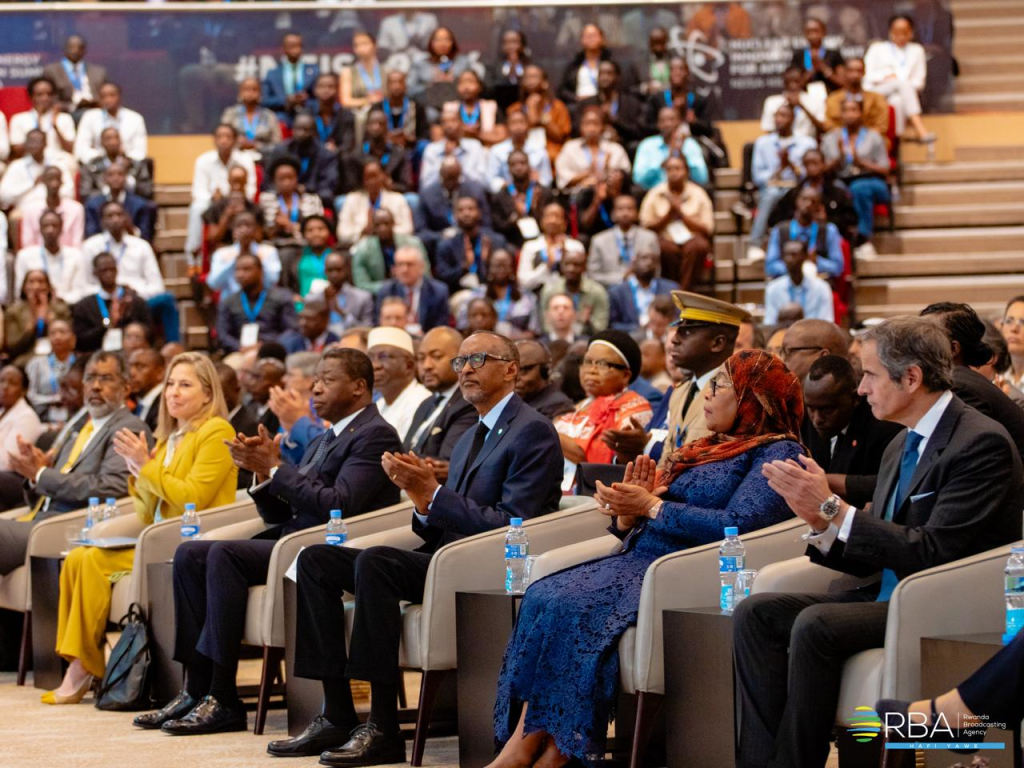
He highlighted this during the opening of the second African Congress on Nuclear Energy and Innovation in Kigali. The summit has drawn an influential crowd of continental policymakers, researchers, and global investors, alongside heads of state including Tanzanian President Samia Suluhu Hassan and Togo’s Faure Essozimna Gnassingbé.
For Kagame, the heavy political presence at the summit is proof of a growing continental consensus: Africa’s development bottleneck cannot be solved by incremental energy gains.
“For Africa, energy is not just a development issue; it is the absolute foundation of industrial growth and trade competitiveness,” Kagame said. “Modern manufacturing, mineral processing, digital infrastructure, and advanced healthcare all rely on one thing: reliable, constant power.”
The blueprint has already received a crucial stamp of approval from the International Atomic Energy Agency (IAEA). The agency’s Integrated Nuclear Infrastructure Review recently verified that Rwanda has successfully cleared its initial phase of infrastructure planning.
IAEA Director General Rafael Mariano Grossi, present at the summit, emphasized that the global conversation around energy security has fundamentally shifted. “How we help each country secure its power grid is what ultimately dictates how we support its development, especially here in Africa,” Grossi noted.
The geopolitical chessboard: Washington and Wall Street
Rwanda isn’t waiting around for the technology to mature on its own; it is actively anchoring itself to global nuclear tech hubs.
During the summit, Rwanda and the United States signed a Nuclear Cooperation Memorandum of Understanding (NCMOU), framing a partnership around peaceful atomic energy development. This legal framework builds on a string of aggressive commercial plays by Kigali over the last two years.
In August 2024, Rwanda signed a development deal with US-based Nano Nuclear Energy Inc. to explore cutting-edge micro-reactor technologies.
In 2023, the government partnered with Dual Fluid Energy Inc. (a German-Canadian joint venture) to establish a test reactor in Rwanda, utilizing an innovative liquid-fuel design.
Traditional Grid: 406 MW to the 2050 Nuclear Leap, with a target grid of more than 5,000+ MW.
The scale of the ambition
To understand why Rwanda is betting so heavily on atomic energy, you have to look at the sheer scale of its economic deficit.
Right now, Rwanda’s national grid operates on a modest 406 megawatts. To fuel its Vision 2050 strategy, which aims to transform the nation into a high-income, fully industrialized economy, the government estimates it needs to scale its power capacity to over 5,000 megawatts.
Traditional renewables like solar and hydro simply cannot provide that kind of baseline industrial power on their own. Instead, Kigali is placing its chips on Small Modular Reactors (SMRs), smaller, safer, and more flexible nuclear plants that can be built in modules and deployed directly near industrial zones.
The country has been quietly laying the intellectual groundwork for this shift for nearly a decade. Since 2018, the government has sponsored more than 200 Rwandan students to study nuclear science and engineering abroad, while simultaneously launching a dedicated nuclear science department at the University of Rwanda.
When the first reactor finally goes online in the next decade, the country intends to have an entirely homegrown generation of scientists ready to flip the switch.


