 0
0
 0
0
By Christophe Uwizeyimana
There are places where nature is beautiful.
And then there are places where nature seems to have a story of its own.
Nyungwe is one of them.
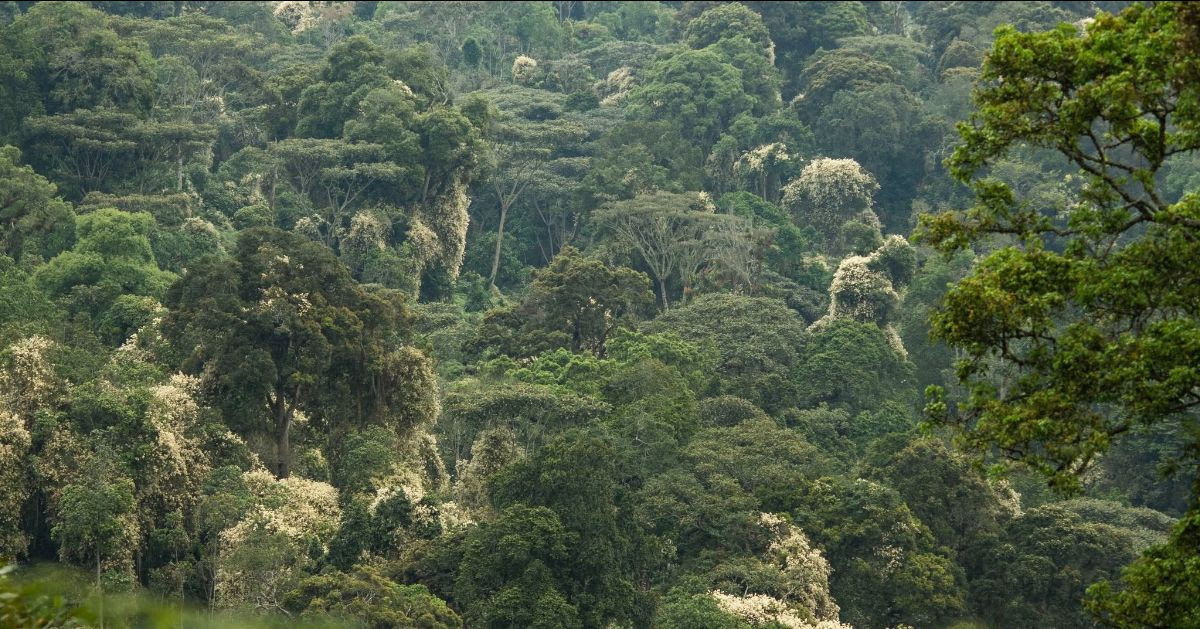
Deep in southwestern Rwanda, the forest changes with the seasons, revealing something new to those who take the time to look. A misty morning can transform a familiar trail. A quiet stretch of forest can suddenly come alive with birds, insects, or the movement of wildlife. And sometimes, a discovery that happens only once in many years can turn an ordinary season into an extraordinary one.
In 2026, Nyungwe told many such stories.
Some were written by the forest itself. Others were written by the people who protect it, study it, run through it, and connect its conservation story to the wider world.
From an extraordinary flowering event that returned after 16 years to international conservation exchanges, staff training, marathon running, and celebrations honouring the people who guard the forest, Nyungwe’s 2026 story was ultimately a story about connection between people and nature, knowledge and action, Rwanda and the wider conservation community.
When the Forest Blooms: The Return of Imikipfu
Sometimes, the forest tells its story without making a sound.
In 2026, one of Nyungwe’s most remarkable stories unfolded quietly among its vegetation: Imikipfu (Cercostachys scandens) began flowering again after 16 years.
The previous flowering events were recorded in 1993 and 2010, making the 2026 bloom a rare natural spectacle.
For visitors and conservationists, the flowering offered a glimpse into one of the forest’s longer rhythms. The flowers are expected to remain for approximately six to eight months before producing fruits, while a new generation of the plant may take another 15–16 years to mature and reach its next flowering period.
The plant itself presents a fascinating ecological story.
Imikipfu is a vigorous and competitive vine grass that is widespread throughout Nyungwe. Its rapid growth allows it to compete with other vegetation for space, light, and nutrients. Yet during its flowering period, the plant can also provide an important seasonal resource: abundant nectar for bees, potentially supporting increased honey production.
That contrast captures something fundamental about nature. A species can present challenges to other vegetation while simultaneously becoming part of an important ecological cycle.
For those fortunate enough to witness it, the 2026 bloom was therefore more than a display of flowers.
It was a reminder that Nyungwe operates on timescales far longer than our own.
Sixteen years can pass almost unnoticed in human life. In a forest, it can mark the return of a phenomenon that researchers, conservationists, and visitors may only have a handful of opportunities to witness.
And when the flowers disappear, the story will not end.
The forest will simply begin waiting for the next chapter.
Protecting the Forest Beyond Its Borders
Protecting a rainforest does not always mean staying within the boundaries of the forest.
Sometimes, conservation becomes stronger when people step beyond those boundaries to learn from others.
In 2026, three members of Nyungwe’s Conservation and Research team—NTIBABARIRA Jean Pierre, NDAHAYO Philbert, and UKUBASHYE Pascal—completed an exchange visit to Odzala-Kokoua National Park in the Republic of Congo.
The exchange created an opportunity for the team to meet conservation colleagues, share experiences, and learn from another major African rainforest landscape.
For the participants, the visit was more than professional travel.
It was a chance to compare experiences, discover different approaches, strengthen technical knowledge, and consider how lessons from another protected area could contribute to conservation work at home.
Across Africa, protected areas face many challenges that do not stop at national borders. Knowledge-sharing therefore becomes an important part of conservation.
A lesson learned in one rainforest can inspire an idea in another.
A challenge faced by one team can help another prepare.
And a professional relationship established between conservationists can eventually become a partnership for protecting Africa’s natural heritage.
Sometimes, protecting a forest begins by listening to another forest.
Running for Health, Teamwork and Nyungwe
On 27 June 2026, the Nyungwe family traded some of its usual routines for running shoes.
The occasion was the Nyungwe Marathon 2026, which brought together an impressive team of 41 participants.
Six took part in the full marathon, while 35 participated in the half marathon.
But for Nyungwe Management Company staff, the event was about much more than distance and finishing times.
It was about health, teamwork and well-being.
For people whose daily work can involve demanding responsibilities in and around a protected area, moments of shared activity outside the workplace create an opportunity to strengthen relationships and build a sense of community.
The marathon also offered another way of presenting Nyungwe—not only as a protected rainforest, but also as a destination capable of supporting outdoor experiences and responsible tourism.
Every kilometre became a small reminder of the same principle that underpins conservation itself:
Progress is easier when people move together.
Preparing for the Unexpected
Working in a protected area means being prepared for situations that cannot always be predicted.
Between 1 and 5 June 2026, a total of 25 park staff participated in national training on Ebola preparedness and response for frontline veterinarians and park rangers.
The training strengthened participants’ knowledge of how to prepare for, identify, and respond to possible disease outbreaks.
For a forest such as Nyungwe, preparedness is particularly important.
The park connects wildlife, conservation personnel, researchers, visitors, and communities living around the forest. Protecting such a complex ecosystem requires more than protecting trees and animals; it also requires people to understand and manage potential risks.
Training is therefore part of conservation infrastructure.
A prepared ranger can respond more effectively.
A trained professional can identify a potential threat earlier.
And a well-informed team can help reduce risks before they become larger challenges.
The June training was another investment in the people responsible for responding when the unexpected happens.
From Nyungwe to the World
Some of Nyungwe’s stories travelled much farther than the forest.
From 14 to 25 July 2026, the Park Manager participated in the 8th UNESCO World Heritage Sites Managers Forum in South Korea, while also partially attending the 48th Session of the UNESCO World Heritage Committee.
The international gathering brought together managers and representatives connected to World Heritage Sites from around the world.
For Nyungwe, participation provided an opportunity to exchange experiences, discuss shared conservation and management challenges, and learn from approaches being used in other parts of the world.
But international forums are not only about learning.
They are also about sharing.
Nyungwe’s experience as a protected natural landscape in Rwanda becomes part of a much larger global conversation about how humanity can protect places of exceptional natural and cultural value.
From the forests of Rwanda to international conservation discussions, Nyungwe is connected to a global community working to preserve heritage for generations yet to come.
Celebrating the Guardians of Nyungwe
Behind every protected forest are people.
People who walk its trails.
People who monitor its wildlife.
People who respond to threats.
People who work in difficult conditions and whose contribution may often go unseen by visitors.
On 31 July 2026, Nyungwe Management Company organized Ranger Day to recognize the dedication and contribution of its rangers.
The celebration included a friendly football match between the Nyungwe Management Company team and the Rwanda National Police in Nyamasheke District.
The match ended 1–1.
But the score was hardly the most important result.
The event created an opportunity for people from the two institutions to meet, strengthen friendship, and reinforce teamwork and cooperation.
For the rangers themselves, the day offered recognition for work that requires discipline, dedication, teamwork, and courage.
Conservation is often represented through spectacular wildlife photographs, ancient trees, mist-covered mountains, and beautiful landscapes.
But behind those images are people.
The guardians of Nyungwe are part of the forest’s story too.
A Forest of Many Stories
The events of 2026 reveal something important about Nyungwe.
Its story cannot be told through one photograph, one species, one trail, or one season.
It is a story made from many smaller stories.
It is the story of a rare plant flowering after 16 years.
It is the story of conservation professionals crossing borders to exchange knowledge.
It is the story of staff running together for health and team spirit.
It is the story of people preparing for potential disease threats.
It is the story of Nyungwe taking its place in international conversations about World Heritage.
And it is the story of rangers whose everyday work helps keep the forest protected.
Together, these moments reveal conservation as something much larger than protecting a physical space.
Conservation is knowledge.
It is preparedness.
It is partnership.
It is teamwork.
It is science.
It is people.
And above all, it is a commitment to the future.
The Story Continues
Behind every quiet path, every misty morning and every sound beneath the canopy, another story is unfolding.
Some stories belong to the people who dedicate their lives to protecting Nyungwe.
Others belong to communities, researchers, partners, and visitors whose lives intersect with the forest.
And some stories belong to the forest itself—stories that may take years, decades, or even generations to reveal.
The return of Imikipfu reminded us that nature does not follow our calendars.
The exchange visit reminded us that conservation becomes stronger when knowledge is shared.
The marathon reminded us that teamwork extends beyond the workplace.
The preparedness training reminded us that protecting nature also means preparing for risks.
The UNESCO forum reminded us that Nyungwe’s story is part of a global heritage conversation.
And Ranger Day reminded us that every protected landscape depends on people willing to stand behind it.
As another season unfolds, the forest continues to change.
New flowers will appear.
Wildlife will move through the undergrowth.
Mist will once again settle over the canopy.
Rangers will return to the trails.
Researchers will ask new questions.
Visitors will arrive looking for their own unforgettable moments.
And somewhere beneath the ancient trees, another story will quietly begin.
Because in Nyungwe, every season tells a story.
And the story is still being written.
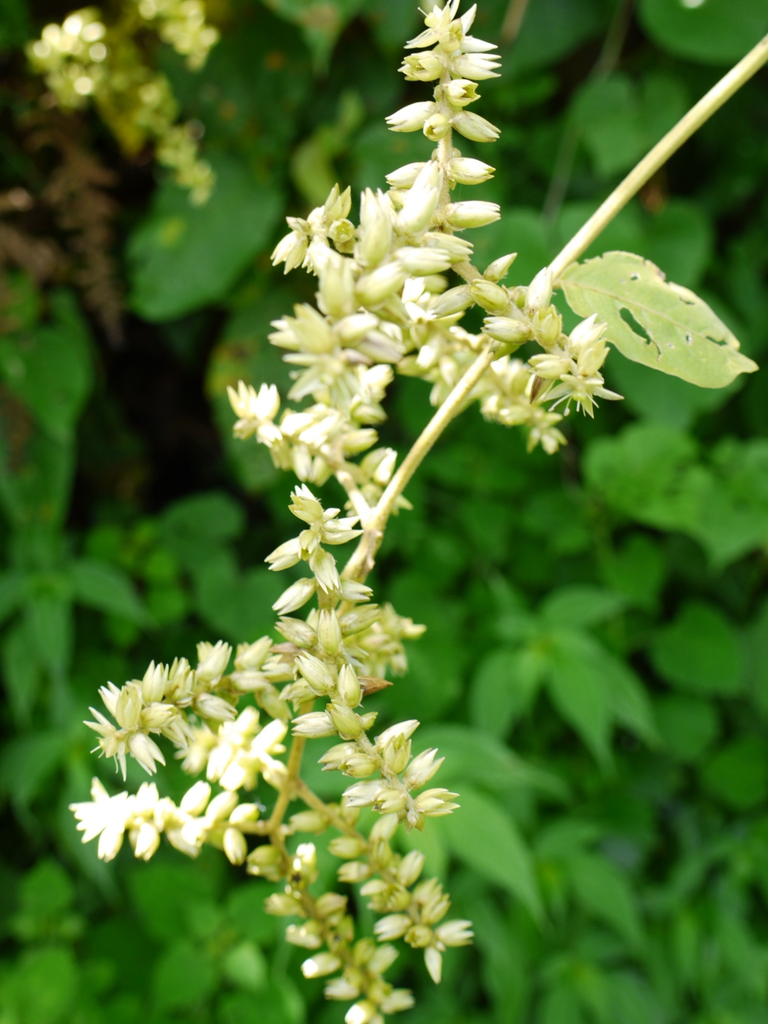
Photo: Sericostachys scandens
© Nyungwe National Park / Nyungwe Management Company — information and events based on material provided for the 2026 season.


