0 0
Read Time:2 Minute, 10 Second

By Christophe Uwizeyimana

On 28th October 2022, The Ministry of Environment has announced that this Forest Planting Season, Rwanda will plant more than 36 million trees to build resilience to climate change, increase forest coverage, prevent erosion and clean the air we breathe. This year also marks the 47th anniversary of National Tree Planting Day, both of which are organized by the Ministry of Environment and the Rwanda Forestry Authority.

On 29 October 2022 under the theme “Plant a Tree, Save the Future,” the start of Forest Planting Season and Tree Planting Day will be celebrated at the Kigali Special Economic Zone. Across the country, planting events will take place at the village level. The launch of this year’s season will take place during the monthly Umuganda (community work).

“When we plant trees, we invest in the future. Trees are one of our greatest allies in the fight against the climate crisis, the biodiversity crisis and the air pollution crisis. This Forest Planting Season, I encourage all Rwandans to plant a tree and save the future. Plant at least three trees in your garden, your school or your community,” said Minister of Environment, Dr. Jeanne d’Arc Mujawamariya.

During this year’s season, a total of 26,227,930 agroforestry seedlings, 7,609,374 classic forest seedlings, 1,601,931 fruit trees and 1,014,400 bamboo trees will be planted. In the City of Kigali, 20 hectares of forest will be rehabilitated while 44,660 native tree seedlings and 191,714 fruit trees will be planted.

The 2022/2023 forest planting season is dedicated to maintaining existing forests and increasing community involvement and ownership in forest restoration. It will also be an opportunity to highlight the role of partners and stakeholders to boost productivity, impact and sustainability in the forestry sector.

To promote agroforestry, trees will be planted along contour lines and terraces created on farmland in collaboration with communities. To ensure the sustainability of Rwanda’s forest planting programme, trees will be planted to expand agroforestry or woodlots. Citizens are also being encouraged to plant fruit trees in their gardens and on agricultural land to improve food security.

In 2011, Rwanda committed to bringing two million hectares of land under restoration by 2030 through the Bonn Challenge. Today, 30.4% of Rwanda’s surface area is covered by forests. The Government of Rwanda is working with a range of partners to conduct forest and landscape restoration to meet the country’s commitment under the Bonn Challenge.
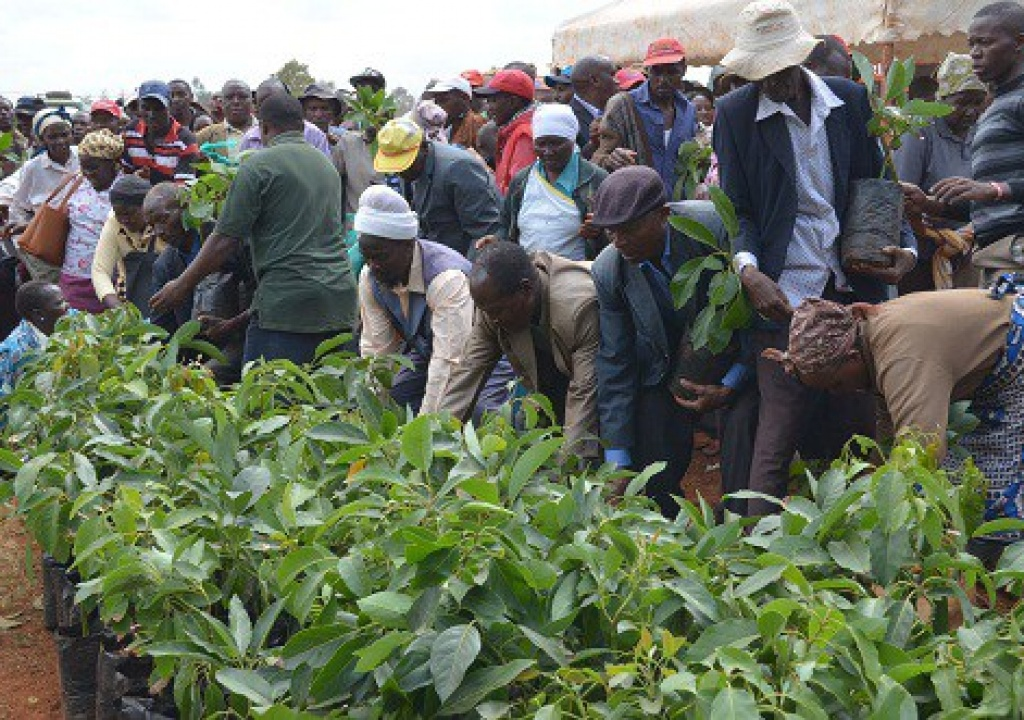
Photo:Rwanda to plant 36 million trees as part of annual Forest Planting Season

About Post Author

Christophe UWIZEYIMANA

Christophe Uwizeyimana is a Rwandan Health, Science, Agriculture and Environmental Journalist with over 10 years of experience in public-interest reporting. He is a reporter and editor at Radio Salus and Chief Editor of The Forefront Magazine. He holds a Bachelor’s degree in Business Administration from the University of Rwanda and is currently pursuing an International Master of Public Administration (IMPA) at Tsinghua University, China. He has also received professional training from FOJO Media Institute, University of Rwanda, and Aga Khan University, Kenya. He is an OFAB-Rwanda journalist fellow, specializing in agricultural biotechnology reporting. Awards Received: • Best Radio Journalist in Rwanda, NTDs/WASH Media Awards — 2024 • Best Statistics Reporter (Radio), Rwanda Data Journalism Awards — 2024 • Best Environmental Journalist in Southern Rwanda — 2024 • Health Reporting Winner, Rwanda Development Journalism Awards — 2023 • Health Award, ABASIRWA — 2023 • Overall Winner, Rwanda, OFAB Media Awards — 2023 • 2nd Place, Africa (Radio), OFAB Africa Media Awards — 2023 • Best Environmental Journalist in Southern Rwanda — 2022 • Anti-Corruption Journalism Award, Office of the Ombudsman — 2022 • Journalist of the Year, Radio Salus — 2018. He is a member of the InfoNile Journalists and Scientists' Coalition and the Rwanda Environmental Journalists' Organization, with a strong focus on evidence-based reporting on health, science, agriculture, environment and climate change.
Happy
Happy
0 %
Sad
Sad
0 %
Excited
Excited
0 %
Sleepy
Sleepy
0 %
Angry
Angry
0 %
Surprise
Surprise
0 %

By Christophe UWIZEYIMANA

Christophe Uwizeyimana is a Rwandan Health, Science, Agriculture and Environmental Journalist with over 10 years of experience in public-interest reporting. He is a reporter and editor at Radio Salus and Chief Editor of The Forefront Magazine. He holds a Bachelor’s degree in Business Administration from the University of Rwanda and is currently pursuing an International Master of Public Administration (IMPA) at Tsinghua University, China. He has also received professional training from FOJO Media Institute, University of Rwanda, and Aga Khan University, Kenya. He is an OFAB-Rwanda journalist fellow, specializing in agricultural biotechnology reporting. Awards Received: • Best Radio Journalist in Rwanda, NTDs/WASH Media Awards — 2024 • Best Statistics Reporter (Radio), Rwanda Data Journalism Awards — 2024 • Best Environmental Journalist in Southern Rwanda — 2024 • Health Reporting Winner, Rwanda Development Journalism Awards — 2023 • Health Award, ABASIRWA — 2023 • Overall Winner, Rwanda, OFAB Media Awards — 2023 • 2nd Place, Africa (Radio), OFAB Africa Media Awards — 2023 • Best Environmental Journalist in Southern Rwanda — 2022 • Anti-Corruption Journalism Award, Office of the Ombudsman — 2022 • Journalist of the Year, Radio Salus — 2018. He is a member of the InfoNile Journalists and Scientists' Coalition and the Rwanda Environmental Journalists' Organization, with a strong focus on evidence-based reporting on health, science, agriculture, environment and climate change.

Average Rating

5 Star
0%
4 Star
0%
3 Star
0%
2 Star
0%
1 Star
0%

Leave a Reply

Your email address will not be published. Required fields are marked *