
 0
0
 0
0
By Annonciata Byukusenge
Rwanda is moving to slash post-harvest losses and bridge the gap between smallholder farms and global dinner tables through a new strategic partnership aimed at reviving the country’s cooling infrastructure.
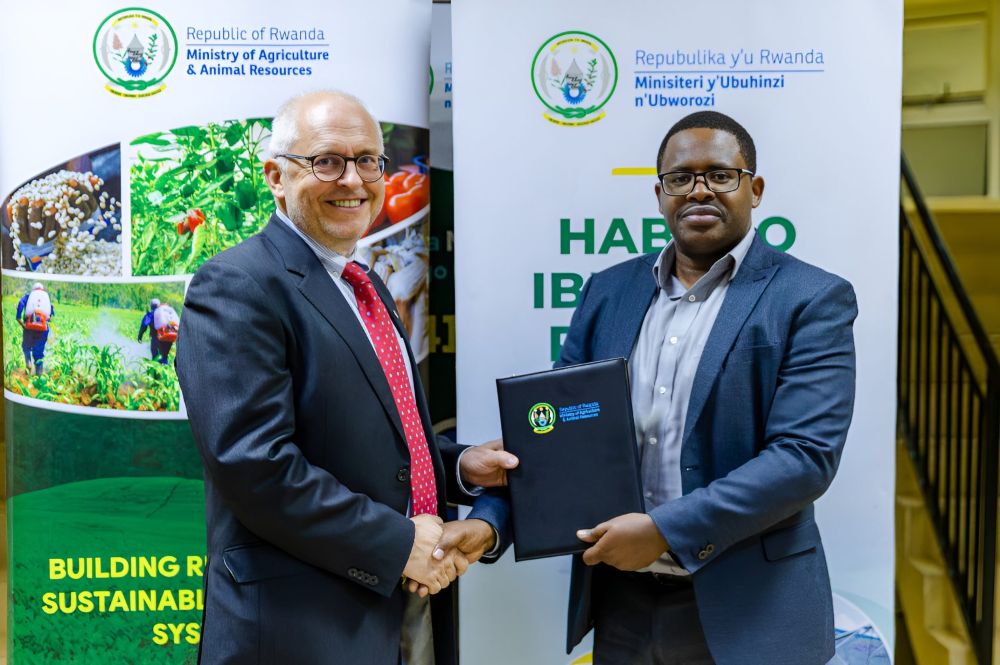
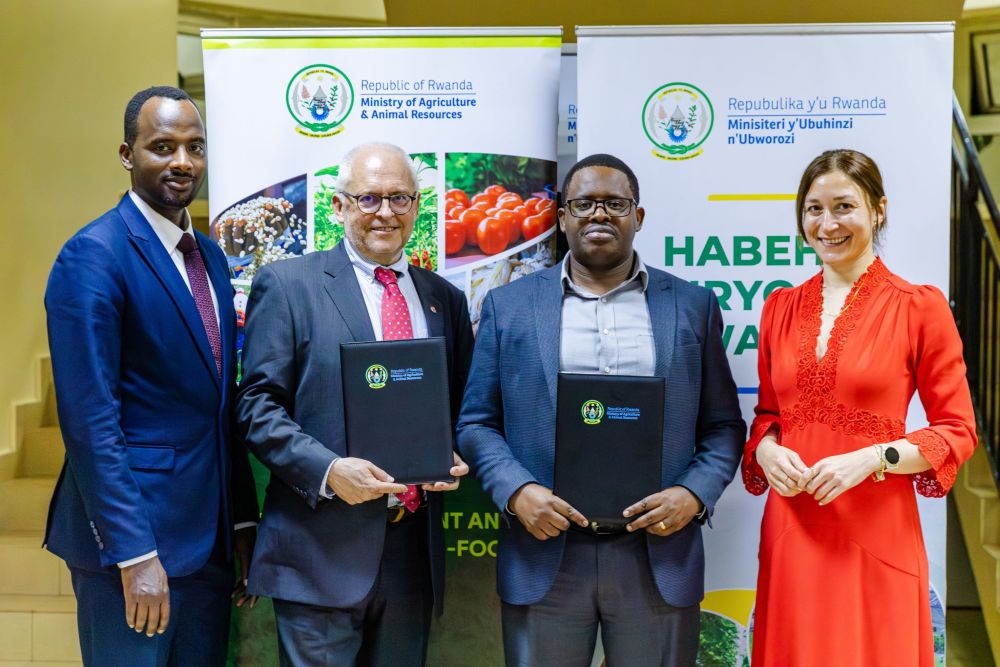
The Ministry of Agriculture and Animal Resources (MINAGRI) signed a Memorandum of Understanding on Friday with the Africa Centre of Excellence for Sustainable Cooling and Cold-Chain (ACES). The deal focuses on the technical “rehabilitation” of 10 underused cold-room packhouses scattered across the country’s key agricultural zones.
For Rwanda, a landlocked nation with ambitions to become a high-value agricultural exporter, the lack of a “cold chain” has long been a bottleneck. Without reliable refrigeration, fresh produce often rots before it can reach lucrative markets in Europe or the Middle East.
Bridging the farm-to-fork gap
The initiative targets over 400,000 smallholder households in districts including Rulindo, Rwamagana, and Karongi. By retrofitting these facilities with solar power and temperature-controlled environments, the government aims to create a “climate-resilient” network capable of handling over 2.3 million metric tonnes of produce annually.
“Across Africa, we often focus on production, but the real challenge lies between the farm and the market,” said Professor Toby Peters, executive director of ACES. “This is about building the systems that connect the two: cooling, logistics, standards, and skills.”
The revamped packhouses are designed to maintain strict temperature controls, processing at 12–15°C and storing as low as 4°C, to ensure fruits and vegetables meet the rigorous standards required for international shipping.
Commercial viability
While many development projects struggle with long-term sustainability, technical assessments released alongside the deal suggest this network is commercially “bankable.”
The facilities are projected to operate at full capacity, even if they capture just 1.6% of the serviceable market. The network will cover roughly 185,447 hectares of production land, representing about 36% of Rwanda’s total addressable market for fruits and vegetables.
Key technical specifications of the new packhouses are processing space of 120 m² per unit, power source, integrated solar energy systems to mitigate rural grid instability, certification, upgrading facilities to HACCP and Global G.A.P. standards, and scope, direct service to 4,811 production sites.
A living laboratory for Africa
Dr. Olivier Kamana, Permanent Secretary at MINAGRI, emphasized that the partnership serves as a cornerstone of Rwanda’s “Vision 2050” strategy, aimed at modernizing the sector and enhancing rural incomes.
“This initiative goes beyond mere construction,” Kamana stated. “It is about building systems that allow our farmers to participate fully in the global economy.”
Under the agreement, ACES, a collaboration between the governments of Rwanda and the United Kingdom, alongside several academic institutions, will lead the technical design and business model development. The facilities are also expected to serve as “living laboratories” to train a new generation of Rwandan cooling technicians and agribusiness managers.
The move comes as African nations increasingly look toward green, solar-powered solutions to solve food security issues while meeting climate goals. If successful, the Rwandan model could serve as a blueprint for similar “food corridors” across the continent.
About MINAGRI
- The Ministry of Agriculture and Animal Resources (MINAGRI) has the mission of promoting the sustainable development of a modern, efficient, and competitive agriculture and livestock sector to ensure food security, agricultural exports, and the diversification of production for the benefit of farmers and the country’s economy.
About ACES
- The Africa Center of Excellence for Sustainable Cooling and Cold Chains (ACES) is a first-of-its-kind global center of excellence focused on developing holistic and sustainable system-level cold chain solutions. Built on a “Hub and Specialized Outreach and Knowledge Establishment (SPOKE)” model, ACES shares knowledge, training, and technical support across markets. ACES serves as the first regional hub, while SPOKEs, developed with in-country expert partners, provide local training and community support to put tested real-world solutions into practice.
- The Africa Centre of Excellence for Sustainable Cooling and Cold-Chain (ACES) has been made possible through the joint support of the governments of Rwanda and the United Kingdom; UNEP; and the University of Birmingham, leading a UK academic consortium including Heriot-Watt University, Cranfield University, London South Bank University, Exeter University, the University of Rwanda, and Rwanda Polytechnic.


