
 0
0
 0
0
By Annonciata Byukusenge
UNCCD COP17 advances new pathways for land restoration, drought resilience and implementation
- US$1.3 billion portfolio of finance for land restoration and drought resilience across 23 countries, with rangelands at its centre through a US$1.2 billion portfolio spanning 45 projects
- Progress towards Land Degradation Neutrality (LDN), with Brazil presenting a new voluntary 2030 LDN target comprising 17 sub-targets, while Central Asia has already achieved half of its LDN targets.
- The Riyadh Global Drought Resilience Partnership, launched by Saudi Arabia at COP16, moved closer to operational delivery in Ulaanbaatar, advancing work on a proposed pooled fund to support around 70 vulnerable countries.
- UNCCD and Luxembourg launched the Drought Resilience Investment Facility, which aims to mobilize up to US$400 million in public and private capital for drought resilience.
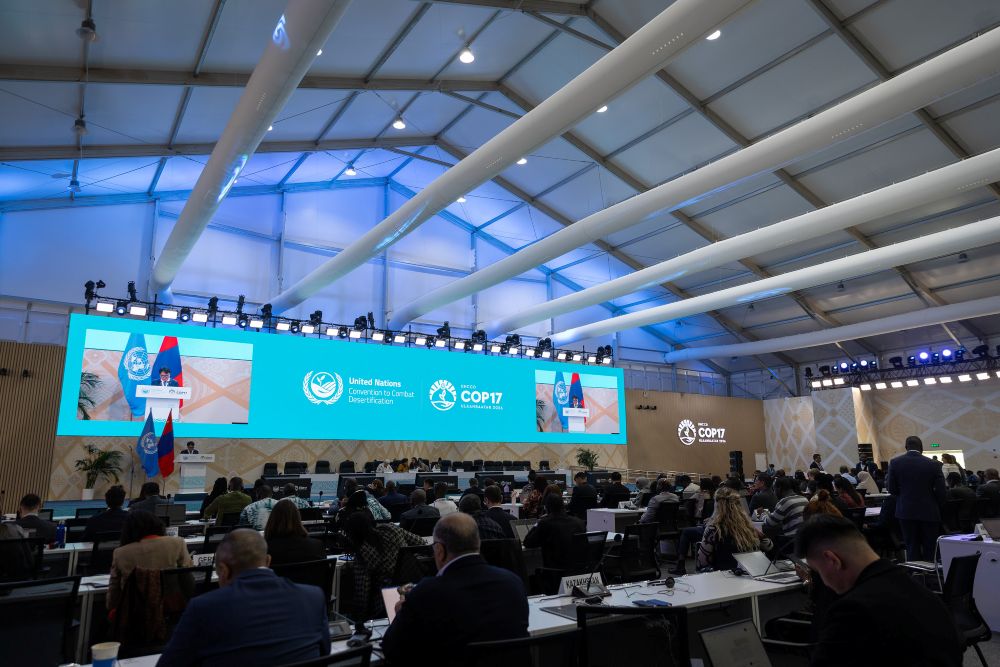
ULAANBAATAR, MONGOLIA, 28 August 2026, After two weeks of negotiations on how to tackle land degradation, desertification, and drought, the seventeenth session of the Conference of the Parties to the United Nations Convention to Combat Desertification (UNCCD COP17) concluded today in Ulaanbaatar, Mongolia.
Across the negotiated and action agenda tracks, Ulaanbaatar brought together key elements of implementation: political direction, science, finance, investment-ready projects, partnerships, and stronger participation by the people who manage the world’s land.
The biannual meeting of the UNCCD’s 197 Parties put the world’s rangelands, which cover 54 percent of the Earth’s land surface, support around two billion people, and are stewarded by some 500 million pastoralists, at the center of the global land agenda.
Launched in Ulaanbaatar during the International Year of Rangelands and Pastoralists, the Rangelands Flagship Initiative brings together US$1.2 billion across 45 projects, the largest single mobilization for rangelands in the Convention’s history.
Alongside the negotiations, COP17 delivered a series of initiatives and financial commitments aimed at accelerating action on land restoration and drought resilience.
Governments, development banks, funds, and companies announced a US$1.3 billion portfolio of finance across 23 countries on five continents, at different stages of development. This includes US$644.5 million identified as new finance, of which US$216.4 million is already confirmed and moving towards implementation.
UNCCD Executive Secretary Yasmine Fouad said:
“We came to Ulaanbaatar saying that COP17 must be a COP of implementation. We leave with more of the architecture needed to make that possible. Political decisions, stronger science, innovative financing mechanisms, investment pipelines, and partnerships that can move solutions to scale.
But Ulaanbaatar will not be judged by what was announced inside this conference. Its legacy will be measured by what happens next: whether countries are better prepared for drought, whether degraded land and rangelands are restored, whether finance reaches viable projects, and whether the people who manage the land see a real difference in their lives.”
H.E. Battsetseg Batmunkh, Minister for Foreign Affairs of Mongolia and UNCCD COP17 President, said:
“As the host country and president of the 17th session of the Conference of the Parties to the United Nations Convention to Combat Desertification, Mongolia has worked in the spirit of ensuring an open, transparent, inclusive, and consensus-driven atmosphere for the discussions and striving to bring parties’ positions closer in order to achieve tangible results.
Within the International Year of Rangelands and Pastoralists, Mongolia has demonstrated to the world that pastures form a strategically important ecosystem that connects food, environment, economy, biodiversity, and herders’ livelihoods.
In exercising the presidency of the 17th session of the Conference of the Parties to the United Nations Convention to Combat Desertification, Mongolia was guided by the principle of “from promises to implementation and from discussions to real work.”
H.E. Sandag-Ochir Tsend, Minister of Environment and Climate Change of Mongolia and Chair of the National Committee for the Organization of UNCCD COP17, said:
“Mongolia successfully hosted the 17th session of the Conference of the Parties to the United Nations Convention to Combat Desertification (UNCCD COP17), bringing countries from around the world together to advance practical solutions to desertification, land degradation, and drought. One of the conference’s most significant outcomes for Mongolia was securing support from Parties, international organizations, the private sector, and civil society for the “Steppe Plan,” a key policy legacy of COP17.
Under the Steppe Plan, the Government of Mongolia officially launched three international initiatives: the Rangelands Flagship Initiative, the Water-Land Nexus Initiative, and the Nature-based Solutions for Sustainable Infrastructure Initiative. These initiatives have created new opportunities to develop projects, strengthen international cooperation, and mobilize investment in these priority areas.
Although COP17 concludes today, our work does not end here. Our next priority is to translate the decisions adopted, partnerships established, and investment commitments secured at the conference into tangible action and to ensure that the initiatives launched from Mongolia’s steppes deliver measurable results.”
From commitments to implementation
The conference took place against a stark global backdrop. Up to 40 per cent of the world’s land is degraded, while countries have committed to restoring more than one billion hectares by 2030. More than 70 countries now have national drought plans, compared with only three in 2013, but financing and implementation continue to lag behind the scale and speed of the challenge. Against this backdrop, parties called for greater mobilization of financial resources, capacity-building, and technical cooperation to strengthen proactive drought management, particularly in African countries, without neglecting other affected developing countries.
A significant body of new evidence presented in Ulaanbaatar highlighted both the costs of inaction and the benefits of investing in healthy land. New reports examined the economics of restoring the world’s rangelands, the growing human and economic impacts of drought, the particular challenges facing Small Island Developing States and Central Asia, and the value of investing in soil health.
The findings showed that 18.8 million hectares of land are degraded across SIDS, while in Central Asia more than 80 million hectares, over a quarter of the region, are already degraded, affecting 24 million people. At the same time, all five Central Asian countries have adopted voluntary land degradation neutrality targets, half of which have already been met.
Together, the reports showed how land degradation and drought are affecting food and water security, livelihoods, and economies across diverse regions, while making the economic case for prevention, sustainable land management, and restoration.
Alongside this new evidence, Brazil presented a major national commitment through its voluntary Land Degradation Neutrality (LDN) target for 2030, comprising 17 sub-targets linked to national policies, plans, and programs.
The target includes the recovery or restoration of more than 163,000 km², including through native vegetation recovery and agroforestry systems, while a further 3.51 million km² are covered by measures aimed at preventing degradation through conservation and sustainable land management. Together, the 17 sub-targets cover approximately 3.67 million km².
This commitment supports Brazil’s efforts to achieve Sustainable Development Goal 15.3 by avoiding, reducing, and reversing land degradation while strengthening food and water security, biodiversity, and climate resilience.
A new global architecture for drought resilience
Following sustained negotiations, Parties decided to continue discussions at COP18, building on progress made at COP16 and COP17, with a view to adopting a decision on the proactive management of drought at all levels. Parties also decided that drought will remain a stand-alone agenda item at COP18 and at each ordinary session thereafter. The Riyadh Global Drought Resilience Partnership, established at COP16, moved towards implementation in Ulaanbaatar. Its first Assembly of Partners advanced work on a proposed pooled fund intended to help around 70 low- and lower-middle-income countries through capacity-building, investment-ready programs, and financing for drought resilience.
COP17 also saw the launch of the Drought Resilience Investment Facility (DRIF), the first global catalytic financing platform dedicated to drought resilience. Co-created by UNCCD and Luxembourg with support from the International Drought Resilience Alliance, the Facility aims to mobilize up to US$400 million in public and private capital for investments in water security, sustainable agriculture, nature-based solutions, and land restoration. Its first strategic partnership with the Global Environment Facility will explore opportunities to unlock private and philanthropic finance.
Phase II of the International Drought Resilience Observatory also introduced the world’s first Drought Resilience Index, providing countries with a new tool to assess their capacity to anticipate, prepare for, and adapt to drought and to better target policies and investment.
Finance for land moves up the agenda
COP17 also sought to narrow the gap between global land commitments and the finance available to deliver them.
An estimated US$355 billion a year is needed through 2030 to meet global land restoration commitments, compared with around US$77 billion currently invested, leaving an annual financing gap of US$278 billion. Private finance accounts for only around six percent of global investment in land restoration.
Governments, development banks, funds, and companies announced a US$1.3 billion portfolio of finance for land restoration and drought resilience across 23 countries on five continents, at different stages of development. Of this, US$644.5 million is identified as new finance, with US$216.4 million already confirmed and moving towards implementation. The portfolio spans rangeland and landscape restoration, drought resilience, and locally led adaptation.
Discussions in Ulaanbaatar also focused on addressing barriers that have kept investment in land low, including how to make land, soil health, and drought resilience more visible and trackable within existing nature-finance categories. Participants also explored greater use of guarantees, first-loss capital, insurance, and project-preparation facilities to turn restoration plans into investment-ready projects.
Host country Mongolia launched the first national Business 4 Land (B4L) Hub, alongside sustainable finance principles, a national green taxonomy, and a target for 10 percent green lending by 2030. Russia followed with its own national hub, while Luxembourg moved to establish a B4L Foundation and Germany supported a B4L Finance Expert Group.
Rangelands: from overlooked ecosystems to economic assets
Hosted by Mongolia during the United Nations International Year of Rangelands and Pastoralists, COP17 gave particular prominence to rangelands and the people who manage them. Parties recognized pastoralists as essential stewards of rangeland ecosystems, highlighting the importance of transboundary mobility and the value of pastoralists’ knowledge and experience. Despite their global importance, rangelands remain largely overlooked in policy and investment: they contain roughly one-third of the world’s key biodiversity areas, yet feature in the national climate plans of only 24 countries, compared with 181 for forests.
New economic analysis presented in Ulaanbaatar estimated that rangelands generate US$21–47 trillion in ecosystem services every year, up to nearly half of global GDP, through benefits including food production, water, carbon storage, and biodiversity. Restoring rangelands typically returns US$4–6 for every dollar invested, rising to as much as US$36 when wider public benefits such as water supply are included.
The Rangelands Flagship Initiative announced at COP17 seeks to translate that economic case into investment, bringing together projects supporting sustainable rangeland management, restoration, and pastoralist livelihoods.
The Global Environment Facility is supporting coordination of the initiative through a US$3.3 million investment in the UNCCD COP17 Legacy Project. Over the past four years, the Fund has also approved more than 50 projects worth over US$300 million benefiting rangelands and pastoralist communities.
Indigenous Peoples and local communities convene new caucuses at COP17
The conference marked the first formal meetings of the UNCCD Indigenous Peoples Caucus and Local Communities Caucus, following the decision by Parties at COP16 in Riyadh to establish the two bodies and provide dedicated spaces for their perspectives and priorities within the Convention.
It also brought together the largest representation of Indigenous Peoples in the history of a UNCCD Conference of the Parties. A high-level special event on Land and People Day highlighted Indigenous Peoples as rights holders, knowledge holders, and implementation partners, focusing on Indigenous knowledge systems, customary governance, sustainable pastoralism, land stewardship, and direct access to finance for Indigenous-led action.
Across COP17, Indigenous Peoples, pastoralists, and local communities called for stronger land and mobility rights, greater direct access to finance, meaningful participation in decision-making, and recognition of Indigenous and traditional knowledge in land restoration and drought resilience.
Discussions also highlighted women and youth leadership, including calls to invest in young people as land restoration leaders and strengthen their participation in action on land and drought.
From Mongolia to Egypt
The next session of the UNCCD Conference of the Parties, COP18, is expected to take place in Egypt in 2028, carrying forward the momentum built in Ulaanbaatar.
Looking ahead, Egypt has emphasized the importance of strengthening cooperation and promoting integrated approaches to land degradation, climate change, and biodiversity loss that strengthen food and water security and resilience.
COP18 will provide the next major milestone for countries to assess progress on land restoration and drought resilience and build on the outcomes reached in Ulaanbaatar.


