 0
0
 0
0
By Temwanani Banda, Blantyre, Malawi
Every day, before I think about my business, my family, or even myself, there is one question that has always come first: How will we cook today?
For many women in Blantyre District, Malawi, cooking begins long before a pot is placed on the fire. It begins with finding fuel.
In my community, between 85 and 95 percent of households still depend on charcoal and firewood for cooking. For women like me, this dependence has never been simply about energy. It has shaped how we spend our days, how much we can earn, the health of our families, the safety of our journeys, and even the future of the land around us.
Before the Eco-Feminist Energy Justice Project, searching for fuel was part of my daily reality. Some women walk long distances to collect firewood, spending hours away from their homes and livelihoods. Others depend on charcoal, which has become increasingly expensive. And when we cook, smoke fills our homes and settles around us and our children.
The cost is rarely counted.
Nobody calculates the hours a woman spends looking for firewood. Nobody puts a price on the time she could have spent running a business, caring for herself, or simply resting. Nobody easily measures what it means for a girl to lose hours of study because she has to search for fuel.
But we know the cost because we live it.
When energy poverty becomes women’s work
Cooking has traditionally been treated as women’s work in our communities. That means energy poverty also becomes a women’s burden.
When fuel is scarce, it is often women and girls who must find it. When charcoal prices rise, women have to stretch household resources further. When cooking smoke fills the home, women and children are often exposed to it for long periods. And when women depend on charcoal trading for their livelihoods, they can face risks that go far beyond economic hardship.
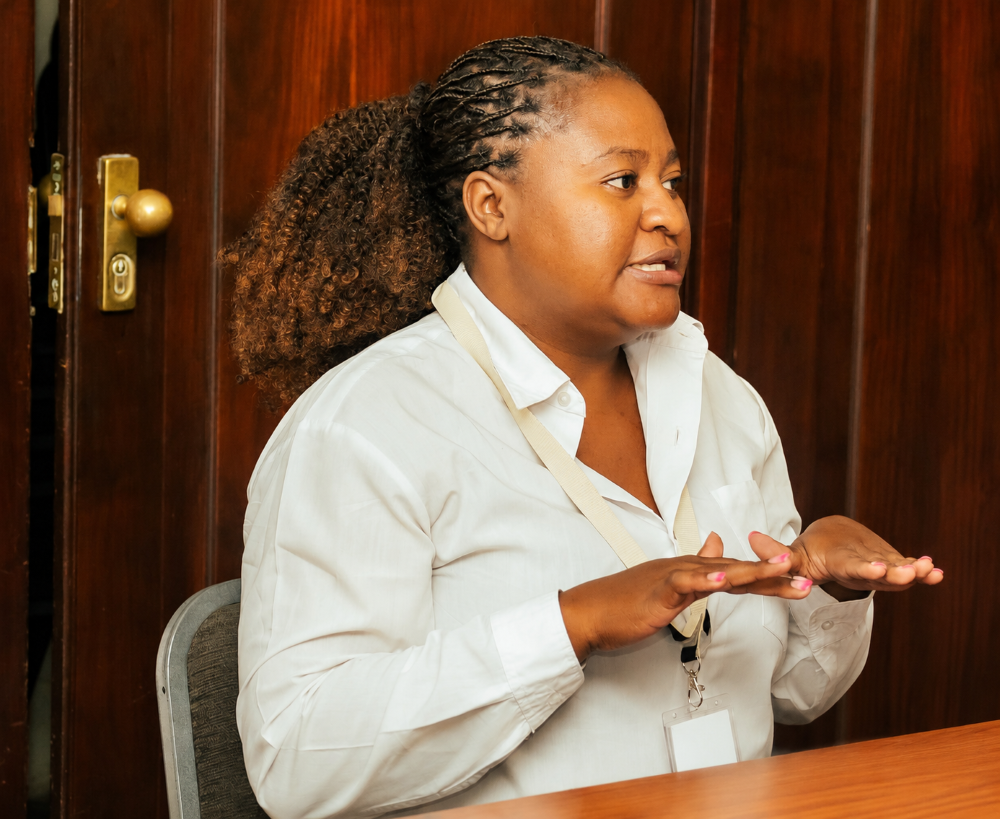
Some women involved in the charcoal trade would leave home before dawn to travel to charcoal stations to buy stock. Along the way, in the darkness, they could face abuse, harassment, and other dangers.
This is why I have come to understand that energy poverty is not a small or private problem.
It is connected to the way society values women’s labor. It is connected to our health and safety. It is connected to forests being cut down for fuel. It is connected to changing rainfall, rising temperatures, and a climate that is becoming increasingly difficult for communities like ours.
The Eco-Feminist Energy Justice Project helped me see these connections.
The project is implemented by the Get Together Youth Organization, working with other civil society groups through the Zingwangwa Youth Network, with funding and support from SHINE Collab.
What has changed for me is not simply the type of energy I use.
It is what that change gives back to me.
With cleaner, cheaper, and more accessible cooking energy, I no longer lose so many hours of my day searching for fuel. The time that once disappeared into the struggle for firewood or charcoal can now be invested in my own business and in building something for my future.
For me, this is one of the most important forms of impact.
The project has given me back my time. And time is something women are often expected to give away for free.
When I have more time, I can think beyond simply getting through the day. I can focus on my livelihood. I can make plans. I can invest in myself. I can spend more meaningful time with my family. That is why I do not see this project simply as charity.
It is about restoring something that energy poverty had taken from me: my time, my health, and my dignity.
The change reaches beyond my household.
The impact does not stop with one woman or one household.
When cleaner energy becomes more accessible, girls can spend less time searching for firewood and more time studying. Families can spend less time dealing with smoke-filled kitchens. Women can have greater opportunities to pursue livelihoods and participate in community life.
There is also a wider environmental benefit.
For years, the demand for charcoal and firewood has contributed to pressure on trees and forests. At the same time, communities are already experiencing the effects of changing rainfall and increasing heat.
The land on which we depend cannot be separated from the energy choices we make.
I now understand myself differently because of this.
I used to see the daily struggle for fuel as simply something I had to endure. Now I see that my experience is connected to a much bigger question: Who pays the price when energy systems fail to meet people’s needs?
Too often, women pay that price with their time, their health, their safety, and their opportunities.
The ecofeminist approach has changed the way I think about my role.
I am no longer only someone burdened by energy poverty. I am also someone who can contribute to changing the situation.
I see myself as a guardian of the trees and land that my community depends on. I see my knowledge and experience as valuable. And I see other women as partners in finding solutions rather than simply as people waiting to receive them.
This is important because solutions to energy poverty cannot be sustainable if women are left out of the conversation.
Women understand the everyday realities of cooking, fuel prices, household needs, and the risks involved in accessing energy. We understand what happens when fuel becomes unavailable or unaffordable. We know how energy decisions affect children, livelihoods, and family life.
Our voices, therefore, need to be at the center of the transition to cleaner and more just energy systems.
My hope is to continue learning through SHINE Collab’s ecofeminist spaces and to hear from women across Malawi and the region who are creating energy alternatives, protecting their environments and challenging systems that have placed disproportionate burdens on women.
I want to carry those lessons back into my community.
My story is only one story. But it represents the experiences of many women whose lives have been shaped by energy poverty.
For us, energy justice is not an abstract policy idea. It is about whether a woman has time to earn a living. Whether a girl has time to study. Whether a family can breathe cleaner air. Whether a woman can travel safely. Whether forests can survive. Whether communities can adapt to a changing climate.
Most importantly, it is about whether women are seen as part of the solution.
The Eco-Feminist Energy Justice Project has shown me what becomes possible when women’s knowledge, needs, and experiences are placed at the center of change.
I have learned that cleaner energy can give us more than cleaner kitchens. It can give us time, opportunity, safety, dignity, and more than anything else; it can give women the power to imagine a future beyond simply surviving the present.
That is what energy justice means to me: not charity, but the return of my own time, my own health, and my ability to shape the future I want for myself and my community.
The writer is a project organiser and community advocate leading the Eco-Feminist Energy Justice Project in Malawi


