
 0
0
 0
0
By Correspondent, Harare
Lawyers, civil society, and community representatives call for movement lawyering, stronger accountability, fair compensation, and meaningful participation of women and affected communities in Africa’s just transition.
SHINE Collab has called for stronger legal protection, community-led decision-making, and greater accountability as the expansion of critical mineral extraction and clean-energy investments reshapes communities across Africa.
The call follows a dialogue bringing together lawyers, civil society organizations (CSOs) from across African countries with substantial critical mineral resources, and community representatives to examine the legal challenges emerging from Africa’s just energy transition, including extractivism, land rights, fair compensation, access to information, and community participation.
The legal panel included Tapiwa Gorejena, a researcher and legal expert from WIEGO (Women in Informal Employment: Globalizing and Organising), Tricia Abwooli from Akina Mama WaAfrica, Uganda, Amina Acola from GreenFaith Africa in Uganda and Victorine Kilembe, a lawyer and Deputy Secretary-General of Conseil pour la Défense des Environnements Démocratiques (CODED), a civil society organization in the Democratic Republic of the Congo.
At the center of the discussion was a critical question: Do Africa’s existing critical minerals and energy transition frameworks adequately protect the land, livelihoods, and rights of local communities?
Participants at a recent convening in Harare, Zimbabwe, warned that as demand for minerals required for renewable energy technologies increases, communities risk bearing the environmental and social costs of the transition without having sufficient influence over decisions affecting their land and natural resources.
Communities Must Lead Legal Strategies
The panel stressed that affected communities should be at the center of legal action rather than becoming passive participants once lawyers and other professionals take over disputes.
Participants called for every community confronted with major mining, energy, or natural-resource projects to develop a clear legal strategy defining what it wants to achieve, the processes available and the remedies that should be pursued when rights are violated.
Communities were encouraged to scrutinize whether governments and project developers have complied with legal requirements, including Environmental Impact Assessments (EIAs), consultation procedures, land laws, and compensation requirements.
Where processes are inadequate or unlawful, communities should explore available legal remedies, including judicial review and strategic public-interest litigation.
Access to Information Critical for Community Justice
The dialogue identified access to information as one of the biggest barriers preventing communities from effectively defending their interests.
Participants expressed concern that communities can struggle to obtain complete and accurate information about proposed investments, environmental impacts, compensation arrangements, and anticipated benefits.
Without access to reliable information, communities cannot participate meaningfully in decisions or provide genuinely informed consent.
The panel therefore called for stronger implementation of access-to-information laws and greater transparency by governments, investors, and corporations operating in Africa’s extractive and energy sectors.
Movement Lawyering Can Bridge the Justice Gap
Participants acknowledged that relationships between communities and lawyers have sometimes been characterized by mistrust, particularly where lengthy litigation raises expectations but fails to deliver the outcomes communities seek.
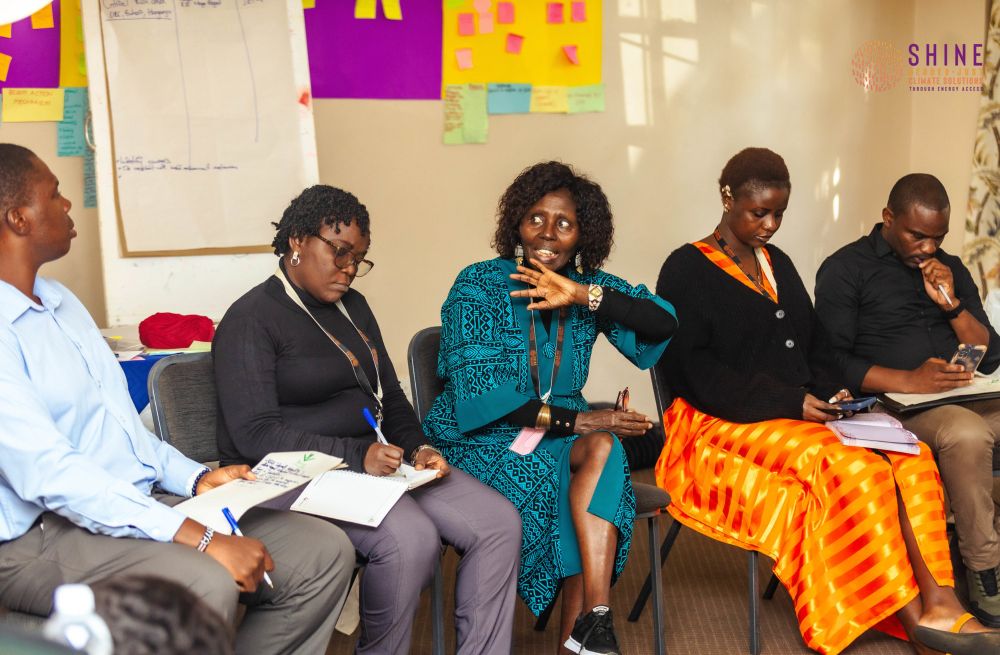
The dialogue called for greater adoption of movement lawyering, an approach in which lawyers work alongside communities and social movements, understand their lived realities, and use the law as one component of broader community organising and advocacy.
Movement lawyers should understand land, indigeneity, gender, livelihoods, and community rights beyond purely technical legal interpretations.
Participants also called for investment in community paralegals who can help communities understand legal processes, document violations, examine agreements, and identify potential remedies before disputes escalate.
Cross-country collaboration among lawyers, CSOs, and affected communities was identified as particularly important because many of the corporations, investors, and financing arrangements driving the energy transition operate across national borders.
Transition Promises Must Carry Accountability
The dialogue also raised concerns about promises of jobs, compensation, reskilling, alternative livelihoods, and community development that may accompany major energy transition projects but fail to materialise.
Participants discussed experiences associated with South Africa’s Just Energy Transition Partnership (JET-P), including the transition surrounding the Komati coal-fired power station, to illustrate concerns about how communities experience the implementation of transition commitments.
The discussion also considered REDD+ initiatives, Reducing Emissions from Deforestation and Forest Degradation, within the broader question of how commitments affecting communities, land, and natural resources are negotiated and enforced.
Participants called for communities to examine national laws governing contracts, legitimate expectations, and fair compensation and to ensure that commitments made by governments, corporations, and investors are properly documented wherever possible.
They also stressed the importance of recognising indigenous and customary approaches to agreements and evidence where national legal systems permit them.
Women Must Be Decision-Makers, Not Token Participants
SHINE Collab emphasised that women, particularly grassroots and indigenous women affected by extractive projects, must be recognised as legitimate representatives and decision-makers within their communities.
Women frequently depend directly on land, forests, water, and other natural resources for livelihoods and household well-being, yet their voices can remain marginal in negotiations over mining, energy, and climate investments.
SHINE Collab, therefore, called for feminist perspectives to be embedded in legal strategies, community organising and national and regional just-transition policies.
Africa’s transition cannot be considered just if communities are expected to surrender land, livelihoods, and natural resources in the name of global decarbonisation without meaningful participation in determining how projects are designed, implemented, and governed.
The organisation called for stronger alliances between affected communities, feminist movements, civil society organisations, movement lawyers, and public-interest legal institutions across Africa.
“A just transition must be about more than replacing fossil fuels with renewable energy. It must deliver justice, accountability, fair compensation and meaningful community power. Women and affected communities must have a decisive voice in determining what happens to their land, livelihoods, and natural resources,” said Dr. Melania Chiponda, a climate activist and Executive Director of SHINE Collab.


