 0
0
 0
0
By Correspondent, ERICE, Italy
IAP’s Science Education Programme brings academies and educators together on inquiry, trust in science, and AI in the classroom.
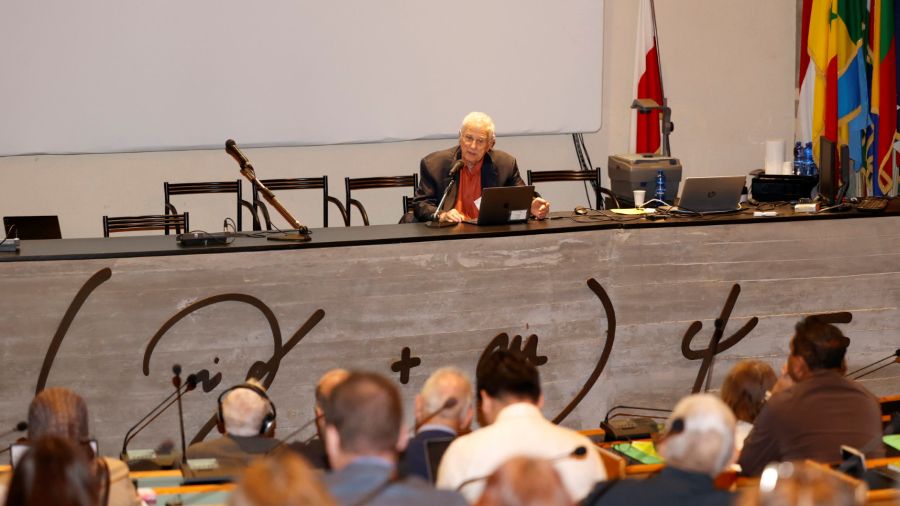
The 60 scientists, science educators, and policy experts from 34 countries across six continents are gathered in Erice, Sicily, for a four-day school on how science education must evolve to meet the challenges of a rapidly changing world.
The InterAcademy Partnership, International School of Science Education (IAP-ISSE 2026), titled A Strategy for Science Education in a Changing World, runs from 16 to 19 October at the Ettore Majorana Foundation and Centre for Scientific Culture (EMFCSC). Participants come from national academies of sciences, universities, ministries, museums, and education networks across Africa, Asia, Europe, Latin America, and North America.
The Ettore Majorana Foundation and Centre for Scientific Culture, founded in 1962, is an internationally renowned center for scientific dialogue and cooperation, bringing together scientists from around the world in Erice. Its International School of Science Education (ISSE) connects scientists, researchers, and educators to advance science education worldwide.
The school is held under a Memorandum of Understanding, signed last December, between the Ettore Majorana Foundation and the Centre for Scientific Culture (which hosts an annual International School of Science Education) and the InterAcademy Partnership. The World Academy of Sciences for the advancement of science in developing countries (TWAS) hosts IAP’s Trieste Secretariat in Italy.
Voices for science education
The InterAcademy Partnership (IAP) is a global network comprising over 150 merit-based academies of science, medicine, and engineering, representing the collective expertise of over 30,000 elected academy members worldwide.
“Italy is proud to host the Trieste secretariat of IAP and to offer the unique environment of Erice for the school. Science diplomacy is a pillar of Italy’s foreign policy, and it begins in the classroom. Science gives young people a common language that crosses borders, and the habits it teaches, asking questions, weighing evidence, and sharing results openly, are the same ones that make cooperation between countries possible,” said Lamberto Maria Moruzzi, Director for Scientific, Space, and Sports Diplomacy within the Directorate-General for Economic Cooperation at the Italian Ministry of Foreign Affairs and International Cooperation.
“Science education is how societies learn to think with evidence. At a time when trust in science is being tested, and AI is reshaping how young people learn, the challenges we face are increasingly complex and global in scope. No institution, network, or country can address them alone. That is why ISSE and IAP have joined forces: to strengthen connections between scientific and educational communities, build lasting alliances, and turn our collective strengths into a shared capacity for action,” said Anna Pascucci, Director of the International School of Science Education (ISSE).
“Students need to experience science as scientists do, by asking questions and investigating the world for themselves. And learning how the community of scientists reaches its conclusions, through evidence, debate, and the honest handling of uncertainty, is one of the most valuable lessons any school can teach,” said Bruce Alberts, former president of the U.S. National Academy of Sciences and a long-term supporter of the IAP Science Education Programme. “None of this is possible without well-prepared, well-supported teachers, and helping countries invest in them is central to what we are doing in Erice,” added Alberts.
A school built around action.
Through its Science Education Programme (IAP-SEP), IAP promotes high-quality, inclusive, evidence-based science education worldwide and engages the scientific community in educational innovation and policy dialogue. Unlike a conventional conference, IAP-ISSE 2026 centers on four working focus groups, each guided by a coordinator and a discussant.
Over four days, the groups will move from framing key issues to setting priorities and identifying collaborations. And, finally, aligning their proposals. On the closing day, 19 October, the groups’ work will converge into thematic alliances linking national academies of sciences with education networks such as La main à la pâte, the Office for Climate Education (both in France), INNOVEC (Mexico), and the Siemens Stiftung. A final round table will agree on actions, shared documents, and validated resources. The resulting synthesis is intended as a first shared framework to drive future collaboration among academies and educational networks worldwide, helping education systems respond to challenges such as climate change, misinformation, inequity, and digital transformation, including the increasing use of AI in education and learning.
The school is guided by senior advisors Bruce Alberts and Pierre Léna and directed by Anna Pascucci, Carol O’Donnell, Director of the Smithsonian Science Education Centre, and Peter McGrath, former IAP Coordinator. Keynote lectures and panels feature speakers from Argentina, Bolivia, Canada, Chile, China, Ethiopia, France, Germany, India, Indonesia, Ireland, Italy, Japan, Korea, Malaysia, Mexico, Norway, Pakistan, the Philippines, Sweden, Tunisia, the United Kingdom, and the United States.


