
 0
0
 0
0
By Annonciata Byukusenge –
African governments, development finance institutions, and global climate leaders call for high-integrity markets, investment-ready projects, and greater value for African communities.
Africa must move beyond carbon market potential towards delivery, building high-integrity, investable markets that attract long-term capital while protecting national climate priorities and ensuring greater value reaches African countries and communities.
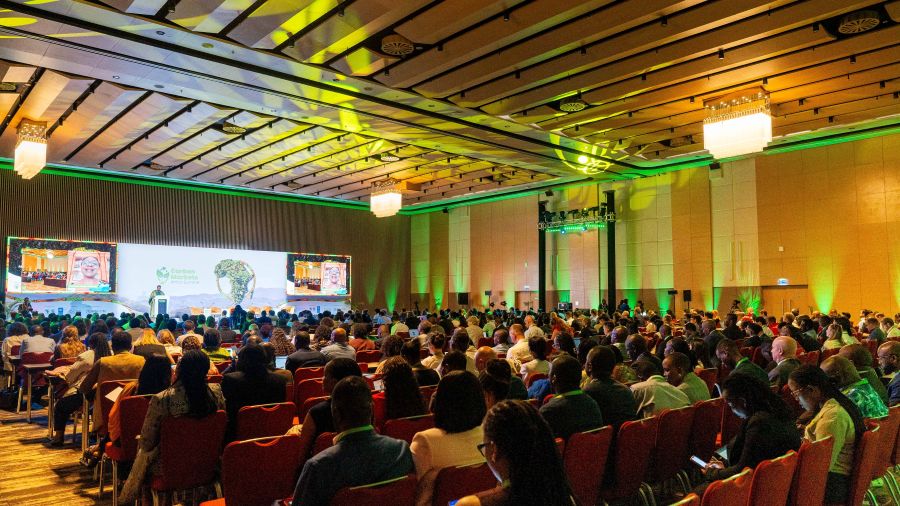
That was the central message from the opening keynote sessions of the Carbon Markets Africa Summit (CMAS) 2026 in Kigali, Rwanda, where policymakers, investors, project developers, development finance institutions, and international climate organizations gathered to accelerate Africa’s participation in global carbon markets.
Representatives from 45 countries, including 21 African nations, are participating in the summit, where discussions have shifted decisively from market readiness to implementation, investment, and transactions.
Officially opening the summit, Hon. Dr. Bernadette Arakwiye, Rwanda’s Minister of Environment, said Africa’s carbon markets must be shaped by African priorities and deliver tangible benefits for the continent.
“The question before us is therefore no longer simply whether Africa is ready. It is whether we can deliver at scale, with integrity and with innovation.”
Minister Arakwiye said progress is already evident as African countries establish carbon market frameworks, grant authorisations, sign bilateral agreements, and develop projects. However, she cautioned that carbon finance remains concentrated in a relatively narrow range of project types. She called for diversification into renewable energy, electric mobility, sustainable waste management, industrial decarbonisation, agriculture, and landscape-scale nature-based solutions.
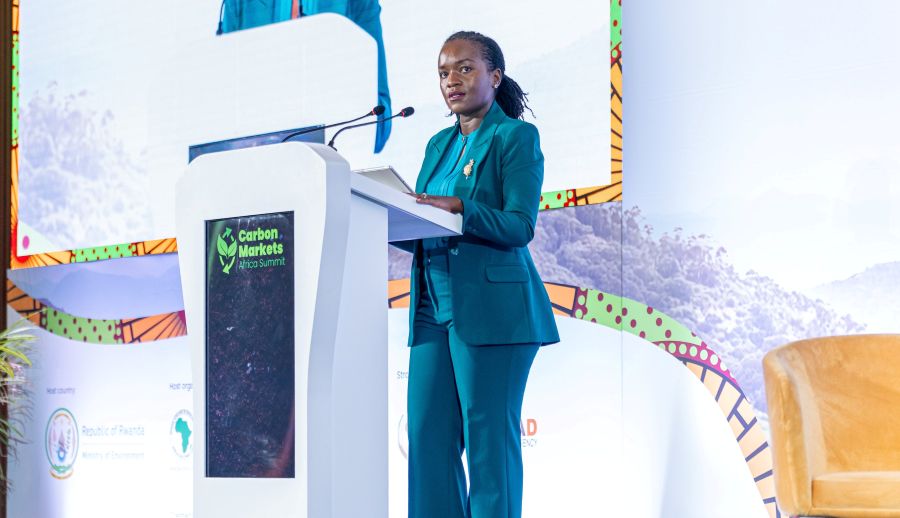
Minister Arakwiye identified three priorities for scaling Africa’s carbon markets: accessible methodologies suited to African contexts; project preparation and readiness finance; and long-term demand at fair value.
“Trust is the currency of this market,” she said. “To our buyers and investors, I say: look closely at these efforts. Reward them with long-term demand, fair prices, and patient capital.”
From potential to execution
The call for delivery was echoed by Hon. Hamad Yusuf Masauni, Tanzania’s Minister of State in the Vice President’s Office responsible for Union Affairs and Environment, who said the continent now has an opportunity to reposition itself in global carbon markets.
“For too long, Africa has been spoken about as a continent of potential. At the Carbon Markets Africa Summit, we declare that the era of potential is giving way to the era of execution.”
Minister Masauni stressed the importance of moving high-quality, bankable projects through to issuance and offtake rather than focusing solely on the size of project pipelines.
“Credibility is built one verified tonne, one closed deal, and one community that sees real benefit at a time.”
The importance of ensuring value reaches communities was also central to remarks from Maxwell Gomera, UNDP Resident Representative in South Africa and Director of the Africa Sustainable Finance Hub.
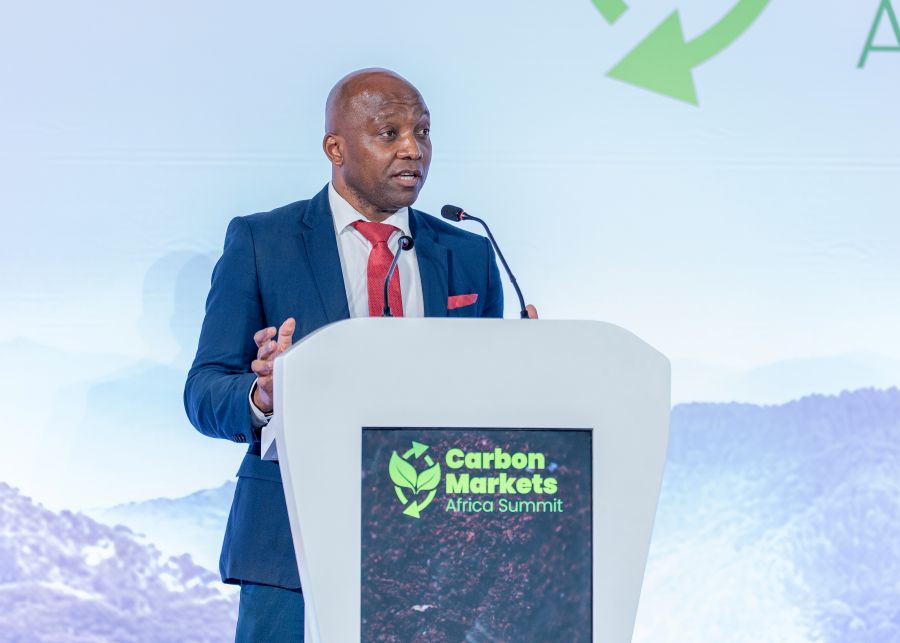
Gomera called for market infrastructure capable of carrying value “from the buyer all the way to the farmer,” backed by strong community rights, enforceable benefit-sharing, early-stage finance, and partnerships focused on delivery.
Africa is urged to compete on integrity, not price.
Speakers also stressed that Africa’s competitive advantage should be the quality and integrity of its carbon assets rather than simply offering the lowest-priced credits.
Perumal Arumugam, Manager of Markets and Non-Markets and Stakeholder Interaction at UN Climate Change (UNFCCC), said Africa should move beyond asking how it can participate in carbon markets and instead consider how carbon markets can advance African priorities.
“Africa should not compete simply by offering the cheapest tons. Africa should compete by offering credible and creditable tonnes, a sustainable tonne, and a tonne that the world can trust.”
He said success should ultimately be measured not only in credits issued but also in investment mobilised, mitigation unlocked, value reaching communities, stronger economies, and African countries retaining control over their climate transitions.
Speaking on behalf of AUDA-NEPAD, Esterine Fotabong similarly called for African countries to scale carbon markets on their own terms, supported by predictable authorisations, functioning registries, and credible monitoring, reporting, and verification systems.
She also highlighted the need to build greater African capacity in validation and verification and expand access to carbon finance in sectors such as agriculture.
Global demand will reward quality.
Representing the European Commission, Lukas Visek, Deputy Head of the Directorate-General for Climate Action Task Force for Carbon Pricing and Carbon Markets, signaled future European demand for international carbon credits while stressing that quality requirements would be stringent.
“Additionality and permanence are not negotiable,” he said. “Quality, however, will be rewarded.”
The message to developers was clear: projects being developed for future international demand will need robust data, genuine additionality, strong community participation, and demonstrable alignment with national and global climate goals.
Turning carbon projects into investable assets
The summit’s opening program then moved directly from policy to capital and deal flow, with leaders from the African Development Bank (AfDB), Development Bank of Southern Africa (DBSA), and Kigali International Financial Centre (KIFC) examining the practical barriers preventing more investment from reaching African projects.
Policy certainty, early-stage project preparation, bankable pipelines, robust governance, and appropriate financial risk-sharing were identified as critical to accelerating capital flows.
Dr. Anthony Nyong, Director of Climate Change and Green Growth at the African Development Bank, emphasised that carbon markets should ultimately be viewed through the lens of African development.
“We don’t have carbon projects. We have development projects.”
Greg Fyfe, Chief Investment Officer at DBSA, highlighted the catalytic role development finance institutions can play by supporting project preparation, providing patient capital, and absorbing risks private investors are unable to take.
The opening sessions underscored a decisive shift in the African carbon market conversation: from readiness to delivery, from fragmented projects to investable pipelines, and from selling credits to building markets capable of delivering lasting economic, social, and climate value.
As CMAS 2026 continues in Kigali, attention now turns to connecting credible African projects with buyers and capital, unlocking transactions and ensuring Africa plays a leading role in shaping the next generation of global carbon markets.


