 1
1
 0
0
By Emmanuel Mutangana
What started as an effort to help vulnerable families access nutritious food has become an income-generating opportunity for a group of farmers in Nyamagabe District, where mushroom production is helping households fight malnutrition while creating new sources of income.
For members of the Vision Group, a mushroom tube-producing group operating within the KOIKWI Cooperative in the Cyanika Sector, the opportunity began after the Second Sustainable Agricultural Intensification and Food Security Project (SAIP II) introduced mushroom production as part of its nutrition interventions.
Before that, the group mainly grew beans, maize, and vegetables.
“We started as farmers growing beans, maize, and vegetables before the SAIP project came to our area. When SAIP started providing mushroom tubes to beneficiaries to help fight malnutrition, we approached our agronomist, who connected us with SAIP,” said Martha Imanishimwe, president of the Vision Group.
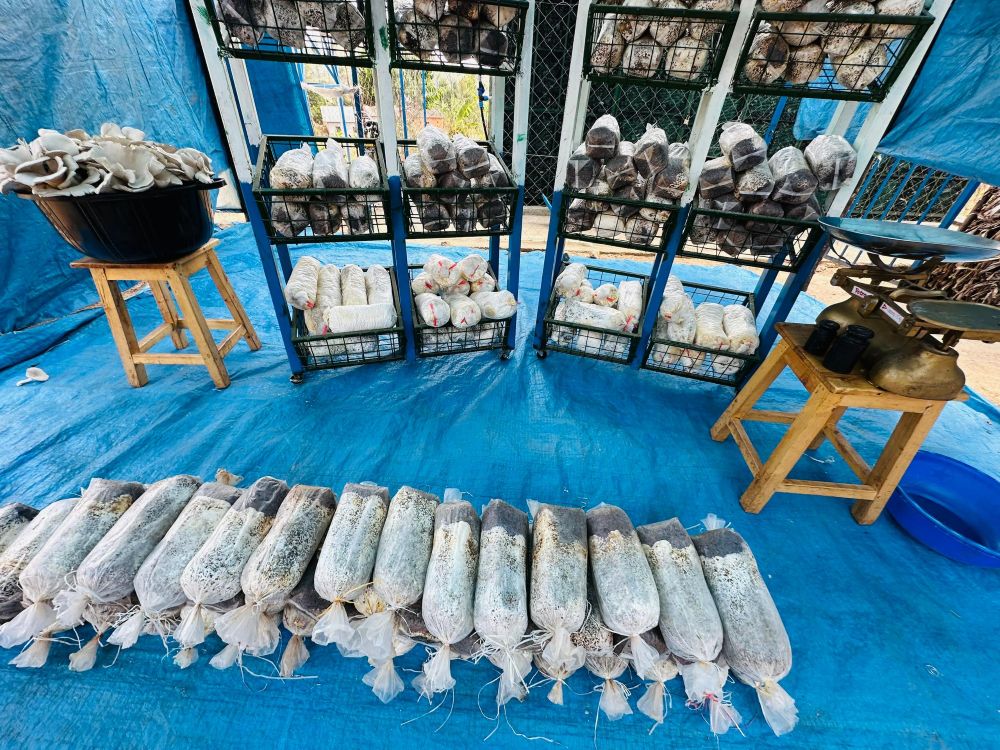
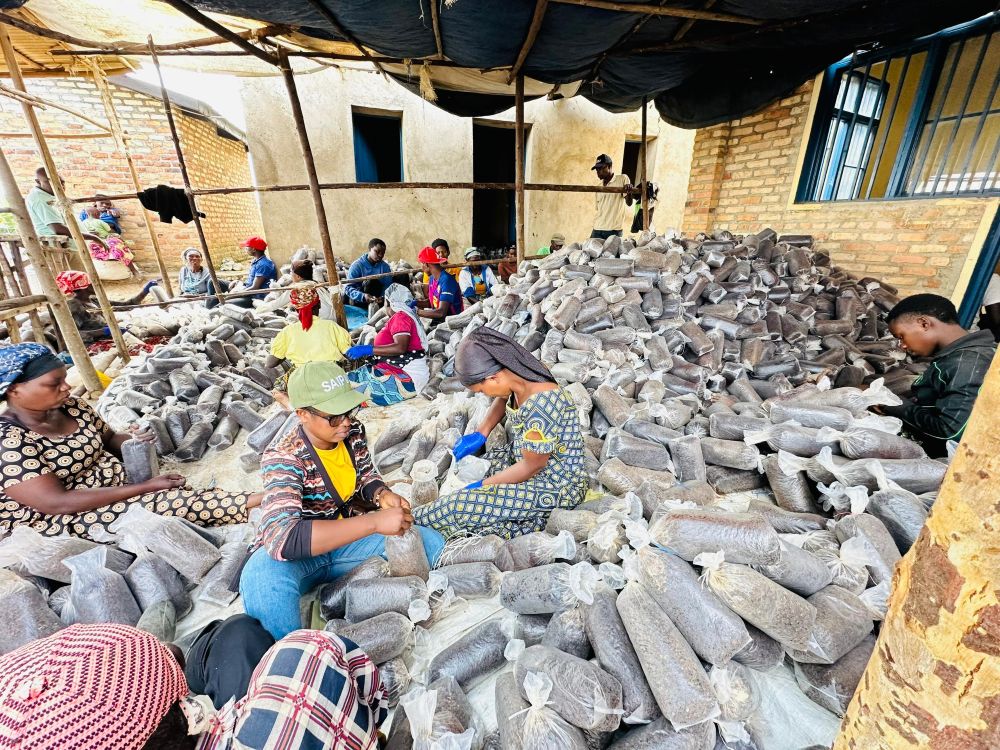
The group was trained to make mushroom-growing tubes and was supported with the equipment and facilities needed to begin production.
The training soon opened a new business opportunity for the 44-member group.
From farmers to mushroom tube suppliers
After sharing proceeds from their agricultural activities, members decided to invest part of their savings in mushroom tube production.
Each member contributed Rwf100,000, enabling the group to raise about Rwf4 million as initial capital.
The money was used to purchase materials needed to produce the mushroom tubes, including cotton, sawdust, water, firewood, and other equipment.
With SAIP II providing a ready market for the tubes, the group began supplying the project and earning from its production.
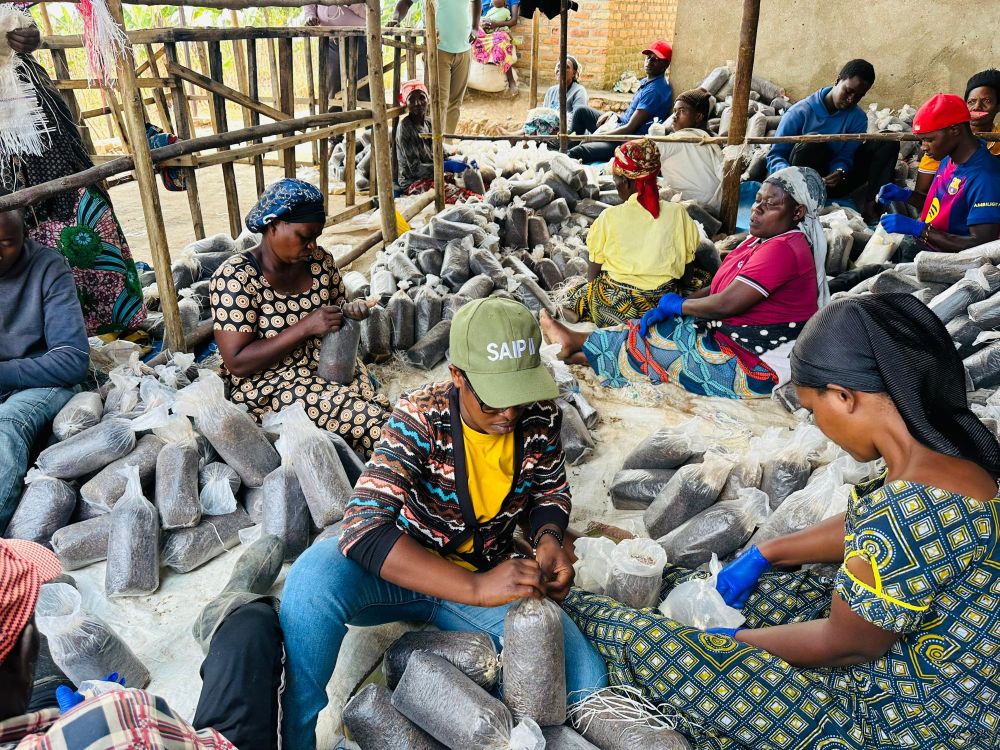
“We took the mushroom tubes to SAIP, and they paid us. From the Rwf4 million we invested, we made a profit of about Rwf2.8 million,” Imanishimwe said.
The group has since expanded its production capacity. Imanishimwe said it initially supplied about 13,500 mushroom tubes to SAIP II and can now produce around 12,000 tubes in a month
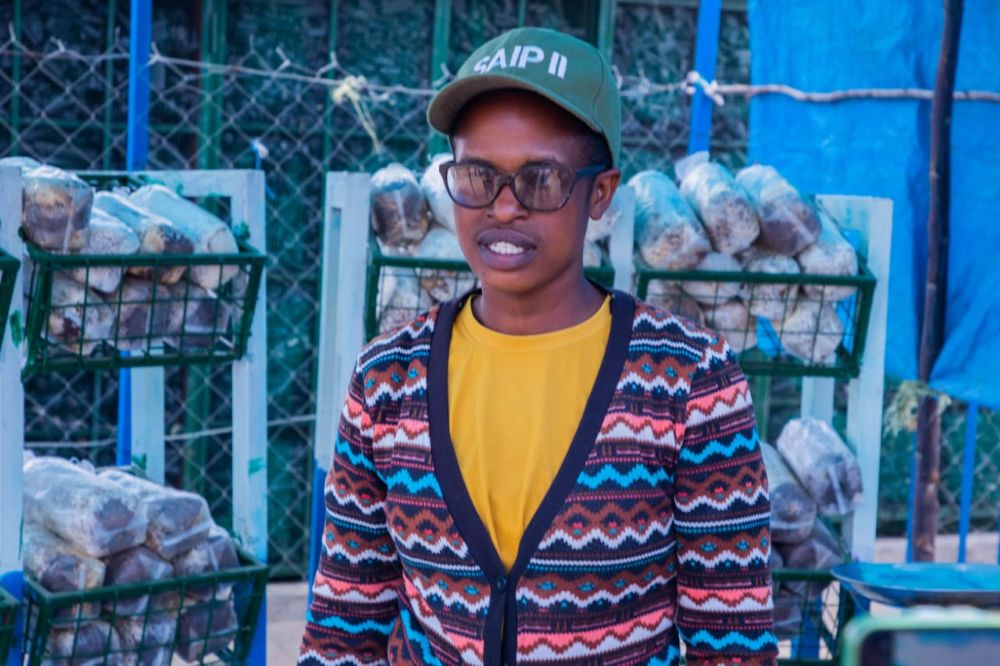
She said the business can generate substantial returns because a single mushroom tube can produce several harvests.
“One mushroom tube produces about eight times over four months. If you bought one tube for Rwf800, you can harvest from it eight times, so there is a significant profit,” she said.
The group estimates that an investment of about Rwf4.6 million can generate around Rwf7 million within three months, depending on production and sales.
But for the group, the value of mushroom production goes beyond the money.
Imanishimwe said some members of the group had young children who had experienced malnutrition when the project began supporting households with mushroom tubes.
Initially, mushrooms were viewed mainly as a way of helping vulnerable households diversify their diets.
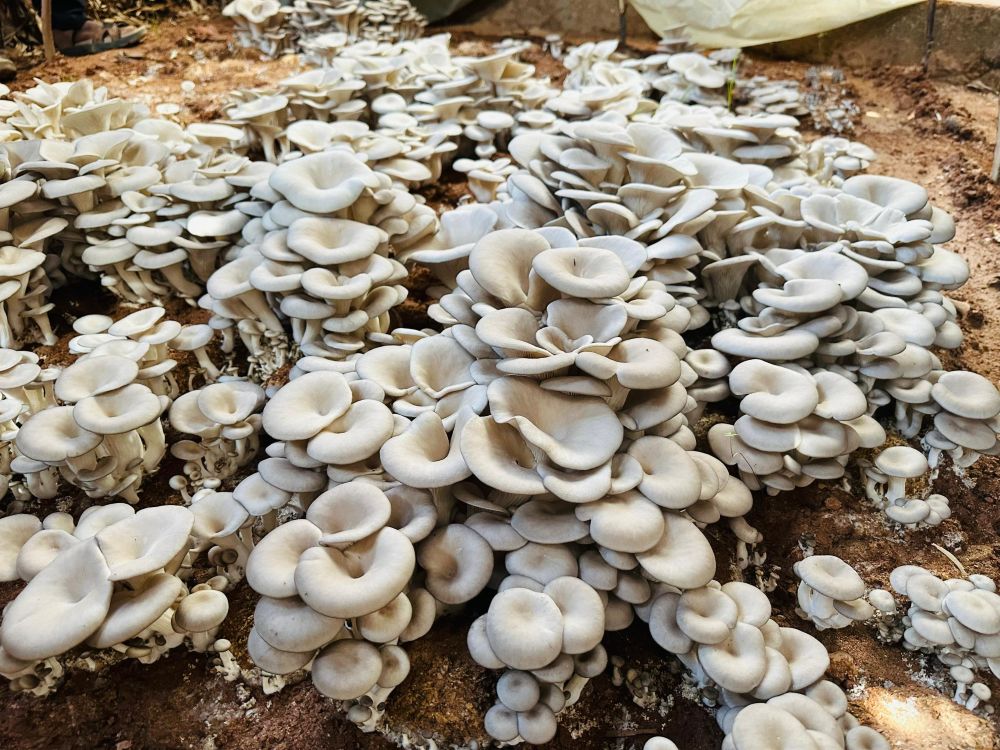
But the group later saw an opportunity to produce the tubes themselves, allowing members to continue growing mushrooms at home for household consumption while also selling the surplus.
“We had young children in our group who were experiencing malnutrition. SAIP gave them mushrooms to grow at home and eat. But we came up with the idea of producing the tubes ourselves instead of waiting for SAIP to keep providing them,” Imanishimwe said.
She added, “We can grow mushrooms at home, eat what we produce, and also sell them to earn money.”
She said every member of the group now has mushroom tubes at home, meaning the intervention has created both a food source and an income opportunity.
“Our goal is to improve ourselves, but at the same time, we are also moving away from malnutrition,” she said.
Jean Damascene Rwasabahizi, a member of the Vision Group from Karama Cell in Cyanika Sector, said mushroom production was initially unfamiliar to the group.
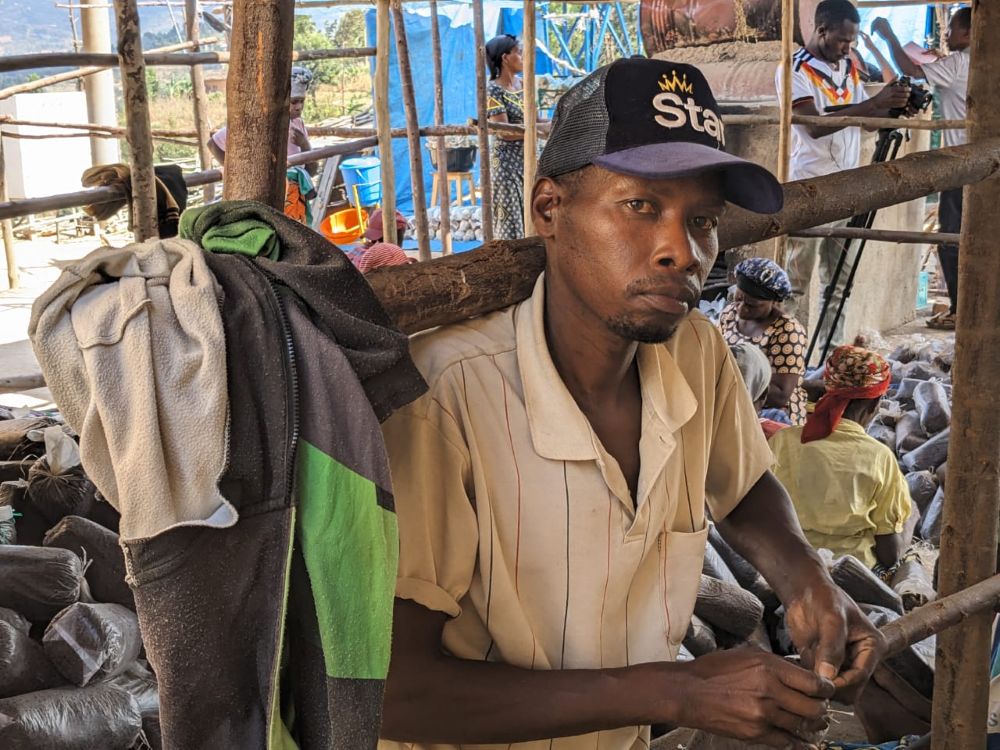
“When we started the group, we thought it was something simple, but we gradually got into it. We received training on how mushroom tubes could generate production. We did not know that mushrooms could help us address malnutrition and could also become a major business,” Rwasabahizi said.
He said the training changed the group’s perception of mushroom farming.
“We used to hear about mushroom tubes and wonder how they were made. We thought they were expensive and difficult to produce. But we came to realize that a person can make them and grow mushrooms wherever they want,” he said.
Rwasabahizi now grows mushrooms at home, with 15 mushroom tubes reserved mainly for feeding his children.
“The children at home eat mushrooms frequently, and they no longer have a problem with malnutrition,” he said.
The mushrooms have also become a source of household income.
“When I harvest more than we need, I sell the surplus and get money,” he said.
Rwasabahizi said his participation in the group has already enabled him to invest in other livestock.
“Recently, after we shared the proceeds, I received about Rwf90,000 without putting in any additional capital. I immediately bought six chickens and a piglet,” he said.
He added, “For me, the malnutrition issue has been addressed, and the money is also available.”
A model that turns beneficiaries into suppliers
The mushroom initiative is part of SAIP II’s wider nutrition intervention in Nyamagabe, where the project has been working since the 2024/25 financial year in Gatare, Musebeya, Tare, and Cyanika sectors.
The project combines support for farmer cooperatives to increase agricultural production and food security with nutrition interventions targeting vulnerable households, particularly pregnant and lactating women and children under five.
In Nyamagabe, SAIP II has distributed 15,700 laying hens to 3,925 households, with each household receiving four three-month-old chickens, as well as poultry housing and feeding and drinking equipment.
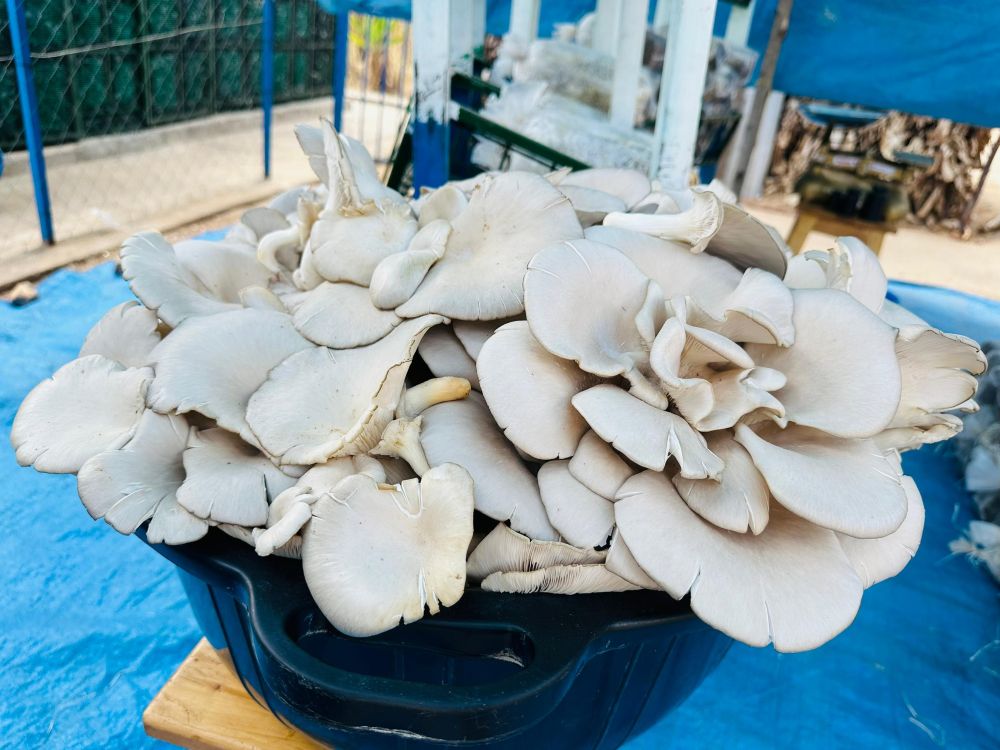
The project has also distributed 47,100 mushroom-growing tubes to 3,925 households, in addition to 20,850 tubes to 417 early childhood development centers in the four sectors.
Other interventions include the distribution of 1.2 million orange-fleshed sweet potato cuttings to 600 households, the establishment of 100 model kitchen gardens at 87 early childhood development centers, and nutritional supplements for 100 young children experiencing poor nutritional status.
SAIP II has also supported eight village cooking demonstration groups, where parents and children are taught how to prepare balanced diets.
Agnes Uwamariya, vice mayor of Nyamagabe District in charge of social affairs, said SAIP II’s nutrition intervention began by training residents on practical ways they could contribute to addressing malnutrition within their own households.
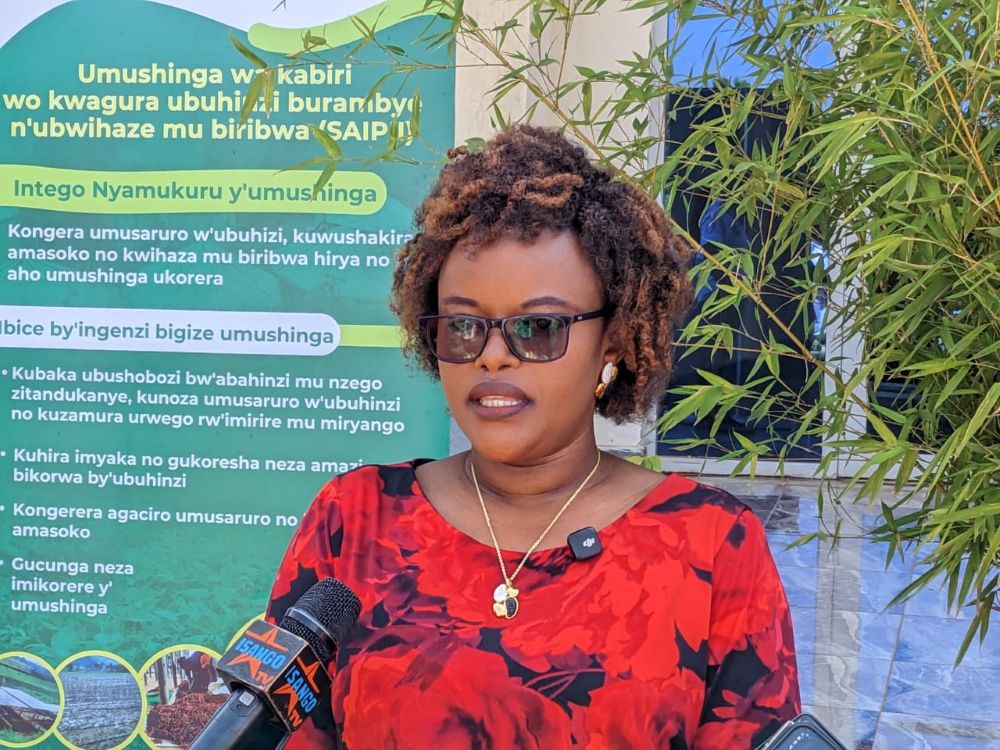
She appreciated the project that targeted households with children under five and pregnant women, while also building residents’ capacity to produce nutritious foods themselves.
“Mushroom tubes are one of the approaches through which beneficiaries were trained to address malnutrition at the household level. SAIP II has also become a market for the mushroom-growing tubes produced by these groups,” Uwamariya said.
For Evode Imanimurinde, RAB-SPIU Nutrition Specialist, the mushroom initiative evolved naturally from a challenge faced by beneficiaries.
Initially, SAIP II provided mushroom tubes to help households diversify their diets and fight malnutrition. But beneficiaries later realized that the tubes were not always easily accessible once their initial production cycle ended.
“Mushroom tubes were initially provided to help diversify food in households and therefore contribute to fighting malnutrition,” Imanimurinde said.
He added, “After some time, we realized that beyond helping fight malnutrition, mushroom tubes could also help residents improve their livelihoods.”
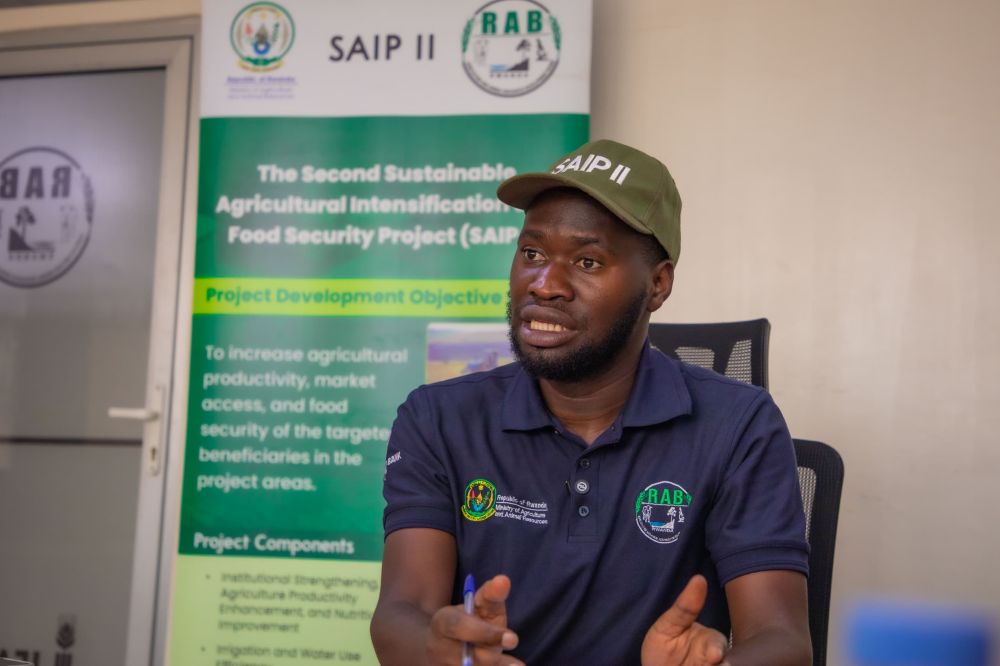
He said beneficiaries approached the project with a proposal to train them to make the tubes themselves because they wanted to continue mushroom production but faced difficulties accessing new tubes.
Previously, the project sourced mushroom tubes from suppliers, including those bringing them from Kigali, which made them more expensive and less accessible to some beneficiaries.
The beneficiaries’ proposal, he said, offered a solution to both problems.
“They told us that when their tubes were finished, they could not get others to continue growing mushrooms. They asked us to train them to make the tubes themselves so that they could access them nearby,” Imanimurinde said.
The project then supported the groups to acquire the necessary skills and equipment and agreed to purchase the tubes they produced.
“This was actually a very good idea that came from the beneficiaries themselves. When we discussed it as a project, we realized that it was an idea we could have come up with ourselves as project implementers,” he said.
He said the approach reduced reliance on external suppliers while creating an income opportunity for local groups.
“Instead of buying tubes from suppliers and having them brought from Kigali at a higher cost, we agreed that the communities could produce them and that we would also buy from them,” he said.
According to Imanimurinde, each of the three districts covered by this nutrition model now has a group capable of producing 10,000 mushroom tubes or more.
Progress beyond the mushroom business
The mushroom initiative comes amid wider improvements in nutrition indicators in Nyamagabe.
District data shows that stunting among children under five declined from 33.6% in 2020 to 29.4% in 2025, according to the Demographic and Health Survey (DHS).
SAIP II has reached 3,925 households in the district, including 3,138 children under five.
Among the children identified as having malnutrition, 100 have recovered, according to district information, through the combined efforts of different actors, with SAIP II playing a significant role.
The project has also seen some beneficiaries expand their poultry activities beyond the initial support.
Of the 3,925 households that received chickens, 165 have increased their flock sizes, with some beginning to treat poultry keeping as a business by purchasing additional chickens and combining them with those received through SAIP II.