 0
0
 0
0
By Delicate Sive, Andrew Aijuka, Cliff Abenaitwe, and Rosemary Anena
For years, the red soils of Northern Uganda were known for the scars left behind by war, such as broken farms and even more broken livelihoods. But if you walk through rural parts of the Acholi region, for example, the air feels different. There is a quiet, green movement growing, and it isn’t coming from government officials or the army with guns. It is coming from the farmers themselves.
At the heart of this change is Kijani Forestry, a tree planting enterprise, working to scale nature-based solutions to address farmer poverty, deforestation, and climate change in Northern Uganda and beyond.
Take Nancy Labong, for example, who is one of the tree farmers under this network. At 35, she spends her mornings walking through rows of young teak and local saplings. She doesn’t just see wood; she sees what she calls her “green bank.”
A few years back, this same patch of ground barely grew enough food to keep her family’s bellies full. Now, the trees stand tall between her crops in a neat, planned-out system that heals the soil while putting money in her pocket.
“I did not know trees could pay school fees,” Nancy says, giving a little laugh. “But now they do.”
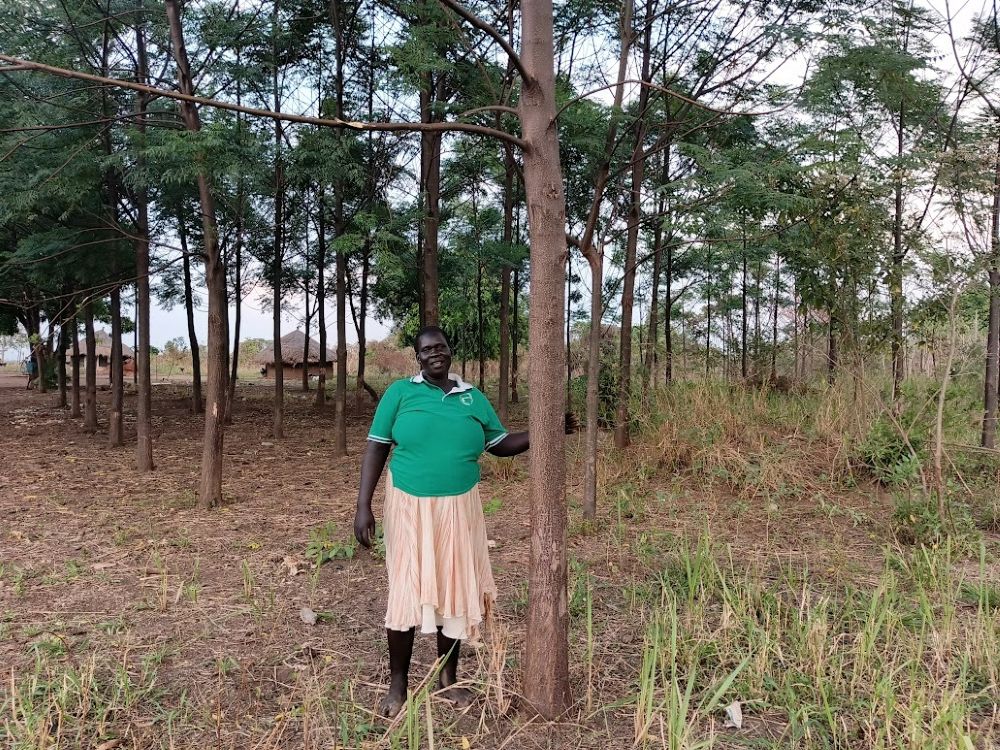
Labong joined Kijani Forestry in 2022, drawn by an unusual promise: plant trees, keep them alive, and earn money long before harvesting them. The organisation works with farmers and landowners to fight poverty and climate change through innovative agroforestry, restoration, and soil conservation methods.
The aim is twofold: to improve smallholder farmers’ productivity and incomes, while sequestering carbon and restoring degraded ecosystems.
“Our approach is what we call a nature-based solution,” explains Michael Tebere, Kijani’s Director for Government and Partnerships. “We design systems that work with the natural ecosystem, not against it. When we think of a solution, we research and test it on our own lands first. Once we have proven that it works, we then roll it out to farmers.”
The six-acre model: turning land into a living asset
Kijani’s flagship initiative, the Six-Acre Model, integrates trees and crops on smallholder farms in a carefully phased rotation.
Though its name suggests scale, the model is flexible. It can be adapted for a farmer with six acres in Acholi or for one with a single acre in the refugee-hosting areas of Yumbe District.
“It’s not the size that matters,” Tebere emphasises. “It’s the system, keeping trees and crops growing side by side, season after season.”
Under this model, farmers plant fast-growing timber species such as white teak alongside food crops. They receive annual survival-based incentives for maintaining the trees, access to carbon credit earnings, and, eventually, timber income. The structure ensures income at multiple stages: short-term, medium-term, and long-term.
A hardworking farmer who plants 1,000 trees can earn about 900,000 Uganda shillings (approximately 243 USD) in five years, without cutting down a single tree. By the fifth year, after planting just one acre of fast-growing trees annually, a farmer can multiply their income six times. By the eleventh year, that income can grow eighteenfold, creating a stable and scalable revenue stream.
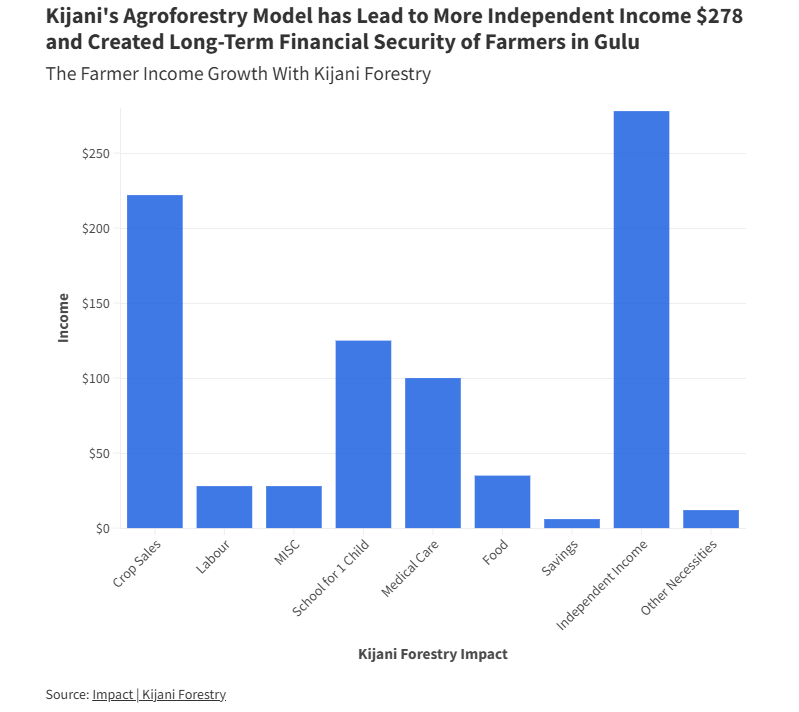
For Labong, the impact was immediate. In 2023, she earned Uganda shillings 52,600 (about USD 14), money she used to pay school fees. By 2025, her annual earnings from tree survival incentives had risen to 89,800 shillings (about USD 24). While modest, the payments are predictable and reliable, a rare certainty in rain-fed agriculture.
Similarly, 80-year-old Janet Aol found in agroforestry a form of dignity that physical labour could no longer provide. Unable to wield a hoe for long hours, she planted 200 white teak trees and earned 95,000 shillings over two years.
“I use the money to feed myself and my dependents,” she says. For elderly farmers like Aol, trees have become pension plans rooted in soil.
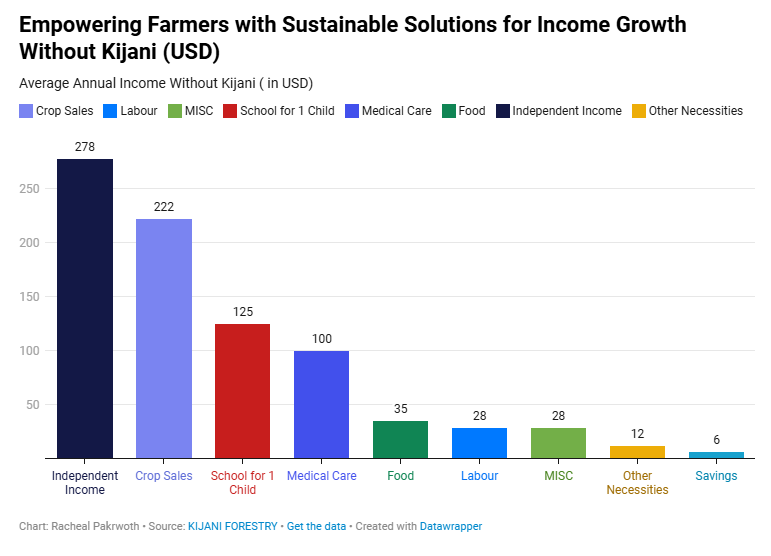
While these individual stories show progress, the broader data reveal the struggle most rural families face. When looking at the income for farmers who are not members of Kijani, it becomes clear that life is often a struggle for survival. With most of their annual income consumed by basic needs like school fees, food, and medical expenses, there is little left for savings or long-term investments, according to community leaders and data from Kiijani Forestry.
Beyond individual farms and homesteads, Kijani’s footprint is expanding rapidly. When the organisation began operations in 2019, tree planting in Northern Uganda was uncommon. Today, it counts nearly 30 million trees planted across the region, a growing forest of progress stretching across Acholi and beyond.
“Uganda’s richest resource isn’t oil,” Tebere says. “It’s biodiversity, the trees, shrubs, and plants that have always sustained us. Sixty to seventy percent of modern human medicine comes from tropical biodiversity. We must protect it.”
How trees protect climate, crops, and communities
Trees act as a natural cooling system for the Earth. When a tree grows, it breathes in carbon dioxide, the main gas causing the earth to heat up, and locks it away in its trunk, roots, and the soil.
A single mature tropical tree can absorb about 22 kilograms of carbon each year. This way, it acts like a giant sponge that cleans the air.
Beyond just cleaning the air, trees improve local weather conditions. Their leaves release water vapour into the atmosphere, which helps form clouds and replenishes the rain that farmers rely on.
On the ground, tree branches act like a huge umbrella, shading the soil so it stays cool and moist even during a dry spell. This microclimate means that crops growing under the trees don’t wither easily.
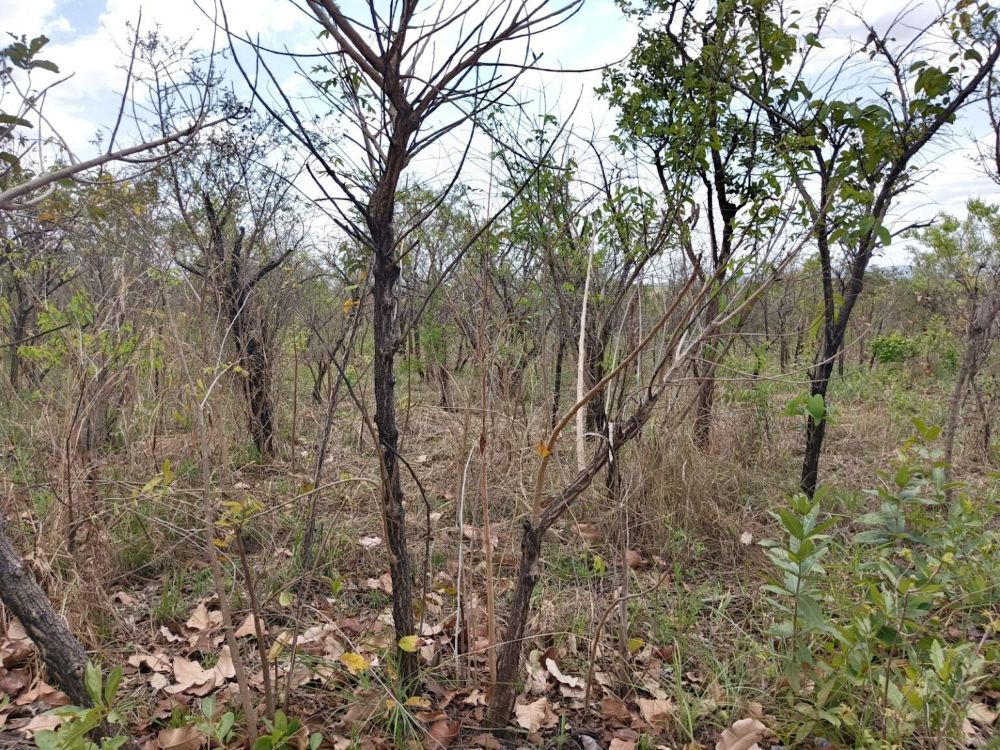
In places where the land has been stripped bare, trees also serve as anchors. Their deep roots hold the soil together during heavy storms. This prevents soil from washing away into the rivers and lakes.
A national story of loss and recovery
Uganda’s relationship with its forests has long been turbulent. According to the National Forestry Authority’s 2015 state of Uganda’s Forestry report, at the turn of the 20th century, an estimated 45 percent of the country was draped in forest cover. By the early 1990s, that figure had fallen to 20 percent. By 2015, it hit a critical low of 9.5 percent.
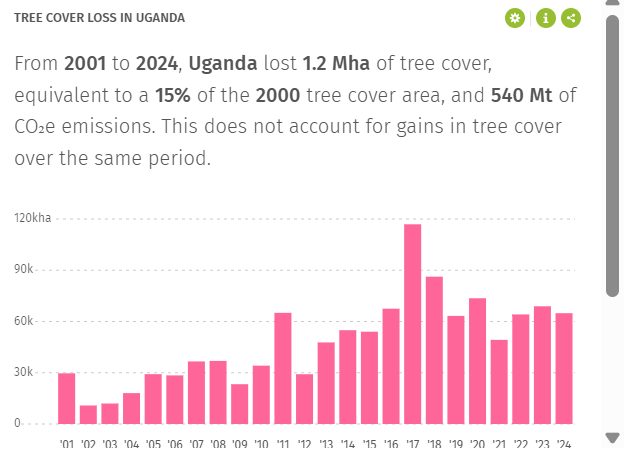
Population growth, charcoal demand, and agricultural expansion drove much of the decline. According to Global Forest Watch, Uganda lost approximately 1.2 million hectares of tree cover between 2001 and 2024, a 15 percent decrease since 2000.
How trees protect climate, crops, and communities
Trees act as a natural cooling system for the Earth. When a tree grows, it breathes in carbon dioxide, the main gas causing the earth to heat up, and locks it away in its trunk, roots, and the soil.
A single mature tropical tree can absorb about 22 kilograms of carbon each year. This way, it acts like a giant sponge that cleans the air.
Beyond just cleaning the air, trees improve local weather conditions. Their leaves release water vapour into the atmosphere, which helps form clouds and replenishes the rain that farmers rely on.
On the ground, tree branches act like a huge umbrella, shading the soil so it stays cool and moist even during a dry spell. This microclimate means that crops growing under the trees don’t wither easily.
In places where the land has been stripped bare, trees also serve as anchors. Their deep roots hold the soil together during heavy storms. This prevents soil from washing away into the rivers and lakes.
A national story of loss and recovery
Uganda’s relationship with its forests has long been turbulent. According to the National Forestry Authority’s 2015 state of Uganda’s Forestry report, at the turn of the 20th century, an estimated 45 percent of the country was draped in forest cover. By the early 1990s, that figure had fallen to 20 percent. By 2015, it hit a critical low of 9.5 percent.
Population growth, charcoal demand, and agricultural expansion drove much of the decline. According to Global Forest Watch, Uganda lost approximately 1.2 million hectares of tree cover between 2001 and 2024, a 15 percent decrease since 2000.
Rwoho: A forest once on its deathbed
At the border of Rwampara, Isingiro, and Ntungamo districts, mist clings to the jagged canopy of Rwoho Forest like a secret shared between the heavens and the rolling hills of Southwestern Uganda. Sprawling across 90 hectares, this verdant expanse serves as the green lungs of a rapidly transforming landscape.
Once, Rwoho was on its deathbed, encroached upon for charcoal and timber by surrounding communities struggling to survive.
For Eldad Bahemuka, a resident of Kasharira village in Kabuyanda Sub- County, Isingiro District, the forest once represented little more than school fees in the form of charcoal sacks and cut logs.
“I didn’t see trees,” Bahemuka recalls. “I saw income.”
Two decades ago, following sustained community sensitisation campaigns and enforcement of conservation policies, including a strict ban on forest encroachment, attitudes began to shift. Residents were encouraged to adopt agroforestry practices on their own land rather than exploit the reserve.
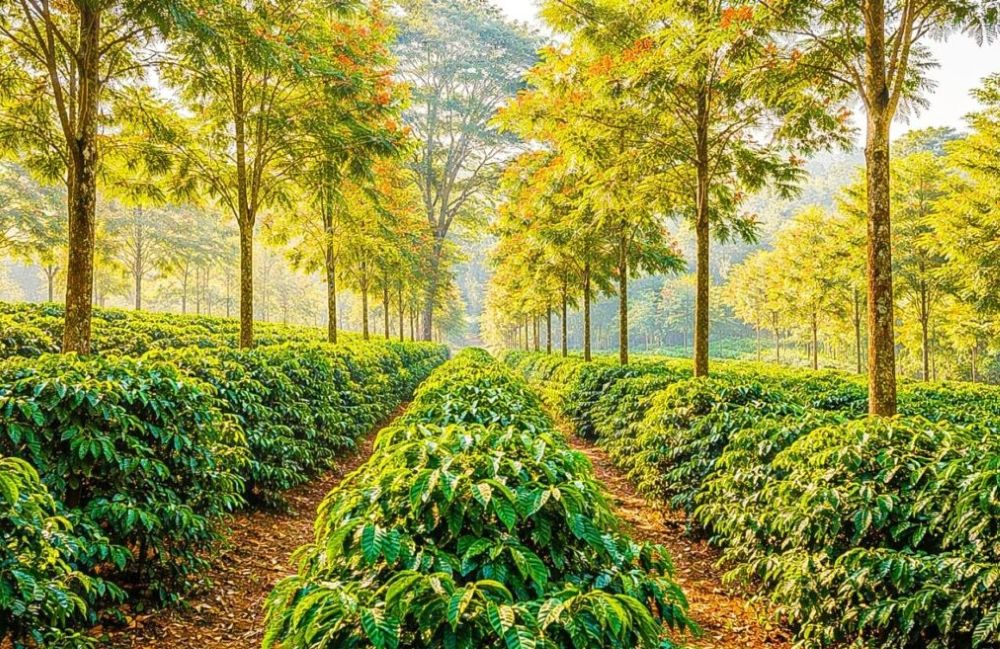
Today, Bahemuka’s land tells a different story. Coffee plants thrive under the partial shade of grevillea trees. Bananas grow between them. Bees hum around apiary boxes at the edge of the farm. He also earns from fruit farming and animal husbandry.
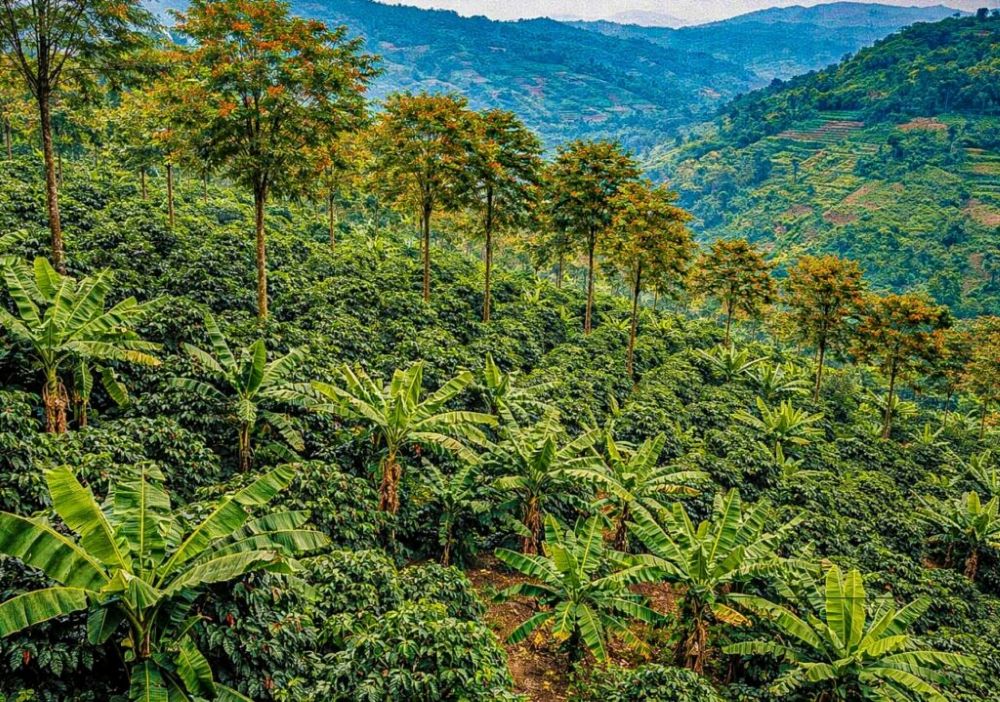
“We came to understand the value of the forest beyond charcoal,” he says. “Our area has a cool climate. We collect only dry branches that fall naturally for firewood. This forest is a resource for all of us, and we must protect it.”
Emmanuel Bwengye, the Isingiro District Natural Resources Officer, calls Rwoho “a true testament that conservation, afforestation, and reforestation are possible if all stakeholders, especially communities, are engaged and aligned.”
The fragile frontier
Despite gains, challenges remain. Private forests account for nearly 70 percent of Uganda’s forested land and remain highly vulnerable to conversion. Deliberate bush burning and uncontrolled grazing continue to undermine restoration efforts.
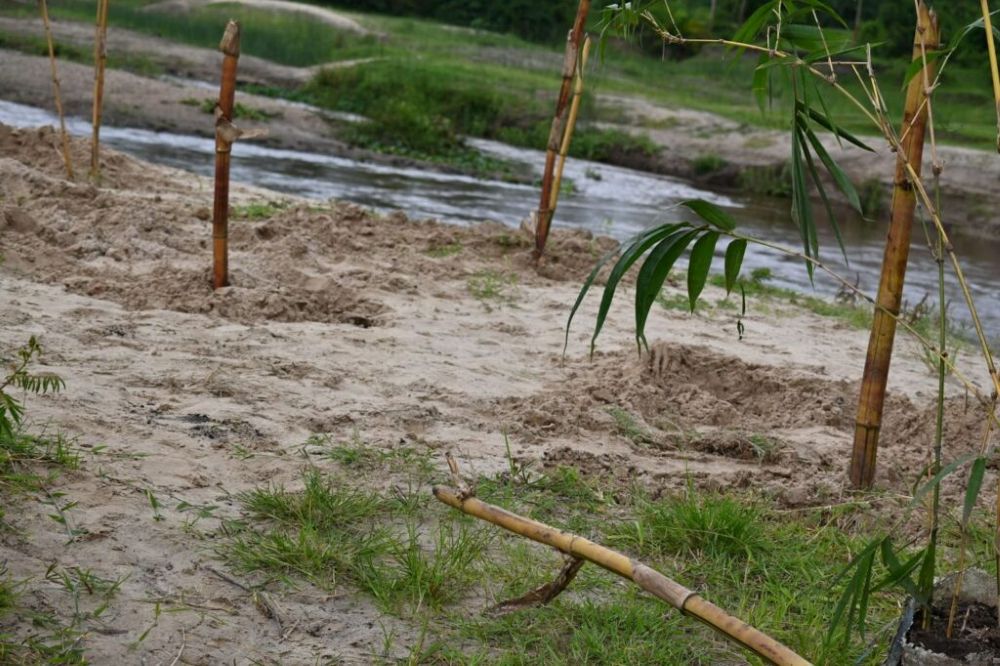
Along the banks of River Rwizi in Mbarara City, Emmanuel Ahimbisibwe – the co-director of Action in Disaster Training Services, a local non-governmental organisation- knows this frustration firsthand. After securing rights to restore one kilometer stretch of river buffer land, he and colleagues planted bamboo in 2024 to stabilise the eroding banks. The vision was a continuous green belt protecting the river.
But cattle and goats from neighboring communities destroyed much of the bamboo.
“We wanted to restore the riverbank and set an example,” he says. “Instead, we are counting losses.”
Vincent Mugabi, an agronomist in Mbarara City, says such setbacks highlight the need for sustained community engagement. “We face deliberate bush burning and grazing that destroys young trees,” he explains. “But a healthy environment is a public good. Continuous sensitisation is key.”
For Mugabi, reforestation is not aesthetic; it is economic. “Trees are Uganda’s most efficient green infrastructure,” he says, noting that a single mature tropical tree can sequester up to 22 kilograms of carbon dioxide annually. “In agroforestry systems, trees act as windbreaks, improve soil fertility, regulate microclimates, and boost yields for crops like coffee and cocoa,” he elaborates.
To agroforestry experts like Edward Mugwisa, an agriculture extension worker with Mbarara district local government, due to sensitisation, people have now appreciated the value of trees.
“All we have to do now is maintain the sensitisation efforts to promote practices like agroforestry and reforestation, be stricter on protection of gazetted government forests, and expand the reach of tree protection rewarding initiatives like carbon trading schemes to as many areas as possible,” Mugwisa opines.
A canopy reclaimed, one seedling at a time
From the plains of Gulu to the hills of Kabuyanda, a new generation of forest guardians is emerging, farmers who see trees not as firewood, but as financial assets; not as obstacles to farming, but as partners in productivity.
This change is not only visible to farmers but to many other people. “I am pleased with the replenishment of the tree cover,” says Arthur Owor, Director of the Centre for Africa Research, a non-governmental organisation based in Gulu city.
He notes that although indigenous tree species are still cut due to the good quality of their wood and charcoal, the situation is not as bad as in the years past and the restoration struggle continues.
“The work isn’t done. We have to keep providing seedlings and paying people for the trees they keep alive,” Owor says. He believes there is a need for more “teaching farms” so the community can see the results. And for those who rely on charcoal, Owor says, “we must provide a different path.” He suggests fast-growing trees that can provide the energy needed without destroying local forests.
The story of Uganda’s forests is no longer solely about loss. It is about resilience, communities learning that conservation and prosperity are not opposing goals but intertwined futures.
Whether Uganda reaches its 15 percent forest cover target by the end of 2026 remains uncertain. What is clear, however, is that across the country, seedlings are taking root, in soil and in mindset.
For Labong in Gulu and Bahemuka in Isingiro, every tree planted is more than a tree. It is a promise of rainfall sustained, of children educated, of rivers protected, and of an emerald canopy slowly reclaiming its place across the Pearl of Africa.
First publication: InfoNile.
This investigation was done by InfoNile member journalists and was supported by ACME (Africa Centre for Media Excellence) in partnership with Climate Smart Jobs Uganda (CSJ). Contributions to the story were made by Andrew Aijuka, Cliff Abenaitwe, Delicate Sive, Rosemary Anena, and Data Visualisations by Racheal Pakrwoth, a Data and Editorial Associate at InfoNile


