
 0
0
 0
0
By Christophe Uwizeyimana
In Rwanda, cassava production has been severely affected for more than a decade by cassava brown streak disease (CBSD) and cassava mosaic disease (CMD), which have significantly reduced yields and farmers’ incomes. CBSD was first reported in Rwanda in 2009, and within five years its incidence increased sharply from 18.5% in 2012 to 69% in 2014, contributing to serious seed shortages and widespread yield losses.
In response to these challenges, Biotech KingaKUU cassava was introduced to improve productivity and protect crops from these destructive diseases. However, questions and concerns remain among the public regarding this biotech crop. To address these issues, the Rwanda Agriculture and Animal Resources Development Board (RAB) has developed eight -page booklet providing detailed information on Biotech KingaKUU cassava. The publication explains how the crop works and responds to various questions about it.
Q1. What is Biotech KingaKUU cassava?
Biotech KingaKUU cassava has been improved to provide strong resistance to cassava brown streak disease (CBSD) and cassava mosaic disease (CMD), while also delivering the high storage root yields desired by farmers.
CBSD and CMD are the most destructive cassava diseases in Rwanda. These diseases are spreading rapidly and have led to an estimated 73% decline in cassava yields. In severe cases, CBSD can cause up to 100% loss of usable storage roots.
Q2. How will Rwandan farmers benefit from the new Biotech KingaKUU cassava varieties?
Currently, farmers have no effective options to protect cassava from CBSD and CMD. No chemical treatments are effective, and no conventional varieties provide high and durable resistance to both diseases.
Biotech KingaKUU cassava offers several benefits, including:
- High-level resistance to cassava brown streak disease
- High-level resistance to cassava mosaic disease
- Higher overall yields, with increased storage root production
- Improved cassava quality
- Enhanced farm productivity
This in-plant dual protection prevents total crop loss and ensures better yields and higher incomes for farmers.
Q3. Why are biotech cassava varieties being developed in Rwanda?
The Rwanda Agri-Biotech Programme, with support from the Government of Rwanda, is improving cassava, maize, and potato to protect these staple crops from pests and diseases that cause major losses. Currently, farmers lack effective tools to control CBSD and CMD. Biotech cassava provides in-plant protection against these destructive diseases.
The programme uses modern biotechnology to:
- Protect cassava farmers from total (100%) yield loss
- Reduce maize yield losses by up to 75%
- Reduce potato yield losses by more than 70%
These efforts are expected to benefit over 500,000 farming households through increased yields, improved food security, reduced pesticide use, and economic growth.
Q4. How was Biotech KingaKUU cassava developed?
Researchers developed KingaKUU cassava by activating natural defense mechanisms within the plant to resist CBSD and CMD. The cassava has been evaluated over eight years in multiple locations in Rwanda, Kenya, and Uganda, where it demonstrated strong and durable resistance to both diseases.
Q5. Does Biotech KingaKUU cassava require processing to reduce cyanogenic content?
No. KingaKUU cassava is a sweet variety with very low cyanogenic content.
Q6. Does Biotech KingaKUU cassava require special chemicals or farming practices?
No. Biotech KingaKUU cassava is planted and grown in the same way as other cassava varieties released by RAB. It requires no special chemicals and can be intercropped with other crops.
Q7. What is the difference between conventional and biotech cassava?
Biotech cassava has built-in dual resistance to CBSD and CMD, preventing total crop loss and ensuring higher yields and incomes. Like conventional varieties, it does not require chemical treatments and can be grown alongside other crops.
Q8. Can farmers replant and share Biotech KingaKUU cassava planting materials?
Yes. Biotech KingaKUU cassava stem cuttings can be replanted just like other RAB-released varieties. Farmers are free to share planting materials, but they are advised to source clean planting materials after every three growing seasons.
Q9. Is Biotech KingaKUU cassava safe?
Yes. Biotech KingaKUU cassava is safe for both human and animal consumption. It has undergone a rigorous risk assessment by Rwanda’s regulatory authorities.
Q10. How does Rwanda review the safety of biotech cassava?
The Government of Rwanda has established a strong legal and institutional framework for the safe and responsible use of modern biotechnology. The Rwanda Environment Management Authority (REMA) conducts safety assessments before any biotech crop is approved. The assessment considers environmental impact, food and feed safety, and comparisons with conventional varieties. Variety evaluation is carried out by the Rwanda Inspectorate, Competition and Consumer Protection Authority (RICA).
Q11. Is Biotech KingaKUU cassava approved in Rwanda?
Research partners, working with REMA and RICA, are currently conducting field trials and developing high-yielding Biotech KingaKUU cassava varieties with strong resistance to CBSD and CMD.
Q12. When will Rwandan farmers be able to access Biotech KingaKUU cassava?
Farmers will be able to plant Biotech KingaKUU cassava after national performance trials are completed and the best-performing varieties are selected and officially registered in the national variety catalogue.
Q13. How much will Biotech KingaKUU cassava planting material cost?
Planting materials will be made available to farmers at the same price as other cassava varieties.
Q14. Who owns Biotech KingaKUU cassava varieties?
The Rwanda Agriculture and Animal Resources Development Board (RAB), together with its partners under the Rwanda Agri-Biotech Programme, a public-private partnership has negotiated access to the Biotech KingaKUU cassava varieties to ensure they are made available to farmers in Rwanda.
As Rwanda continues to strengthen its agricultural transformation agenda, Biotech KingaKUU cassava represents one of the scientific approaches being explored to address persistent crop diseases and improve food security. While the technology offers promising benefits particularly in protecting farmers from devastating yield losses.Its adoption will continue to depend on transparent regulation, ongoing safety assessments, and public awareness. Ensuring that farmers, consumers, and other stakeholders remain well informed and involved will be key to building trust and maximizing the potential benefits of biotechnology for sustainable agriculture and rural livelihoods in Rwanda.
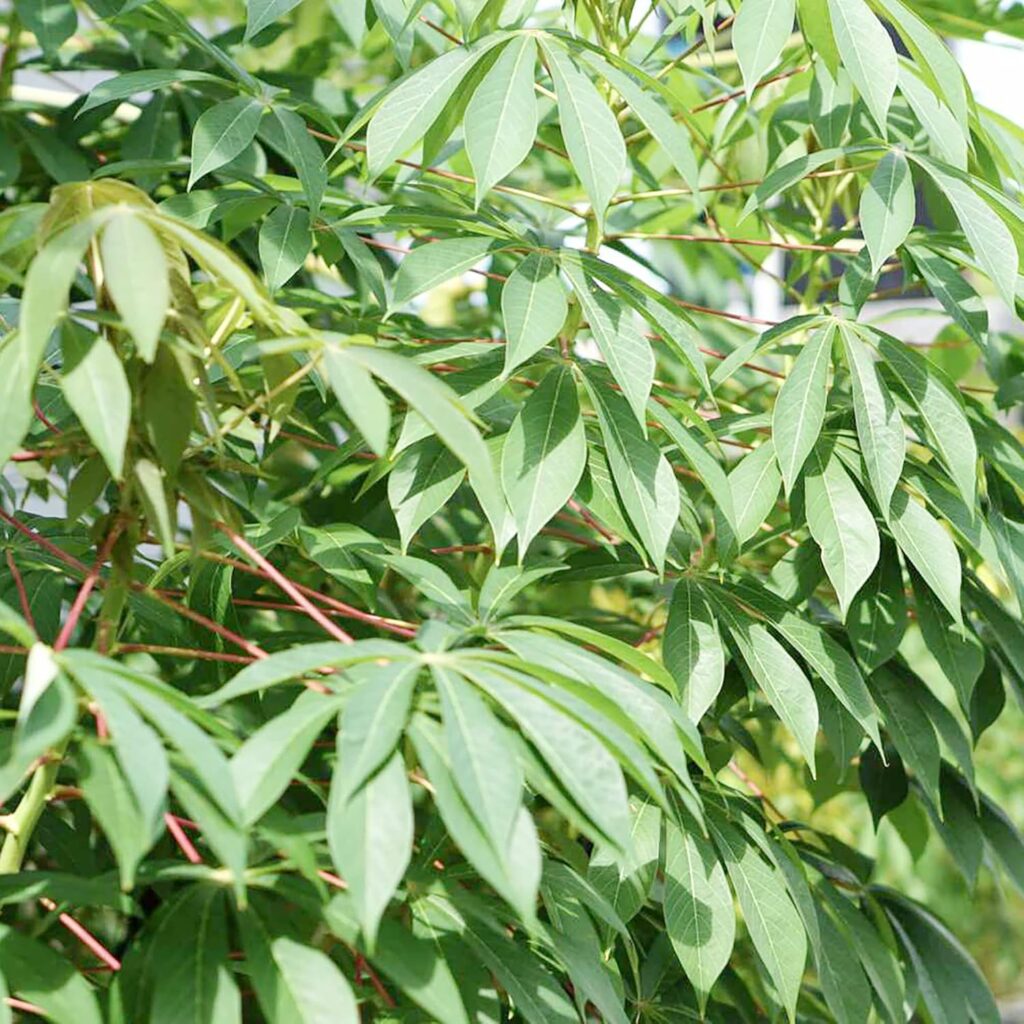
Photo:Biotech KingaKUU cassava offers improved yields and stronger disease resistance to support farmer productivity.
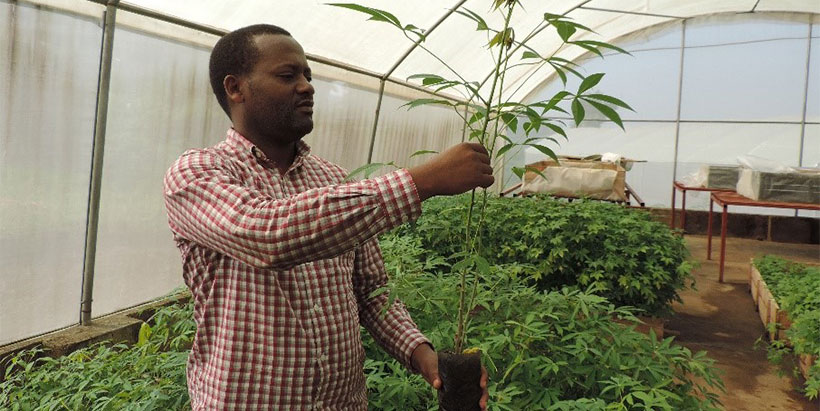
Photo:Dr. Athanase Nduwumuremyi, Senior Research Scientist and Program Coordinator of RAB’s Roots and Tubers Program, shows a healthy, disease-free cassava plant inside a screen house.
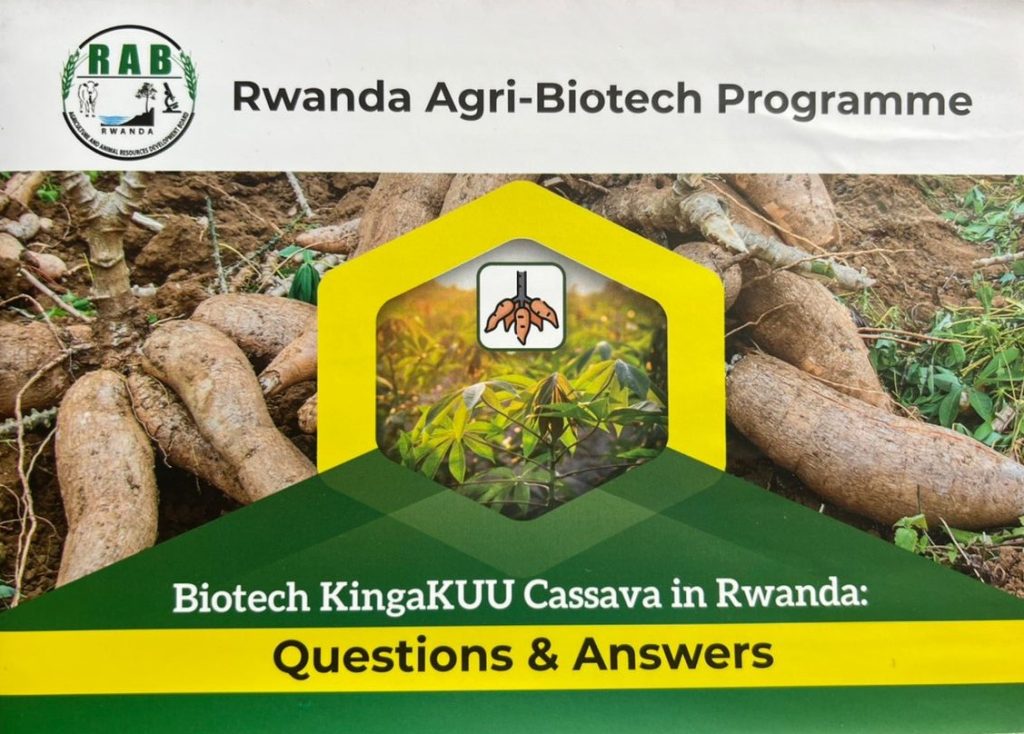
Photo:RAB’s information booklet on Biotech KingaKUU cassava, developed to address public questions and concerns.


