
 0
0
 0
0
By Bobby Ramakant
Amidst the high-decibel organising to mark World TB Day 2026 globally, we got a chance to spend time at TB ground zero: a shelter home for the homeless people in a state (Delhi) with the highest TB incidence in a country with the highest TB burden worldwide (India).
“I stress that TB is not only a medical issue – it is a social and economic challenge,” had rightly said Dr Benjamin Paulus Octavianus, Vice Health Minister of Indonesia, to CNS (Citizen News Service).
But is TB a response, socially and economically? Can we do better in equity and justice while serving those in dire need of TB services? The answer could be a resounding yes. Perhaps keeping this in mind, government-run services are partnering with people-led initiatives so that those most at risk can be served with dignity, rights, and equity.
Why are the most needy, underserved?
People who are at most risk of TB – such as homeless people and migrants – and who are in the greatest need of standard TB services, often remain unreached, said Dr KP Singh, District TB Officer (Pili Kothi) of the government’s National TB Elimination Programme, Delhi, India.
He underlined the critical role shouldered by frontline healthcare workers of Humana People To People India (HPPI) by regularly reaching out to key and other vulnerable populations, like homeless people and migrants, and screening them for TB. Those with active TB disease are linked to free TB treatment services from the nearest government-run facility and receive daily follow-up and support to tide them through their treatment (which lasts for at least 6 months) so that they can get cured.
HPPI is reaching those who are most difficult to reach and convince them to take a TB test promptly, said Dr. KP Singh. “Without them, it would have been impossible to screen this population and link them to TB diagnosis, treatment, care, and support.” He commended HPPI workers like Vinay, Preeti, Kamlesh, and others.
Dr. BK Vashisht, former State TB Officer of Delhi, agrees: Key and other vulnerable populations are at a very high TB risk. The track record of HPPI is commendable as their trained workers reach out to the underserved people with compassion and empathy, and regularly screen them for TB. Engaging those who have been cured of TB as TB champions has helped fight TB stigma and reduce discrimination.
Ravinder Kumar of HPPI, who leads a team of frontline healthcare workers, agrees: It needs a lot of courage for TB survivors to share their journey and lived experience with others. “We salute this spirit of TB survivors who are championing the cause and standing up to help others win over TB. We need to end all forms of TB stigma and discrimination if we are to end TB.”
A big challenge is to retain people throughout TB treatment
Not just getting diagnosed early and accurately is challenging, but retaining homeless people and migrants throughout TB treatment could also be a very daunting task.
After getting diagnosed, it is very difficult to hold or retain people from key and other vulnerable populations all through the TB treatment, said Dr. KP Singh. “We cannot hold them without HPPI support. We are unable to provide the support to each one of them that HPPI provides. They are in regular touch with the person and the communities. We cannot drop a single TB case, and holding each one of them all through the TB treatment is very important if we are to end TB.”
Dr. Singh assured his continued support to groups like HPPI so that the Pili Kothi area can become TB-free. To make TB history, we must reach out to key and other vulnerable communities with help from groups like HPPI.
Listen to those we serve
A resident of a shelter home for homeless people, Sam (name changed), already had diabetes and high blood pressure. He was familiar with HPPI frontline workers as they regularly engaged him and others in a range of activities, such as health awareness programmes. HPPI also screened them for TB and other symptoms. On one such visit, when his health was down, they encouraged him to take a chest X-Ray, after which he was offered a TB test at a nearby chest clinic. He completed his six-month-long TB treatment successfully, thanks to daily follow-up and support provided by HPPI. Taking TB medicines regularly, without any interruption, is very important, and staying away from tobacco and alcohol use is vital too, Sam said.
Another homeless person who is currently on TB treatment from a government-run Jhandewalan Chest Clinic in Delhi emphasised taking medicines daily without fail. “HPPI workers helped me understand the importance of adhering to my medication. It is for our own health and well-being.”
Arun (name changed) is also currently on TB treatment. He hardly had any information about TB earlier, but when his health was on a decline, he was spotted by HPPI workers who took him for a chest X-Ray. He was presumptive for TB and so was accompanied by them to the nearest government-run Pili Kothi Chest Clinic for a TB test. He had TB disease and was put on therapy. He shared how HPPI workers counselled and supported him on an ongoing basis.
Another female homeless person said that she has been on TB treatment for the last month. She said that good nutrition does not only mean expensive fruits but also eating vegetables and lentils, and not wasting money on tobacco or alcohol. She was having fever, cold, cough, breathlessness, and weight loss for over a month when she happened to go to a free health camp organised by HPPI. She was offered an X-Ray because of which she was found presumptive for TB. She was accompanied by HPPI workers for a TB test. She told us that without HPPI’s counselling, moral support, and daily follow-up, it would have been difficult for her to adhere to the therapy.
Prevent, find, and treat ALL TB to end TB.
Dr. BK Vashisht, former Delhi State TB Officer, added that the government of India’s TB strategy is based on science and evidence. We have to find people with TB early and accurately – even those who have no TB symptoms yet (as almost half of those with TB could be asymptomatic). Artificial intelligence (AI) enabled handheld ultraportable X-Ray is being taken closer to the high-risk populations in a van (Ni-Kshay van) to screen everyone for TB – regardless of symptoms – and link those with active TB disease to TB treatment, care, and support. Those without active TB disease and eligible for TB preventive therapy are offered the latest regimen (12 doses – once weekly for 12 weeks) to prevent latent TB infection from progressing to active disease.
We at CNS met a person who took an AI-enabled X-Ray (thanks to a Medanta’s Mission TB Free van standing outside the shelter home for the homeless) and was found eligible for TB preventive therapy. He got his medicines on the same day (within an hour or so). Medanta has joined hands with HPPI to support the local government programme.
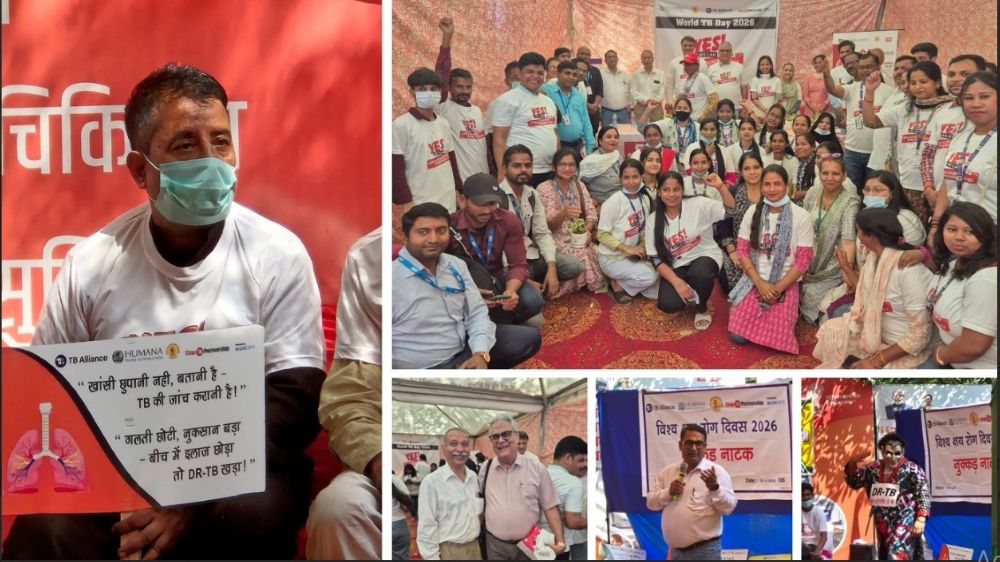
Dr Vashisht emphasised the importance of focusing on key and other vulnerable populations, identifying people with active TB disease and linking them to TB treatment, care, and support – and the role of HPPI frontline workers is critical for daily follow-up and support.
He also said that the government of India’s TB centres are also conducting free universal drug susceptibility testing (DST) so that people with TB can be treated with medicines that are effective against the disease-causing TB bacteria. DST tells us if a person’s bacteria are resistant or sensitive to TB medicines.
Dr. Vashisht commended Medanta for its van, which was parked outside the entrance of the shelter home for the homeless people. It has an AI-enabled X-Ray, and samples are taken on the spot from those who are found presumptive for TB.
Now it is possible to end a 10,000-year-old disease.
India’s national TB programme began in the 1960s, but major changes began having an impact around the turn of the century in 2000, said Dr Kuldeep Singh Sachdeva, former Deputy Director General of the Indian government’s national TB elimination programme as well as national AIDS control programme. Community engagement is a bedrock for advancing person-centred care. Dr. Sachdeva currently leads Molbio Diagnostics as its President and Chief Medical Officer.
Dr. Sachdeva underlined the critical role played by TB survivors or TB champions, Ni-Kshay Mitras (volunteers who provide nutrition and other support to those on TB treatment), and others.
A decade back, it became possible to think of TB elimination, said Dr. Sachdeva. Ending a 10,000-year-old disease (TB) is possible because we have the proven tools, approaches, and community leadership to impact change. Dr. Sachdeva reiterated the importance of AI-enabled handheld X-Rays that can be taken closer to the communities for screening everyone, regardless of symptoms.
There are point-of-care molecular tests that can be deployed closer to the communities to provide accurate diagnosis within half an hour. There are very effective TB treatment regimens, such as the six-month regimen for drug-resistant forms of TB. Earlier, treatment for drug-resistant TB was for around two years, and up to 75% of those on it were not likely to survive. But now, the treatment success rate of six months treatment (BPaL or BPaLM) is 90-95%, said Dr. Sachdeva.
During his long service at the National TB Elimination Programme, Dr. Sachdeva travelled to far and remote areas and several villages. But examples of groups like HPPI, which are dedicated to serving the homeless and migrant people, were few. Dr. Sachdeva highlighted the significance of preventing, finding, and treating all TB among high-risk people.
He commended HPPI’s well-trained team, which can connect with the unreached populations and convince them towards a health-seeking behaviour, and come forward for TB screening and test as well as adhere to the therapy. If more organisations like HPPI can join the efforts to reach the unreached, we would be able to end TB, he said.
Survivor champions efforts to get the underserved cured of TB
A young woman, Nisha (name changed), who survived not only drug-sensitive TB but also drug-resistant TB in the past, has now joined the HPPI team to help those who are underserved but at high TB risk stay TB-free. She follows up and supports those who are on treatment and helps them in every possible way to get cured.
When Nisha got TB, she barely had any information about it. She had persistent fever and cough, sweat, and a cold, and was receiving treatment from the private sector. But the treatment was not working, and her condition deteriorated to the point that she started coughing blood. Then she was taken to the nearest government-run Chest Clinic and was found to be positive for active TB disease. She completed her six-month treatment, but just three months later, she was back in the clinic with severe health problems – and got diagnosed with a drug-resistant form of TB.
Nisha’s treatment for drug-resistant TB lasted two years, during which she faced a lot of problems, such as difficulty walking, seeing, and frequent vomiting, but she did not stop the therapy. Along with nutrition, support from her family and healthcare workers helped her tremendously to adhere to the treatment and finish it. Now she is dedicatedly working with HPPI to help others get cured of TB and win over TB.


