 2
2
 0
0
By Annonciata and Freddie
As climate change and urbanization intensify flooding in Rwanda, the capital of Kigali has embraced nature-based solutions. The city is restoring and reshaping 18,000 acres of degraded wetlands, planting native species to filter and slow runoff, and enhancing biodiversity.
Maurice Manishimwe runs a small garage beside a fuel station in Musango village, just outside the Rwandan capital of Kigali, in a nation known as the land of a thousand hills. Sandwiched between one of those hills and the Nyabugogo River, his workshop hums with activity as people arrive with cars and equipment to be tested and repaired.
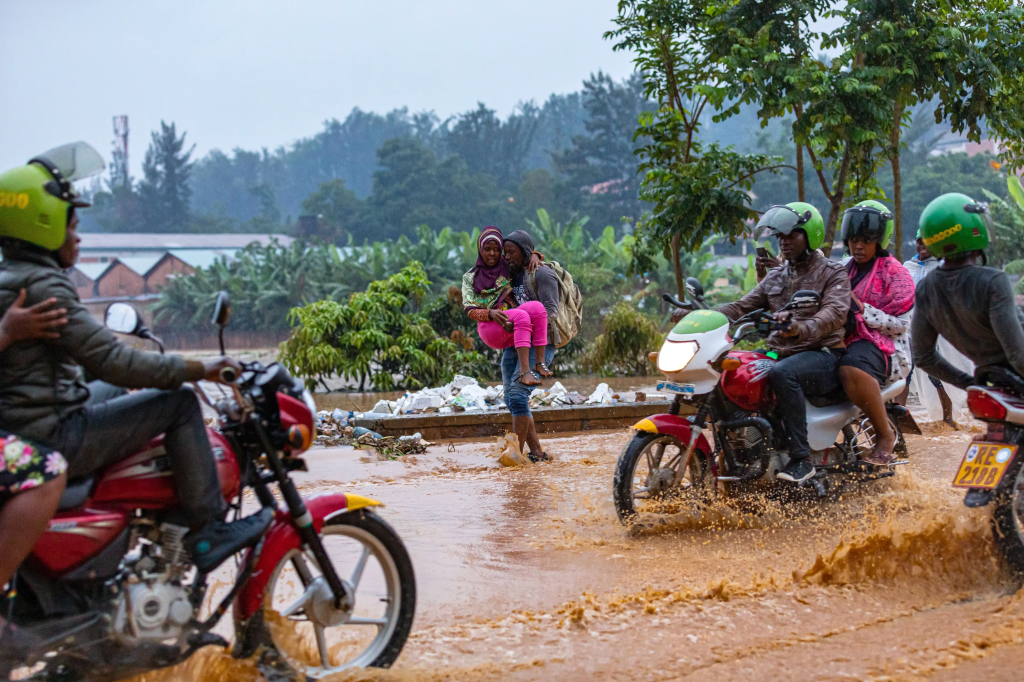
But this busy location comes at a cost: When rainstorms hit, water running off the hillsides and rising river levels flood the streets and spill into Manishimwe’s workplace. “Our shops were submerged, and our goods were destroyed,” says the 30-year-old, speaking about a December 2023 storm that surrounded his garage with knee-high water. He says the flood cost him thousands of dollars in lost inventory and tools.
Manishimwe built a higher step into his workshop to protect his brake pads and taillights, laid new tiles, and replaced his wooden shelves. Still, he worries that heavy rains could once again wreck his shop.
Kigali, a city of 1.7 million, has historically seen an average of nearly 40 inches of rain a year. But rainy seasons in Rwanda are becoming both “shorter and more intense,” according to the Rwanda Environment Management Authority (REMA). Since 2017, East Africa’s spring rains have shown record-breaking extremes as warmer air and ocean surfaces load storms with more moisture.
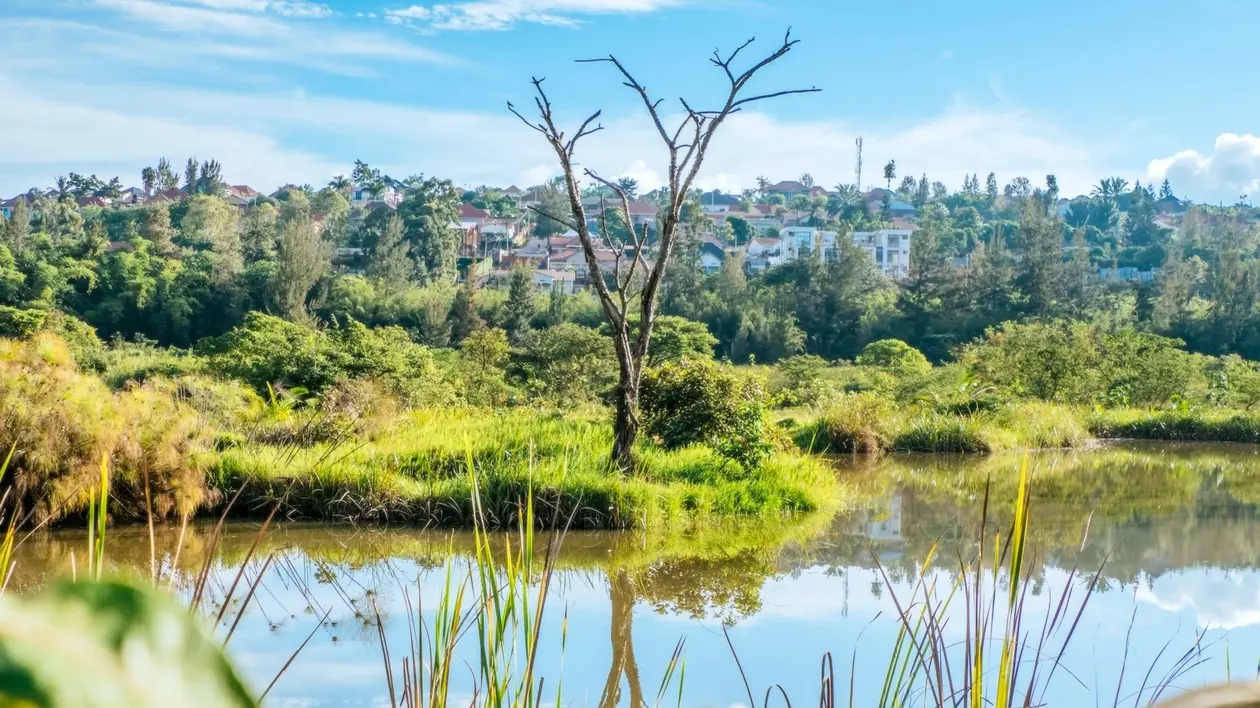
In just three years, Kigali converted a degraded swamp into a functioning wetland featuring ponds, a riverine forest, and a savanna.
Forty years ago, Kigali was protected from stormwaters by extensive wetlands at the base of its many hills. The wetlands soaked up rain, slowed floods, and filtered runoff. But decades of degradation, including informal agriculture, sand mining, and industrial dumping in these areas, have reduced the wetlands’ ability to perform these essential ecological functions.
Rapid urban growth has placed additional pressure on the wetlands. The city’s population has risen by 4 percent each year since 2020, and open space continues to be replaced with impermeable concrete, which sends ever more runoff downhill. The flooding erodes soil, destroys buildings and infrastructure, and causes tens of millions of dollars’ worth of damage a year, according to Teddy Kaberuka, a Rwandan economist.
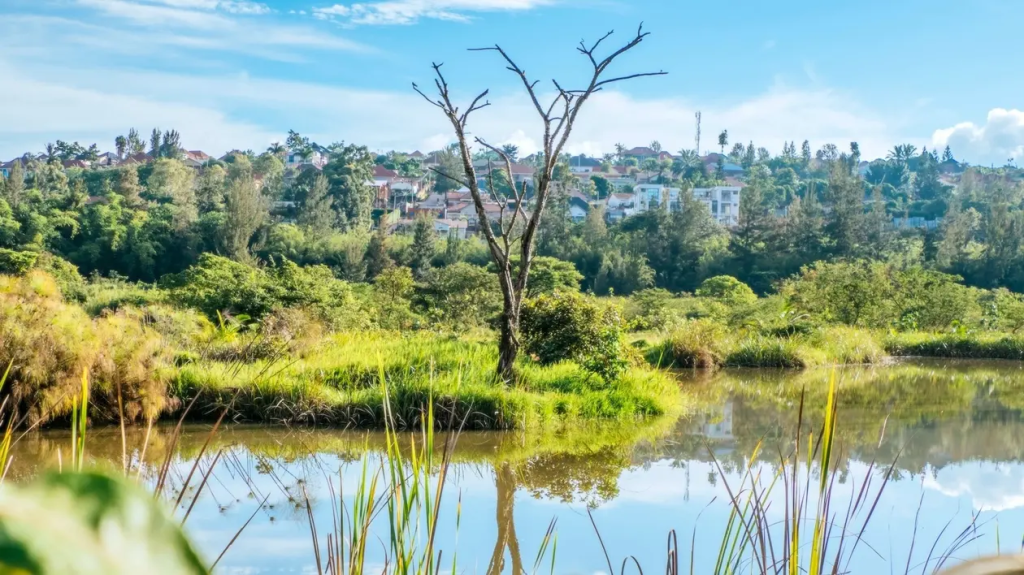
Eager to protect its citizens and property, create green space for communities and wildlife, and curb financial losses, Kigali began working nearly a decade ago to restore its natural defenses. In just three years, the city converted a degraded swamp into a functioning wetland featuring a series of ponds, a riverine forest, and a savanna that stores carbon, controls floods, filters pollutants, and enhances biodiversity. Building on that success, the city is currently reforesting hillsides and restoring an integrated wetland system that will eventually span more than 18,000 acres. The ambitious project will ultimately reshape one of Africa’s fastest-growing capitals.
As wetland loss accelerates worldwide, few cities have the space, resources, or political will to restore nature at this scale. Kigali’s project cannot stop floods on its own or reverse climate change, but it represents a rare, citywide effort to rebuild nature-based infrastructure offering one of the continent’s clearest models for urban areas seeking to boost their resilience.
Kigali sits within what was once an exceptionally soggy and verdant landscape, with 37 interconnectedwetlands covering almost 23,000 acres, or 12.5 percent of the city’s land mass. These weren’t small urban ponds with patches of swampland but broad, saturated expanses teeming with vegetation that supported birds, reptiles, amphibians, and small mammals.
The city’s wetlands functioned as a vast natural sponge, soaking up excess water, reducing flooding, trapping sediment, and filtering pollutants before they reached streams and rivers. Wetlands also cool surrounding neighborhoods through moisture release and shading, and, according to the U.S. Environmental Protection Agency, support a diverse array of wildlife in their reedbeds and grasslands, and store carbon in their soils and vegetation.
By mid-2026, restored sites will form a ribbon of parks and wetlands that will guide stormwater safely downstream.
But in Kigali, explained Gloriose Umuziranenge, a senior lecturer in the Department of Urban and Environmental Management at Protestant University Rwanda, urban expansion, including the construction of new roads, housing estates, commercial developments, and hillside settlements, as well as the pasturing of livestock and dumping of waste, gradually degraded the city’s wetlands. At least 50 percent of Kigali’s wetlands have lost their ecological character, according to the World Bank, meaning these wetlands have lost their “capacity to absorb and store excess rainwater,” Umuziranenge said. This local trend reflects a global pattern: about 22 percent of the world’s wetlands, around 1 billion acres, have been lost since 1970, and 25 percent of the remainder are degraded.
Eastern Kigali’s Nyandungu wetland is a case in point. The formerly lush area had been despoiled by decades of sand mining, stony quarrying, and cattle grazing. It frequently flooded the nearby roadway, jamming up traffic and endangering lives. In response, REMA, with support from the World Bank, Global Environment Facility, and Rwanda Green Fund, began in2016 to transform this wasteland, for $5 million, into a biologically productive landscape.
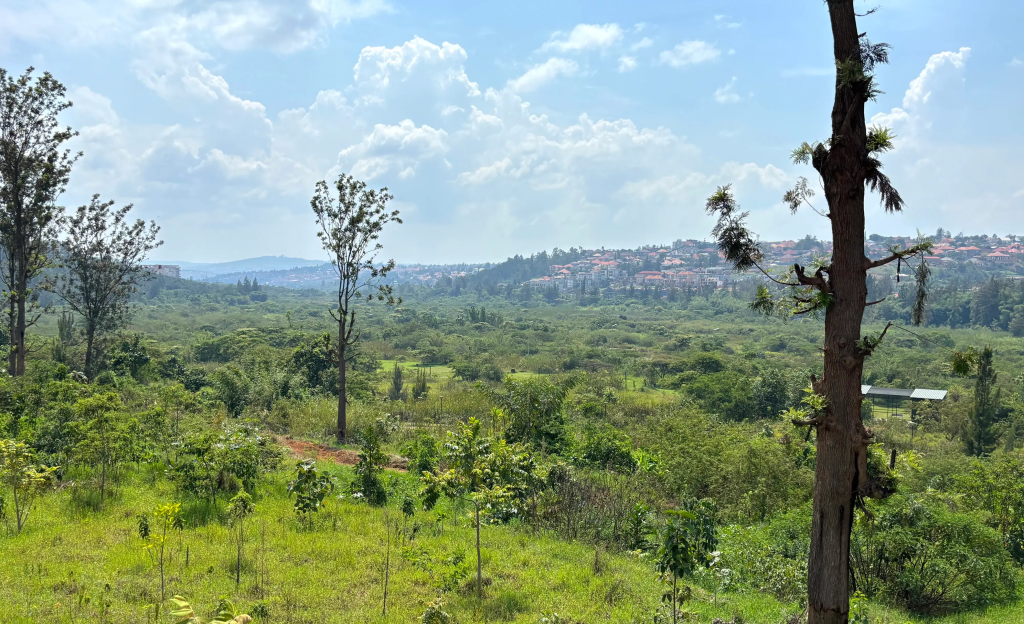
Today, the 400-acre Nyandungu Eco-Park is alive with marshes, ponds, and more than 200 species of birds. “From the time [the wetland] was restored,” said park manager Ildephonse Kambogo, “there was no more flooding.”
The success of the Nyandungu pilot project reshaped national thinking about other wetlands, said Richard Mind’je, an environmental studies lecturer at the University of Lay Adventists of Kigali. “After having this benefit, Rwanda said, ‘Why can’t we now restore other wetlands from Kigali so that we can keep benefiting from these services?’”
Today, cranes and diggers are working amid the bustle of Kigali’s streets, crowded with buses, moto taxis, shops, and homes, to restore and reshape five more degraded wetlands, covering 1,200 acres. Hundreds of workers are reshaping the land, creating islands, lakes, and ponds, clearing water channels, planting indigenous species, removing invasives, and establishing reed beds.
By mid-2026, according to the city’s restoration blueprint, the restored sites Gikondo, Rwamperu, Kibumba, Nyabugogo, and Rugenge-Rwintare will link up, forming a continuous ribbon of wildlife corridors, parks that contain 36 miles of walkways and bike lanes, and wetlands that guide stormwater safely downstream. With wetlands under threat across the continent, the project has the potential to serve as a model for other African cities, said Julie Mulonga, East Africa director for Wetlands International. Its design, financing, and community engagement are all elements “that can be replicated,” she said.
Many of the areas now set aside for restoration have been used informally for generations to grow food, graze cattle, and fish.
Yet challenges remain as Kigali expands. The city must balance new green spaces for flood protection and climate resilience with residents’ need for agricultural land. Many of the areas now set aside for restoration have been used informally for generations to grow food, graze cattle, and fish. According to a 2019 report by the Albertine Rift Conservation Society, 53 percent of Rwanda’s wetlands had, by 2015, been converted to agriculture. The land is government-owned, and its use has, so far, been tolerated, as these wetlands are clearly spaces that people have come to depend on.
The Kigali Master Plan 2050 aims to restore and protect 18,000 acres of wetlands that thread between the city’s hills, said Emma Claudine Ntirenganya, a spokesperson for the City of Kigali, but more than 14,000 farming households could lose access to these areas if the city’s restoration ambitions proceed as planned. Nyandungu, for example, no longer allows agricultural activity; its grounds are fenced, and entry now requires a fee.
Park manager Kambogo acknowledged that informal use has continued in Nyandungu, including illegal fishing and collecting grass for cattle. He said some breaches, such as fence cutting, incurred fines, and that it was important to engage with and educate the local community until they “understand the importance of having the wetlands.”
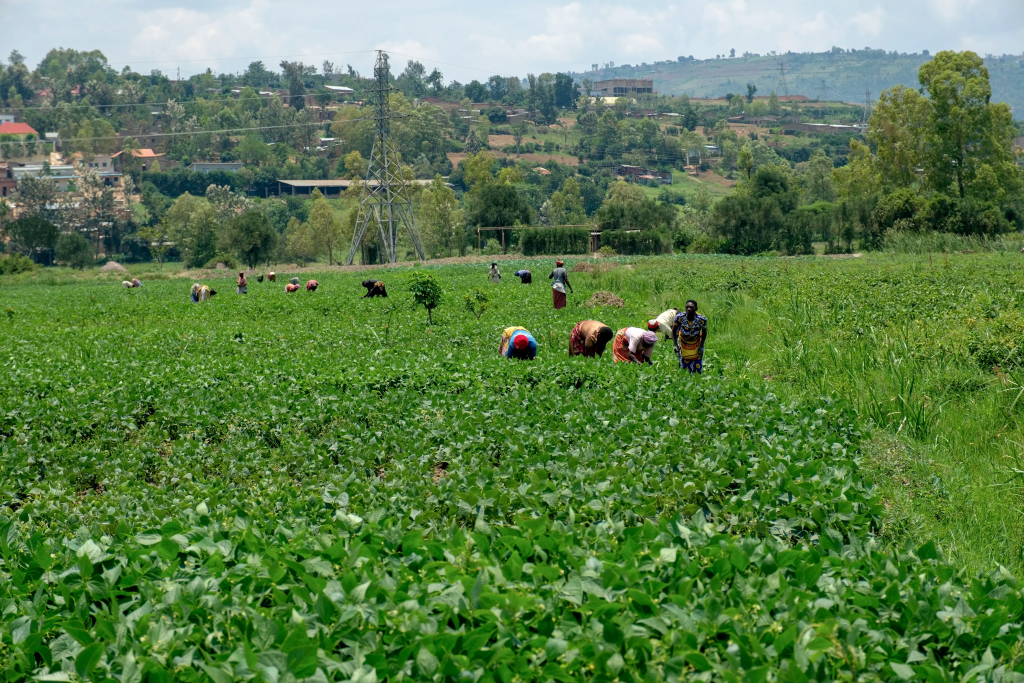
Emphasizing conservation and tourism over agriculture, said Alan Dixon, a professor of sustainable development at the University of Worcester, in the U.K., risks creating “spaces of exclusion.” Ultimately, he said, “people have just got to feed themselves. Everywhere else is drying up, the weather is becoming less predictable, so wetlands are the last place in the catchment that people can [use].” The dilemma for governments, planners, and conservationists, he added, is “how do you allow people to use these areas while also retaining the environmental integrity?”
Christian Benimana, a Rwandan architect and the founding director of the African Design Centre, emphasized the importance of monitoring social impacts as Kigali restores its wetlands. So far, among the six wetlands restored to date, he said, displacement hasn’t yet occurred, “but it’s something that might happen.” Gentrification is also a concern. “Before, you were living close to makeshift car shops, and all of a sudden it’s a beautiful park,” he said. “Is it bad that it makes these people’s property more valuable? I don’t think so. Is it bad if it leads to some form of negative gentrification? I think so.”
For some residents, relocating from the wetlands has been a relief rather than a loss. Athanase Segatsinzi, 60, head of Runyonza Village in Nyandungu, spent decades farming and grazing cattle in the flood-prone area.
Kigali launched a campaign to plant 3 million trees, creating a continuous network of forest that links restored wetlands.
“When heavy rains came, the wetland overflowed and destroyed our crops,” he recalled. “Even after the water receded, everything was ruined.” In 2019, he says, farmers and herders using the wetland were resettled in Rwanda’s Eastern Province, where the government gave his family 15 acres to farm. “Milk production increased because my cows now graze on a much larger area without the risk of losing pasture to floods,” he said.
But wetlands alone cannot protect the capital from flooding as temperatures rise, rainfall intensifies, and deforestation of the city’s slopes compounds the city’s challenges. “If you’re deforesting the catchment,” Dixon said, “no amount of wetland is going to make much difference.”
In response, the City of Kigali last year launched a community campaign that aims to plant 3 million trees over five years, creating a continuous network of forest that links the restored wetlands.
Gatsata Hill, the steep slope that channels torrents of water into Maurice Manishimwe’s workplace, is currently being reforested, and the wetland in front of his garage is being restored. Together, these interventions will create a buffer that fills him with optimism.
“Once the reforestation is complete and the trees take root, the water that used to rush downhill will slow,” he said. “And when the Nyabugogo wetland restoration is finished, the flooding problem will be solved for good.”
First publication: Plagued by Flooding, an African City Reengineers Its Wetlands


