 1
1
 0
0
By Annonciata Byukusenge
People who once lived below the poverty line, some relying on government assistance, others surviving on occasional farm labor for neighbors, have become investors and small business owners, thanks to support from the PRISM project, beneficiaries say.
Louise Hagenimana, about 54 years old, says how she and her family lived before 2021, when she was not yet a PRISM beneficiary.
“I was so poor that I only got food after working in other people’s fields. I was below the poverty line. Anyone who felt pity for me would give me food so I could feed my children.”
She remembers when local leaders announced at a community meeting known as Inteko y’Abaturage that the PRISM project would begin operating in their sector, prioritizing the most vulnerable households. Louise was among those selected at the outset.
“Residents ranked me first because I met the criteria to become a project beneficiary. There were 100 of us selected. We were organized into four groups, each with 25 people.”
What did PRISM do?
The PRISM project helped participants learn practical ways to lift themselves out of poverty through targeted training.
“They trained us in resolving family conflicts, saving, and raising small livestock like chickens, pigs, goats, sheep, and rabbits.”
After the training, beneficiaries received starter livestock, which became the spark for their growth.
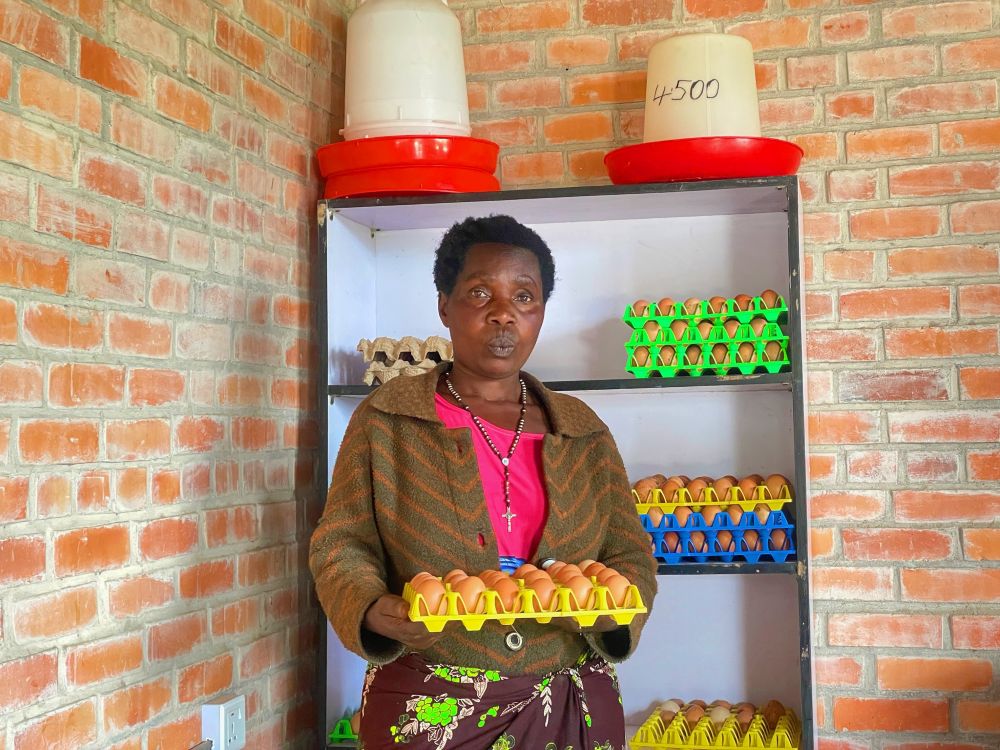
“I personally received 10 chicken layers and roosters along with feed and materials to build a coop. I raised them until they matured, sold the roosters, and bought more birds. As the flock grew, I passed on offspring as required and kept expanding. I sold some eggs to buy feed, and we ate the rest at home. None of my children are malnourished now.”
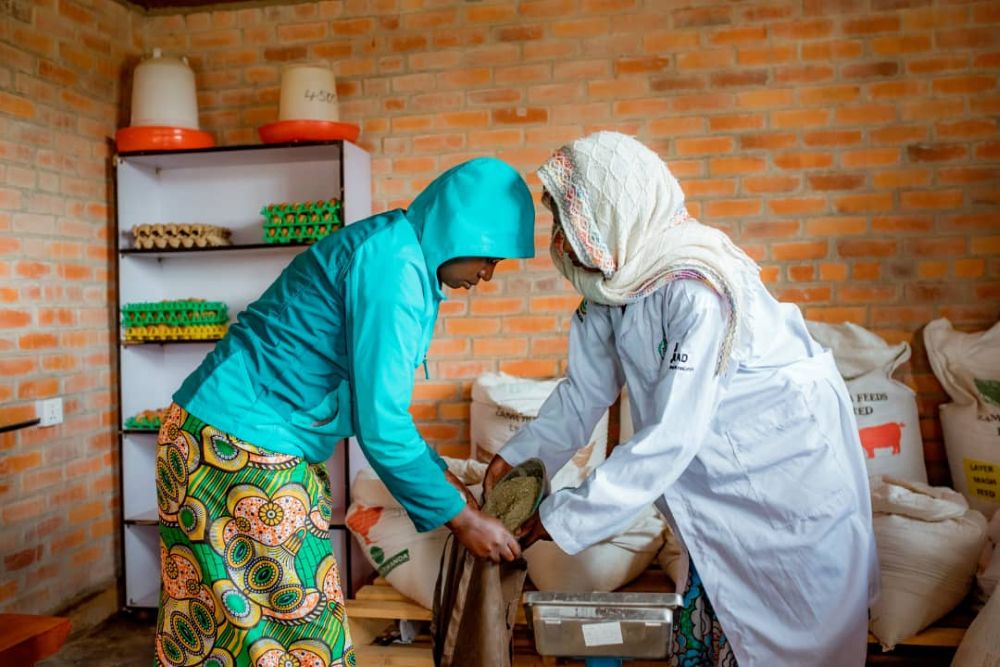
With income from egg sales, Louise began saving and eventually bought two pigs. The pigs reproduced and provided manure, which boosted her crop yields.
“Even though I was poor, I had a small piece of land, and I just couldn’t afford fertilizer. The pigs gave me manure, and on about half a hectare, I used to harvest around 400 kilograms of beans. Now I harvest about 1.5 tons because the soil is well fertilized.”
The power of groups
Mukankusi Brigitte, an agricultural extension facilitator in Rambura Sector’s Guriro Cell, works with Abihuje, a cooperative that now has 50 members.
She highlights the value of working together and saving as key to turning beneficiaries into entrepreneurs.
“We started with 25 members in this group. After they ‘passed on the gift’ to others, those new households were encouraged to join the group. Because members were producing so many eggs, they decided to pool them and sell them in bulk and even buy additional eggs from other residents.”
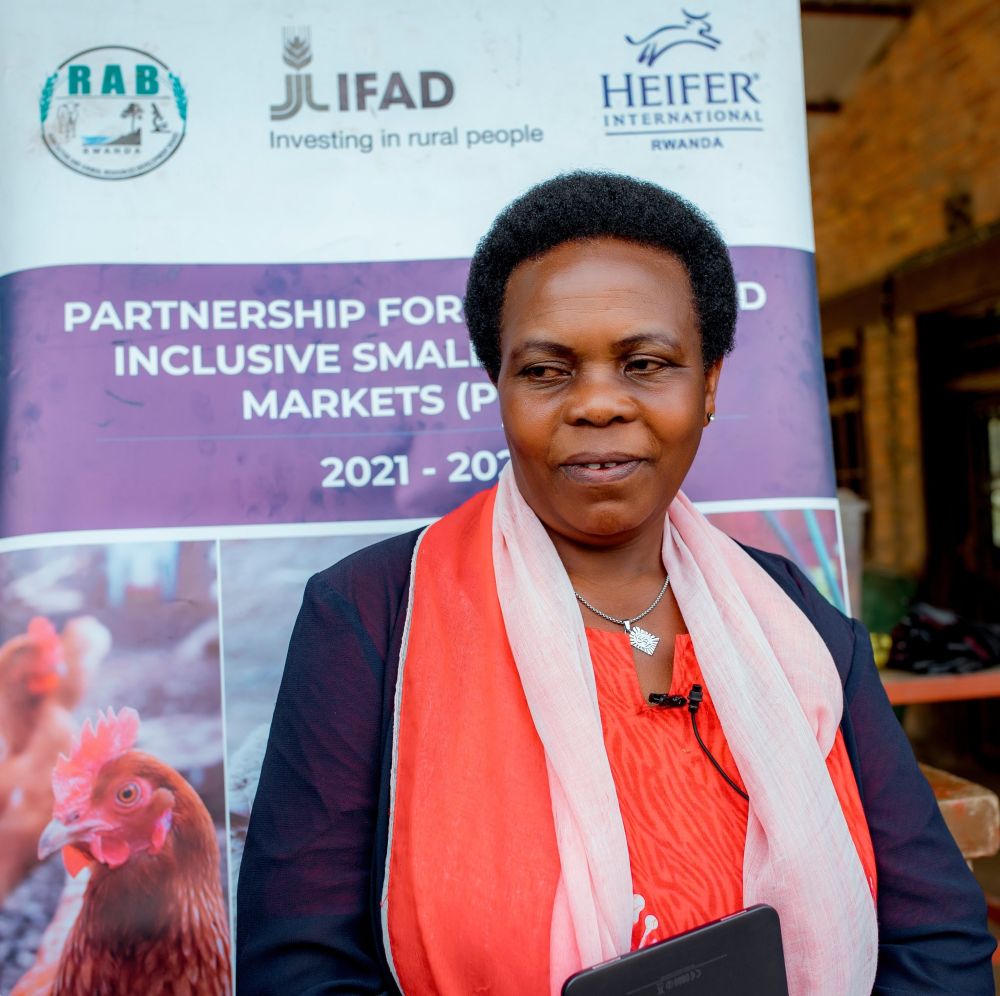
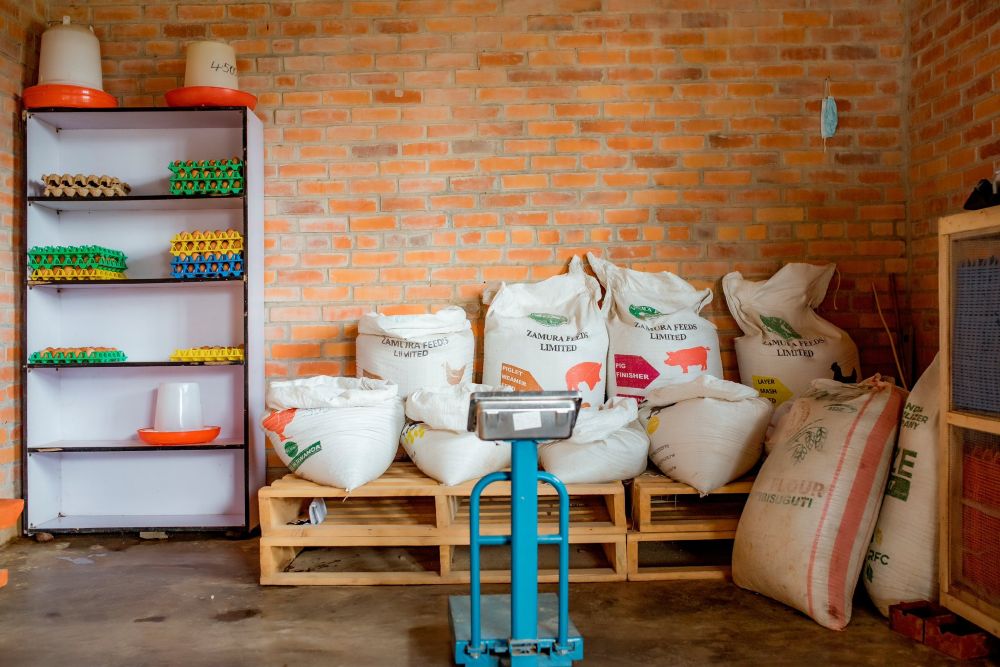
As the number of chickens grew, feed became harder to source, so the group launched an animal feed shop. They buy in bulk for members and sell to non-members as well.
“They initially had the capacity to buy 1,000 eggs, but now they handle about 3,000. For animal feed, they started by stocking just one sack; today, they can stock 20. They’ve progressed, their living standards have improved, and they’re now helping others learn how to move out of poverty.”
Joseph Nshokeyinka is a project manager. He says that PRISM, the Project Development Objective (PDO), is to reduce poverty by empowering poor rural men, women, and youth to participate in the transformation of the Rwanda livestock sub-sector and to enhance their resilience.
“The 67,500 chickens were purchased and distributed, and 3,077 pigs were purchased and distributed to 3,077 rural households and 6,750 rural households.”
He adds that 149,890 chickens were distributed to 14,805 rural households through the pass-on gift. Among these, 184 farmers received 20 chickens. And the 6,265 were distributed to 3,133 rural households through Pass on Gift.
PRISM is a project jointly implemented by the Government of Rwanda in partnership with the International Fund for Agricultural Development (IFAD), through the Ministry of Agriculture and Animal Resources (MINAGRI), and implemented under the Rwanda Agriculture and Animal Resources Development Board (RAB).


