
 0
0
 0
0
By Christophe Uwizeyimana
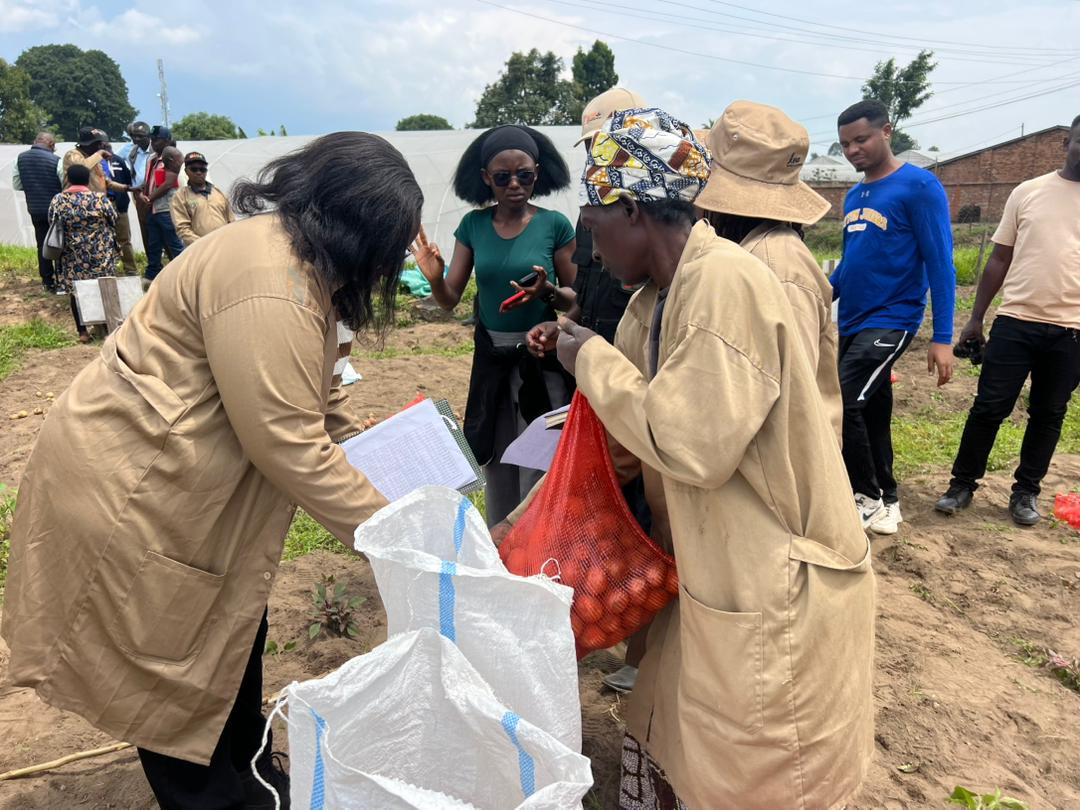
The Rwanda Agriculture and Animal Resources Development Board (RAB) has successfully harvested Living Modified Potato New Plant Types (NPTs) in Musanze District, marking a major milestone in Rwanda’s agricultural transformation and food security efforts.
The harvest, conducted at the RAB Musanze Research Station, followed official authorization granted by the Rwanda Environment Management Authority (REMA) under Authorization No. 1531/BIOS/DG/2025 issued on September 3, 2025, which permits the introduction and testing of the Living Modified potato varieties Ndamira and Victoria.
This landmark event provided farmers, researchers, policymakers, and partners with a firsthand opportunity to observe the performance, productivity, and resilience of these improved potato varieties, which are designed to withstand pests, diseases, and climate challenges while significantly boosting yields.
Farmers Witness a Farming Breakthrough
Among the invited guests was Semarembo Félicien, a veteran seed multiplier from Cyanika Sector, Burera District, who expressed deep excitement after witnessing the harvest.
“I was truly amazed,” Semarembo said. “Among the varieties I saw here are Kirundo and Victoria. I used to grow Victoria years ago, but I abandoned it because it became highly vulnerable to diseases. Seeing it today performing so well is extraordinary. It is healthy, productive, and strong.”
He added that this breakthrough will help restore farmers’ confidence in potato production.
“When I return home, I will share this experience with fellow farmers. I will also plant these seeds myself so they can see with their own eyes how productive they are. Farmers will embrace this variety again because it is now disease-resistant and highly productive.”
Reduced Costs, Higher Yields: A Game Changer for Farmers
Uwase Christella, a potato seed multiplier from Gicumbi District, described the technology as a lifeline for farmers struggling with high pesticide costs and low yields.
“In our daily farming activities, pesticides are very expensive. What I saw here gave me real hope. These potatoes produce higher yields than ordinary varieties, and they resist pests and diseases. This means lower production costs and better income for farmers. We are excited and now eagerly waiting for official approval so we can start using them.”
Technology That Doubles Production
According to Pacifique Nshimiyimana, Executive Director of Alliance for Science Rwanda, which partners with RAB to promote agricultural biotechnology, the results demonstrate the immense potential of science-based farming.
“The harvested varieties:Victoria and Ndamira showed remarkable performance. Compared to conventional varieties, their yields are almost double. Most importantly, these potatoes require little to no pesticide application, which lowers production costs and protects the environment,” he explained.
“This is a great opportunity for farmers to reclaim varieties they had abandoned due to diseases. Technology has provided the solution.”
Scientific Validation and National Impact
Dr. Athanase Nduwumuremyi, Coordinator of the Roots and Tubers Program at RAB, confirmed that this biotechnology initiative primarily targets three major crops, focusing on developing climate-resilient, disease-resistant, and high-yield varieties.
“As you can see, the results are very encouraging. The yields are excellent,” Dr. Nduwumuremyi said. “Our next step is to seek approval so that these potato varieties can be officially released and made available to farmers. If all goes well, within one year, farmers across Rwanda could begin accessing these improved seeds.”
Field trials conducted across three sites:Nyamagabe, Rwerere, and Tamira, some recorded impressive results, with yields reaching up to 35 tons per hectare, compared to less than 8 tons from conventional potato varieties under similar conditions.
This represents more than a fourfold increase in productivity, positioning the technology as a potential game-changer in Rwanda’s food security strategy.
A Boost for Food Security and Climate Resilience
The harvest event also served as a public awareness platform, enabling stakeholders to better understand the benefits and safety of Living Modified crops. The initiative aligns closely with Rwanda’s national vision of agricultural modernization, climate resilience, and sustainable food production.
By increasing productivity, reducing pesticide use, and restoring abandoned varieties, this technology offers a sustainable pathway to improving farmers’ incomes, strengthening national food security, and supporting Rwanda’s long-term development goals. Related Story:https://theforefrontmagazine.com/rwanda-agri-biotech-programme-key-questions-and-answers-on-biotech-potato/
Dr.Athanase’s Message:https://www.youtube.com/watch?v=537TNz3TuHo&t=3s
Pacifiques Nshimiyimana’s Message;https://www.youtube.com/watch?v=g_K3pdxto3M
Farmers’ Testimonies:https://www.youtube.com/watch?v=NXOb9JrIPhE , https://www.youtube.com/watch?v=sSUvyXQ7nhA
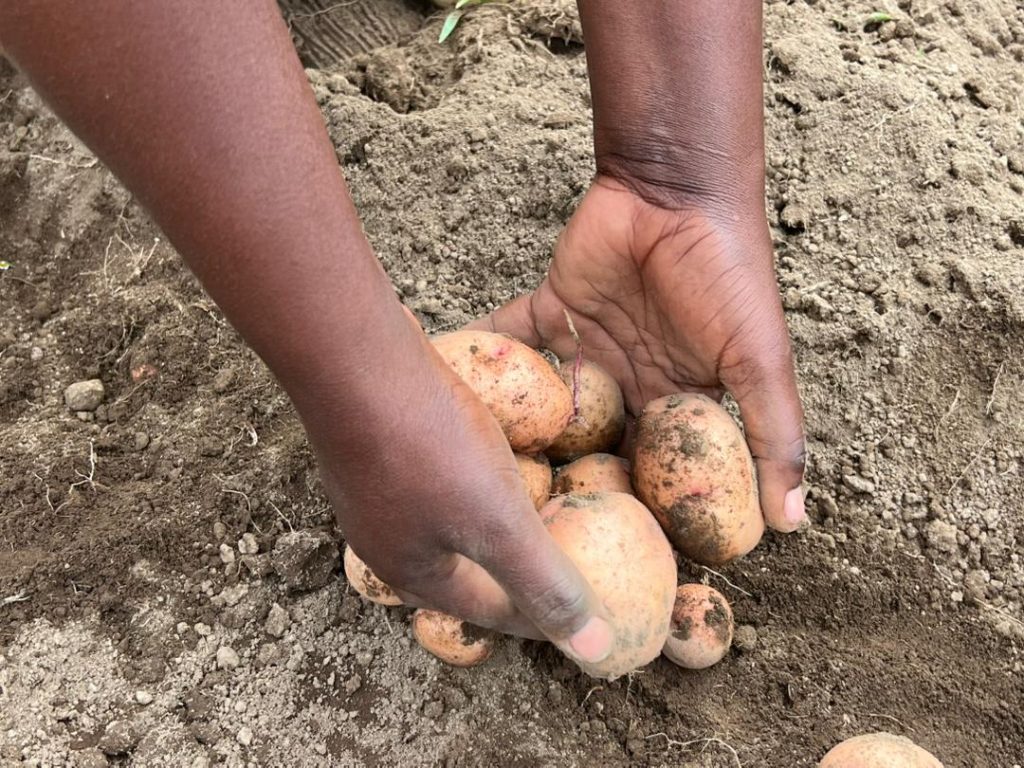
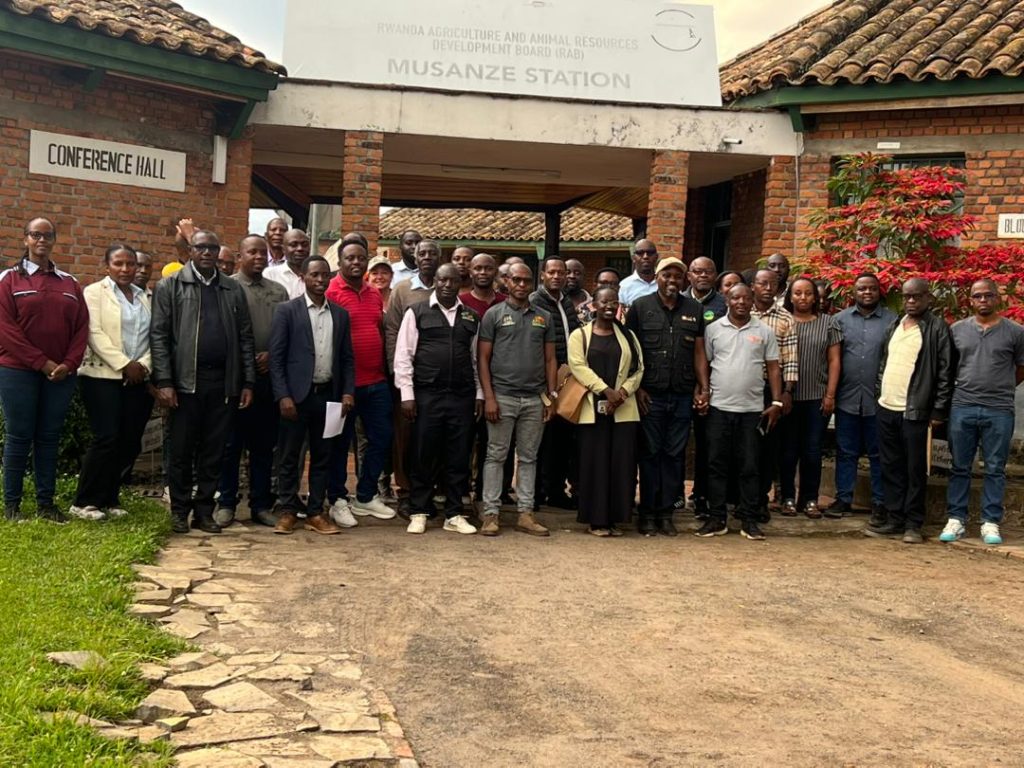
Photo:Farmers and scientists witness a breakthrough as improved potato varieties show exceptional yield, resilience, and disease resistance in Musanze.


