 0
0
 0
0
By Annonciata Byukusenge
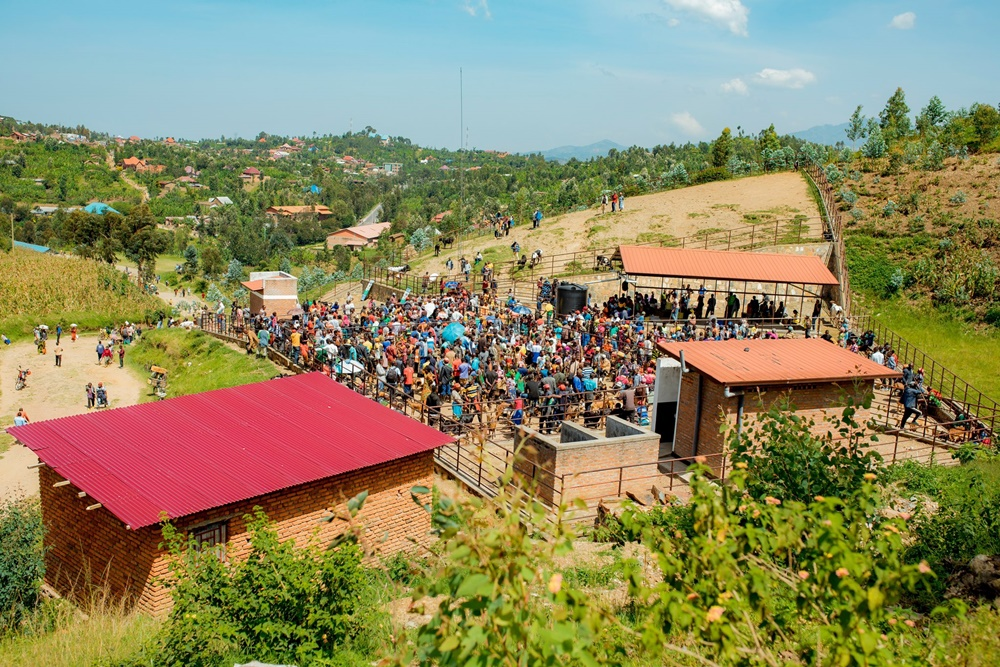
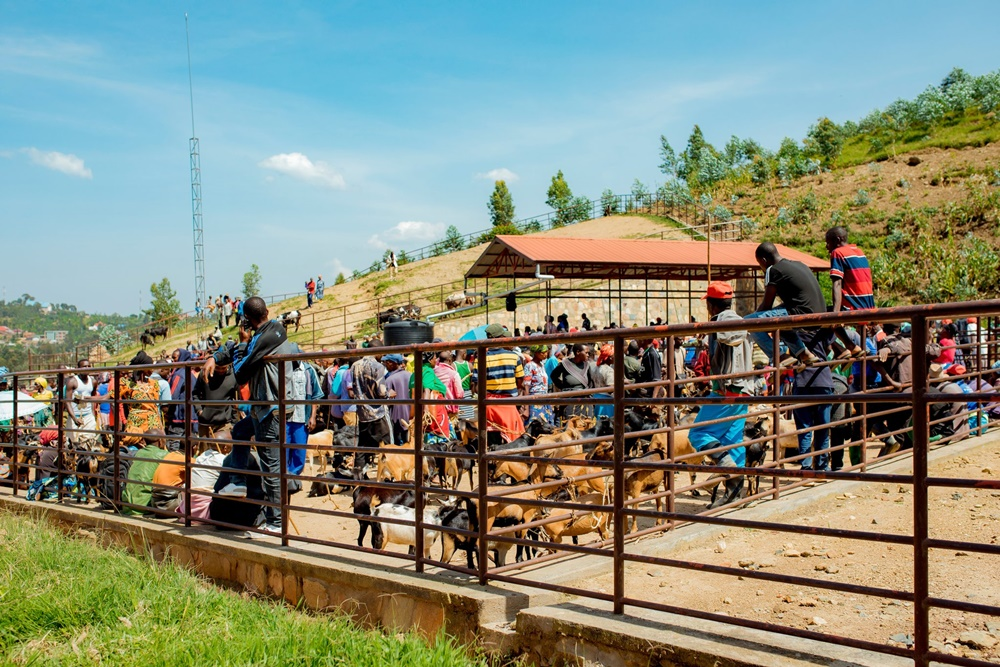
Residents of Rubengera and Bwishyura sectors say they are relieved to have a nearby livestock market after going without one for many years, thanks to the PRISM project.
Mbanenimana Josué, who lives in Gitarama Cell, Bwishyura Sector, recalls that before 2021, selling livestock was a challenge because there was no market nearby.
“We used to go to the Rugabano livestock market, but it was about a three-hour walk. We arrived exhausted, and the animals were worn out, too. Some even died along the way.”
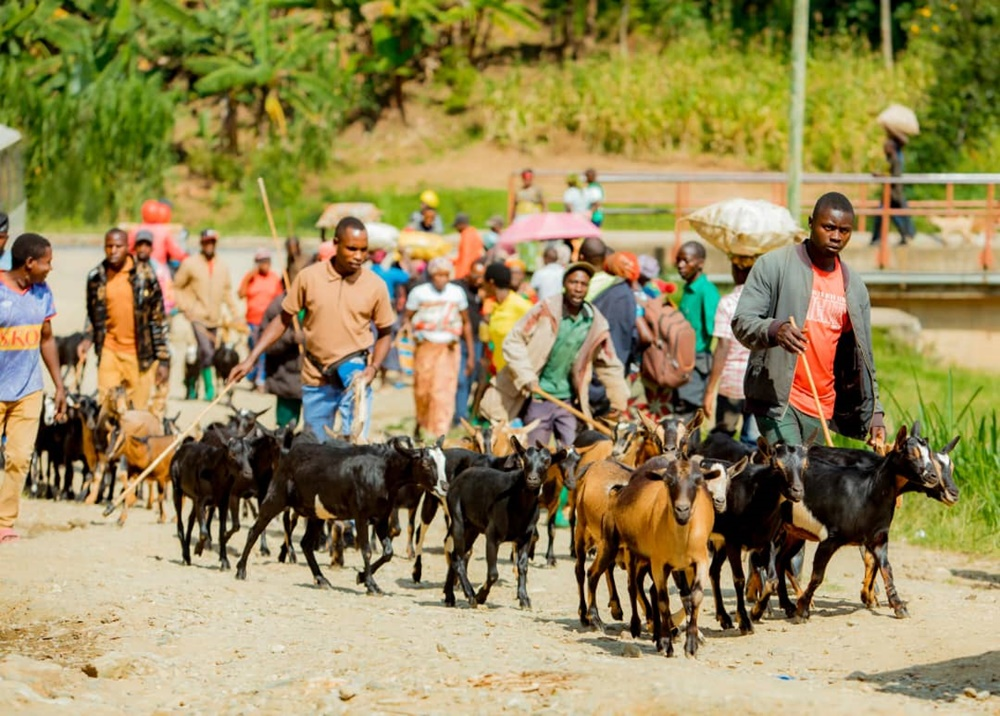
He adds that things have changed. From his home to the new livestock market built in Rubengera Sector, Bubazi Cell, it now takes him about one hour on foot, making sales faster and safer.
Ntawuyirusha Dany, a livestock farmer in Rubengera, says the new market has brought order and security.
“Building this market was a big step. It ended the chaos. Now, when someone brings an animal, they know exactly which section to take it to. Before, all the animals were mixed.”
He notes that theft has also decreased. “Thieves have reduced because PRISM built a proper market layout, which makes it harder for them to operate. Those who steal from people’s homes now rush to slaughter stolen animals immediately, because they know they cannot resell them here at the market.”
Pascasie Umuhoza, the Karongi District Vice Mayor in charge of Economic Development, says they are grateful for the new infrastructure and are committed to maintaining it and continuing poverty-reduction efforts even after the PRISM project ends.
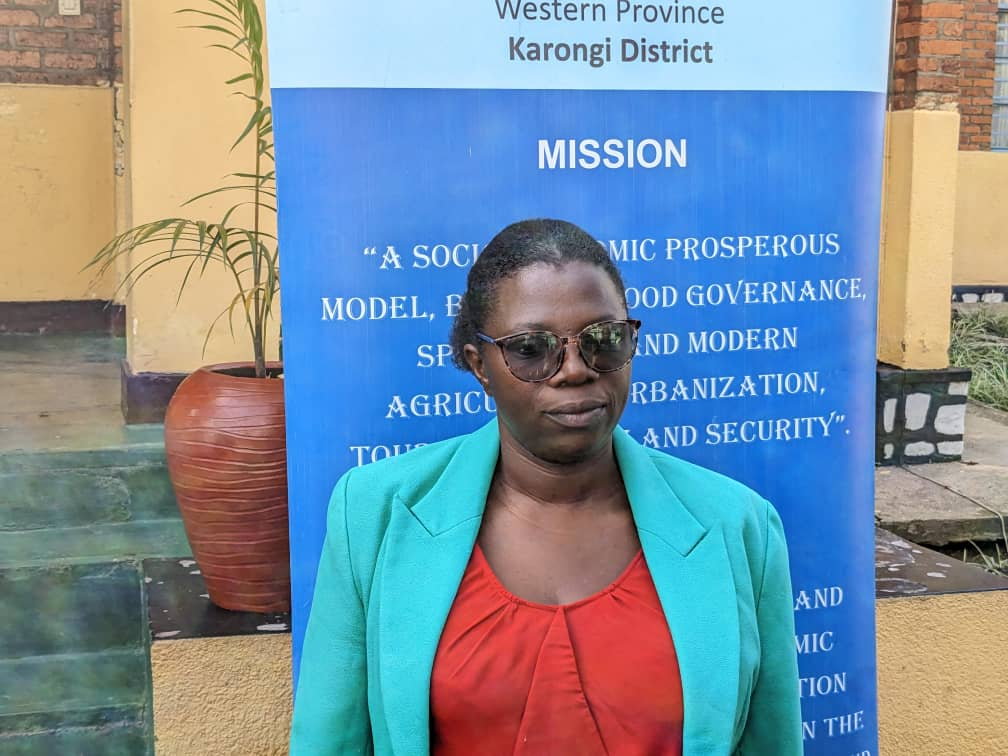
“We thank the government for continually seeking the well-being of Rwandans. “Our district is among the poorer ones, but PRISM has played a major role in helping vulnerable residents lift themselves out of poverty. Initially, 4,576 livestock were distributed, and that number has now surpassed 10,000, achieved through the ‘pass-on’ model, which is still ongoing.”
The project initially supplied 4,576 animals directly to farmers and an additional 5,528 animals through the Passing on Gifts (PoG) initiative, where beneficiaries share offspring with other community members. As a result, the number of animals has grown to 10,104, extending benefits far beyond the original recipients.
Joseph Nshokeyinka is a project manager. He says that PRISM, the Project Development Objective (PDO), is to reduce poverty by empowering poor rural men, women, and youth to participate in the transformation of the Rwanda livestock sub-sector and to enhance their resilience.
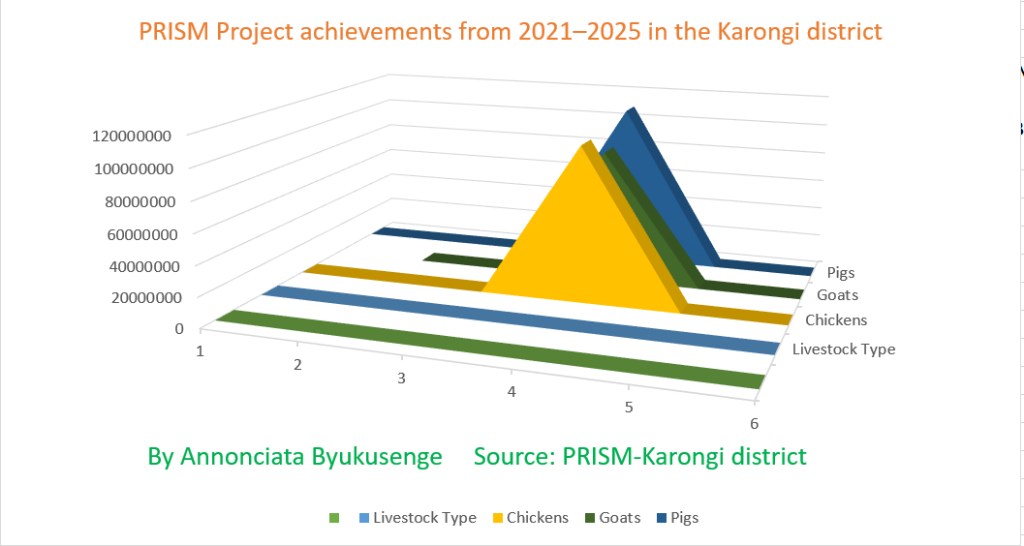
“The 67,500 chickens were purchased and distributed, and 3,077 pigs were purchased and distributed to 3,077 rural households and 6,750 rural households.”
He adds that 149,890 chickens were distributed to 14,805 rural households through the pass-on gift. Among these, 184 farmers received 20 chickens. And the 6,265 were distributed to 3,133 rural households through Pass on Gift.
PRISM is a project jointly implemented by the Government of Rwanda in partnership with the International Fund for Agricultural Development (IFAD), through the Ministry of Agriculture and Animal Resources (MINAGRI), and implemented under the Rwanda Agriculture and Animal Resources Development Board (RAB).


