
 0
0
 0
0
By Annonciata Byukusenge
Gashango Félicien wakes up at five in the morning every day. His main activity consists of farming potatoes in a small 5-hectare farm located at Minyove, a remote rural village in the Nyabihu district in Western Rwanda.
The 61-year-old father never envisioned that one day the erosion problem would be solved and farmers in this area would see sufficient production, their economy would grow, and their lives would improve.
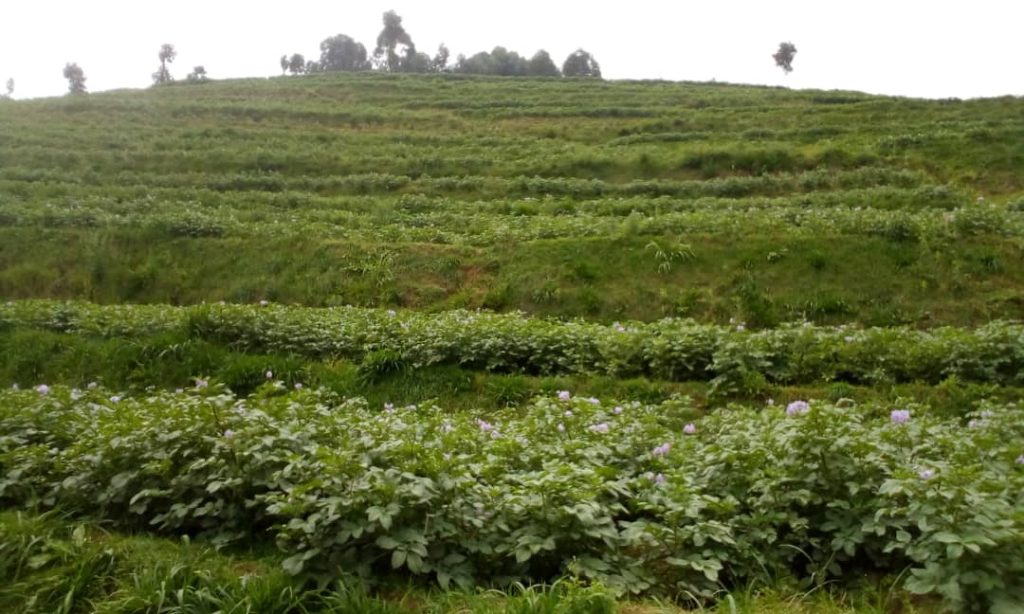
“For more than 50 years, farming in Kanyove was just a name, but it didn’t produce anything because of erosion. We planted on time and applied fertilizer, but when the rains came, the soil washed away, carrying away the fertilizer and the crops. In the end, very little remained, and what was left had no nutrients.”
Because fertilizer was expensive and often wasted by erosion, many farmers gave up using it altogether.
“We used organic compost and industrial fertilizer, but they were expensive, and after heavy rain, the fertilizer would just wash away. On one hectare where I should have planted a ton of seed potatoes, I spent more than 20,000 Rwf on fertilizer, yet I harvested only about 3 tons.”

This wasn’t only the fate of farmers in the sector of Mukamira; the same struggle afflicted those living in the volcanic region and the Vunga Corridor.
Beyond erosion, these areas were hit hard by floods triggered by climate change. In June 2023, heavy rains devastated many districts, among them Burera, Musanze, Muhanga, Nyabihu, Gakenke, Ngororero, Rutsiro, and Rubavu. According to the Ministry in Charge of Emergency Management (MINEMA) records, 539 people were killed, 316 seriously injured, 18,415 houses damaged, 7,740.57 hectares of crops damaged, 1,995 livestock lost, and 345 road structures damaged.
A recent flood risk assessment by the World Bank (2023) shows that the expected annual damage in the Volcanoes Region and Vunga corridor amounts to US$10.1 million per year and may increase national food security risks.
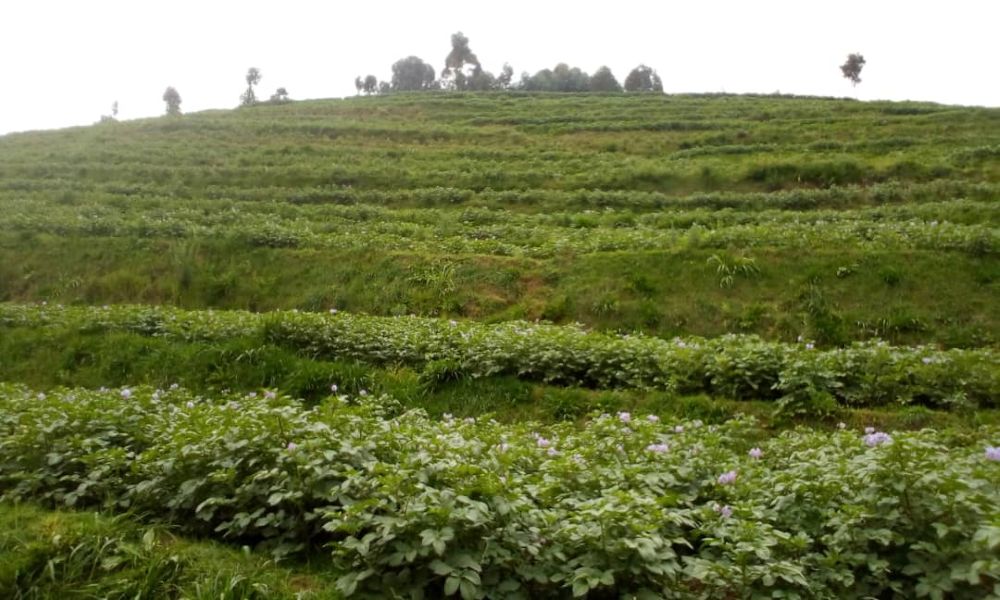
What changed, and how did erosion become history?
In March 2024, the government, with support from the World Bank, launched a major initiative in the region: the Volcanoes Community Resilience Project (VCRP). The goal was not only to expand the national park and protect biodiversity but also to build climate resilience, reduce flooding and erosion, restore degraded landscapes, and improve livelihoods through sustainable farming.
One of the people benefiting is Mukarwego Agnes, a vegetable farmer in the volcanic region in the Musanze district. She says that traditional farming used to give only a little production. But thanks to VCRP, she learned climate-resilient agriculture methods, especially greenhouse farming, that now produce much more.
“In our region, floods ruined harvests, and even during dry spells, long sunlight periods harmed us. The VCRP project taught us greenhouse farming, and now we get enough produce to sell at markets.”
Mukarwego even compares her past and present yields. She once used A4 and produced barely enough for her family, enough to feed them, but not more. Now, in the same area using greenhouse methods, she harvests significantly more. “I used to get maybe 1T or 2T; now I get 5T.”
She and about 510 other households will be relocated to a model village in Kinigi, and they formed a cooperative to farm vegetables in greenhouses. This initiative is known as Kinigi Horticulture Hub, a model intended to show what climate-smart agriculture can do.
The broad vision: More than just agriculture
VCRP isn’t only about climate-proof farming. As described by the Rwanda Water Resources Board (RWB) and other environmental agencies, VCRP brings together soil restoration, erosion control, watershed management, flood risk reduction, and sustainable land-use planning.
Among actions currently underway, reforestation and agroforestry are planting more than 448,000 seedlings of species such as Alnus, Grevillea, Calliandra, and Leucaena across the region. This helps hold soil, improve fertility, reduce erosion, and support long-term agricultural resilience.
The communities are drawing up Village Land-Use Action Plans (VLUAPs) to guide where to plant, how to farm, and where to build, reducing risks of floods, landslides, and soil loss.
Through such integrated, community-led solutions, VCRP aims not only to restore damaged land but also to improve livelihoods, giving farmers a stable, sustainable future, and turning previously risky farmland into productive land.
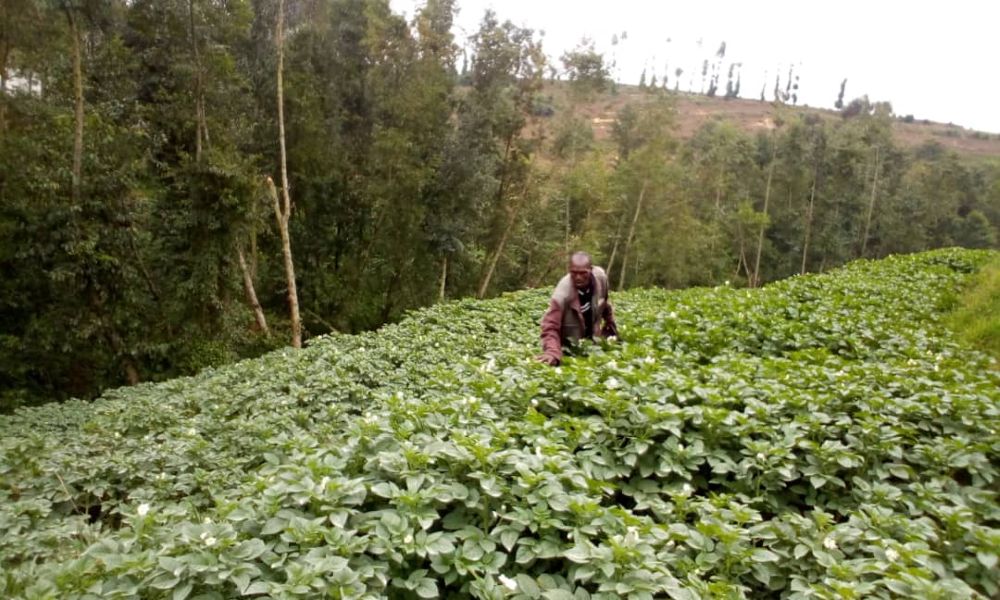
Why these matter
- Erosion and unpredictable weather once made farming almost hopeless in these mountain and volcanic areas, even on large plots.
- Simple changes, such as greenhouse farming, agroforestry, and strategic land use, turned the story around. Farmers are now producing more than they ever thought possible.
- It’s a model that balances environmental protection, climate resilience, and improved livelihoods, showing that protecting nature and feeding people can go hand in hand.
- With support from VCRP and similar initiatives (like the national Rwanda Climate Smart Agriculture Investment Plan launched in 2025), climate-resilient agriculture is becoming part of Rwanda’s long-term strategy for food security and sustainable development.


