
 0
0
 0
0
By Annonciata Byukusenge
Heavy rains that swept across parts of Rwanda on Wednesday killed two young children, injured several others, and damaged more than 30 hectares of crops, the Ministry in charge of Emergency Management (MINEMA) said.
The victims, aged four and three, drowned in the Kabimbiro River in Karongi District. Both were nursery school pupils from the Mutuntu sector. Authorities said one of the children’s bodies had not yet been recovered.
In weather-related incidents, four other people sustained injuries, three of them from lightning strikes. In Rwamagana District, two women aged 29 and 34 were hospitalized after being hit by lightning, while a man in the Gitoki sector, Gatsibo District, was also injured.
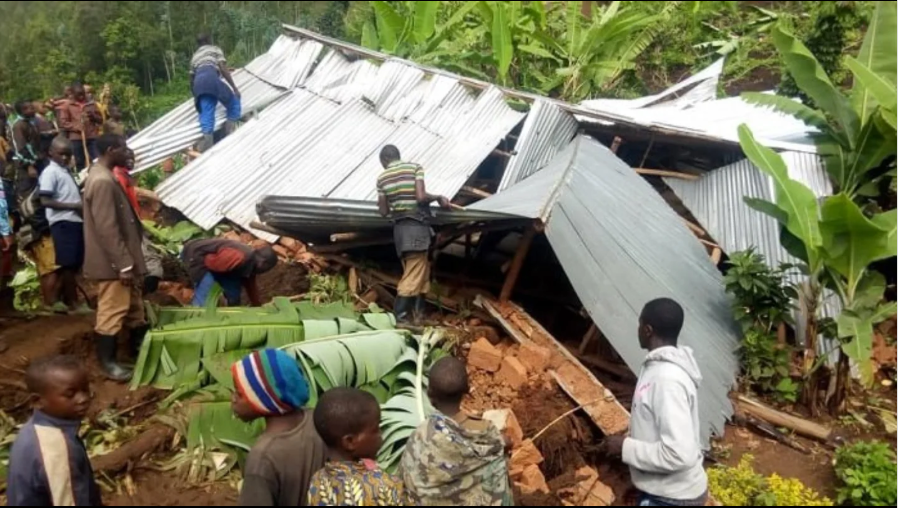
Strong winds in Kayonza District injured a 12-year-old girl by destroying infrastructure and causing debris to fall on her.
The storms also caused widespread agricultural losses. More than 30 hectares of crops, including maize, beans, bananas, sorghum, and cassava, suffered damage in the Kabarore sector of Gatsibo District, according to MINEMA. At least 18 water tanks were also destroyed.
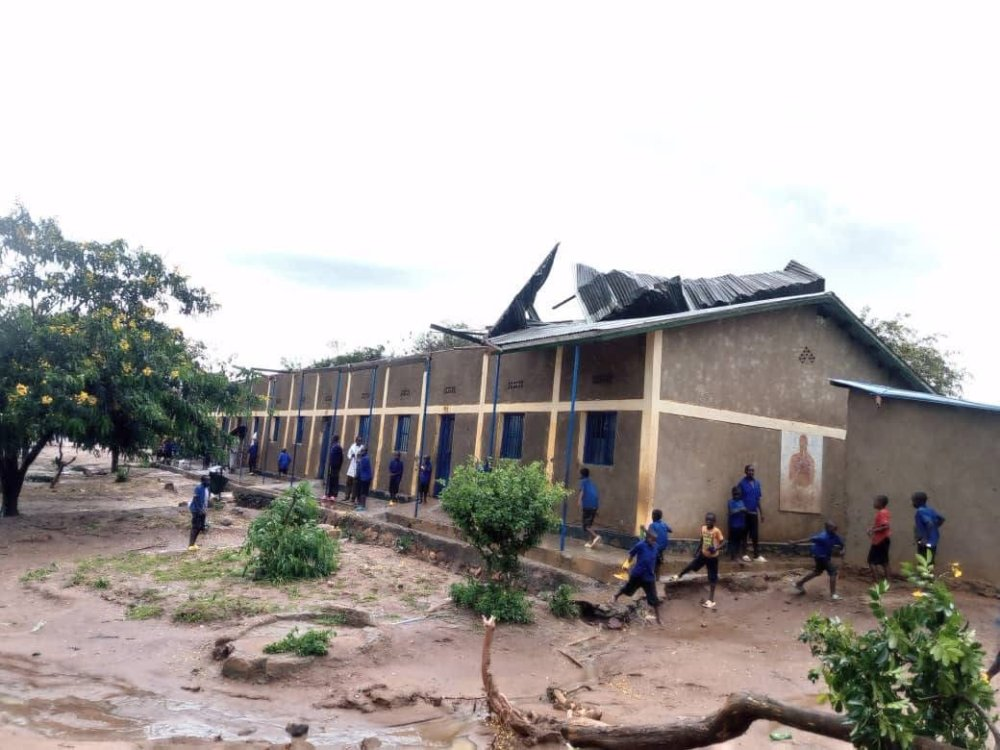
Homes and public infrastructure were damaged across several districts, including Nyamasheke District, Kayonza, Gicumbi District, Nyagatare District, and Kicukiro District, where strong winds tore off roofs and left many families homeless.
In the Ndego sector, Kayonza District, winds destroyed seven classrooms at EP Amahoro Primary School and damaged a church.
A lightning strike in Musanze District caused a temporary power outage, but the Rwanda Energy Group quickly restored the supply.
Residents in the Maraba sector, Huye District, say heavy rain that began late Friday night on 20th March 2026 and continued into Saturday afternoon, on 21st March 2026, washed away a key bridge linking them to the Kigoma sector and destroyed crops in nearby wetlands.
Meteo Rwanda has forecast above-average rainfall across the country between March and May, with totals expected to range between 280 mm and 800 mm, slightly higher than the usual 270 mm to 770 mm.
Disasters remain a growing concern for Rwanda, with the government’s spending on response efforts steadily rising over the past decade, according to a report presented at a high-level consultative meeting in October 2025.
The meeting, convened by the Ministry of Environment Rwanda and its partners, focused on disaster risk management across the country. Findings show that public expenditure on disaster response has increased since 2014, reaching between 1% and 2% of gross domestic product (GDP), and accounting for about 4.3% of total government spending.
The report estimates that Rwanda loses around 210 billion Rwandan francs (about $150 million) each year in dealing with the impacts of disasters.
It also warned that without stronger preventive measures, extreme events occurring at least once every 50 years could cause losses exceeding $345 million.


