 0
0
 0
0
By Annonciata Byukusenge
Residents who were once classified among the most vulnerable say that receiving support to lift themselves out of poverty completely changed their mindset. Instead of waiting for a benefactor to rescue them, they became active participants in their development and achieved progress in a short time.
Mukeshimana Vestine is a woman farmer who lives in Mubuga cell, Miyove sector, in Gicumbi District. Her daily work now revolves around livestock farming, a shift from the small-scale subsistence farming she practiced before becoming a livestock keeper.
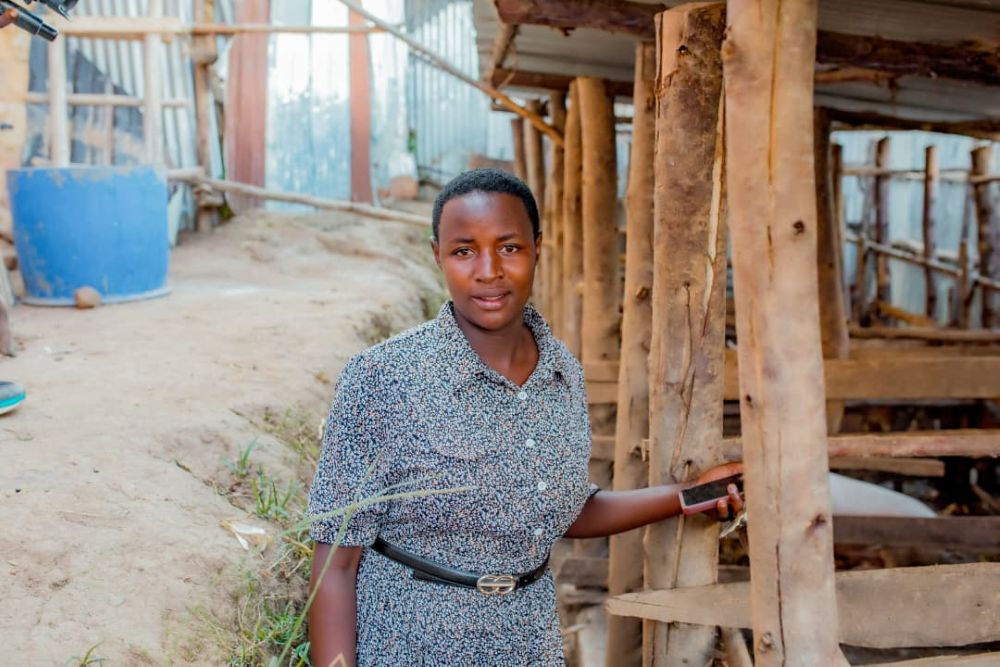
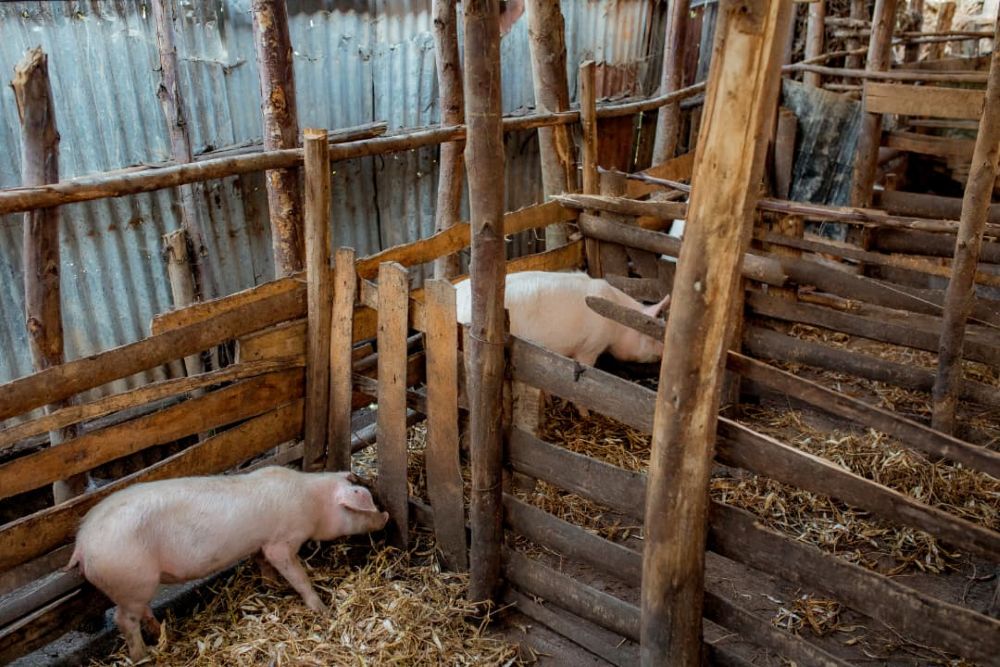
In 2021, Mukeshimana received support aimed at helping her escape poverty. The assistance consisted of eight pigs and enough feed to sustain them for one month.
“I took care of the pigs together with my husband. They grew well and reproduced. We sold some of them and used the income to improve our household’s living conditions.”
She adds that she soon stopped the casual farming she had been doing, as it was not productive enough, and instead made pig farming her full-time activity.
Meanwhile, agricultural activities within the family continued to be managed by her husband, Nizeyimana Elias.
“I continued overseeing other household development activities, including farming. At the same time, I helped my wife take care of the animals. Together, these efforts paid off and enabled us to make real progress.”
He adds that after the first sale of pigs, the income was used to meet urgent household needs. During the second litter, the pigs gave birth to ten piglets, followed by six in the third litter and nine in the first birth.
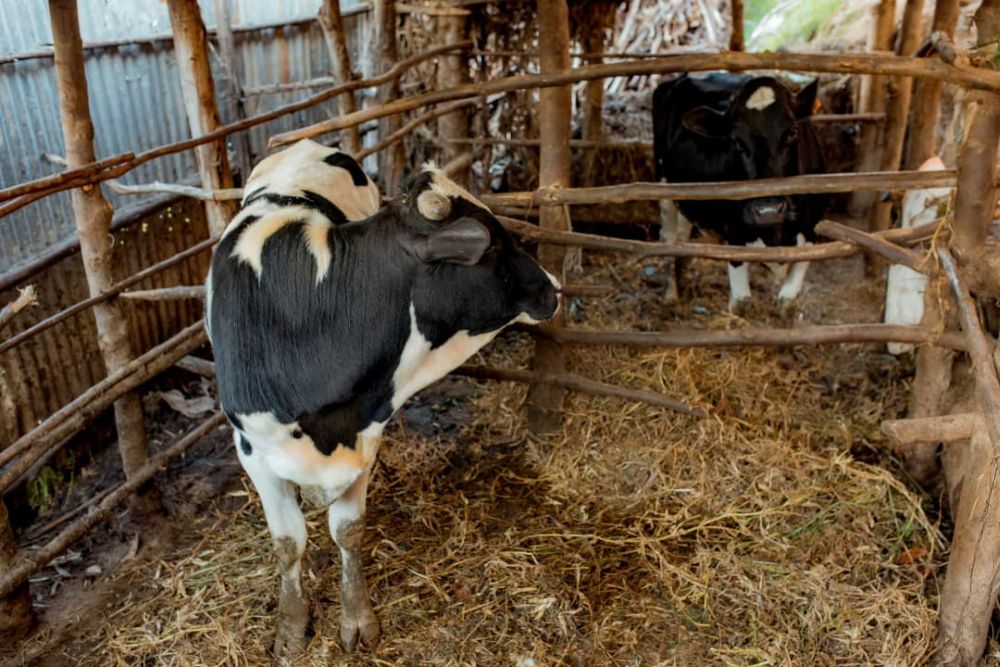
“We raised the pigs until they matured and sold them.” This time, we used the money to buy a cow, since the income from the first sale had already been spent on household necessities. The cow has since given birth and now produces five liters of milk per day. Our children drink milk regularly, which was not the case before.”
The Vice Mayor of Gicumbi District, in charge of Economic Development, Madam Parfaite Uwera, appreciates the PRISM project for its role in improving residents’ livelihoods.
“Our citizens received various small livestock, including pigs, chickens, and sheep. They took good care of them, and the animals multiplied; the beneficiaries even passed them on to others. This has led to tangible development. They were also trained in saving through groups, which has improved their daily lives and enabled them to work with financial institutions and banks.”

Achievements of PRISM projects in the Gicumbi district
Self-help group formed
- 105 self-help groups were formed, and some of the groups have formed a union to become a legal cooperative.
- self-help group members saved 37,988,930
- 18,042,070 was given as a loan to 2680
- Small animals and materials distributed: 250 pig farmers received pig and pin construction materials made of iron sheets, cement, and nails; 500 chicken farmers received 5000 chickens (10 each farmer) and construction materials made of wire mesh, nails, and an iron sheet; 368 goat farmers received 736 goats (2/family) and construction materials made of an iron sheet and nails; 275 sheep farmers received 550 sheep and sheep construction materials made of iron sheets and nails.
- Adaptation to climate: 178 solar panel kits were given to 178 farmers; Vegetable seeds were given to 1958 farmers to prevent malnutrition and soil erosion; 127 households have received 126 plastic water tanks.
- Other support: 3 Motorcycles were given to 3 Community Agro Veterinary Entrepreneurs (CAVEs); 8 Bicycles were given to Community facilitators (CFs); Animal feeds were given to 2487 pig/chicken farmers to feed their animals; animal fodder crops were distributed to 633 goat and sheep farmers to feed their animals; and 3294 avocados were given to 1098 households (3 avocado trees per household) to fight against malnutrition and care for the earth.
Joseph Nshokeyinka is a project manager. He says that PRISM, the Project Development Objective (PDO), is to reduce poverty by empowering poor rural men, women, and youth to participate in the transformation of the Rwanda livestock sub-sector and to enhance their resilience.
“The 67,500 chickens were purchased and distributed, and 3,077 pigs were purchased and distributed to 3,077 rural households and 6,750 rural households.”
He adds that 149,890 chickens were distributed to 14,805 rural households through the pass-on gift. Among these, 184 farmers received 20 chickens. And the 6,265 were distributed to 3,133 rural households through Pass on Gift.
PRISM is a project jointly implemented by the Government of Rwanda in partnership with the International Fund for Agricultural Development (IFAD), through the Ministry of Agriculture and Animal Resources (MINAGRI), and implemented under the Rwanda Agriculture and Animal Resources Development Board (RAB).


