
 0
0
 0
0
By Annonciata Byukusenge
Some districts in Rwanda’s Eastern Province, which are often affected by the effects of climate change, especially prolonged sunshine and drought, have benefited from the planting of trees mixed with crops on a total area of 3,719 hectares. This initiative has helped protect soil from erosion while increasing agricultural productivity.
Implemented under the National Adaptation Plan (NAP), the Rwanda Environment Management Authority (REMA) says that the project focuses on planting climate-resilient trees in rocky areas that were previously considered unsuitable for farming. These areas are found in the sectors of Mpanga, Kigina, Nyarubuye, and Nasho in Kirehe District, where intense sunshine had long posed a serious challenge.
According to Cyprien Ngendahimana, REMA’s officer in charge of media and communication, the main objective of the project is to build community resilience and support Rwanda’s efforts to adapt to climate change.
“People living in these areas believed it was impossible to plant trees there because of the rocky terrain.”
He added that the planted trees help improve air quality and attract rainfall. Among the species planted is Calitris, a type of tree well known for its ability to withstand high temperatures and harsh climatic conditions.
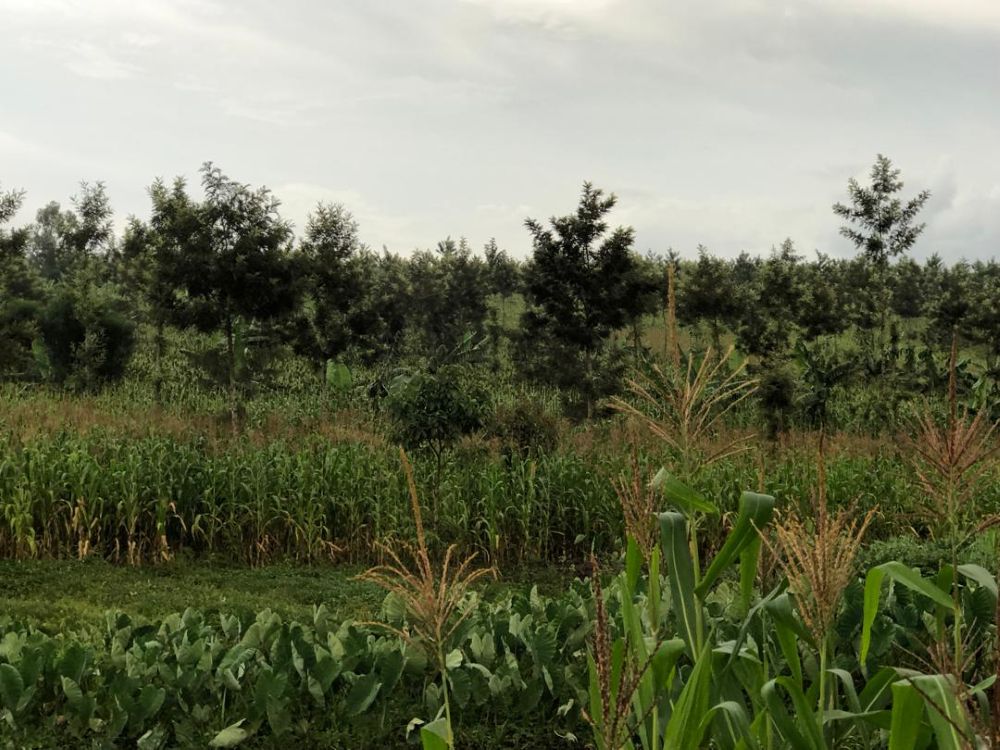
Nsengiyumva Anatole, a resident of Rusha Village in Kankobwa Cell, Mpanga Sector, says the area where REMA planted trees used to look like a desert due to the stones surrounding the hill.
“Whenever it rained, all the soil would be washed away. But since the trees were planted, the soil is no longer being carried off by runoff.”
Mukansanga Léonille, from Musheri Village in Musheri Cell, Musheri Sector of Nyagatare District, says that tree–crop farming has helped stabilize the land they cultivate while also protecting them from strong winds that used to blow roofs off houses.
“Since we started planting trees alongside crops, our harvests have doubled,” she noted.
Servant Niyitegeka, the REMA officer coordinating the NAP project, said the initiative has also helped bring water closer to farmers and livestock keepers in some areas.
“This is a farming and livestock zone where many people use solar-powered irrigation to water their crops.”
In four sectors of Kirehe District, the project planted tree–crop systems and other climate-resilient trees across 1,830 hectares. In Musheri and Matimba sectors, a further 1,889 hectares were covered.
The NAP project is being implemented in Kirehe, Rusizi, Nyagatare, and Nyamasheke districts, with a total budget of $ 6 million.


