 0
0
 0
0
By Annonciata Byukusenge
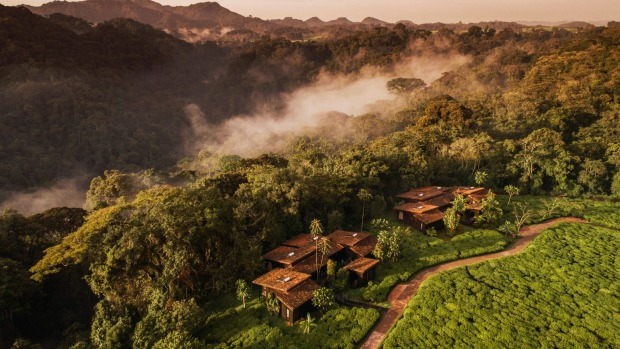
Residents living around Nyungwe National Park are set to benefit from tourism revenue, as six community development projects have been selected to receive a total of 1.2 billion Rwandan francs. The initiative aims to ensure that communities neighboring the park directly benefit from income generated through tourism.
The selected projects will be implemented in five districts bordering the park. According to the Rwanda Development Board (RDB), two projects are based in Karongi District, while Rusizi, Nyamasheke, Nyaruguru, and Nyamagabe districts each have one project.
Pierre Ntihemuka, the officer in charge of community relations at Nyungwe National Park, explained how the funds have been allocated. Nyamasheke District will receive 375 million francs, Rusizi 228 million, and Nyamagabe and Nyaruguru 268 million each, while Karongi will receive 107 million francs.
“These funds are meant to reduce challenges that threaten the park, such as illegal hunting, bush fires, and other harmful activities,” Ntihemuka said. “Any project that does not address these issues cannot be considered. At the same time, the project must help residents feel proud of living near the park and motivate them to take part in its conservation.”
He added that the selected projects are closely linked to poverty reduction and to strengthening trust between local communities and the natural ecosystem within the park. They are also intended to minimize damage caused by wildlife straying into community areas and to promote conservation awareness so that residents see the park as a valuable asset rather than a burden.
Ntihemuka emphasized that sustainability was a key requirement in selecting projects. “A project must be realistic and long-lasting. We have seen projects from 2018 or 2020 that no longer exist today; that should not happen again,” he said. He also noted that projects must be located close to the park to help ease tensions between conservation efforts and surrounding communities.
Community participation is another priority, with residents expected to be the primary beneficiaries. Larger projects are also allowed to involve additional partners to ensure quality and long-term impact.
Reviewing the use of funds allocated last year, Ntihemuka said Karongi District topped the list with 100 percent utilization, followed closely by Nyamasheke. Nyamagabe used 87 percent of its allocation, and Rusizi 66 percent, while Nyaruguru had not yet used its funds. Nyaruguru District Mayor, Dr. Emmanuel Murwanashyaka, explained the reasons behind the delay.
Protais Niyigaba, Director of the Nyungwe Management Company, praised local communities for making good use of the opportunities provided through tourism revenue sharing, as well as local leaders for supporting the initiatives. He encouraged residents to continue protecting the park.
“The benefits we are seeing today exist because the park is well protected and visitors are well received,” he said. “The way tourists are welcomed, guided, and impressed encourages them to return and bring others with them.”
He also urged residents to actively fight activities that harm the park, including poaching, setting fires, dumping waste, and reckless driving along the paved road that passes through the park, which can lead to wildlife accidents.
Residents living near the park said the revenue-sharing program has greatly improved their lives and strengthened their commitment to being responsible neighbors to the park.
Ntamakunzi, a resident of Mutuntu Sector in Karongi District, said the benefits have changed how communities view the park. “When the benefits come directly to you, you grow to love the park even more. We can no longer stand by and watch anyone destroy it,” he said.
Josepha Ndebeyinka from Butare Sector in Rusizi District shared a similar sentiment: “RDB built modern schools for our children in Nyabitimbo. We cannot allow anyone to damage this park. It is our friend; we owe our children’s education and future to it,” he said.
The Vice Mayor of Karongi District, in charge of economic development, welcomed the additional 107 million francs allocated to the district and expressed confidence that the funds would be well used, as in previous years.
“Our two selected projects include distributing pigs to 100 households in Mutuntu Sector and constructing three new classrooms in Twumba Sector, where children currently walk more than two kilometers to school. This will allow them to study closer to home,” he explained.
Ngoga Télésphore, an officer in RDB’s National Parks Conservation Department, said the tourism revenue-sharing program has been running since 2005. Since then, districts surrounding Nyungwe National Park alone have received more than 4.5 billion francs.
At the national level, more than 5 billion francs will be distributed this year to communities living near all national parks. Over the past 20 years, a total of 18 billion francs has been invested through this program, reflecting Rwanda’s long-term commitment to linking conservation with community development.


