
 0
0
 0
0
By Annonciata Byukusenge
For some residents of Mbazi Sector in Huye District, access to clean water has become a distant memory. After spending an extended period without functioning water taps, many families have been forced to return to drawing water from a nearby swamp, a practice that carries serious health risks.
Residents of Agasharu Village, Kabuga Cell, Mbazi Sector, told The Forefront Magazine that they no longer have access to clean water because their communal tap has stopped working. With no alternative, they have gone back to fetching contaminated swamp water.
Uwimana, one of the residents who used to rely on the tap. “This water was provided to us by WASAC in partnership with World Vision. We used it for a short while, and then it just stopped flowing entirely. We tried reporting the problem to the authorities, but the response was inconsistent; someone would come once or twice a week, and even then, only for about two hours.”
She added that before the tap was installed, the community drew water from a swamp called Nyirampana, and that is where they have returned, since the clean water they once celebrated is no longer available.
“We were so happy when clean water was brought close to us. We felt like we had finally broken free from the cycle of waterborne illness, especially for our children. But that hope didn’t last. Now we’re back at Nyirampana. It’s far, and the journey takes about an hour because it involves climbing a steep hill.”
Kamana, a man of about 55 years, echoed those concerns, emphasizing how the broken tap has disproportionately affected the most vulnerable members of the community.
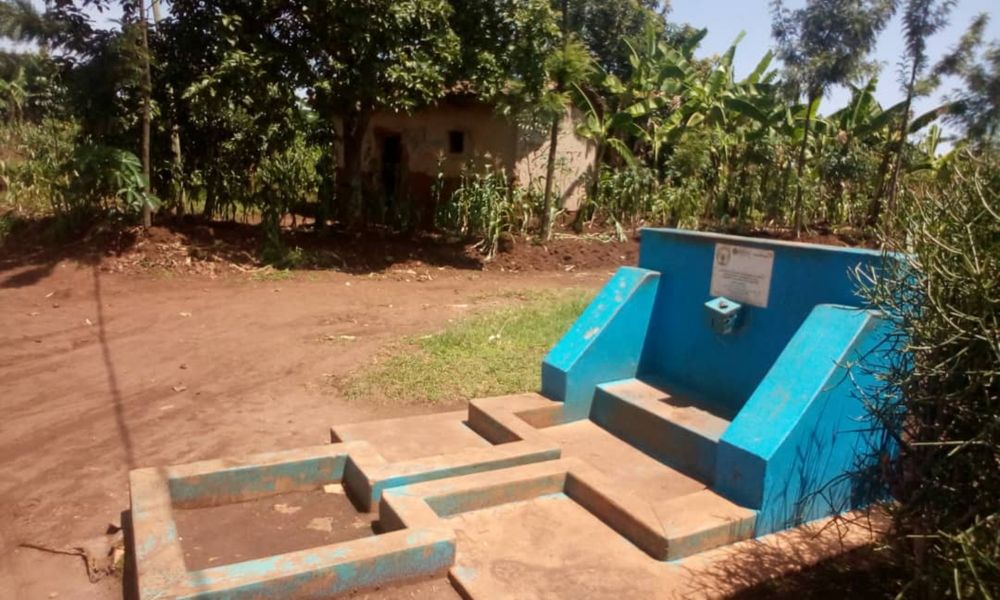
“My daughter-in-law is pregnant right now and cannot make the trip to the swamp,” he said. “Even if she woke up at dawn to go, carrying a jerrycan of water up that hill would be too much for her. And it’s not just pregnant women who struggle; elderly women without the strength for that kind of journey face the same problem. Some people walk nearly 40 minutes to fetch water from a tap in a neighboring village, but even that is difficult for those who live far from it.”
He also noted that other taps built around the same time as theirs continue to function without issue, leaving residents puzzled about what specifically went wrong with their own.
Huye District Mayor Sebutege Ange acknowledged the challenge, attributing part of the problem to population growth outpacing water supply infrastructure.
“As the number of residents increases, so does water consumption, which means the available supply has to be shared among more people. When there are prolonged dry spells, water sources run lower, reducing what reaches households. We are developing a distribution plan to ensure residents receive information and enforce fair sharing.
He also mentioned an upcoming project aimed at increasing the overall water supply in the urban area, as population growth and water demand must be balanced.
According to a household welfare survey, the share of Rwandans in urban areas who are satisfied with their access to clean drinking water has declined from 53% to 40%, while in rural areas the figure has similarly dropped from 53% to 48%.
Under Rwanda’s Second National Strategy for Transformation (NST2, 2024–2029), the country has set a target of achieving universal access to clean water, reaching 100% of the population, up from the 90% recorded at the end of 2024. The central goal is to ensure that every Rwandan has clean water available nearby, including extending piped water to one million new households.


