
 0
0
 0
0
By Annonciata Byukusenge
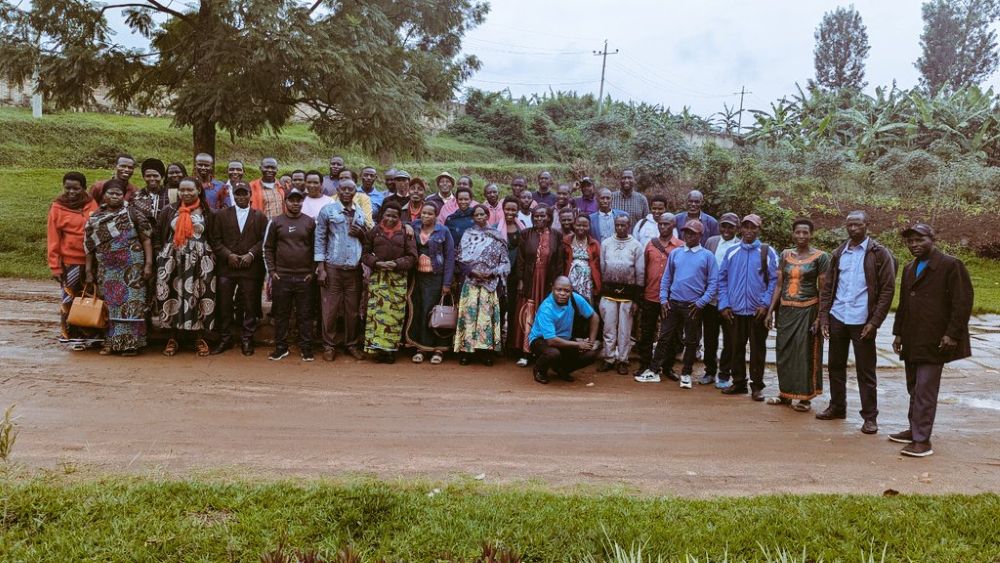
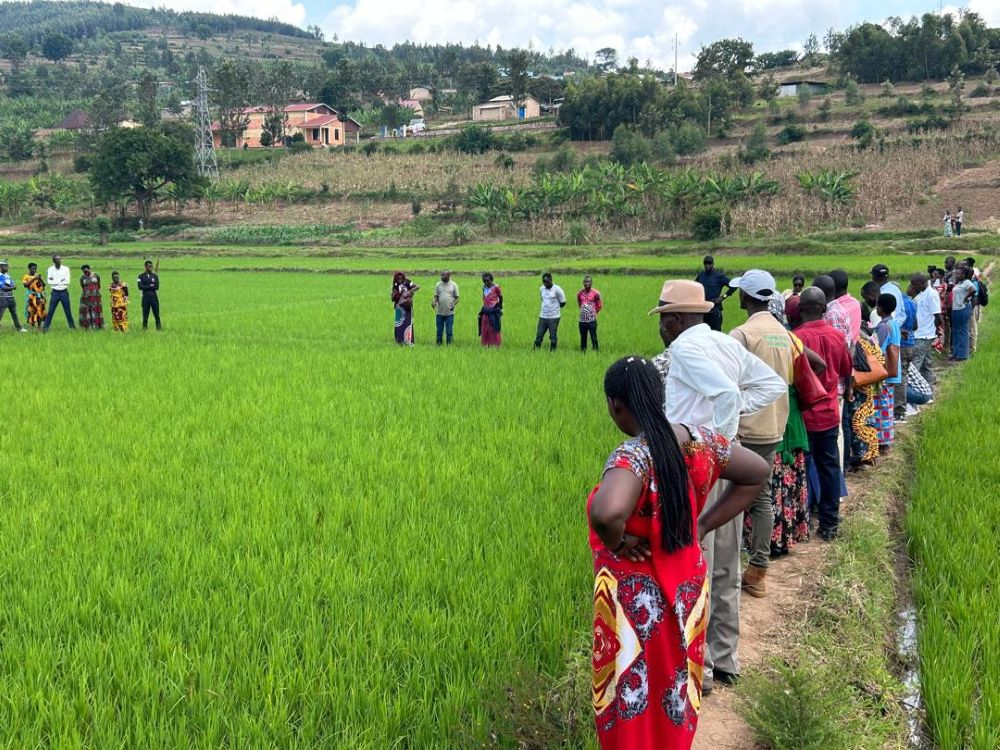
Farmers from Ruhango and Huye districts who participated in the field exchange say that the knowledge they acquired has laid a strong foundation for small-scale irrigation farming. In their testimonies, the experience opened their eyes to better ways of organizing, managing irrigation systems, and collaborating with water users.
Françoise Bazubagira, a farmer from Ruhango District, was among the participants. Reflecting on what she learned after attending various training sessions at the farmers’ field school.
“I learned many things, but what stood out most was the importance of collaboration between cooperatives and water users’ associations. I believe that once our marshland is developed and we have access to irrigation, we will be able to build strong and effective partnerships.”
She added that she was particularly impressed by the good governance practices she observed in the cooperatives working closely with water users’ associations.
Aphrodis Nsengiyumva, who also took part in the study tour, shared similar views. He said that the farmers gained the practical knowledge they had been missing and are now determined to put it into action.
“After this visit, we have committed to improving everything, starting with leadership and cooperation among members of our cooperative. We also plan to share what we have learned with fellow members who didn’t attend so that we all have a common understanding of small-scale irrigation and how to work effectively with water users’ associations. We are confident that once the necessary infrastructure is in place, things will run smoothly because we will already have the skills and knowledge.”
Jule Mporana, a water user specialist at the Rwanda Agriculture and Animal Resources Development Board (RAB), emphasized that the country has an ambitious plan to expand irrigated land to boost agricultural productivity.

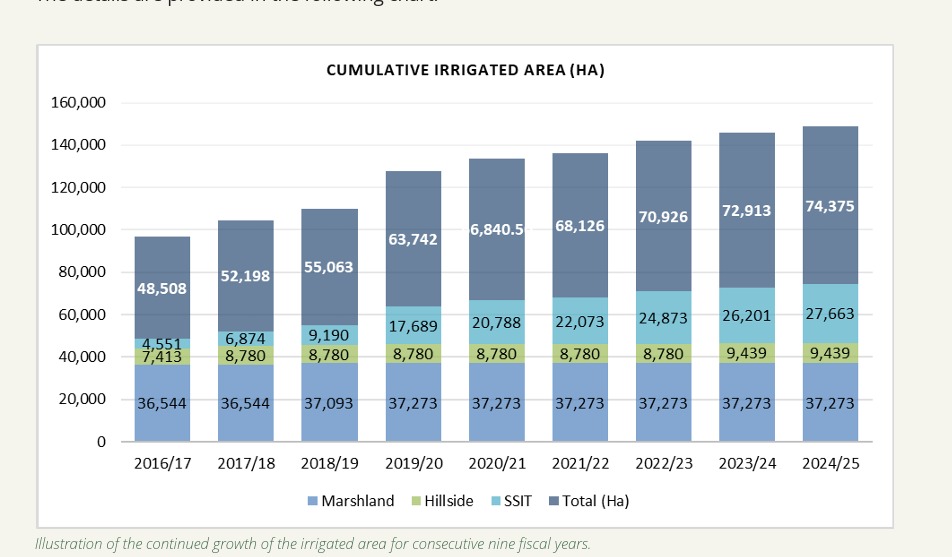
“Irrigation isn’t limited to marshlands with natural water sources. For example, in the Eastern Province, we developed 600 ha in the Nasho irrigation scheme, and it has been successful. Another 400 ha were developed in Matimba and Musheri. Building on this progress, we aim to expand irrigation schemes across the country, targeting a total of 493,050 hectares of irrigated land.”
Overall, participants left the study tour not only inspired but also ready to turn what they learned into concrete action in their own communities.
Through initiatives like this, farmers are gaining practical solutions to adapt to climate change, improve food production, and build more resilient livelihoods.
This transformative study tour was organized by the Rwanda Agriculture and Animal Resources Development Board (RAB) through its Single Project Implementation Unit (SPIU), under the Sustainable Agricultural Intensification and Food Security Project (SAIP).


