
 0
0
 0
0
By Annonciata Byukusenge
When conversations about artificial intelligence turn to Africa, they often focus on startups, fintech, or mobile innovation. Increasingly, however, the spotlight is shifting to education, where AI is beginning to reshape how students learn, study, and succeed.
At the center of this shift is the Open Institute of Technology (OPIT), a global online university that has introduced a new tool designed to make higher education more accessible and responsive: OPIT AI Copilot. More than just a digital assistant, the Copilot is built to function as a constant academic companion, one that understands each student’s learning journey and adapts in real time.
For many African students, especially working professionals balancing careers and family responsibilities, flexibility is not a luxury; it is essential. OPIT’s AI Copilot was created with this reality in mind. The system has been trained on over 3,500 hours of OPIT course material, covering 131 courses and 320 assessments. That means when a student asks for help, the assistant can provide guidance that is directly connected to specific lessons, assignments, and concepts they are studying.
Instead of offering generic answers, the Copilot tracks progress, identifies knowledge gaps, and adjusts its support accordingly. If a learner struggles with a particular concept, they can revisit related materials, explain ideas in simpler terms, or suggest additional exercises. If a student is advancing quickly, it can challenge them further. The result is an experience that feels far more personal than traditional online learning platforms.
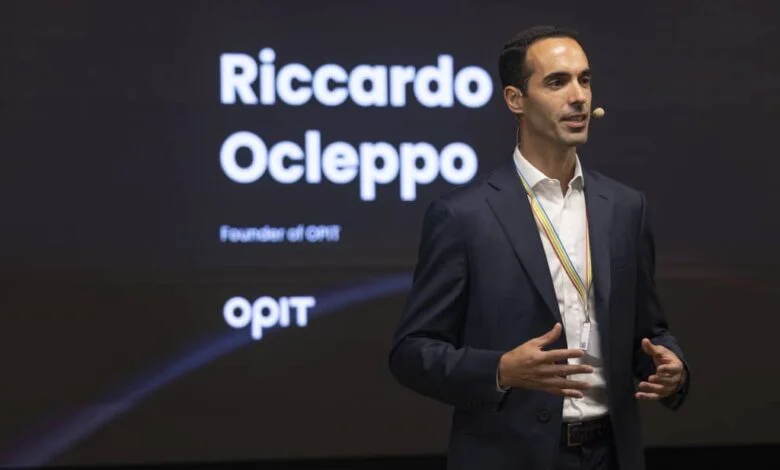
Riccardo Ocleppo, Founder and Director of OPIT, describes the initiative as a breakthrough for learners who cannot afford to pause their lives to pursue education. With 24/7 availability, the AI Copilot removes the limitations of office hours and time zones. Students no longer need to wait days for clarification on a concept; they can receive support instantly, whether they are studying late at night in Lagos or early in the morning in Nairobi.
But the technology is not only about students. Faculty members also benefit. By automating grading processes, generating feedback rubrics, and assisting in the creation of teaching materials, the Copilot reduces assessment time by as much as 30 percent. That efficiency gives educators more space to focus on meaningful engagement, mentorship, discussion, and curriculum design, rather than administrative tasks.
Still, OPIT acknowledges that the integration of AI into higher education must be handled responsibly. During examinations, the Copilot switches to a restricted “anti-cheating mode.” In this setting, it avoids giving direct answers and instead functions as a guided reference tool, encouraging critical thinking and independent reasoning. The goal is not to replace intellectual effort but to strengthen it.
The launch of the AI Copilot at Microsoft’s “AI Agents and the Future of Higher Education” event in Milan signaled a broader shift in global academia. Institutions such as IE University and the Royal College of Art were present, underscoring the growing recognition that artificial intelligence is becoming part of the learning environment itself.
Professor Francesco Profumo, OPIT’s Rector and former Italian Minister of Education, emphasizes that innovation must be paired with ethics. Artificial intelligence, he argues, is not simply a tool; it is a new context for learning, one that demands cultural awareness and responsibility.
Across Africa, this conversation is particularly relevant. In countries like Rwanda, where digital transformation is central to national development strategies, AI-driven education tools are aligning with broader goals of building a knowledge-based economy. Rwanda has invested heavily in digital literacy, coding academies, and smart classrooms, positioning itself as a regional leader in technology-enabled learning. AI assistants such as OPIT’s Copilot fit naturally into this landscape, offering scalable academic support that can reach students beyond urban centers.
Moreover, Africa’s mobile-first culture shapes how education must evolve. Recognizing this, OPIT plans to release a mobile application later this year. The app will allow students to download concept maps, course summaries, and other materials for offline use, an important feature in regions with inconsistent internet connectivity. By prioritizing mobile access, the institution acknowledges how most African learners engage with digital platforms through their phones.
With over 350 students from more than 80 countries, including Nigeria, Kenya, and Ghana, OPIT is already seeing strong participation from the continent. As AI continues to redefine classrooms worldwide, its role in Africa may be especially transformative. By combining flexibility, personalization, and ethical safeguards, tools like the AI Copilot suggest a future where geography and circumstance no longer dictate who gets quality education.
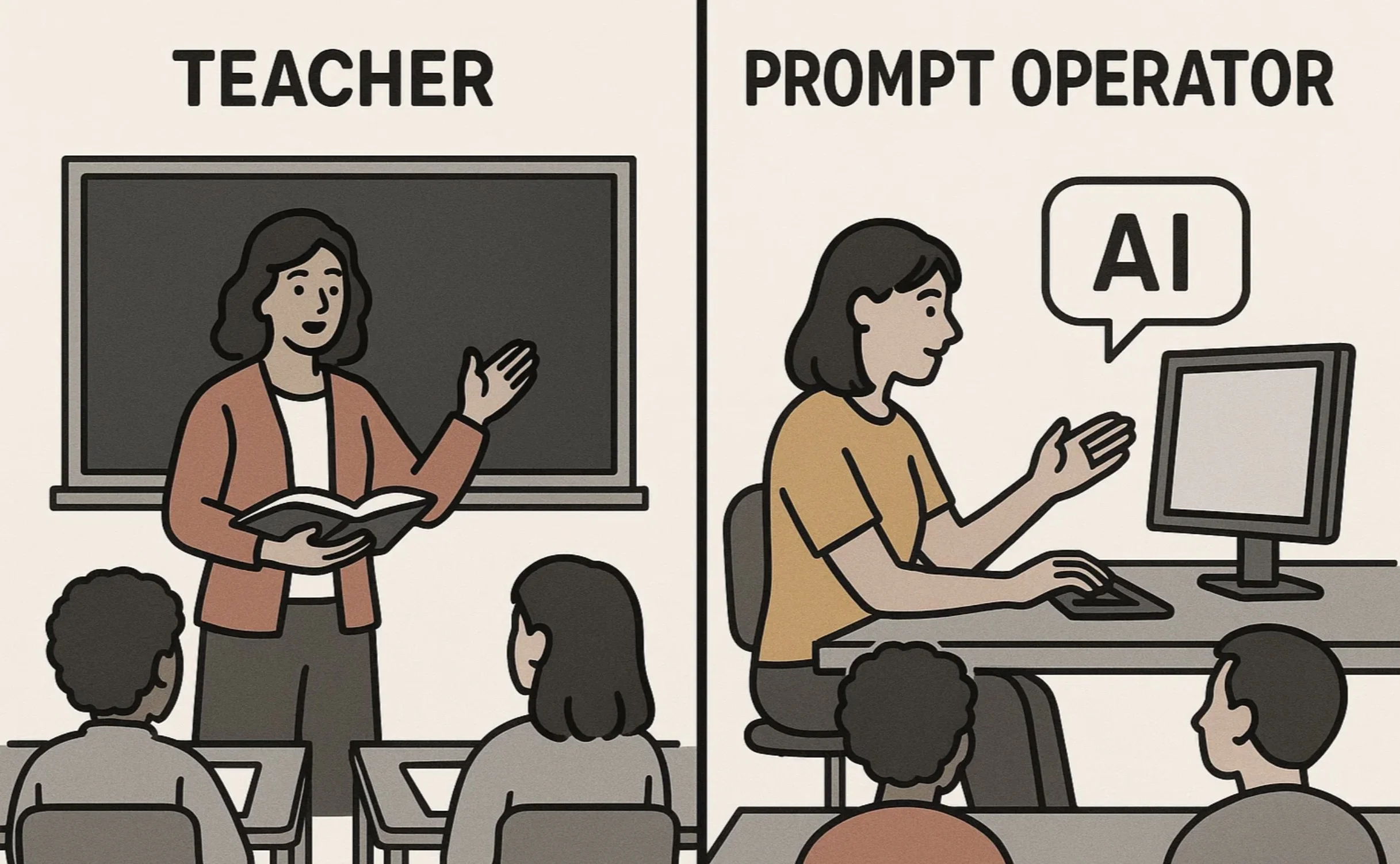
In that future, artificial intelligence does not replace teachers or traditional study; instead, it becomes a steady guide, quietly working in the background to ensure that every learner, no matter where they are, has a fair chance to succeed.
What About OPIT?
The Open Institute of Technology is a fully accredited online university offering Bachelor’s and Master’s degrees in Software Engineering, Artificial Intelligence, Data Science, and Digital Innovation.
It is committed to building a future-ready academic model. OPIT combines global inclusion with career-focused, tech-driven learning.


