
 0
0
 0
0
By Shobha Shukla
58 months left to #KeepThePromise and end female genital mutilation/cutting and ensure menstrual health where no one is left behind
All world leaders had promised to end female genital mutilation/cutting by 2030 (SDG target 5.3) and ensure menstrual health “where no one is left behind” by 2030 (SDG-3, 4, 5, 6). But progress is way off the mark, say experts at the SHE & Rights session held in February 2026, ahead of the upcoming 70th intergovernmental Session of the UN Commission on the Status of Women (CSW70).
“When we speak about violence and human rights violations, female genital mutilation/cutting (FGM/C) is among the most heinous crimes. We must end such practices everywhere if we are to keep the promises of gender equality and human rights. All world leaders globally had promised to end female genital mutilation/cutting by 2030 (at the UN General Assembly 2015). Despite such promises to end female genital mutilation/cutting by 2030 (SDG 5.3), rates have instead risen by 15% in the recent 8 years (2016-2024), from 200 million in 2016 to over 230 million in 2024. One-third of FGM/C happens in Asia (~80 million),” said Shobha Shukla, SHE & Rights Host and CNS Executive Director.
FGM/C survivor calls to end FGM/C – a form of gender-based violence
“My journey to end female genital mutilation/cutting did not begin in an office. Instead, my journey began when I knew where the shoe hurts most. So, speaking from a perspective of personal experience (of undergoing female genital mutilation/cutting), and the perspective of pain. Some years back, when I was a very young girl, I was subjected to female genital mutilation/cutting. That was the first turning point of life because the pain and psychosocial trauma are so raw even today in my head. But now I take it as an opportunity to save more than a thousand girls that I have known and who have passed through my hand but never underwent the cut,” said Catherine Menganyi HSC, nurse epidemiologist, survivor of female genital mutilation/cutting, and a powerful advocate to end it as well as all forms of gender-based violence in Kenya. She is also a Co-Founder and Chapter Lead of Women in Global Health, Kenya.
“As a survivor of female genital mutilation/cutting, and as a nurse-epidemiologist, I know the harmful effects that will be caused by female genital mutilation/cutting,” said Catherine. “We need to invest in community-led and community-owned solutions. Affected communities understand why harmful practices are occurring and are best placed to find a locally relevant and effective solution. Investing in community-led responses to end female genital mutilation/cutting is best.”
FGM/C does not exist in isolation but controls women/girls’ bodies
“Female genital mutilation/cutting does not exist in isolation. It is part of a wider system that controls women’s and girls’ bodies. It limits the choices of women and girls. It normalises violence against women and girls. So, we cannot delink female genital mutilation/cutting from the deeper issue of all forms of violence against women and girls. We must emphasize the importance of gender equality because it is not optional. It must be guaranteed as a right to all women and girls,” stressed Catherine. “Every girl, every woman has the right to grow up whole, safe, educated, and free from violence. Ending female genital mutilation/cutting is not charity, it is justice.”
“Female genital mutilation/cutting is referred to by a range of terms, but no matter what terminology we are using, it is recognised internationally as a grave violation of human and child rights, particularly sexual and reproductive health and rights of girls and women, and as a form of gender- based violence. 35% of estimated female genital mutilation/cutting happens in Asia. We have 13 countries in South Asia and Southeast Asia where female genital mutilation/cutting is documented: India, Pakistan, Sri Lanka, Maldives (South Asia); Vietnam, Cambodia, Thailand, Brunei, Singapore, Philippines, Indonesia, Malaysia and Azerbaijan (South-East Asia),” said Safiya Riyaz, Programme Officer, The Asian-Pacific Resource & Research Centre for Women (ARROW) and coordinator, Asia Network to End FGM/C, Sri Lanka.
WHO says FGM/C is against medical ethics
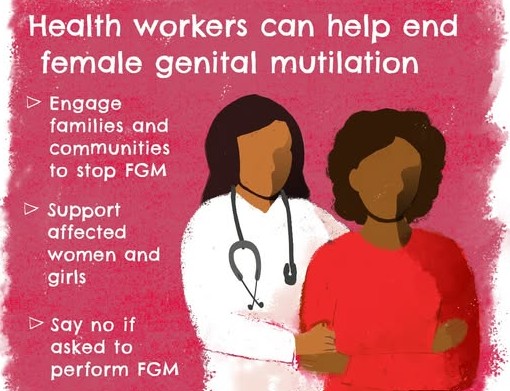
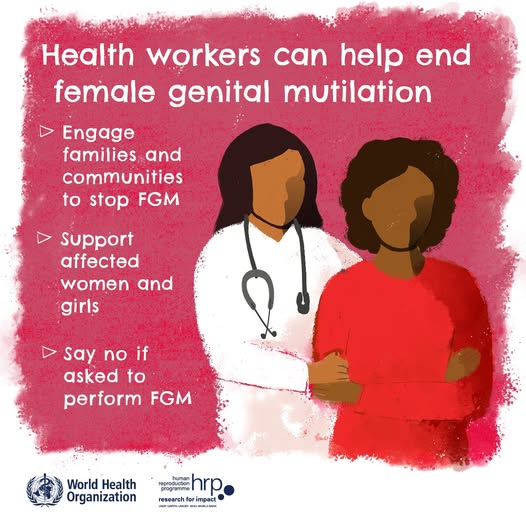
“We are seeing a very worrying trend in ‘medicalisation’ of FGM/C in Asia as more healthcare professionals are getting involved in performing it. It is important to remember that female genital mutilation/cutting has no health or medical benefits and no scientific basis to justify why a healthcare professional should be engaging in it. When healthcare professionals perform it, then they are wrongly legitimising this harmful practice as something that is ‘medically sound’ or ‘beneficial’ when it is not. We have very explicit condemnations by medical and scientific bodies such as the WHO, International Federation of Gynaecology and Obstetrics, International Confederation of Midwives, UNFPA, and others against the medicalisation of female genital mutilation/cutting,” said Safiya Riyaz. “We see in Asia that female genital mutilation/cutting has been sustained due to social norms or ideas around ‘purity’ that by performing female genital mutilation/cutting on a girl, they somehow become less promiscuous. It really boils down to a control of sexuality.”
“In Asia, possible post-procedural complications of female genital mutilation/cutting, such as infections, long-term pain after childbirth, negative impact on women’s sex lives, and the emotional impacts and the distress that comes with women realising that this has been done on them. We have documented complications of type-one female genital mutilation/cutting, which is also happening in Asia, whose complications are of a more severe form, such as pain, genital swelling, haemorrhage, among others,” added Safiya Riyaz of Asia Network to end FGM/C.
Holding governments accountable with the UPR to end FGM/C
This SHE & Rights session marks the 20th anniversary of the Universal Periodic Review (UPR). “We have found the Universal Periodic Review (UPR) mechanism very helpful, including, for instance, issuing the first-ever recommendation from an international mechanism to India on female genital mutilation/cutting (FGM/C), which helps keep the issue current. We are seeing the rising anti-rights pushback, for example, in The Gambia where there have been efforts to repeal the anti-FGM/C law; as well as in the US, where the government is trying to misuse the anti-FGM/C law to attack gender-affirming care,” said Divya Srinivasan, Global Lead, End Harmful Practices, Equality Now while responding to a question in SHE & Rights session.
The Universal Periodic Review (UPR) is a unique, State-driven, UN Human Rights Council mechanism that periodically examines the human rights records of all 193 UN Member States. It aims to improve human rights situations globally through 4.5-year cycles of interactive, peer-reviewed dialogues, where countries highlight progress and receive recommendations.
“Let us make accountability mechanisms like UPR more effective in ensuring gender equality and human right to health are protected and guaranteed to every person, where no one is left behind,” said Shobha Shukla, who hosts SHE & Rights.
A new report of Equality Now launched in February 2026, Towards Justice: Global Challenges and Opportunities in Litigating Cases of Female Genital Mutilation, produced with legal research assistance from TrustLaw, the Thomson Reuters Foundation’s pro bono service, outlines how survivors of female genital mutilation/cutting and women’s rights advocates are increasingly using strategic litigation to strengthen implementation of laws, close legal gaps, and defend hard-won protections from rollback.
The research examines strategic litigation in India, Burkina Faso, Kenya, Liberia, The Gambia, and the US, and analyses barriers to justice in Australia, Burkina Faso, Egypt, France, Kenya, Liberia, Sierra Leone, Uganda, the UK, and the US. Some of the findings of the Equality Now report include:
- Despite a global shift to criminal bans on female genital mutilation/cutting, many countries do not have a specific law prohibiting the practice, leaving women and girls unprotected.
- Strategic litigation can clarify the law, expose systemic failures, set legal precedent, and drive legal and policy reform.
- Prosecutions can empower survivors, raise public awareness of female genital mutilation/cutting as a serious human rights abuse, and encourage other survivors to report. However, prosecutions remain rare, and failings in justice systems enable immunity.
“Research shows that female genital mutilation/cutting is taking place in at least 94 countries across the world. Out of these 94 countries, 59 of them have specific laws which are addressing female genital mutilation/cutting. Despite this, prosecutions and access to justice remain rare in most of the countries across the world. So that is why this report was necessary to examine how strategic litigation has been used across different jurisdictions to improve accountability and to strengthen the implementation of legal frameworks. It also looks at access to justice and what survivors of female genital mutilation/cutting have really faced when they have tried to access the justice system and what kind of barriers they have faced,” added Divya Srinivasan, Global Lead, End Harmful Practices, Equality Now.
Menstrual health must be a reality for all menstruators by 2030
The Indian Supreme Court made an important judgment recognising menstrual health as a fundamental right. “Indian Supreme Court’s judgment on menstrual hygiene is a landmark one. However, it is also ironic because the Supreme Court, the highest court of justice in India, had to intervene for menstrual health, dignity, and hygiene, which should have been guaranteed to all in need already. The Supreme Court has emphasised that the meaning of life under Article 21 of the Indian Constitution is not confined to a mere existence but includes the right to live with dignity, health, and self-respect. This means that by recognising menstrual health and hygiene as an integral part of life under Article 21, the court acknowledged a reality that has long affected girls and women, particularly in silence and neglect, because it stems from a patriarchal mindset, stigma, and taboo. The recognition is supported by the constitutional mandate under Article 15, which empowers the State to make special provisions for women by bringing menstruation into constitutional discourse. The Supreme Court of India addressed a long-standing gap between legal guarantees and lived experiences,” said Debanjana Choudhuri, independent gender justice activist.
Agrees Ruchi Bhattar, journalist with ThePrint, and Lawyer that the Supreme Court had to intervene in something as basic as the right to menstrual hygiene and health. “Why does a court have to issue directions to authorities or education directors to make sure that girls do not drop out? (because it must not be happening anywhere). What is recorded by the government shows that approximately 4 million (40 lakhs or 40 lacs) girls dropped out of primary education in the last four years. So, a top court had to intervene to make menstrual health a fundamental right.”
In 2023, the court emphasised the responsibility of the state to ensure that menstrual health is treated not just as a peripheral welfare issue but as a matter of fundamental right (and not charity).
“For decades, menstruation has remained a taboo subject with public institutions, especially schools. Even to date, in schools, menstrual health, dignity, hygiene, and usage of menstrual products are not shared openly. There are rarely any segregated toilets at many places. And in many places and/or schools, the toilets, or the girls’ toilets, are under lock and key,” said feminist leader Debanjana Choudhuri.
“Despite some progress in India, menstrual hygiene discourse in India has always been under sanitation, and it has not been discussed vocally as a fundamental right. The onset of menstruation leads to irregular school attendance. Inadequate toilet facilities, lack of privacy, unavailability of sanitary products, and fear of embarrassment compel many female students to remain absent during their menstrual cycle. This has a huge impact on her life choices, economic freedom, and her dignity. What begins as a temporary absence frequently develops into an academic difficulty and, in several cases, results in discontinuation of education. She just simply stops going to school,” shared Debanjana.
Menstrual poverty is a silent killer.
“Menstrual poverty is another issue that we need to talk about in India, as it exists. Access to menstrual products, information, and counselling exists, and the gap is huge. Menstrual poverty operates as a silent killer. It’s invisible, but it keeps on reinforcing inequality without being adequately reflected in official statistics. We hardly have any data in India on menstrual poverty, and there have been several instances where girls have compromised their health or abandoned their education due to the absence of basic menstrual support,” said Debanjana Choudhuri.
The decision of the Supreme Court must not remain only on paper but be implemented to increase access. When girls are forced to sacrifice their education or dignity due to biological realities, the harm is constitutional in nature,” said Debanjana. “The judgment recognises that exclusion arising from menstruation cannot be dismissed as a ‘private inconvenience’ or ‘personal issue’.”
“This judgment also reinforces the principle of substantive equality. Educational institutions are often considered neutral spaces, but neutrality loses its meaning when there are structural differences and the structural differences are ignored. Failure to address menstrual needs places girls, of course, at a very disadvantaged position in relation to the boys. By acknowledging this imbalance, the court reaffirmed that constitutional equality does not mean identical treatment but requires the removal of barriers that prevent equal participation. Equally significant is the emphasis on the state’s responsibility. In India, health is a state subject, and recognising menstrual health as a fundamental right imposes a constitutional obligation on the state,” said Debanjana Choudhuri.
“Access to sanitary products, functional toilets, clean water, privacy, and safe disposal facilities must form an essential part of the educational system. These are not discretionary welfare measures but constitutional requirementsflowing directly from the right to live with dignity. The judgment also aligns with the constitutional values of privacy and bodily autonomy,” she further added. “Menstruation is a personal experience, but the failure of public institutions is a public humiliation.”
“The Supreme Court decision also complements India’s broader commitments to gender equality. Let’s hope that it is translated into reality by the states and by the actors, and the constitutional recognition transforms classrooms or schools’ infrastructure. We need continuous monitoring, effective execution, and institutional accountability, which are essential to ensure that this right translates into tangible changes. Without adequate resources, training, and oversight, this judgment, like many other judgments, will remain largely symbolic,” she added.
“In terms of service delivery with rights and dignity, we must address disability, gender identity, geographical differences, caste-based issues, including Dalit segregation. Health systems should collect the disaggregated data, which we currently lack. We often talk about menstruation only in gender conformity, and I would really want to emphasize that the Supreme Court decision talks about living with dignity, which is for all menstruators. So, we really need to understand how we must make access possible, not just for women and girls, but also transgender and non-binary individuals who are also going to schools and colleges,” said Debanjana.
“We talk a lot about policies being made in India, but the implementation is where we lack. This has been acknowledged time and again by the top court. So, the Supreme Court tried to bridge that gap by issuing binding directions and making menstrual hygiene a fundamental right. Now, those girls and women who do not have these rights can go back to the courts and appeal for justice to enforce these rights,” said Ruchi Bhattar, journalist with ThePrint, and Lawyer.
“Supreme Court judgement (127 pages) directed all states and union territories in India to ensure that every school has a functional gender segregated toilet with usable water and handwashing facilities. Schools must provide free biodegradable sanitary napkins to female students accessible through vending machines or designated authorities. It directed schools to establish menstrual hygiene management corners. This is very interesting because this equips the schools with spare uniforms, inner wares, and disposable bags for emergencies – something which the court had to come up and tell the states to enforce. The institutions must implement safe, environmentally compliant disposable mechanisms and incorporate gender-responsive curriculum to break the stigma around puberty and menstruation,” said Ruchi Bhattar.
“After 3 months, the Supreme Court will hear this matter again, knowing how well this judgment or this decision has been implemented. So, the district education officers are mandated to conduct periodic inspections and obtain anonymous feedback from students to ensure that menstrual hygiene is maintained very well, and compliance with this judgment has been done, and they are supposed to return to the Supreme Court within 3 months,” informs Ruchi Bhattar. Judges said, “We wish to communicate to every girl child who might have become a victim of absenteeism because her body was perceived as a burden that the fault is not hers.”
“Most importantly, I think the part of the judgment that stuck out with me is how the court spoke to not just women but like the people around menstruators – the people that can enforce this, which is the most important aspect of it. It said that the responsibility of the state is further heightened in the case of a child with disability, as the intersection of disability with gender compounds the disadvantage faced during menstruation. The absence of accessibility results in exclusion from education and reinforces the social and economic marginalisation,” said Ruchi Bhattar.
“The court also talks about the men and boys who are supposed to break the silence and stigma around menstruation. It emphasised that the role of men and boys, including male teachers and peers, is to sterilise themselves from menstruation-related stigma; until then, such services would be underutilised,” said Ruchi Bhattar.
Community-led breast cancer screening is making a difference.
“Swasthya Setu, A Bridge of Trust, Courage, and Early Hope, is an initiative of Humana People to People India, which we implemented in 570 villages of Deoria (Uttar Pradesh state) and Ballari (Karnataka state) in India,” said Subrat Mohanty, Health Programmes Coordinator, Humana People to People India. It increased the uptake of breast self-examination, a screening for breast cancer.
“For many women, their own health rarely gets any attention. Those who developed cancer, such as breast cancer, it was not merely a medical condition but a sentence: associated with suffering, loss, and inevitability. Few had heard of breast self-examination. Fewer still believed that finding cancer early could mean survival, not stigma. Our initiative was a bridge to health, to reach women early. Between February and December 2025, the project reached more than 230,000 (2.3 lakh) women across 570 villages,” added Subrat Mohanty, who is also on the Board of Stop TB Partnership hosted by United Nations OPS. “We used theatre, street plays, rallies, small group discussions, and a range of other local approaches to connect with women and provide a safe space for open conversations around health, including issues related to breast self-examination. Slowly, breast health stopped being taboo. It became a topic of conversation.”
ASHAs (frontline female health volunteers) were trained not only as health educators, but as listeners, guides, and companions. With patience and respect, they demonstrated breast self-examination, breaking down medical jargon into simple, repeatable steps. They reassured women that knowing one’s own body was not shameful, it was empowering.
Out of 233,583 women screened, 448 women noticed something unusual-a lump, pain, discharge, or change. What mattered most was not just the number, but the response. Instead of hiding symptoms, most women choose to speak.
ASHAs followed up diligently. They accompanied women to Primary Health Centres and district hospitals, explained procedures, mediated conversations with families, and waited outside examination rooms. Because of this unwavering support, 88% of women completed their referrals, a rate significantly higher than national averages.
In 2025, out of 233,583 women screened in 570 villages, 448 women had an unusual finding. Out of them:
- 21 breast cancer cases were confirmed
- 15 women had already started treatment
SHE & Rights was together hosted by Global Center for Health Diplomacy and Inclusion (CeHDI), Women Deliver Conference 2026, International Planned Parenthood Federation (IPPF), Asian-Pacific Resource and Research Centre for Women (ARROW), Women’s Global Network for Reproductive Rights (WGNRR), Asia Pacific Media Alliance for Health, Gender and Development Justice (APCAT Media) and CNS.


