 0
0
 0
0
By Annonciata Byukusenge
As African Heads of State gather in Addis Ababa for the African Union Summit, a stark warning is hanging over the meetings: the model that has long underpinned healthcare financing across the continent is breaking down, and there may be no easy replacement waiting in the wings.
Civil society leaders and health experts sounded the alarm this week, arguing that Africa is approaching a tipping point in health security. Foreign aid, once a major lifeline, is projected to shrink by as much as 70 percent, while a deepening sovereign debt crisis is forcing governments into painful trade-offs. Today, 34 African countries spend more servicing debt than they do on the health of their people, a reality experts describe not just as an economic failure, but a moral one.
The warning came during a high-level webinar titled “Africa Leadership for Health Sovereignty,” convened by AIDS Healthcare Foundation (AHF) Africa alongside AFRICA REACH, WACI Health, and RANA. Speakers described a continent caught in what they called a “fiscal trilemma”: governments are struggling to manage rising debt, growing disease burdens, and a weak tax base, all without triggering social unrest.
The numbers presented were sobering. Africa carries roughly 23 percent of the global disease burden, yet accounts for only about 1 percent of global health spending. The annual health financing gap now stands at an estimated $66 billion, equivalent to a shortfall of about $43 per person each year. Compounding the challenge is the cost of borrowing. While high-income countries often access capital at interest rates of 2 to 3 percent, many African nations pay rates closer to 10 percent, a disparity some speakers bluntly labeled “financial apartheid.”
In her keynote address, Dr. Penninah Iutung, Executive Vice President of AHF, challenged the foundations of the global charity model. She argued that Africa cannot “beg its way” out of a structural crisis of this scale. When governments are forced to prioritize debt repayments over life-saving medicines, she said, the issue ceases to be about budget management and becomes a question of values. Her message to African leaders was direct: negotiate collectively, or continue to depend almost entirely on imported vaccines and, by extension, imported vulnerability.
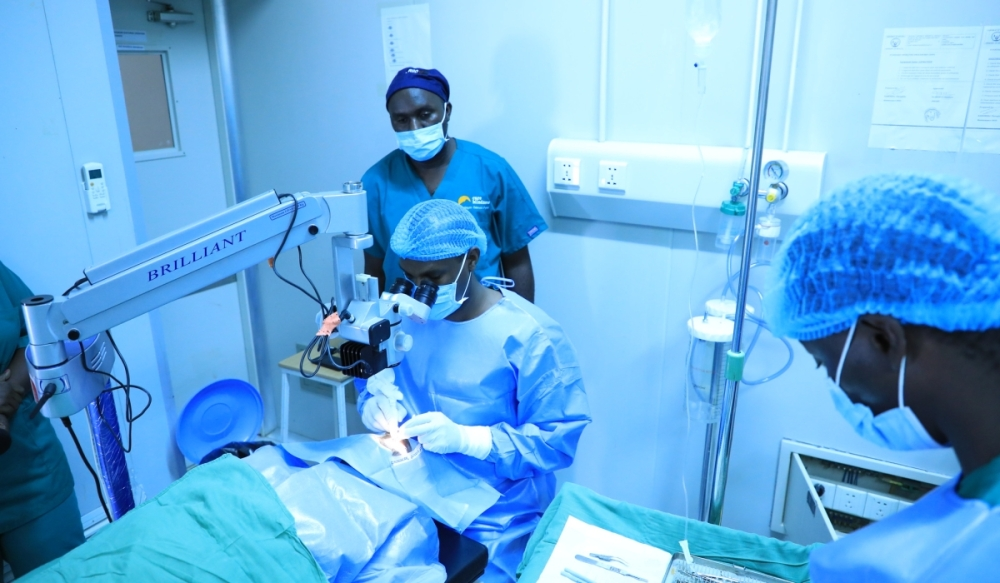
That vulnerability is becoming more visible by the day. The webinar highlighted what participants called a looming “funding cliff,” driven by the termination of thousands of USAID-supported programs and a broader retreat by European donors. Domestic health budgets, which often hover around 7 to 8 percent of national expenditure, remain well below the 15 percent target set by the Abuja Declaration more than two decades ago. The gap has real consequences: globally, an estimated 4.5 billion people lack access to essential health services, with the majority living in low- and middle-income countries.
Africa’s reliance on external supply chains adds another layer of risk. The continent imports about 99 percent of its vaccines, a strategic weakness laid bare during the COVID-19 pandemic and now intensified by currency devaluations that make imports even more expensive.
For Rosemary Mburu, Executive Director of WACI Health, the answer lies not in isolation, but in what she termed “smart protectionism.” Health sovereignty, she argued, is about aligning policy, power, and people. Mburu pushed back strongly against austerity narratives that frame underfunded health systems as inevitable, insisting that Africa has resources but not always the political will to prioritize health. In her view, urgency is non-negotiable: access to healthcare is not something the continent can afford to endlessly debate.
Others warned that the consequences of inaction extend well beyond hospitals and clinics. Martin Matabishi, AHF Africa Bureau Chief, described the current financing trajectory as a direct threat to stability. Chronic underinvestment in health, he said, weakens states and fuels fragility. Choosing creditors over caregivers may balance books in the short term, but it undermines the future.
The session concluded with a Call to Action, read by Tolessa Olana Daba of AHF Ethiopia, and framed as a manifesto for leaders attending the AU Summit. The message was clear: sovereignty is not a slogan, but a prerequisite for survival and prosperity. Dependence on unpredictable external donors, the coalition argued, is no longer viable. What Africa needs is a shift from development assistance to long-term health investment.
The manifesto sets out three core demands. First, African governments must present a united front to renegotiate what the coalition described as “odious” debt, freeing fiscal space for health and social services. Second, the continent must urgently operationalize the African Medicines Agency to harmonize regulations and strengthen local pharmaceutical manufacturing, which currently accounts for only a tiny fraction of supply. Finally, the coalition called for a move from abstract state sovereignty to people-centered sovereignty, one that protects communities facing climate-related and economic health shocks.
As leaders deliberate in Addis Ababa, the message from civil society is unmistakable: the begging bowl is cracking, and the cost of ignoring that reality will be measured in lives.


