
 0
0
 0
0
By Shobha Shukla
The year 2026 marks an important milestone with only 5 years left for world leaders to deliver on the promise of ending AIDS by 2030 (Sustainable Development Goal 3). With zero new HIV infections and ensuring all people living with HIV are healthy (virally suppressed) and supported we can end AIDS now!
We can #endAIDSnow!
Thanks to communities of people living with and affected by HIV, a lot of scientifically proven tools and approaches have made it possible to offer HIV combination prevention to those who are HIV negative – as well as ensure that all people living with HIV remain healthy and lead fulfilling lives.
If people with HIV are on lifesaving antiretroviral therapy with sustained viral suppression, then people with HIV live normal and healthy lives (comparable to those without the virus). In addition, there is zero risk of any further HIV transmission as per the WHO – this is commonly referred to as undetectable equals untransmittable or #UequalsU.
According to UNAIDS, in 2024, around 40.8 million people were living with HIV globally but not everyone was on lifesaving treatment – 31.6 million people were receiving the treatment by 2024. We need to bridge this gap.
1.3 million people became newly infected with HIV in 2024 – each of which could have been prevented if we had ensured that HIV combination prevention is accessible to everyone and all people with HIV have #UequalsU a reality in their lives.
Sadly, 630,000 people died from AIDS-related illnesses in 2024 too. With proven science- and evidence-based tools, how can we be complacent or accept this figure? No one should be dying of AIDS-related illnesses because we have the tools to avert such untimely deaths.
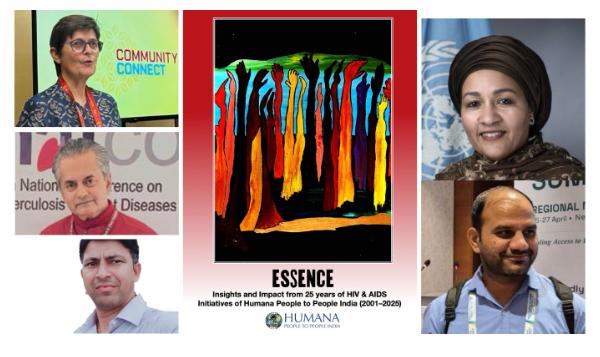
Before 2025 ended, Amina Mohammed, United Nations Deputy Secretary-General had said in a UNAIDS meeting that “ending AIDS remains achievable… but only if resources match our ambition.”
Amina also warned of growing financial pressures on countries and donors, highlighting the strain on domestic resources in low- and middle-income countries, driven by debt and the cost of debt servicing. “Governments, even if they wanted to prioritise HIV as a budget spend, quite frankly are taking away from education, taking away from health, because they cannot meet that cost.”
Amina’s remarks are on spot as they underpin the critical importance of addressing HIV risk factors as well as social, cultural, and economic vulnerabilities of diverse peoples as well as health and social welfare systems – and how multilateralism has worked (or not). We need to ensure that governments are making strong robust and not-fragile progress on all SDG goals and targets – ending AIDS is one of them.
26 years ago…
“ESSENCE: Insights and Impact from 25 years of HIV and AIDS Initiatives of Humana People to People India (2001–2025)” report was launched during the 16 Days of Activism against gender-based violence and ahead of Human Rights Day and Universal Health Coverage Day 2025.
Reading this report, we at CNS felt as if we are going back in time because like many others perhaps, we may be taking current services for granted. There are hard fought gains made in HIV responses, thanks to community leadership and government’s response to #PutPeopleFirst.
When Humana People to People India began working 26 years ago, there was no free rollout of antiretroviral therapy in the country. Now, every person with HIV in India gets free lifesaving antiretroviral therapy from the government.
Indian government had first announced the free rollout of lifesaving HIV treatment on 1st December 2003 (World AIDS Day) which began from 7th April 2004 (World Health Day). Today, India offers free treatment to over 1.8 million people nationwide.
Lisbeth Aarup, Head of Project Development of Humana People to People India said that since last 25 years, Humana has worked in India with HIV affected communities to reduce stigma and discrimination related to HIV as well as address physical and mental violence.
“Ending stigma and discrimination helps reduce HIV and TB risk for key and other vulnerable populations including women and girls. Stigma and discrimination is also a form of violence they have to bear,” said Jahangeer Alam of Humana People to People India. Jahangeer was also among the key presenters at National Conference of TB Association of India (NATCON 2025) as well as World Conference on Lung Health 2025.
“We have mostly worked with HIV key populations like female sex workers, men who have sex with men, member of transgender communities, people who inject drugs, migratory population, persons who inject drugs, young people, street children and pregnant women,” said Dr Sugata Mukhopadhyay, noted public health expert. “Humana addressed critical structural issues regularly, which often create hindrances to service utilisation by the underserved communities like stigma, discrimination, gender inequity, violation of human rights, gender-based violence and social exclusion.”
Government of India’s National AIDS Control Organisation (NACO) and several State AIDS Control Societies have supported Humana People to People India over the years. Peoples of Humana People to People India were speaking in SHE & Rights (Sexual Health with Equity & Rights) session last month, co-hosted by Global Center for Health Diplomacy and Inclusion (CeHDI), Women Deliver Conference 2026, International Planned Parenthood Federation (IPPF), Asian-Pacific Resource and Research Centre for Women (ARROW), Women’s Global Network for Reproductive Rights (WGNRR), Asia Pacific Media Alliance for Health, Gender and Development Justice (APCAT Media) and CNS.
Sex workers are challenged with not only gender-based violence but also criminalisation of sex work, said Ramphool Sharma of Humana People to People India. “They face multiple vulnerabilities which puts them at risk of not only physical violence but also sexual violence, economic violence, rape, risk of infections when clients refuse to use a condom, and other forms of abuses. Sex workers also have few options when it comes to seeking justice.”
“Unhoused or homeless and migrant women are dealing with a range of gender-based inequalities including gender-based violence and abuse. They are also at higher risk of infections like deadliest infectious disease (TB), HIV and other sexually transmitted infections – and face myriad barriers when it comes to accessing care and support or justice. Their biggest enemy is not poverty, it is violence – and intersectional stigma and discrimination lurks too. TB or HIV related stigma is additional form of violence they face,” said Ravinder Kumar of Humana People to People India. “A woman without support remains invisible.”
This report traces Humana People to People India’s long and unique journey of two and a half decades to explore and explain the stories of thousands of people infected and affected by HIV and AIDS across the country. Humana has supported these individuals to live with care, confidence and dignity. It reflects Humana’s strategic perspectives and approaches towards controlling the spread of HIV, mitigating the impact of AIDS in India, and supporting the country in moving a step closer to eliminating AIDS – a shared goal which all governments have committed themselves to (of ending AIDS by 2030).
#RethinkRebuildRise
With 2026 largest AIDS conference to open in July (26th International AIDS Conference or AIDS 2026) as well as 2026 United Nations General Assembly High Level Meeting on AIDS, the global efforts towards ending AIDS are indeed at crossroads. Commendable progress has happened with remarkable community leadership but this is NOT ENOUGH. We need to rethink, rebuild and rise to ensure that all governments and HIV programmes #PutPeopleFirst and get on track to end AIDS. It is a human rights imperative.


